A Nazi plan to fly senior figures to Greenland as the Third Reich collapsed in 1945 has long been dismissed as a conspiracy theory, but evidence suggests the operation was not only real but actively prepared. The scheme was reportedly the brainchild of Hitler’s armaments minister, Albert Speer, who was seeking a way to escape Allied justice as Germany faced inevitable defeat. Speer, who oversaw a vast slave labor empire that kept the German war economy running, knew by early 1945 that the country was finished. He also knew that his command of that brutal system meant he would likely face the gallows if captured.
According to interviews he later gave to historians and military intelligence officials, Speer was inspired by the 1933 German film “SOS Eisberg,” starring Leni Riefenstahl, to look toward the frozen north as a place of refuge. Speer told historian Hugh Trevor-Roper that he planned to fly himself, his wife, their six children, some of his closest staff, and a protection detail to Greenland. There, they would construct a camp, sit out the Arctic summer, and return to Germany in October 1945, when he believed the war and its horrors would have been forgotten. Trevor-Roper found the plan astonishingly naive, questioning how a camp of Germans could avoid discovery and how they could survive the harsh climate.
Speer said he intended to use the six months to write his memoirs. For decades, historians largely dismissed the Greenland plan as nonsense. That changed in 2003, when a man intimately involved in the operation in April 1945 spoke on the record for the first time. Former Luftwaffe Captain Ernst Kernig, then 93 years old, told the Sunday Times that he was one of several officers tasked with preparing planes for the Greenland mission.
He said tons of equipment began arriving at a flying boat base at Travermünde in northern Germany, including skis, tents, food, sledges, rifles, and fishing gear—everything a large group would need to survive for six months without resupply. A historian for the Imperial War Museum in London said Kernig’s story was credible. The man responsible for planning the escape was Colonel Siegfried Kneemeyer, chief of Luftwaffe technical developments. Speer instructed him to gather air ministry documentation and hide it in a forest outside Berlin to keep it from the advancing Soviets.
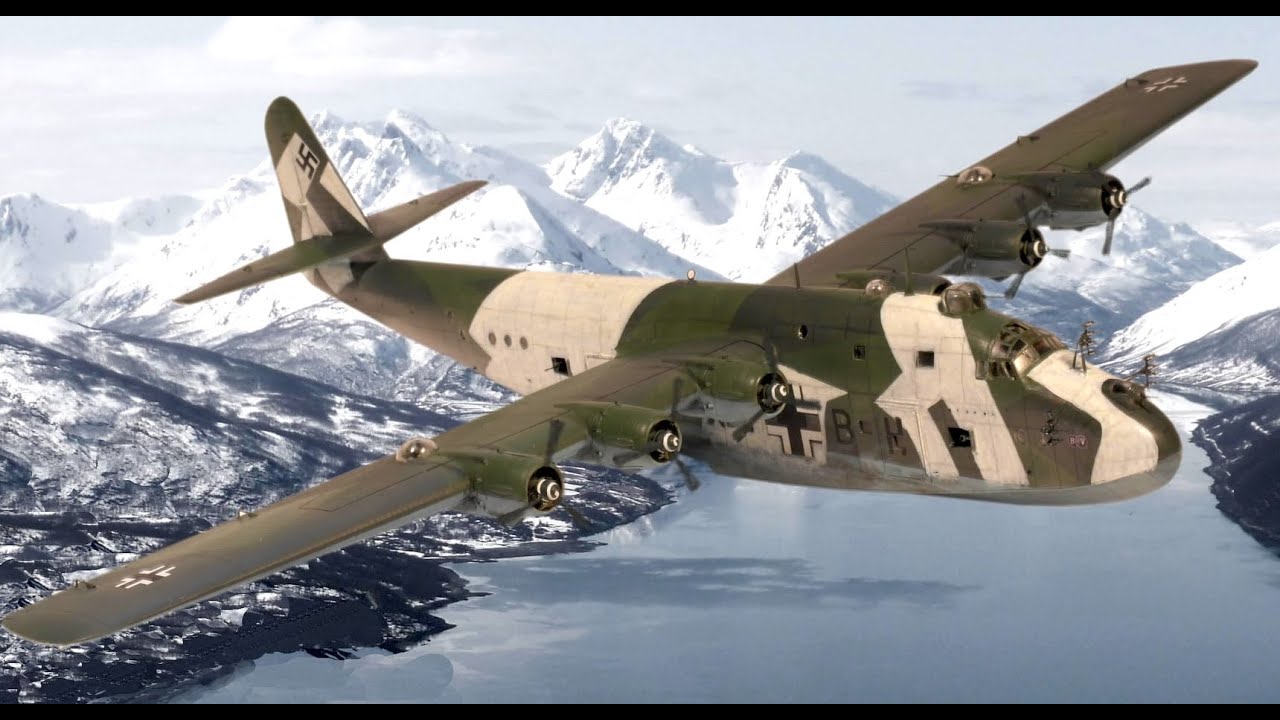
Kneemeyer was also told to arrange the Greenland flight, and he knew the right aircraft for the job. The favored plane was the Blohm & Voss BV 222, a massive six-engine flying boat operated by the special operations squadron KG 200. It was 37 meters long with a wingspan of 46 meters, could carry 92 fully armed troops, and had a ferry range of 6,100 kilometers. It could land on water, which meant it required no airfield in Allied-controlled territory.
Even with a full load, it was more than capable of reaching Greenland’s east coast. The Germans also knew Greenland well. They had maintained military weather stations on the island for most of the war, needed for accurate forecasts for European operations. Some stations had been evacuated by air, including one famous rescue involving a Junkers Ju 290 landing on sea ice to pick up stranded personnel.
A BV 222 had also flown over Greenland in July 1944 to drop spare parts to a weather station before flying home unmolested. The plan hit its first major obstacle on April 24, 1945, when Allied fighter bombers attacked the seaplane base at Seedorf near Plön. Royal Canadian Air Force Typhoons destroyed one BV 222 and likely damaged another. The planes had reportedly been fully stocked for the mission.
A third undamaged BV 222 was then worked on at Travermünde, and fresh supplies began to be gathered again, but this took time. Speer remained outwardly active as a minister while the plan was being put together. On April 23, he flew into Berlin, which was under direct Soviet attack, and met Hitler in the Führerbunker. He tried to persuade Eva Braun to leave the city.
Hitler asked Speer whether he should go south, and Speer replied that it seemed better for him to end it all in Berlin rather than at his weekend home in Bavaria. Hitler said that had been his feeling too. After leaving Berlin, Speer met Heinrich Himmler, who told him he was setting up a future government and offered Speer the position of minister of the interior. Speer suggested Himmler might want to say farewell to Hitler in person, pointing to his aircraft on the lawn.
Himmler declined, saying he was too busy and the journey too risky. The final collapse came quickly. On May 1, Grand Admiral Karl Dönitz told Speer that Hitler had died in Berlin the day before and that he was the new Reich president. The same day Berlin surrendered.
On May 2, the commanding officer at Travermünde called his pilots and ground crew together, told them the war was effectively over, handed out discharge papers, and dispersed them. The last BV 222 was allegedly demolished with explosives, ending any possibility of the Greenland escape. Speer joined the Dönitz government as minister of industry and production on May 5. When the government moved to Flensburg on the Danish border, Speer went with it.
He was arrested by British soldiers at Glücksburg Castle on May 23, 1945, the same day the Dönitz government was extinguished. He was later convicted at Nuremberg and served 20 years in Spandau Prison. Evidence for the Greenland plan includes Speer’s own accounts, Kernig’s 2003 testimony, fragments of wartime orders, and documented BV 222 operations at the end of the war. One archived mission order addressed to the commander of the Travermünde base still exists.
Whether the plan could have succeeded is a question historians still debate, but the evidence now suggests it was far more than a passing fantasy.