Born in 1986 in Blanding, Utah, Buu Nygren grew up in a tiny three-meter-wide home without electricity or running water, raised by a Navajo mother and a Vietnamese refugee father he never met. Few imagined he would one day become the youngest president in the history of the Navajo Nation. His mother, Charlotain, was just 15 years old when she gave birth to him. His father, a Vietnamese refugee who arrived in the United States after the fall of Saigon in 1975, was absent from his life.
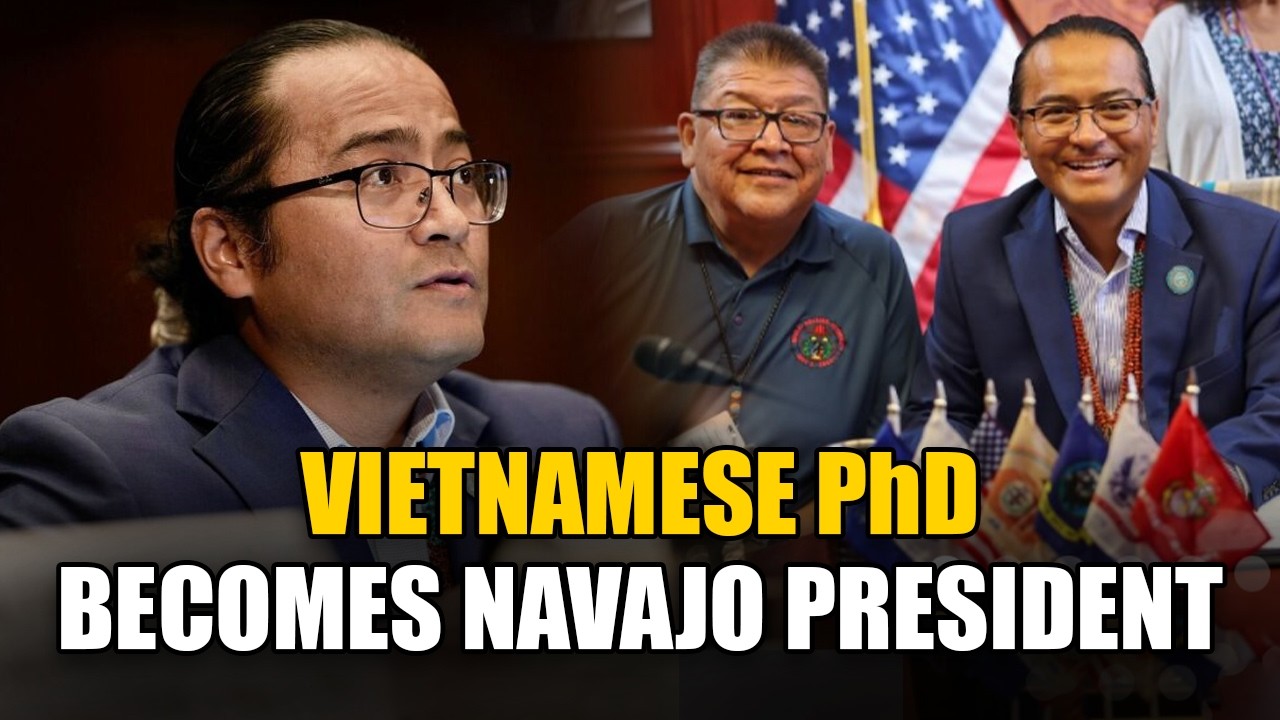
Despite never meeting his father, Nygren has always proudly embraced his Vietnamese heritage alongside his Navajo identity. Raised by his mother and grandmother in Red Mesa, Arizona, Nygren learned the Navajo language first, before English. The three generations lived together in a dusty, modest home with no modern utilities, but Nygren said the love in that household outweighed the poverty. He later recalled studying by oil lamp as simply a normal part of life.
To support the family, his mother handmade jewelry and sold it whenever possible. When money for food ran short, she sent young Buu into restaurants in Farmington to offer the pieces to diners. Repeated rejection taught him patience, humility, and perseverance. As he grew older, he also sold homemade baked goods across the reservation.
His mother insisted that money was never the greatest wealth and that education was the only true path to changing one’s future. She passed away just one year before her son reached the pinnacle of his career. Nygren often recalls her words: only you can help yourself, be self-reliant and independent, and always live with a kind heart. Nygren began washing dishes and taking various jobs at age 14 to help his family.
Reading was a major struggle, and he failed his graduation exam twice. Through persistence, he graduated first in his class from Red Mesa High School in 2006. He went on to earn a bachelor’s degree in construction management from Arizona State University. Having learned carpentry from his uncle, he worked directly on construction sites before supervising large-scale projects.
He later earned an MBA from Arizona State University and a doctorate in education from the University of Southern California. From 2010 to 2018, he worked as a project manager for a major construction company, overseeing schools, senior housing, and public infrastructure across the United States. He also became the first board chair of Change Labs, a nonprofit helping Navajo entrepreneurs launch businesses and strengthen local economies. Nygren has said he is grateful for his difficult upbringing, believing it built the resilience that prepared him for leadership.
He is married to Jasmine Blackwater, a former Arizona state legislator, and the couple lives in Red Mesa with their daughter. They practice different religions but deeply respect each other’s beliefs. Nygren continues to participate in traditional Navajo ceremonies while attending church every Sunday with his grandmother. In 2022, Nygren resigned from his role as business director for the Navajo Engineering and Construction Authority to run for president of the Navajo Nation.
On April 4, 2022, he rode a horse into Window Rock, the capital, to officially launch his campaign at the Veterans Memorial Park. In his opening remarks, Nygren said his family, education, and experiences growing up in poverty had prepared him to lead. He told the Navajo Times: “This is the moment I have been preparing for all my life. Without that dream, I would not be here today.
” He recounted seeing portraits of past Navajo presidents in his school and community buildings as a student, quietly promising himself he would one day serve in that same role. His vision centered on building a self-sufficient Navajo Nation where every citizen has a chance to succeed. A key priority was encouraging Navajo citizens living outside the reservation to return home to work and start businesses, warning that the language, culture, and traditions could gradually disappear otherwise. Having grown up without electricity or clean water, he pledged to expand infrastructure so tens of thousands of Navajo residents could finally access these basics.
He also focused heavily on addressing alcoholism in the community. Nygren revealed that his mother died from alcohol-related complications, a tragedy affecting many Navajo families. He advocated for economic development and job creation as a path to family stability. He also pledged to streamline government procedures and remove legal barriers that had slowed economic growth.
During the campaign, he drew international attention for opposing a proposal to send human remains to the Moon, arguing that the Moon is sacred in Navajo spirituality and many other Native American belief systems. Nygren won the 2022 presidential election with 34,890 votes. On January 10, 2023, he was officially sworn in as the youngest president in the history of the Navajo Nation. The Navajo Nation, based in Window Rock, Arizona, is the largest Native American territory in the United States.
Despite the forced displacement known as the Long Walk in 1864, the people have preserved their language, culture, and traditions. Many families still live in traditional hogan homes, maintaining a sacred connection to the land and valuing harmony. For Nygren, the journey from a small village without electricity or running water to the highest elected office in the Navajo Nation is more than a story of overcoming poverty. It is a reminder that a person’s starting point does not determine how far they can go.
Through education, perseverance, and a commitment to serving others, the man carrying both Vietnamese and Navajo heritage has written a remarkable new chapter in the history of his people.