Benjamin Siegel hated being called Bugsy, and he resented the nickname his whole life. He wanted to be seen as a businessman, a visionary, a Hollywood player in tailored suits who could reinvent himself far from the Brooklyn streets that made him. But on the night of June 20, 1947, nine bullets crashed through a Beverly Hills window and reminded everyone what he had always been: a gangster. The man popular history credits with inventing Las Vegas died just six months after his dream casino opened, murdered by the same mob that bankrolled his vision.
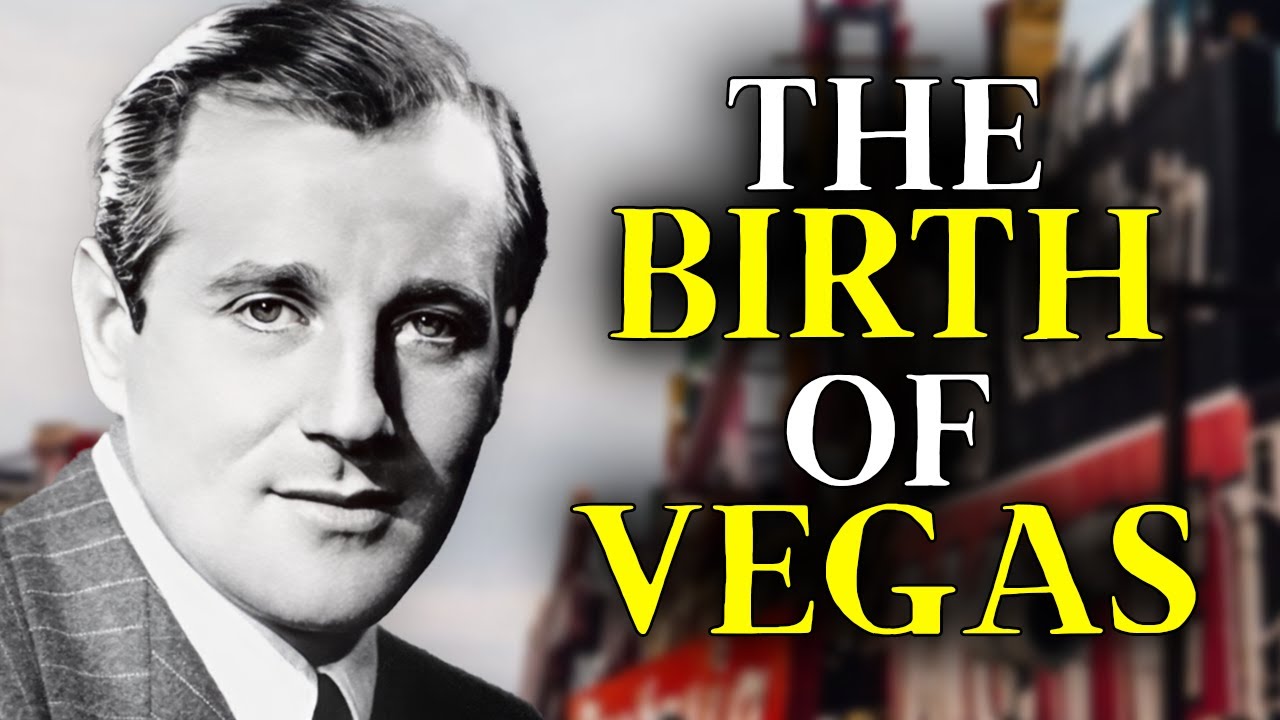
But the question rarely asked is whether Bugsy Siegel actually invented Las Vegas, or whether Las Vegas invented the myth of Bugsy Siegel. The popular story is a beautiful one. It holds that Siegel discovered Las Vegas in the 1940s, saw potential in an empty desert, and built the Flamingo Hotel and Casino, transforming a dusty gambling town into the entertainment capital of the world. It casts him as a visionary who died for his dream, killed by small-minded mobsters who simply could not see what he saw.
That story is mostly wrong. Siegel did not discover Las Vegas. The city had been a legal gambling destination since 1931. By the time he arrived in 1945, several casinos were already operating downtown, and the El Rancho Vegas and Hotel Last Frontier had opened on the Strip in 1941 and 1942 respectively.
Vegas was already happening before Bugsy ever got involved. He did not even conceive of the Flamingo. That vision belonged to Billy Wilkerson, a Hollywood nightclub owner who had launched construction before Siegel ever set foot on the property. What Siegel actually did was take over the project, spend mob money recklessly, and then get himself killed when the bills came due.
History remembers Bugsy as the man who invented Las Vegas for a simpler reason: he was the first gangster to die for it. His murder was spectacular and Hollywood-adjacent. Meanwhile, Meyer Lansky and the other mob bosses who actually ran the city for decades were smart enough to stay in the shadows while Siegel courted the spotlight. Benjamin Siegel was born on February 28, 1906, in Brooklyn, the son of poor Jewish immigrants from Ukraine.
By age 14, he was running protection rackets on Pitkin Avenue, where shopkeepers paid him a few cents to keep their pushcarts upright and refused him at their own risk. It was there he met Meyer Lansky, who was younger but possessed something Siegel lacked: a calculating mind. Where Siegel saw quick violence, Lansky saw long-term strategy. Together they formed the Bugs and Meyer Mob.
Siegel provided the muscle; Lansky provided the brains. But Siegel was never comfortable being just a gangster. He wanted legitimacy. He hated the nickname Bugsy because it came from the word “bugs,” slang for crazy.
Even other gangsters thought Siegel was too violent, too unpredictable. So he chased respect his whole life. He dressed impeccably, read books to improve his vocabulary, and when the opportunity came to move to California and rub shoulders with movie stars, he took it. He thought he could reinvent himself.
He was wrong. By the 1930s, the Bugs and Meyer Mob had graduated from street crime to bootlegging, gambling rackets, and enforcement for the National Crime Syndicate. Siegel was not just willing to kill; he was good at it. He did not hesitate, and he did not feel remorse.
Stories circulated about him personally carrying out dozens of murders. The exact number will never be known, but everyone who knew him agreed on one thing: cross Benjamin Siegel and you would disappear. He worked closely with Murder Incorporated, the syndicate’s contract killing operation, while also running what passed for legitimate businesses in gambling, narcotics, and labor racketeering. By 1937, the heat was rising in New York as Thomas Dewey cracked down on organized crime.
Meyer Lansky, always thinking ahead, saw opportunity on the West Coast, which was wide open and full of money, glamour, and an unorganized vice market. Siegel volunteered to go. Maybe he saw it as an escape from prosecution. Maybe he genuinely wanted a fresh start.
Or maybe he saw Hollywood and thought that was where he belonged. Siegel arrived in Los Angeles in 1937 with his wife Esta and their two daughters. He rented a mansion in Holmby Hills, bought custom suits on Rodeo Drive, joined exclusive country clubs, and began befriending movie stars. He was strikingly handsome: six feet tall, athletic, with intense blue eyes and a smile that could charm anyone.
He looked like he belonged on screen. He became friends with George Raft, the actor who specialized in playing gangsters, which was ironic because Raft was playing the part while Siegel was living it. He befriended Cary Grant, Clark Gable, and Jean Harlow, dated starlets, and attended premieres. But Siegel was not in California to make movies.
He organized Los Angeles gambling rackets, took over bookmaking and wire services, established drug smuggling routes from Mexico, and muscled in on the Teamsters Union. Violence worked in Hollywood just like it worked in Brooklyn. By the early 1940s, he was rich and had achieved surface respectability, but underneath he remained a gangster, still violent, still answering to Lansky and the syndicate. In 1945, Siegel met two things that would define the rest of his life: Virginia Hill and the Flamingo.
Virginia Hill was trouble, and everyone said so. Born in Alabama, she had worked her way through the Chicago mob as a courier, carrying cash between cities and sleeping with powerful men. She was beautiful, smart, and had a temper that matched Siegel’s. They met at a Hollywood party, and the chemistry was instant, toxic, and all-consuming.
Within months, Siegel had left his wife and moved in with Hill. Some say she helped him launder money; others say she encouraged his worst impulses. What is certain is that she understood Siegel in ways his wife never could. She knew he was a gangster and did not care.
Then Billy Wilkerson showed up with plans for a casino in the desert. Wilkerson owned three of Hollywood’s hottest nightclubs and understood luxury and entertainment. His vision was a casino resort in Las Vegas that would bring Hollywood sophistication to the desert. He had bought land and started construction, calling it the Flamingo.
Siegel saw the plans and saw something bigger: his chance to build something permanent that would put his name on the map, not as a gangster but as a builder and visionary. To understand what Siegel tried to build, you have to understand what Las Vegas was in 1945. It was a dusty railroad town with about 8,000 residents, legal gambling since 1931, and a few small casinos downtown where cowboys blew their paychecks on craps and cheap whiskey. Wilkerson wanted to build a real resort: luxury rooms, a world-class restaurant, a showroom with top entertainment, and a casino that felt like Monte Carlo rather than a cowboy saloon.
The problem was that Wilkerson was running out of money. Construction costs were spiraling, wartime shortages made materials scarce and expensive, and he needed capital. In 1945 Las Vegas, that meant the mob. Lansky saw the potential immediately: legal gambling, clientele flying in from California, and no real competition.
It was exactly what the syndicate loved, a legitimate business on the surface with mob control underneath. Lansky sent Siegel to investigate. Siegel walked the construction site in spring 1945: six acres of dirt and concrete on Highway 91, four miles south of downtown, nothing but desert and dreams. The foundation was poured and some walls were up, but Wilkerson did not have the money to finish.
What happened next depends on who is asked. Wilkerson claimed Siegel muscled him out. Siegel claimed Wilkerson invited him in, desperate for capital. What is certain is that by summer 1945, the syndicate had invested and Siegel was running the project.
And Siegel did not just want to finish Wilkerson’s vision; he wanted to exceed it. He expanded the plans with bigger rooms and more luxury. The casino would have the latest slots and finest gaming tables. The showroom would seat 400.
There would be a pool, a golf course, and a health club. Every room would have its own bathroom, which was revolutionary for 1945. He imported palm trees and installed rose gardens and manicured lawns in the middle of the Mojave Desert. Siegel obsessed over every detail.
He flew to Mexico to source tiles, hired craftsmen from Los Angeles, and demanded perfection. Perfection was expensive. The original budget was $1 million. By the end of 1945, they had spent $2 million and were not half finished.
By spring 1946, the tab hit $3 million. Siegel kept spending, and the syndicate kept sending money, but Lansky was asking questions about where the money was going. Part of the cost was legitimate: wartime inflation, material shortages, and Siegel’s luxury details. But part was theft.
Siegel and Virginia Hill were skimming, buying materials twice, inflating invoices, and routing money through shell companies. They were stealing from the mob, and they were not careful about it. There is a story about Siegel having the same marble tiles shipped multiple times, ordering them, rejecting them for minor imperfections, sending them back, reordering the same tiles, and billing the syndicate again. Meanwhile, Hill deposited hundreds of thousands of dollars in Swiss banks.
Lansky knew, of course he knew. But he had invested too much to walk away. The syndicate had poured millions into the Flamingo, and if they killed Siegel before the casino opened, that money would be gone forever. So Lansky made a calculation: let Siegel finish, let the casino open, and see if it makes money.
If it does, everyone gets paid. If it does not, Siegel has a problem. By fall 1946, Siegel had spent $6 million of mob money on a casino that had not opened and had not made a single dollar. In 1946, that sum could build ten luxury hotels, finance a major studio picture, or buy half of downtown Las Vegas.
The syndicate was done waiting. They told Siegel to open the Flamingo, ready or not, and prove it works or face the consequences. Siegel set the date for December 26, 1946, the day after Christmas. It was the biggest mistake of his life.
Lansky was furious, as were Lucky Luciano and Frank Costello. Every major mob boss who had invested was demanding answers. Where did the money go? When would they see returns?
Siegel tried to explain, citing wartime inflation, material shortages, and the cost of luxury, but the numbers did not lie. Six million dollars for a 92-room hotel was insane. Everyone suspected the same thing: Siegel was stealing. Virginia Hill had power of attorney over the Flamingo’s accounts.
She signed checks, authorized payments, and moved money between banks. Somewhere in those transactions, hundreds of thousands disappeared, some to legitimate suppliers, some to Swiss banks, some into real estate under false names. Siegel and Hill were not subtle. They bought a Beverly Hills mansion and flew to Europe on spending sprees while telling the syndicate they needed more money to finish.
The audacity was breathtaking. Stealing from Meyer Lansky, the most calculating mobster in America, and from Lucky Luciano, the man who had organized the National Crime Syndicate, was stealing from men who had killed for far less. But Siegel believed he was untouchable. He had been Lansky’s partner since they were teenagers, and he believed that history meant protection, that Lansky would give him the benefit of the doubt.
Siegel was wrong. Lansky did not have friends; he had business partners. And when a partner became a liability, Lansky was ruthless. The only reason Siegel was still breathing by December 1946 was that killing him before the opening meant losing the entire $6 million.
But if the casino failed, if it did not generate revenue immediately, Siegel was a dead man walking. The construction disasters kept piling up. In the rush to meet the deadline, contractors cut corners. Wiring was faulty, plumbing leaked, the kitchen was unfinished, many rooms were not ready, and the landscaping was incomplete.
Siegel pushed forward anyway. He sent invitations to Hollywood’s elite, booked Jimmy Durante as opening night headliner, and arranged Xavier Cugat’s orchestra. He printed programs and hired staff, ignoring every warning sign that this was about to be a disaster. The mob bosses sent representatives to watch the opening.
Mo Sedway and Gus Greenbaum arrived from Phoenix, and Charlie Fischetti came from Chicago. These were not social calls; they were there to audit Siegel’s work and report to Lansky. But Siegel was confident, walking through the unfinished casino in his custom tuxedo, preparing for the moment the doors opened and proved his vision was right. Because if the Flamingo failed, if opening night was a disaster, then Siegel had spent $6 million of mob money on a dream that did not work.
And the mob did not forgive that kind of mistake. They did not fire you or sue you. They killed you. On December 26, 1946, the Flamingo was as ready as it would ever be.
Half the rooms were unfinished, so Siegel closed them off. The landscaping was still dirt and debris, so he hung strings of lights. The restaurant kitchen was not operational, so he brought in caterers from Los Angeles. Everything was improvised, rushed, held together with hope and desperation.
Then nature intervened. A storm rolled in from California, not a drizzle but a full desert downpour. Rain hammered the unfinished buildings, wind tore at temporary structures, and the roads, mostly unpaved in 1946 Vegas, turned to mud. Siegel had chartered planes to fly guests from Los Angeles, but the planes could not fly.
He had arranged limousines for Hollywood stars, but the limousines got stuck in the mud on Highway 91. Clark Gable did not show. Cary Grant did not show. Lana Turner did not show.
George Raft came, along with a handful of lesser celebrities, but the glamorous Hollywood crowd that was supposed to give the Flamingo legitimacy stayed home. Some stayed because of the weather, some because they had heard the place was not finished, and some because they did not want to be photographed at a gangster’s casino. The guests who did arrive found a beautiful casino attached to chaos. The gambling floor looked spectacular, with chandeliers, decor, and attention to detail.
But step outside and you were standing in mud. Try to check in and you might be told your room was not ready. Jimmy Durante performed and the audience loved him. Xavier Cugat’s orchestra played and people danced.
The casino had gamblers, money changing hands, and the energy of a working operation. But here is what Siegel did not understand: the house is supposed to win. That is the whole business model. You design games so that statistically the casino takes more than it pays out.
But on opening night, the house lost. Big high rollers hit winning streaks at craps. Card players cleaned up at blackjack. Slots paid out more than they took in.
By night’s end, the Flamingo was down over $100,000. The syndicate representatives watched in horror. Sedway calculated the losses and knew exactly what they meant. This was not just a bad opening night; this was proof that Siegel had built a casino that could not make money.
Siegel tried to spin it. The weather killed turnout. The Hollywood crowd would come next time. The casino just needed word of mouth.
But two weeks later, the Flamingo was still hemorrhaging money. Gamblers were not coming, hotel rooms sat empty, and overhead, salaries, entertainment costs, and maintenance were bleeding the casino dry. On January 18, 1947, less than a month after opening, Siegel closed the Flamingo. Temporarily, he claimed, to finish construction and prepare for a grand reopening.
The truth was simpler: the casino had failed. Opening night had been a disaster, and now Siegel had to convince Lansky to give him one more chance. They did, but only one. The Flamingo reopened on March 1, 1947, and this time it had to work because if it did not, Siegel was a dead man.
The second opening went better, not great but better. The weather cooperated, more rooms were finished, and the Hollywood crowd started showing up. Slowly, the Flamingo began generating revenue, but it was not enough. Operating costs were too high and debt service was too crushing.
The casino needed tens of thousands of dollars every single night just to break even, and most nights it did not hit that number. Siegel fought for every dollar. He slashed budgets, fired staff, and personally walked the casino floor watching for cheats, calculating odds, and trying to figure out why the Flamingo was not printing money. Then, in late May 1947, something remarkable happened.
The Flamingo turned a profit, a real, measurable profit. The casino had a good week, then another, then another. The numbers started working. Siegel was elated.
This was vindication. He had spent $6 million, endured the mob’s suspicion, and survived the disastrous opening, and now, finally, the Flamingo was working. He flew back to Los Angeles in mid-June to spend time with Virginia Hill. She had been in Europe for weeks, moving money and setting up bank accounts.
Some said she knew what was coming. Some said she stayed away deliberately. On the evening of June 20, 1947, Siegel was at Hill’s mansion at 810 North Linden Drive in Beverly Hills. He sat in the living room with his associate Allen Smiley, reading the Los Angeles Times.
Hill’s brother Chick was in the house. It was a quiet Friday evening. At 10:45 that night, someone stood in the flower bed outside the window, raised a . 30-30 carbine, and fired nine shots through the glass.
Four bullets hit Siegel. One struck his right cheek and exited through the back of his neck. Another entered his lungs. Two more hit his torso.
The bullet to his face was devastating, destroying his right eye and sending it flying 15 feet across the room, where it landed on the dining room floor. Siegel died instantly. He was 41 years old. Allen Smiley was sitting next to him.
Somehow, miraculously, Smiley was not hit. Not a single bullet touched him. He was sitting less than three feet away when nine shots came through the window, and he walked away without a scratch. That detail tells everything about who ordered the hit.
This was not random and it was not a burglary gone wrong. This was a professional hit by someone who knew exactly what they were doing, someone who could put four bullets into Siegel while leaving the man next to him completely unharmed. The Los Angeles Police Department investigated. They questioned Smiley, Virginia Hill, and everyone near the mansion that night.
They found nothing: no witnesses, no evidence, no suspects. But everyone in organized crime knew exactly what had happened. Lansky had ordered the hit. The syndicate had made the decision.
Siegel had stolen from the mob, wasted $6 million, and even though the Flamingo was finally turning a profit, the bosses decided he had to go. There is a story that on the night Siegel died, Mo Sedway and Gus Greenbaum walked into the Flamingo in Las Vegas and announced to the staff that they were taking over. They had been waiting for word from Los Angeles, and when the call came, they simply assumed control. The timing is what makes it tragic.
Siegel died in June 1947, just weeks after the Flamingo finally started making money. If he had been more patient, if he had stolen less, if he had survived just a few more months, the Flamingo’s success might have saved him. But the mob does not work on “maybe. ” They work on ledgers, and Siegel’s ledger showed $6 million spent, months of delays, a disastrous opening, and evidence of embezzlement.
That was enough. Lansky never admitted to ordering the hit, and he never spoke publicly about Siegel’s death. But years later, Lansky told an associate that Siegel had been his friend, but business was business. When someone costs the syndicate millions, friendship does not matter.
The shooter was never identified. Some say it was Frankie Carbo. Others claim it was Eddie Cannizzaro. A few believe it was someone from out of town brought in specifically for the job.
Whoever it was got paid, got out, and was never caught. Siegel was buried at Hollywood Forever Cemetery on June 25, 1947. Fewer than 100 people attended. The Hollywood stars who had partied with him stayed away.
The mob bosses who had financed his dream did not come. His tombstone read simply: “Benjamin Siegel, beloved father and brother. ” No mention of Las Vegas. No mention of the Flamingo.
Just a name and an alias, because Bugsy Siegel was not beloved by the people who mattered. He was a problem that got solved. Here is the cruelest twist in Siegel’s story. After he died, the Flamingo became a massive success.
Under Greenbaum and Sedway’s management, the casino started making serious money. Within a year, it had recouped the entire $6 million investment. Within two years, it was one of the most profitable casinos in Las Vegas. The vision Siegel died for worked perfectly once he was gone.
The Flamingo expanded, adding a second tower in 1950 and a third in 1953. By the 1960s, it was one of the largest and most famous casinos on the Strip. Its success proved Siegel had been right about one thing: Las Vegas could support luxury gambling. People would fly in from California, pay premium prices, and gamble in elegant surroundings.
What Siegel was wrong about was thinking he could build it himself, thinking he could steal from the mob, thinking his friendship with Lansky would protect him, and thinking vision alone was enough. So did Bugsy Siegel invent Las Vegas? No. Legal gambling existed there long before he arrived, and other casinos were already operating when he took over the Flamingo.
Billy Wilkerson deserves credit for the original vision of a luxury casino resort. What Siegel did was accelerate the transformation. The Flamingo, despite its disastrous opening, proved that the big money was in luxury rather than western-themed motor lodges. It proved Las Vegas could compete with Havana and Monte Carlo.
It proved that if you built something spectacular, people would come. Within five years of Siegel’s death, the Strip exploded. The Desert Inn opened in 1950, the Sahara and Sands in 1952, and the Dunes in 1955, each one bigger and more luxurious than the last, each following the blueprint Siegel had created. But all those successful casinos were run by mob-connected operators who learned from Siegel’s mistakes: do not steal from your investors, do not go wildly over budget, and do not court publicity.
Stay in the shadows and let the casino be the star. Lansky and the syndicate controlled Las Vegas for the next three decades, skimming millions and laundering money through Vegas properties, building an empire exactly like Siegel envisioned, except smarter, quieter, and more profitable. They did it all without him. There is a plaque at the Flamingo today marking where the original building stood.
Tourists take pictures and ask about Bugsy Siegel. Staff tell sanitized stories about the visionary gangster who built Vegas. But the truth is darker. Siegel did not invent Las Vegas.
He was a violent criminal who stole mob money, built a casino that initially failed, and got murdered for it. The fact that the Flamingo succeeded after his death does not make him a visionary. It makes him a cautionary tale. What remains of Siegel is not the Flamingo, which has been rebuilt so many times that nothing from 1947 exists anymore.
It is not the mansion on Linden Drive, long since demolished. It is not even the legend, twisted and romanticized beyond recognition. What remains is a question: Was Siegel a tragic visionary who died before seeing his dream fulfilled, or was he just another mobster who got greedy and paid the price? Maybe he was both.
A killer who wanted to build something beautiful. A criminal who dreamed of legitimacy. A gangster who thought he could escape his past by transforming the desert. He failed.
But the desert transformed anyway. And that is the real story of Las Vegas: not the men who built it, but the city that consumed them.