On the morning of November 14, 1957, New York State Police Sergeant Edgar Croswell noticed a black Cadillac with California plates turning onto McFall Road outside Apalachin, a village of 277 people in New York's Southern Tier. He canceled his lunch, called for backup, and set a roadblock at the only exit.
Because of that roadblock, dozens of men in silk suits scattered into the woods, and the American public learned that the Mafia was not a myth.
In the chaos of that afternoon, one man stayed calm. He walked slowly toward a trooper with his hands visible and his face showing nothing. His name was Russell Bufalino.
He was 54 years old, stood 5-foot-8, and weighed 160 pounds. For the next 30 years, he would control one of the most powerful and least visible criminal networks in the United States without ever raising his voice or making a headline.
Russell Alfredo Bufalino was born on September 29, 1903, in Montedoro, Sicily, a limestone village 12 miles inland from the southern coast, where the soil turned to dust in summer and families measured wealth in goats. His father, Salvatore, worked stone. His mother bore seven children.
In 1906, when Russell was three, the family boarded a steamer in Palermo and arrived at Ellis Island on October 12. Immigration logs list their destination as Pittston, Pennsylvania, a coal town in the Wyoming Valley, where Sicilian labor was cheap and mine owners did not ask questions.
The Bufalinos settled on South Main Street in a rowhouse with four rooms and no indoor plumbing. Salvatore found work in the mines. Russell attended school through the eighth grade, learned English fast, and at 14 took a job sorting coal on a picking table for $9 a week.
The anthracite seams ran deep. The air below ground was black with dust. Men died in rockfalls, explosions, and slow suffocation from silicosis. Russell watched and learned that the real money moved above ground, in the pockets of union organizers, bootleggers, and men who controlled the flow of labor and liquor.
By 1920, Prohibition had turned Pennsylvania into a pipeline. Canadian whiskey came down through Buffalo. Homemade wine moved out of basements in Pittston and Scranton, and trucking routes ran straight to New York and Philadelphia.
Russell was 17. He began driving loads at night, small runs at first, then regular routes. He worked for Angelo Paley, a produce dealer who controlled bootlegging in Pittston and reported to the Buffalo family.
Russell drove clean. He did not drink, did not brag, and did not get pulled over. He understood that silence was a currency.
By 1925, he was managing distribution for Paley, coordinating drop points, paying off local police, and keeping perfect books that lived only in his head. He married a woman named Carrie Sciandra in 1928.
Her cousin was John Sciandra, a rising figure in the Pennsylvania rackets who controlled slots, numbers, and labor rackets across Luzerne County. The marriage tied Russell into a network that stretched from Scranton to Detroit. He never spoke about the connection, but from that year forward his income climbed and his arrest record stayed nearly blank.
In 1933, Prohibition ended. The trucking stayed. Russell bought a jewelry store on Pittston's main street as a front and a garment business in Kingston that handled nothing but invoices. The real work was labor.
Northeastern Pennsylvania sat at the hinge of three industries: coal, textiles, and trucking. All three depended on the Teamsters. Russell understood that controlling a union local was better than owning a casino. Casinos drew attention. Union posts were invisible.
He became close to William Bufalino, no blood relation, a Detroit lawyer who represented Teamsters locals and knew Jimmy Hoffa. Through William, Russell met Hoffa in 1939 at a union conference in Chicago.
Hoffa was 26, compact, and fast-talking, running Joint Council 43 in Detroit and fighting company goons with tire irons and baseball bats. Russell was 36, quiet, already overseeing loans and gambling across five Pennsylvania counties.
The two men spoke for 20 minutes. Hoffa later told an aide, "That guy listens more than he talks. That's the dangerous kind." Because of that meeting, a partnership began that would shape the Teamsters and the Mafia for the next 35 years.
Russell's method was simple. He loaned money to small trucking companies at 6 percent weekly interest, a rate that compounded to 312 percent annually. When owners could not pay, he took a stake in the business, installed a manager, and folded the company into Teamsters Local 229 in Pittston, which his cousin William Sciandra controlled.
The local grew from 340 members in 1940 to over 2,000 by 1950. Pension funds flowed into regional accounts. Russell directed a portion into legitimate investments, shopping centers, and motels, and a portion into loans for other union locals, casino projects, and eventually Las Vegas.
He never signed a contract. He never appeared on a corporate filing. His name surfaced in FBI reports as a suspected associate, but bureau files in the 1940s were thin, disorganized, and distracted by communist investigations.
Russell drove a 1947 Buick. He lived in a modest house on Doran Street in Kingston. He played bocce on Sundays and brought bread to the church rectory. Neighbors knew him as a quiet businessman who helped people with loans when the banks said no.
In 1956, John Sciandra died of a heart attack at age 68. The Pittston family, a Mafia crew that controlled northeastern Pennsylvania and reported loosely to the New York Genovese family, needed a new boss.
The membership was small, perhaps 25 made men, but the territory was rich: coal, garment factories, jukeboxes, vending machines, and union locals tied to the Teamsters. A sit-down convened in Pittston. Russell was proposed. He accepted without a speech.
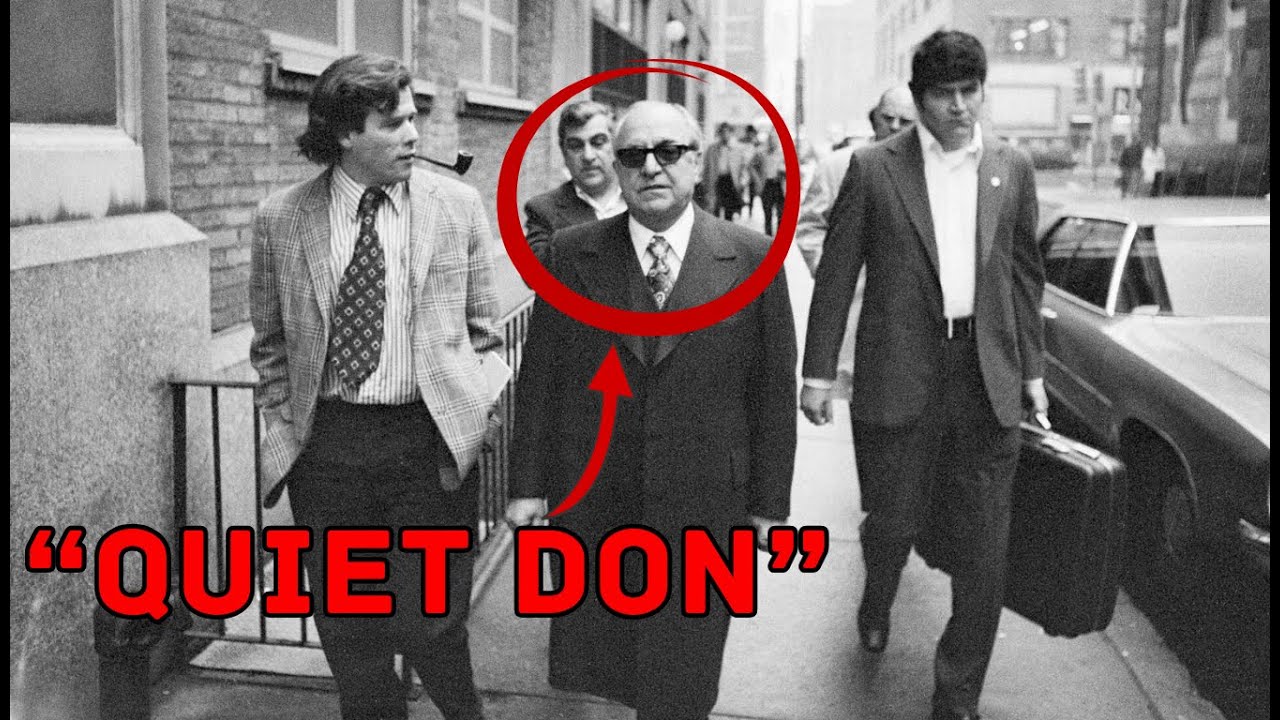
He was 53 years old. He had never served a day in state prison. His business interests were diversified, and his political connections ran through both parties in Luzerne and Lackawanna counties. He moved into the role the way he did everything else, without announcing it.
The family's operations continued without interruption. Loan rates stayed the same. Collections remained polite until they were not. No bodies turned up in ditches. The structure was so quiet that the FBI did not confirm Russell as boss until 1959, two years after he took the seat.
On November 14, 1957, Russell received a call from Joseph Barbara, a beer distributor in Apalachin, New York, 70 miles northwest of Pittston. Barbara was hosting a meeting. The agenda was leadership transitions after the murder of Albert Anastasia in New York and the attempted hit on Frank Costello, both in October.
The meeting was planned as a one-day summit, quiet, with no agenda on paper. Russell drove north with two associates in a black Chrysler. They arrived at Barbara's estate, a 58-acre property with a stone house, a barbecue pavilion, and a gated drive, shortly after 11 a.m.
Cars filled the driveway and lined the road. Sergeant Croswell, who had been watching Barbara for months on suspicion of bootlegging, saw the traffic and called for backup. At 12:40, troopers set up a roadblock at the base of McFall Road. At 12:50, someone inside spotted the police.
Panic moved through the house. Men ran for the woods. Some were overweight, in their 60s, wearing leather-soled shoes. Troopers chased them into the trees and swamps. Fifty-eight men were stopped, identified, and questioned.
Russell walked out calmly, handed over his identification, and said he had come to visit a sick friend. His shoes were clean. His story was polite and useless.
Because of that afternoon, the Apalachin meeting became the first public proof of a national crime syndicate. Because of that exposure, the FBI launched the Top Hoodlum Program in 1958, assigning agents in every field office to track Mafia leaders. Because of that program, Russell Bufalino's life would be documented, recorded, and slowly dismantled over the next 30 years.
But in 1957, Russell returned to Pittston and continued as before. He was indicted for obstruction in 1959 for refusing to testify before a grand jury about Apalachin. He served four years in federal prison in Lewisburg, Pennsylvania, from 1960 to 1964.
He read, played cards, and ran family business through messages passed by attorneys and visitors. He never complained. When he was released in March 1964, he was 60 years old. His hair was gray. His health was good. His organization had not missed a payment or lost a racket. He resumed control as if the four years had been a weekend.
During Russell's incarceration, Jimmy Hoffa had become the most powerful labor leader in the United States. Hoffa was elected president of the International Brotherhood of Teamsters in 1957, controlling a union with 1.7 million members and a pension fund worth over $400 million.
The Central States Pension Fund, managed by Teamsters trustees in Chicago, became the largest source of capital for mob-controlled casinos in Las Vegas. Hoffa directed loans to the Stardust, the Fremont, the Dunes, and Caesars Palace. In return, cash from casino counting rooms flowed back to union officials and their silent partners.
Russell Bufalino was one of those partners. He never visited Las Vegas. He never walked a casino floor. His share arrived in cash delivered by couriers to Pennsylvania, usually in amounts under $10,000 to avoid reporting thresholds.
FBI wiretaps from 1963 to 1965 picked up references to "the old man" and "the Pennsylvanian" in conversations between Hoffa and Anthony Giacalone, a Detroit mobster who controlled Teamsters Local 299. The taps were legal under the Omnibus Crime Control Act, but court rules in the 1960s were loose and transcripts were often incomplete. Still, the pattern was clear. When Hoffa needed help with a problem, a rival, or a loan, he called Russell.
In 1964, Hoffa was indicted on two federal charges: jury tampering in Tennessee and fraud involving the Teamsters pension fund in Chicago. The cases were built by Robert Kennedy, who had pursued Hoffa since the McClellan committee hearings in 1957.
The trial in Tennessee began in January 1964. Hoffa was convicted on March 4 and sentenced to eight years. The Chicago trial began in April. Hoffa was convicted on July 26 and sentenced to five years, to run consecutively. He appealed both verdicts.
While the appeals moved through the courts, Hoffa remained free on bond and continued to run the union. He grew paranoid. He believed Kennedy had placed informants inside his inner circle. He was right. Edward Partin, a Teamsters official in Baton Rouge, was feeding information to the FBI.
Hoffa began meeting his closest associates in moving cars, in public parks, and in hotel rooms swept for bugs. One of those associates was Frank Sheeran, a Teamsters organizer from Wilmington, Delaware, a truck driver who had grown close to Hoffa and closer to Russell Bufalino.
Frank Sheeran was born in 1920 in Darby, Pennsylvania, the son of Irish immigrants. He drove delivery trucks in Philadelphia, served in the 45th Infantry Division in World War II, and saw action in Italy, France, and Germany. He came home in 1945, returned to trucking, and joined Teamsters Local 107 in Philadelphia.
In 1955, he was recruited by Russell Bufalino to handle enforcement work, collections, and labor disputes that required physical persuasion. Sheeran was 6-foot-4, weighed 230 pounds, and did not ask questions. Russell introduced him to Hoffa in 1957. Hoffa liked him.
By 1965, Sheeran was a business agent for Local 326 in Wilmington and was traveling frequently to Detroit, Chicago, and Miami on Teamsters business that had nothing to do with trucking. FBI surveillance logs from 1967 place Sheeran and Bufalino together at a restaurant in Kingston on at least six occasions. The conversations were not recorded, but the frequency suggested trust.
In 1967, the Supreme Court upheld Hoffa's convictions. On March 7, 1967, Hoffa entered Lewisburg Federal Penitentiary to begin serving 13 years. Russell Bufalino had served time in the same facility. The warden was familiar. The guards were locals, some with Sicilian last names, some who had grown up in Pittston or Scranton.
Hoffa was placed in a medium-security block. Russell made sure Hoffa was comfortable, arranging for certain privileges, extra commissary access, and protection from inmate violence. Hoffa stayed in contact with the union through visits and letters, but the Teamsters executive board was required to name an acting president.
They chose Frank Fitzsimmons, a loyal lieutenant who had worked with Hoffa since the 1940s. Fitzsimmons was seen as a placeholder. He was not. By 1969, Fitzsimmons had consolidated control, made alliances with rival Teamsters factions, and began distancing himself from Hoffa's policies. Russell saw the shift. Hoffa did not at first.

In December 1971, President Richard Nixon commuted Hoffa's sentence on the condition that Hoffa refrain from union activities until 1980. The commutation was arranged through Charles Colson, Nixon's special counsel, with support from Teamsters leadership and implied Mafia backing.
Hoffa was released on December 23, 1971. He returned to Detroit, moved into a lakefront home in Lake Orion, and immediately began fighting the restriction. He filed lawsuits, lobbied the Department of Justice, and worked behind the scenes to undermine Fitzsimmons and reclaim the Teamsters presidency.
Fitzsimmons did not want him back. Neither did the mob bosses who had profited from Fitzsimmons's compliant management of the pension fund. Hoffa was loud, unpredictable, and angry. He threatened to expose the pension fund loans and the cash skimming if he was not reinstated. Russell Bufalino counseled patience. Hoffa ignored him.
By the summer of 1975, Hoffa's campaign to return to the Teamsters had become a problem. He was giving interviews, attacking Fitzsimmons, and hinting at cooperation with federal investigators if his restriction was not lifted.
On July 30, 1975, Hoffa told his wife Josephine that he was meeting Anthony Giacalone and Anthony Provenzano, a New Jersey Teamsters leader with ties to the Genovese family, at the Machus Red Fox restaurant in Bloomfield Township, Michigan, at 2 p.m. that afternoon.
Hoffa was declared legally dead on July 30, 1982, exactly seven years after his disappearance. His wife received death benefits. The Teamsters moved on. Fitzsimmons remained president until his death in 1981. The Central States Pension Fund continued to loan money to Las Vegas casinos until federal oversight shut down the practice in the 1980s.
Russell Bufalino continued to operate in Pennsylvania as if nothing had changed. He managed his businesses, attended family functions, and met with associates in diners and private homes. FBI surveillance remained constant. Agents followed him to doctor appointments, weddings, and funerals. They photographed license plates, recorded phone numbers, and built files that eventually ran to thousands of pages.
But surveillance is not evidence. For years, Russell stayed ahead of prosecution. A break came in 1977. Federal investigators, using new RICO statutes passed in 1970, began building cases against Mafia families as criminal enterprises rather than prosecuting individual crimes.
The Racketeer Influenced and Corrupt Organizations Act allowed prosecutors to charge leaders with conspiracy and use evidence from decades of activity, even if the individual acts were beyond the statute of limitations.
Russell was indicted in 1977 on charges of conspiracy to murder a witness, extortion, and labor racketeering. The case involved a jewelry store owner named Jack Napoli who had testified against a Bufalino associate in a fraud trial. Napoli disappeared in August 1976. His body was never found. Prosecutors argued that Russell ordered the killing to intimidate other potential witnesses.
The trial began in 1978 in federal court in Pittsburgh. The government's case relied on informant testimony, wiretaps, and financial records. Russell's attorney argued that the evidence was circumstantial and that Russell had no direct involvement in violence. The jury deliberated for four days.
On May 12, 1978, they convicted Russell on conspiracy and extortion charges, but acquitted him of murder. He was sentenced to 10 years in federal prison. He was 74 years old.
Russell entered the Federal Correctional Institution in Danbury, Connecticut, in June 1978. He served quietly. He had a heart condition and was placed in a medical unit. He read newspapers, received visits from family, and gave no interviews.
In 1981, while still in prison, he was indicted again, this time in New York on charges related to a labor racketeering scheme involving Teamsters locals in New York City. The trial took place in 1982. Russell, now 79, appeared in court in a wheelchair.
He was convicted on April 20, 1982, and sentenced to an additional 10 years, to run consecutively. His attorneys filed appeals on health grounds. The appeals were denied.
Russell remained in custody, transferred between medical facilities as his health declined. By 1989, he was confined to a nursing unit in the federal prison in Leavenworth, Kansas. He suffered two strokes. His speech was impaired. His weight dropped to under 120 pounds.
On February 25, 1994, at the age of 90, Russell Bufalino died of natural causes in a locked hospital ward. No public funeral was held. His death was noted in a three-paragraph obituary in the Scranton Times. The FBI closed his file.
His estate was valued at under $200,000, most of it in a Kingston bank account. The house on Doran Street was sold for $48,000. The jewelry store had closed in 1985. There were no Mafia ceremonies, no banners, no war for succession. The organization he had led simply dissolved, absorbed into other families or retired into legitimate fronts that required no management.
Russell Bufalino's career spanned 60 years. He was arrested six times, convicted twice, and served a total of 14 years in prison. He never spoke to the press. He never wrote a memoir. He attended no public events.
Yet his influence shaped the American labor movement, the structure of organized crime in the Northeast, and the flow of capital into Las Vegas during its fastest growth period. His method was patience, his weapon was access, and his protection was silence.
He understood that power is most effective when it is invisible, that violence is a last resort and a sign of failure, and that the men who shout are the first to fall. He built a network that operated without headlines, without spectacle, and without the chaos that destroyed so many of his peers.
He lived long enough to see the RICO cases dismantle the families around him: the Genoveses, the Gambinos, the Colombos, and the Luccheses. He watched as informants, wiretaps, and federal sentences turned Mafia leadership into a cycle of indictments and plea deals. He never cooperated, never turned, and never gave the government a single name.
The disappearance of Jimmy Hoffa remains officially unsolved. The FBI continues to classify the case as active. In 2013, agents excavated a field in Oakland County, Michigan, based on a tip. They found nothing. In 2019, they searched beneath a New Jersey dump site. Again, nothing.
The file is thousands of pages. The theories are dozens, but the evidence ends where it started, in a parking lot in Bloomfield Township on a hot afternoon in July.
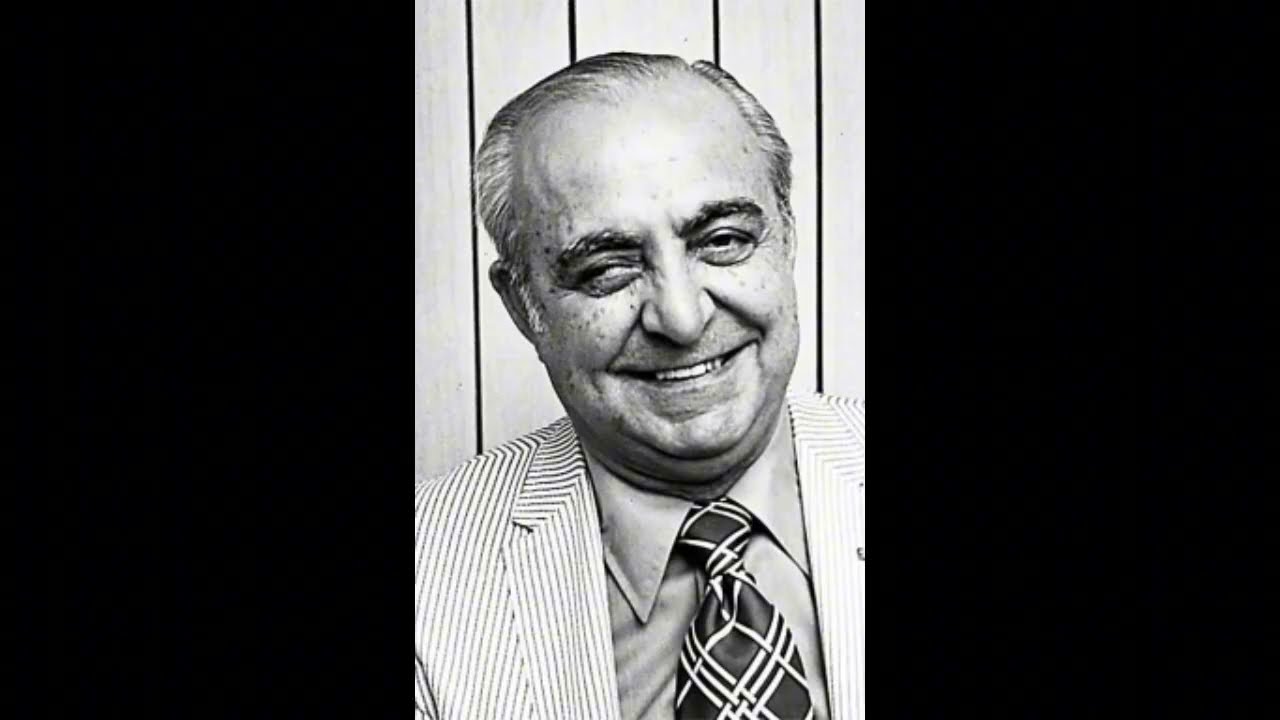
What can be proven is this: Hoffa's removal solved a problem for the Teamsters leadership and for the Mafia families who controlled pension fund loans. His silence was guaranteed not by negotiation but by elimination.
Russell Bufalino had the motive, the connections, and the discipline to authorize the act. Frank Sheeran had the history, the access, and the skill to execute it. Whether Sheeran's confession is literal truth or a deathbed performance is less important than the structure it reveals. The hit required coordination across three cities, approval from multiple families, and absolute operational silence. That kind of coordination was Russell's signature.
The Bufalino crime family, as it existed from 1956 to 1994, was never large. Membership estimates from FBI files range from 25 to 35 made men, with perhaps 100 associates operating in Pennsylvania, New York, and Ohio.
The family controlled labor rackets, loan sharking, gambling, and vending machines. Annual income estimated by federal prosecutors in the 1980s was between $20 million and $30 million, a fraction of the New York families' revenues, but managed with far less violence and far fewer defections.
The family reported loosely to the Genovese family in New York but operated with autonomy in its territory. Russell attended commission meetings when invited but rarely spoke. His vote, when it came, was respected because he delivered when others could not.
He loaned money to other families when they were under indictment and needed legal fees. He brokered disputes between labor factions in Detroit and Cleveland. He provided safe houses in Pennsylvania for fugitives from New York and Chicago. He never asked for recognition. He asked for silence, and he received it.
The rise of the Bufalino family was tied to three factors. First, geography. Northeastern Pennsylvania sat between New York, Philadelphia, Pittsburgh, and Buffalo, a crossroads for trucking, labor, and contraband.
Second, restraint. Russell avoided drugs, prostitution, and high-volume gambling, rackets that drew federal attention and required large workforces. He focused on loans, unions, and investments that looked legitimate on paper and required minimal enforcement.
Third, discipline. Russell did not promote men who were flashy, violent, or talkative. He promoted men who were reliable, quiet, and patient. The result was an organization that functioned more like a regional investment firm than a traditional mob crew.
Collections were handled politely. Defaults resulted in asset seizures, not beatings. Law enforcement was paid when necessary and avoided when possible. The model worked for four decades.
The fall of the Bufalino family was tied to RICO, informants, and time. The RICO Act allowed prosecutors to charge entire organizations as criminal enterprises and to use evidence spanning decades. Wiretaps improved. Surveillance technology became cheaper and more portable.
The FBI's Top Hoodlum Program matured into the Organized Crime Strike Force, with dedicated attorneys, agents, and analysts assigned to each major family. Informants multiplied as sentences grew longer and the omerta code weakened.
Between 1980 and 1990, over 1,000 made members of Mafia families nationwide were indicted under RICO statutes. Conviction rates exceeded 85 percent. Appeals rarely succeeded. Russell's convictions in 1978 and 1982 were part of that wave.
His organization did not survive his incarceration. The younger generation lacked his discipline. Some cooperated, others retired. By 1995, federal authorities considered the Bufalino family defunct, its operations absorbed into the Genovese and Gambino families, or simply abandoned.
Russell Bufalino's legacy is not in headlines, but in method. He demonstrated that organized crime could function as a quiet partnership with legitimate business and labor rather than as an occupying force. He showed that discipline and patience were more valuable than territory and violence.
He understood that the goal was not power for its own sake, but the accumulation and preservation of capital, influence, and freedom. He built a system that required no soldiers, no public displays, and no wars. It was efficient, profitable, and invisible. It worked until federal law changed the rules and made invisibility insufficient.
RICO did not just prosecute crimes. It prosecuted associations, structures, and histories. Against that kind of law, silence was not enough.
The question Russell's career poses is not whether crime pays. It does, for a while, for those who are careful. The question is whether it is possible to build a criminal enterprise so quiet, so embedded, and so patient that it outlives the laws designed to dismantle it.
Russell came closer than most. He avoided the spectacle that destroyed John Gotti. He avoided the informants that shattered the Colombo family. He avoided the drug trade that brought down the Bonanno family. He was caught not by mistakes, but by the evolution of federal prosecution, by laws that did not exist when he began, by tools that had not been invented when he took power. He lived long enough to see the thing he built made illegal simply by definition.
That is not failure. That is time.
Russell Bufalino died in a prison hospital. His file closed, his fortune dispersed, his organization dissolved. He left behind no recordings, no manifestos, no guidebooks for future bosses. He left only the structure, the example, and the silence.
The men who knew him are dead. The agents who pursued him are retired. The laws that convicted him are still on the books. What remains is the archive: thousands of pages of surveillance reports, wiretap transcripts, financial records, and court filings that document a life spent in the margins, controlling the flow without ever stepping into the light.
It is a record of discipline, a manual of restraint, and a proof that the quietest voice in the room often carries the most power. Not because it shouts, but because it waits. Not because it threatens, but because it decides. Not because it is loud, but because when it speaks, others listen.
That was Russell Bufalino, a man who built an empire in silence and left no echo when he disappeared.