On July 16, 1999, at 8:38 p.m. Eastern Daylight Time, a Piper PA-32R-301 Saratoga II received FAA clearance for takeoff from Essex County Airport in Fairfield, New Jersey.
The pilot was John Fitzgerald Kennedy Jr., 38 years old. He held a private pilot certificate and had logged 310 hours of total flight experience. He was not instrument rated.
The intended route followed the Connecticut coastline east across Rhode Island Sound to Martha's Vineyard Airport.
At 9:41 p.m., radar contact was lost. The aircraft entered the Atlantic Ocean approximately seven and a half miles southwest of Gay Head, Martha's Vineyard, Massachusetts, at a near vertical descent angle.
On July 21, 1999, the United States Navy recovered the bodies of John Kennedy Jr., his wife Carolyn Bessette Kennedy, and her sister Lauren Bessette from approximately 120 feet of water.
On July 6, 2000, the National Transportation Safety Board released its final report, accident number NYC-99-MA178. The probable cause was the pilot's failure to maintain control of the aircraft during a descent over water at night, resulting from spatial disorientation caused by haze and darkness.
No mechanical failure. No external interference. The investigation was complete.
Within its defined scope, the finding is supported by the radar data, the weather documentation, and the pilot's documented experience level. The NTSB was investigating a plane crash.
It was not investigating what John Kennedy Jr. was five months away from announcing. It was not investigating what his magazine had been building toward since 1997.
And it was not investigating what he had carried since the age of three: oral knowledge inherited from the inner circle of his father's administration, knowledge that existed in no archive, was subject to no subpoena, and died with him at 9:41 p.m. on July 16, 1999.
To understand what John Kennedy Jr. carried, you need to understand the world he grew up inside. Not the public world of Camelot mythology, but the private world of men who had been present on November 22, 1963, and who had spent the decades that followed choosing what to say and what to keep.
John Kennedy Jr. was born on November 25, 1960. He was three years old when his father was killed in Dallas. He was too young for adult memory of the day itself, but old enough to grow up as the son those men watched become a man, and trusted in ways they trusted no investigative body on Earth.
Kenneth O'Donnell was President Kennedy's appointment secretary and one of three men closest to the president in the final years of his life. O'Donnell was in motorcade four on November 22, 1963. He was present at Parkland Memorial Hospital. He was aboard Air Force One for the return flight to Andrews Air Force Base.
In his 1972 memoir, Johnny, We Hardly Knew Ye, co-written with Dave Powers and published by Little, Brown and Company, O'Donnell described a set of circumstances following the assassination that he stated he came to understand only much later.
O'Donnell died on September 3, 1977, in Boston, Massachusetts. He was 53 years old. The conversations he had with John Kennedy Jr. in the years between Dallas and his death are not in any archive.
Pierre Salinger was JFK's White House press secretary from January 20, 1961, through the assassination, and for a brief period under Lyndon Johnson. In his 1995 memoir, P.S.: A Memoir, published by St. Martin's Press, Salinger documented the political landscape of the Kennedy administration with a specificity that stopped precisely short of the assassination itself.
Salinger died on October 16, 2004, in Provence, France. He had known John Kennedy Jr. since the boy walked the corridors of the West Wing.
Charles Spalding was JFK's close personal friend from their shared social circles in the 1940s and 1950s. His personal diary was donated to the John F. Kennedy Presidential Library in Boston and unsealed in 2001. Researchers who reviewed the unsealed diary described entries from the weeks following November 22, 1963, as guarded but suggestive.
Spalding died on January 20, 1999, six months before the plane went down.
Every one of these men maintained a direct personal relationship with the Kennedy family through the decades after 1963. They attended Kennedy family gatherings. They had conversations with Jackie Kennedy, with Robert Kennedy, and with the children that were not recorded, not archived, not accessible to any Freedom of Information request, and not available to any congressional investigator.
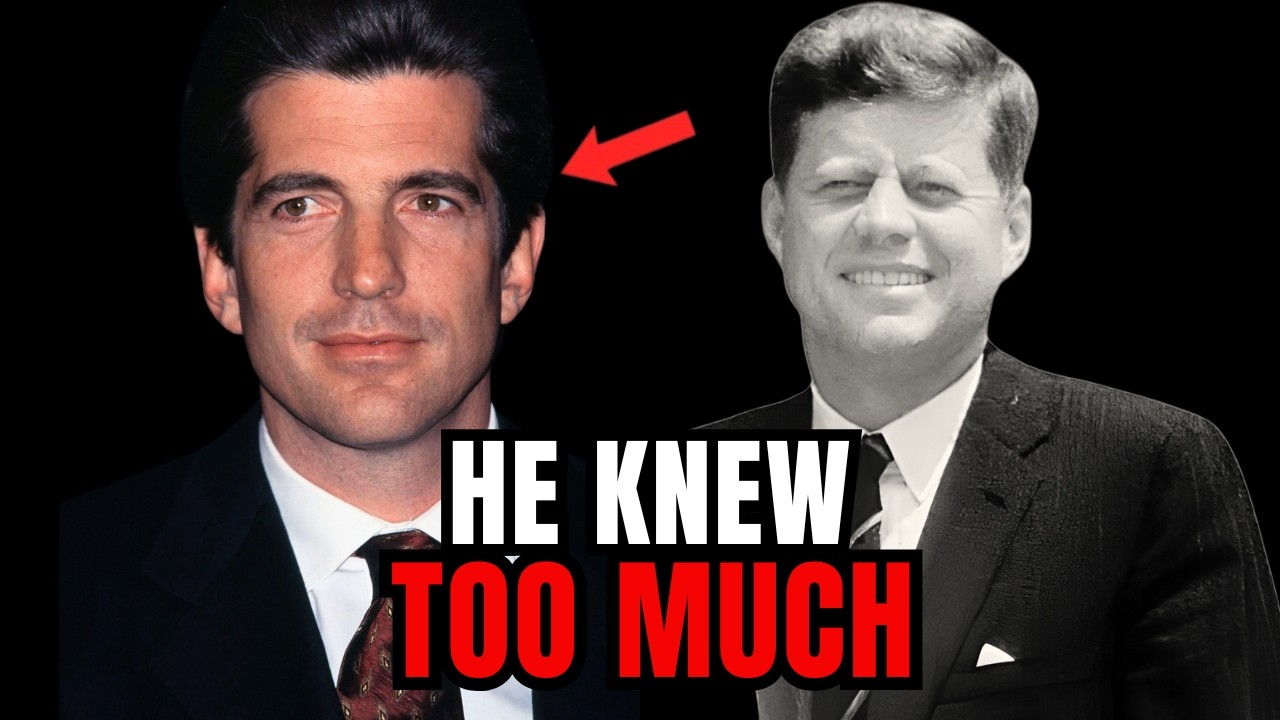
John Kennedy Jr. had access to all of them. Not as a researcher, not as a journalist, not as a government official with subpoena power and institutional friction, but as family, as JFK's son.
Robert Kennedy carried more direct knowledge of what happened in Dallas than any other living person after November 22, 1963. As Attorney General of the United States from January 21, 1961, through September 3, 1964, Robert Kennedy had access to CIA operational files, FBI surveillance records, and the internal communications of every federal agency with a connection to the events of that November.
He had been running Operation Mongoose, the CIA's covert program against Cuba, and had direct knowledge of the CIA-Mafia plots that the Church Committee, in its 1975 Senate Intelligence Committee report, documented as having been operational in the years immediately preceding the assassination.
Robert Kennedy spoke with CIA Director John McCone by telephone within hours of the shots in Dallas, a call documented in McCone's personal diary and cited by Tim Weiner in Legacy of Ashes: The History of the CIA.
Robert Kennedy formed his own private conclusions about what happened. His aide, Walter Sheridan, documented his knowledge of those conclusions in an oral history recorded at the University of California and archived in 1993.
Robert Kennedy was assassinated on June 5, 1968, at the Ambassador Hotel in Los Angeles, California. He died at 1:44 a.m. on June 6, 1968, at Good Samaritan Hospital. John Kennedy Jr. was seven years old.
Before he died, Robert Kennedy spoke to his nephew. Those conversations were not recorded. What a man who had spent five years assembling his private understanding of his brother's assassination chose to tell his brother's seven-year-old son is not in any archive. It existed in one place after June 6, 1968: inside John Kennedy Jr.
Jackie Kennedy understood this structure precisely. She had managed what the family knew for a decade before her son was old enough to carry any of it.
The Arthur Schlesinger oral history recordings, 17 hours of interviews recorded in Georgetown, Washington, D.C., beginning in March 1964, were donated by Jackie Kennedy to the John F. Kennedy Presidential Library in Boston under terms that sealed them until the year 2067. The collection was published in partial form by Hyperion Books in September 2011 under the title Jacqueline Kennedy: Historic Conversations on Life with John F. Kennedy.
What she chose to publish in 2011, and what she chose to transmit privately to her son rather than to any archive, represent two entirely different categories of information with two entirely different levels of institutional protection. An archive can be unsealed. A restriction can be overridden by legislation or court order. What Jackie Kennedy told her son in private cannot be unsealed by anyone.
He carried it. He lived with it. And by September 1995, he had built something that people who were paying close attention recognized as more than a magazine.
On September 7, 1995, at Federal Hall, 26 Wall Street, New York City, John Kennedy Jr. stood at a podium and launched a political magazine he named George. He described it at the launch event as the intersection of politics and pop culture. The description was accurate. It was also incomplete.
George launched with a first issue circulation of 500,000 copies, the largest debut circulation of any magazine launched in the United States in a decade, documented by The New York Times in its September 8, 1995, launch coverage. Its first cover featured model Cindy Crawford dressed as George Washington.
The mainstream media classified it as a novelty, a vanity project, JFK Jr. playing at journalism with his father's name as the engine. That classification was wrong. And by 1997, it was demonstrably wrong to anyone reading the magazine carefully.
In 1997, George published an investigation into the assassination of Israeli Prime Minister Yitzhak Rabin, shot on November 4, 1995, at a peace rally in Tel Aviv's Kings of Israel Square. The official Israeli investigation, the Shamgar Commission, chaired by Supreme Court President Meir Shamgar and delivered in March 1996, concluded that Yigal Amir acted alone.
The George investigation examined forensic and witness evidence that the Shamgar Commission had not fully resolved, drawing structural parallels between political assassinations where official investigations produced clean conclusions that subsequent evidence complicated.
John Kennedy Jr. wrote the editor's letter accompanying that issue himself. In it, published under his own name in a magazine with 500,000 subscribers, he stated that political murder is rarely what official investigations conclude it to be, and that institutional pressure to reach closure quickly consistently produces records that subsequent decades reveal to be incomplete.
He was the son of a president whose official assassination investigation had produced exactly that kind of record. He did not say that in the editor's letter. He did not need to.
The Rabin investigation was not an isolated editorial decision. It was the visible edge of a pattern. In 1997 and 1998, George published investigations into CIA covert operations in Central America, into the documented relationship between organized crime and American political financing, and into the structural conditions that allow institutional corruption to survive official scrutiny across decades.
Richard Blow, who served as a senior editor at George from the magazine's launch through its final issue, described JFK Jr.'s editorial focus in his 2002 memoir America's Prince, published by Three Rivers Press, as shifting in the final two years of the magazine's operation toward territory that Blow characterized as getting closer to something he hadn't yet named.

Blow was present in editorial meetings with JFK Jr. through 1999. He described a pattern of story assignments and editorial decisions that were moving consistently in one direction.
George was in financial difficulty by 1999. Hachette Filipacchi Media, the French media company that had been George's publishing partner since the magazine's launch, applied sustained pressure through 1998 and into 1999 for JFK Jr. to accept restructuring terms that would have given Hachette effective editorial control. He refused those terms, as documented in Richard Blow's America's Prince and in reporting by The New York Times in April 1999 covering the magazine's financial situation.
Multiple acquisition offers from larger American media organizations arrived during this same period. He refused those as well.
On May 21, 1999, JFK Jr. attended a meeting at Hachette Filipacchi's offices at 1633 Broadway in New York City to discuss George's future. He left the meeting without signing restructuring terms. Seven weeks later, on July 16, 1999, his plane entered the haze over the Atlantic and disappeared from radar at 9:40 p.m.
George published its final issue in September 2000. The investigation it was circling was never published.
In January 1999, in New York City, JFK Jr. told Billy Way, a documentary filmmaker and close friend, that he was seriously considering running for the United States Senate seat in New York, then held by Daniel Patrick Moynihan, who announced in November 1998 that he would not seek re-election in 2000.
Billy Way described these conversations in multiple interviews following JFK Jr.'s death, most extensively in interviews documented in Christopher Andersen's 2004 biography, The Day John Died, published by William Morrow.
In the same period, the first quarter of 1999, JFK Jr. had a parallel conversation with John Perry Barlow. Barlow is a lyricist for the Grateful Dead and a founding member of the Electronic Frontier Foundation, and had been a close friend of JFK Jr.'s for years. Barlow described these conversations in interviews given after the crash, characterizing JFK Jr. as working through the practical questions of timing and announcement with the expectation of making a formal decision by late 1999.
A Senate announcement in late 1999 for the 2000 election cycle would have made John Kennedy Jr. the most recognizable Kennedy alive, the editor of a political magazine that had spent four years circling a specific investigative territory, and the immediate frontrunner for the most media-saturated Senate seat in the country.
Hillary Clinton, who ultimately won that seat in November 2000 and was sworn in on January 3, 2001, entered the race officially in February 2000, after the field had been cleared by JFK Jr.'s death.
From a United States Senate seat, with the institutional standing and public platform that position provides, and with the private oral knowledge he had carried since childhood, John Kennedy Jr. would have been the first person in American public life with both the motive and the means to force a genuine institutional re-examination of November 22, 1963.
Six weeks before the crash, on Memorial Day weekend 1999, JFK Jr. fractured his left ankle in a paragliding accident. The injury required surgery. On July 15, 1999, the day before the fatal flight, JFK Jr. had his cast removed at Lenox Hill Hospital in New York City. He was still required to walk with crutches.
Witnesses at Essex County Airport on the evening of July 16 observed him walking with a limp as he boarded the aircraft. The NTSB report, accident number NYC99MA178, noted the ankle injury as a documented factor in the pilot's physical condition on the night of the crash.
JFK Jr.'s orthopedic surgeon stated in interviews with NTSB investigators that at the time of the crash, Kennedy would have been able to apply the type of pressure required to operate aircraft.
That context is relevant because it documents the specific physical state of a man who made the decision to fly at night over open water in haze with 310 total flight hours, no instrument rating, and a cast removed the previous day. A man who seven weeks earlier had been planning a Senate announcement that would have made him the most politically consequential Kennedy since his father's presidency.
The NTSB report was released on July 6, 2000. It is 49 pages. It documents the weather conditions with precision: haze reducing visibility to three to five miles, no visible horizon over the water. Conditions described by a pilot familiar with the Martha's Vineyard approach as providing little if any visible horizon.
It documents the radar data: the plane descending rapidly, making turns inconsistent with controlled flight, entering what aviation safety inspector Thomas Gazetti described as a graveyard spiral in interviews following the report's release. It concludes spatial disorientation, pilot error, impact at 9:41 p.m.
The NTSB found no evidence of mechanical failure, no evidence of external interference with the aircraft, no sabotage, no structural compromise. The investigation was thorough within its scope. Its scope was the aircraft and the pilot's physical management of it.
It was not designed to examine the political trajectory of the pilot. It was not designed to examine the editorial direction of his magazine. It was not designed to examine the private knowledge he had accumulated across 38 years as the son of an assassinated president, the nephew of an assassinated senator, and the inheritor of oral testimony from every surviving member of his father's inner circle.
The NTSB investigated a plane crash. Nobody investigated what was in the cockpit beyond the instruments.
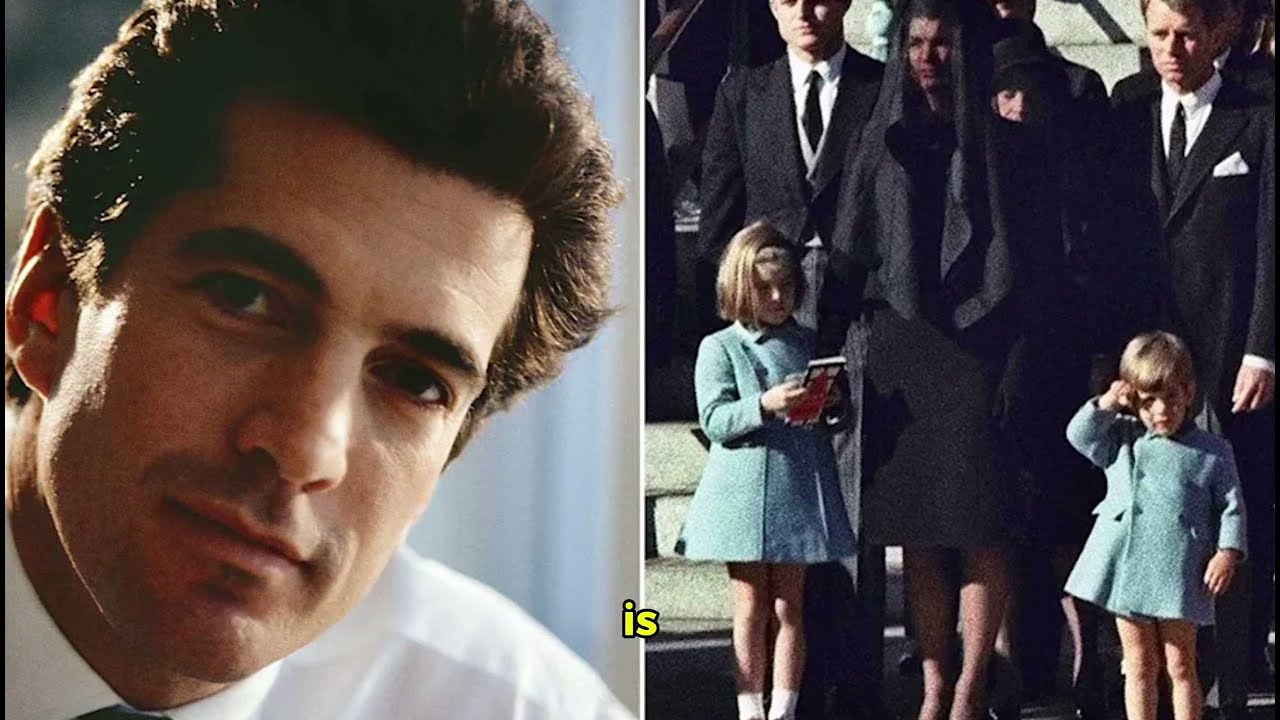
The pattern that assembles itself when you place the documented record in sequence does not require conspiracy in any conventional sense. It does not require a meeting, a memo, a chain of command, or a single actor issuing orders across four decades. It requires only that you read the sequence in the order it occurred and ask what each event removed from the world.
November 22, 1963, Dallas, Texas. President John F. Kennedy is shot and killed in Dealey Plaza at 12:30 p.m. Central Standard Time. He is 46 years old. He carries the institutional power of the American presidency, the executive authority to open every CIA file, every FBI file, every NSA file, and the political standing to act on what those files contained. He is killed before his second term.
His assassination is investigated by a commission appointed by the man who succeeded him. The commission's senior fingerprint examiner, Sebastian Latona, testified on April 2, 1964, that an unidentified print found on box A in the sixth-floor sniper's nest belonged to an unknown individual.
That print sat in the National Archives for 38 years before A. Nathan Darby, a board-certified fingerprint examiner with 50 years of experience, executed a sworn affidavit on March 12, 1998, matching it to Malcolm Wallace, a man convicted of first-degree murder in Travis County, Texas, in February 1952, whose defense attorney was John Coffer, personal counsel to Lyndon Baines Johnson.
The FBI received Darby's affidavit in May 1998 and issued no public response.
June 5, 1968, Los Angeles, California. Senator Robert Francis Kennedy is shot at the Ambassador Hotel at 12:15 a.m. following his victory in the California Democratic primary. He is 42 years old.
He carries the private knowledge of a former attorney general who ran covert CIA operations, spoke with CIA Director John McCone within hours of the Dallas assassination, and spent five years forming conclusions about November 22, 1963, that he never stated publicly. He dies at Good Samaritan Hospital at 1:44 a.m. on June 6, 1968. The investigation is conducted by the Los Angeles Police Department under Chief Thomas Reddin. The case is closed.
July 16, 1999, Atlantic Ocean, seven and a half miles southwest of Gay Head, Martha's Vineyard, Massachusetts. John Fitzgerald Kennedy Jr. enters the water at 9:41 p.m. He is 38 years old.
He carries the oral inheritance of both men, knowledge passed in private between people who trusted each other absolutely, existing in no archive, subject to no subpoena, reconstructable by no investigative body after his death.
He is five months from the announcement window in which he expected to declare for the United States Senate. He is the editor of a magazine whose editorial direction, in the assessment of senior editor Richard Blow in America's Prince, had been circling a specific investigatory territory for two years without naming it directly.
The NTSB closes its report on July 6, 2000. Accident number NYC99MA178. Probable cause, pilot error.
Each conclusion is defensible. Each investigation followed procedure. Each finding is supported by the available evidence within the scope each investigation chose to examine.
JFK was 46. RFK was 42. JFK Jr. was 38. Each of them younger than the last. Each of them carrying more of the inherited truth than the one before, in the moment before what they carried could have been transformed into something no institution could absorb, dismiss, or catalog as unknown.
The Warren Commission called Mac Wallace's fingerprint unknown. Nathan Darby called it something else. The FBI said nothing.
The History Channel broadcast the findings in November 2003, and then, following formal written complaints from former President Jimmy Carter, former Vice President Walter Mondale, and LBJ aide Jack Valenti, documented by the Washington Post in November 2003, withdrew the episode permanently. It has not been rebroadcast.
The JFK Records Act of 1992 mandated full release of assassination-related documents by October 2017. The October 2017 release covered 2,891 documents. Thousands more were withheld, deferred by the CIA on national security grounds, as reported by The New York Times on October 26, 2017.
The withheld documents describe events from more than 50 years ago. The personnel they reference are overwhelmingly dead. The Cold War ended in 1991. They are being withheld because releasing them would require explaining on the official institutional record why they were withheld to begin with.
John Kennedy Jr. understood this structure. He had watched it operate his entire life. He was not moving quickly. He was circling. He was building a platform carefully, refusing every offer that would have placed it under outside control, telling close friends about a Senate announcement that would give him institutional protection from which to act. He had time.
On July 15, 1999, he had his cast removed at Lenox Hill Hospital. On July 16, 1999, at 8:38 p.m., he took off from Essex County Airport. At 9:41 p.m., the radar return disappeared.
George magazine folded in September 2000. The Senate seat went to Hillary Clinton in January 2001.
And the knowledge that John Fitzgerald Kennedy Jr. had carried for 36 years, the oral inheritance of every witness, every aide, and every Kennedy family insider who had chosen him as the person they trusted with what they would never give to an archive, settled into approximately 120 feet of water, seven and a half miles southwest of Gay Head, on the floor of the Atlantic Ocean, where it remains.
Because the only safe truth is the one that goes down with the only person who knew how to use it. And the only safe fingerprint is the one cataloged as unknown.