Hugh Richard Arthur Grosvenor, the second Duke of Westminster, was one of the richest men alive. He owned much of Mayfair, Belgravia and Pimlico, a Cheshire castle with 54 bedrooms, more than 130,000 acres across Britain, two ocean-going yachts and half a million acres of hunting ground in France.
He was known to almost everyone not by his name but by a nickname. From boyhood he was called Bendor, after the chestnut colt his grandfather owned that won the Derby at Epsom in 1880, the year after the boy was born.
The inheritance came to him sideways. His father, Lord Henry Grosvenor, died before the dukedom could reach him. When the first Duke of Westminster died in December 1899, the title and the estate leaped over a generation and landed on the grandson. Bendor was 20 years old.
The Grosvenor fortune was not made in a factory or won in a war. It was made by owning land — the right land, the most valuable few hundred acres in the country. Every townhouse, shop and embassy on that ground paid the Grosvenors for the privilege of standing there.
There was Eaton Hall in Cheshire, set in 11,000 acres of park, its walls hung with old masters by Goya, Rubens, Rembrandt, Velázquez, Frans Hals and Raphael. There were townhouses, hunting lands, racing stables and motor cars when motor cars were still a rich man's toy.
He was tall, fair, restless and charming in the careless way of men who have never once been refused. He soldiered in South Africa and won a decoration, soldiered again in the Great War, drove fast and hunted hard.
What he did not have was contentment. Men who can have anything often discover that having is not the same as wanting. Bendor spent his whole long life chasing the next thing — the next house, the next yacht, the next wife.
There was one telling detail from the early years of the inheritance. When the city around his land needed housing for ordinary working people, he granted long leases on his Pimlico ground at rents so small they were almost symbolic — a single pound a year in one case, a shilling in another.
Generosity cost him nothing, which is precisely why it came so easily. The harder thing, the thing that costs a person something real, was to be told no and to accept it. That he never learned.
By his 40s, he had married twice, buried a small son, and still had no one to inherit the greatest private fortune in England. The Dukedom of Westminster was entailed, meaning it could pass only down a strict male line. A daughter could not inherit the title or the great estate.
His first marriage, in 1901, was to Constance Cornwallis-West, known as Sheila, a celebrated society beauty. She gave him a son, Edward, styled Earl Grosvenor, the heir to all of it.
In the early spring of 1909, the boy fell ill with appendicitis, sudden and savage in the years before such things could be reliably treated. Edward died at the age of four. The marriage did not survive the grief, and the couple divorced in 1919.
The next year, 1920, he married Violet Mary Nelson. That marriage was brief, gave him no children at all, and was dissolved by 1926.
So there he was, somewhere in his middle 40s, twice married, twice failed, the father of a dead son and two daughters who could carry nothing forward. The most important question of his life — who will inherit all this — had no answer money could provide.
It was in this state of mind, restless, wealthy beyond counting and quietly desperate, that he went south in the winter to the warmth of the Mediterranean coast. Monte Carlo in the cold months was where the rich of Europe gathered.
What he found there was a small, sharp-eyed Frenchwoman in a plain dark dress who had built everything she owned with her own two hands — and who would turn out to be the only person in his gilded life entirely uninterested in being bought.
Her name was Gabrielle Chanel, though the world would come to know her as Coco. She had arrived at the heights of European society by a road so unlike Bendor's that the two of them might have been born on different planets.
She came into the world in 1883 in a charity hospital in the town of Saumur in the Loire Valley of France. Her mother was a laundry woman. Her father was a market trader who sold whatever he could from a cart.
When her mother died, her father gave the children up, and Gabrielle was raised in an austere convent orphanage by religious sisters who fed her, disciplined her and taught her the one skill that would change everything: how to sew a clean, plain, perfect seam.
Everything that made Chanel began in that orphanage, even the things she later hid. The severe simplicity of her clothes, the love of black and white, the plainness she made fashionable — all of it carried the memory of those convent walls.
She left as a young woman with nothing, sang in a provincial cabaret for coins and earned the nickname Coco there. She caught the eye of wealthy men, and she used what she learned in their world to escape needing it.
The other women in Bendor's world had been given everything and had built nothing. Chanel had been given nothing and built an empire. She opened a hat shop, then a dress shop, then another.
She understood before almost anyone that the rigid, corseted clothing of the old century was dying and that women wanted to move, to breathe, to walk fast through a changing world. She cut away the boning and the fuss.
She made clothes from soft jersey, a humble fabric used for men's underwear, and turned it into elegance. She gave women the cardigan, the simple suit, the little black dress.
In 1921, she launched a perfume, a strange, modern scent she numbered rather than named, calling it simply Number Five. It would become one of the most successful luxury products in the history of the world.
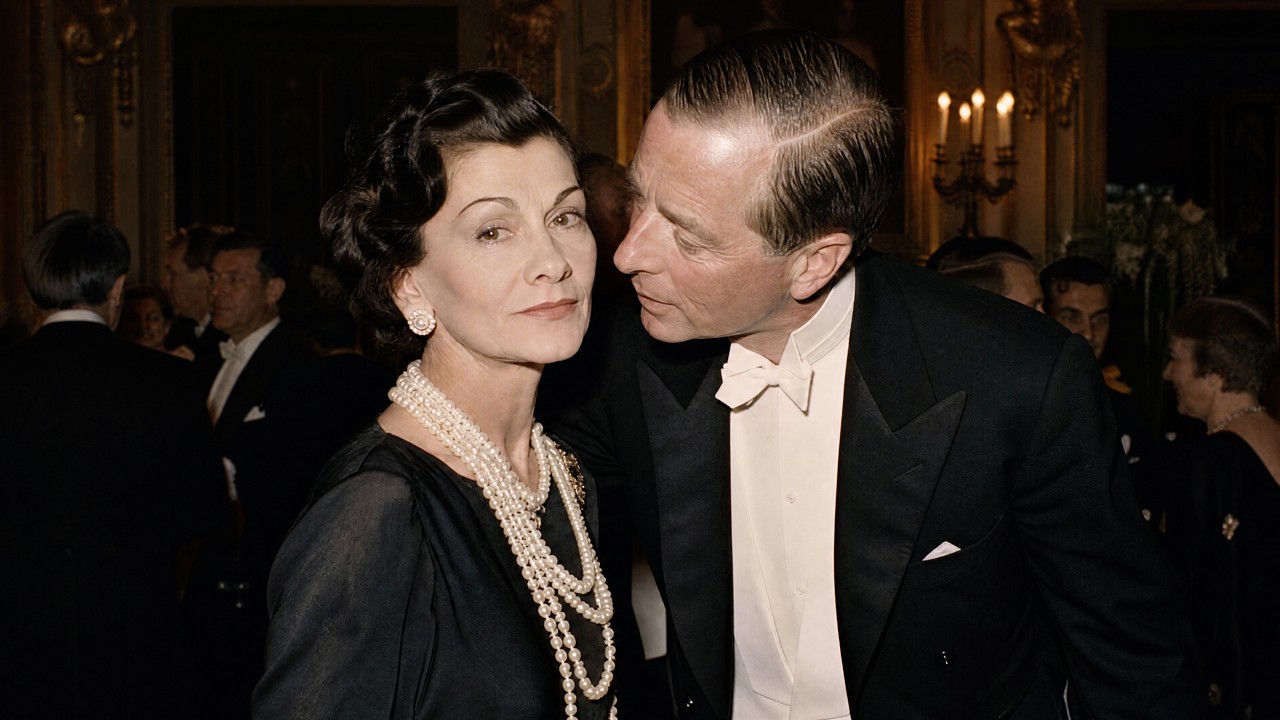
A woman who controls a thing like that does not need a husband's allowance. She does not need a duke to keep her in villas, because she can buy her own. When Chanel accepted Bendor's pearls and his Riviera land, she did so as a wealthy woman accepting gifts from another wealthy person.
By the time she met the Duke of Westminster, Coco Chanel was not a kept woman waiting to be rescued. She was a self-made magnate with her own house of couture, her own perfume fortune, her own name above her own door, her own money and her own bank.
She employed hundreds. She answered to no husband, no father, no patron. In an age when a woman of her birth was supposed to end as a servant or a mistress, she had made herself a power without a single inheritance or a single acre of anyone's rent.
Vera Bate Lombardi, a society fixture who moved between the worlds of fashion and aristocracy, introduced them in Monte Carlo over the winter of 1923 and into 1924. He was 44, she was 40.
Within weeks of meeting her, the Duke had rearranged his floating, landed, gilded life around a woman who sold dresses for a living. There was nothing cautious about it, nothing hidden. Bendor pursued Chanel the way he pursued everything, completely and without doubt that he would win.
The affair began on the water. He swept her aboard the Flying Cloud, the great black-hulled schooner, and they cruised the Mediterranean and out into the Atlantic.
He brought her to England, to the cold grandeur of Eaton Hall. He brought her north to Scotland, to the salmon rivers and the deer forest at Lochmore, where she fished in the rain and, characteristically, turned the experience into fashion, bringing tweed and the comfortable clothes of the Scottish estate back into her collections in Paris.
He brought her to Mimizan, the half-million-acre hunting estate in the south of France, where they chased boar through the pines.
There, again and again, was a witness whose presence tells you how serious this had become. Winston Churchill, Bendor's friend since the South African War, was woven all through these years. The two men were close in the deep, easy way of old friends, linked even by marriage.
Churchill stayed at Eaton, at Mimizan, aboard the yachts. He met Chanel and approved of her. In early 1927, he wrote of seeing her on a boar hunt at Mimizan, describing the famous dressmaker in the Duke's company as good company and impressive.
For Bendor, this was love conducted at the only scale he knew, the scale of pure abundance. He could not simply enjoy her company. He had to pour things over her.
He gave her jewels, including long ropes of natural pearls of a length and quality that became, in time, part of her signature look wound in layers at the throat. He gave her uncut emeralds and unset sapphires, loose stones by the handful, as another man might give flowers.
He gave her a Renoir. He gave her Tudor furniture from his own collections, old English silver and Russian icons. He gave her the use of houses and cruises that ran for weeks and a level of luxury that even she had never personally lived inside.
Across the years, biographers have estimated his total outlay on her ran into the modern equivalent of tens of millions of pounds.
And yet she took the gifts but was not bought by them. She wore the pearls, but she added her own glass beads beside the real ones and made the whole world copy the mixture. She absorbed even his fortune into her own style and made it hers.
She enjoyed the yacht, the villa and the cruises, and she went on running her business through all of it, dictating, designing, deciding. The other women in his life had been transformed by his wealth into ornaments of it. Chanel took what he offered and remained stubbornly, completely herself.
In 1927, he bought a parcel of land above Roquebrune-Cap-Martin on the hills of the Riviera between Monte Carlo and the Italian border, with a view down to the Mediterranean. He gave it to her.
On that ground, Chanel built the house that may be the truest portrait of her that survives. She called it La Pausa. She worked closely with a young architect named Robert Streitz and involved herself in every decision.
The villa rose between 1928 and 1929, low and cool and pale, built around a central courtyard and a great staircase she modeled on the orphanage of her childhood, that convent in the hills where the nuns had taught her to sew.
The richest man in Britain bought her a hilltop on the most fashionable coast in Europe, and she used it to rebuild, in beauty this time, the cold institution that had made her. La Pausa was a duke's gift turned by the woman who received it into a monument to a poverty he could never have understood.
All of Europe watched the affair and asked the obvious question. He was a duke, recently free, desperate for a wife and an heir. She was the most famous self-made woman of the age. Surely, the salons of London and Paris murmured, the dressmaker from the convent would become Her Grace the Duchess of Westminster.
The whole world could see it coming. The whole world was wrong. Because the one person who did not want that ending was the orphan girl herself.
She had not clawed her way out of a charity hospital and built an empire bearing her own name in order to dissolve all of it into a man's title, however grand. She had something the Duke of Westminster, for all his 130,000 acres, did not. She had a name she had made herself.
He asked her to marry him. He asked her to become the Duchess of Westminster, to take the title, the castle, the rent of half of Mayfair, the yachts and the deer forest, and the name that opened every door in the empire. And Coco Chanel, the laundry woman's daughter, said no.
He did not ask only once. Bendor proposed more than once across the years of the affair, and biographers who have studied his life place his most insistent attempts in the later 1920s, when the relationship was at its deepest and the pressure on both of them was greatest.
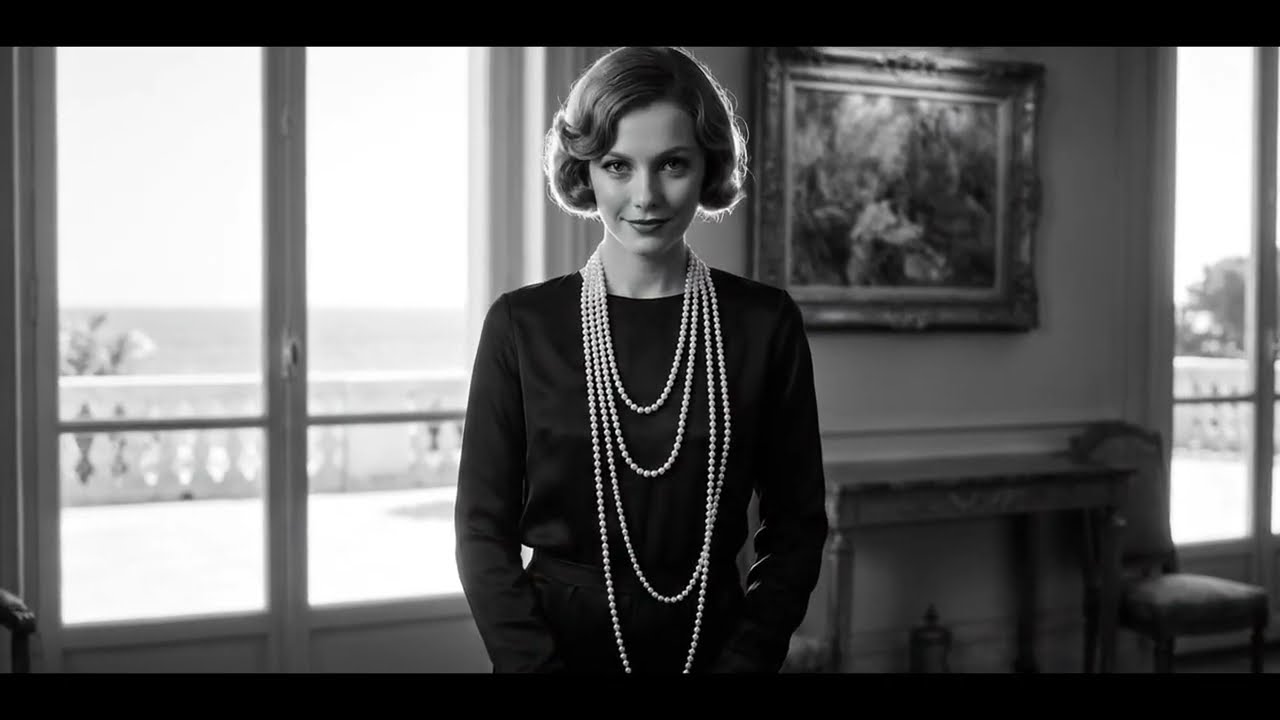
He wanted her, plainly, but he also needed something from her that he needed from no other woman alive. He needed an heir. He had buried his only son and had failed to produce another through two marriages.
Vera Bate Lombardi, the friend who had introduced them, is said to have pressed the point to Bendor that Chanel was approaching the end of her childbearing years — that if he wanted a son from her, he could not wait.
So the proposals carried a double weight: the longing of a man for a particular woman, and the dynastic anxiety of a duke who could feel his line dying with him. He was not only asking her to love him. He was asking her to save the house of Grosvenor.
And still she said no. Not in anger, not in a single dramatic scene, but steadily, finally, across years. To marry him, she would have to become his. A duchess is defined by her husband, ranked by his rank, housed in his houses, named by his name.
Chanel had spent her whole life making sure she would never again be defined by anyone. Her business was her own. Her name was above her own door. To become Her Grace the Duchess of Westminster, she would have had to stop being Coco Chanel, the only thing she had ever truly owned.
She is reported to have understood very well that he wanted a young wife to give him a son, and that she could be neither young nor merely a wife. She watched the way his world swallowed women whole, turned them into hostages and ornaments and breeders of heirs. She had no intention of being swallowed.
So she refused the coronet. She refused the strawberry leaf coronet of a duchess, the castle, the rent, the rescue. The whole world assumed any woman would seize with both hands. The richest man in Britain offered her everything he had, and she looked at it all and decided that everything he had was worth less than the one thing she had made herself.
History remembers her answer in a single perfect sentence, and history may have invented it. The line has been repeated for the better part of a century in books and films and magazine profiles, always as the moment Coco Chanel put the Duke of Westminster in his place.
There have been several duchesses of Westminster, she is supposed to have said. There is only one Chanel.
It is a magnificent sentence. It captures the whole truth of her refusal in a dozen words, the disposability of his title against the singularity of her name. It is too good, in fact, which is exactly why it deserves a careful look.
The line appears in the accounts that built the Chanel legend, repeated by biographers and memoirists who knew her or knew people who did. But Chanel herself, in old age, is reported to have denied it flatly.
Asked about the famous quote, she is said to have answered that the Duke would have laughed in her face if she had ever spoken to him like that. That is a striking denial from a woman who was, by every account, a tireless polisher of her own myth.
The biographer Justine Picardie, who examined Chanel's life with particular care, suggested a different origin for the sentence altogether. The remark, in her account, more likely grew out of a lunch at the British Embassy in Paris, where a diplomat named Sir Charles Mendl, making gallant conversation, told Chanel that there was only one Coco Chanel.
From a chivalrous compliment across a lunch table, the story may have migrated, over years of retelling, into Chanel's own defiant mouth, attached to the most romantic refusal in fashion history.
So the honest position is this: the sentence is probably not a real quotation. It is very likely a beautiful invention, or at least a borrowed compliment dressed up as defiance. And yet it does not matter. The line endures because it is true, whoever first said it.
There were several Duchesses of Westminster. Bendor married four women in his life, and not one of them was Chanel. There is, even now, a century later, only one Chanel. The house she built still bears her name. The perfume she numbered still sells.
The romance with Chanel wound down around 1930 after roughly six years, ending not in a single explosion but in the slow recognition that she would never give him the answer he needed. And Bendor did what men of his kind do with a wound. He covered it immediately.
On the 20th of February, 1930, only a short time after the end of the affair, the Duke of Westminster married for the third time. His bride was Loelia Ponsonby, a clever, well-connected young woman of good family — exactly the sort of suitable English aristocrat Chanel had refused to become.
The wedding was the society event of the season, a blaze of publicity, and standing beside the groom as his best man was none other than Winston Churchill, the same friend who only a few years earlier had been sending home warm reports of Chanel from the boar hunts at Mimizan.
The marriage was wretched from the start. Loelia herself would later write about it with painful honesty in her memoirs, published in 1961 under the title Grace and Favor, with a foreword by Noel Coward. The diarist James Lees-Milne described the union as a definition of unadulterated hell.
It was a marriage made in the shadow of another woman, and everyone involved seemed to know it. Bendor had married a duchess, the kind of woman the world had always expected him to marry, and he had married her too fast, on the rebound from the one woman who had told him no.
After years of unhappiness and long separation, Bendor and Loelia divorced in 1947. By then, she had given him no son, as the two wives before her had given him no son. He married a fourth and final time that same year, to a woman named Anne Sullivan, and she too produced no male heir.
Four marriages, four wives, one small boy dead at four years old in 1909. And after all of it, after a life of unimaginable wealth and unlimited choice, the second Duke of Westminster had failed at the single task his title most demanded of him. He had no son to carry the name.
It is hard not to read these later marriages as the long aftershock of the refusal on the deck of the yacht. He had asked the one woman he truly wanted, and she had said no, and he had spent the rest of his life marrying the ones he could have, and finding that having them changed nothing.
The phrase that she ruined him is true and false at the same time, and the difference matters. She did not ruin him financially. Coco Chanel never cost Bendor his fortune, and he never lost it.
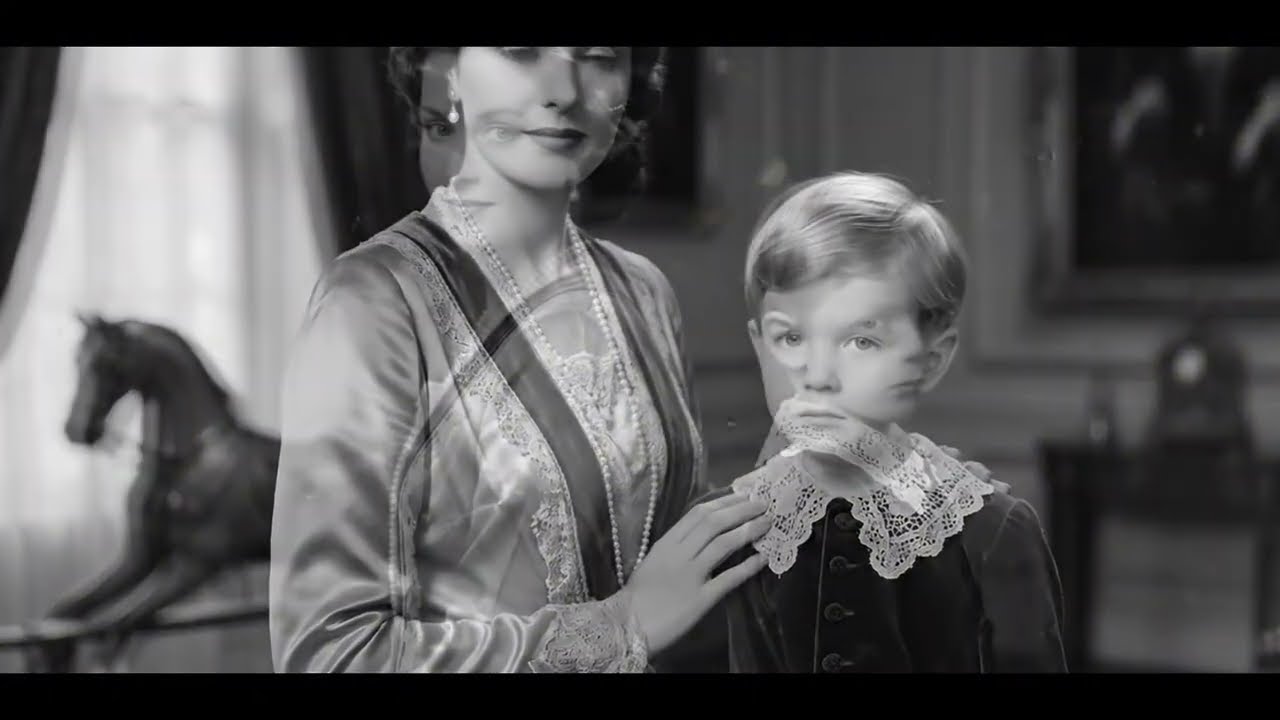
He died one of the wealthiest men in Britain, his estates intact, the rent of Mayfair and Belgravia still flowing in, Eaton Hall still standing, the old masters still on the walls. No woman could have bankrupted a fortune that size, and Chanel, who had her own money and her own empire, never tried.
The ruin was of a different kind, slower and sadder and entirely interior. After Chanel, something in Bendor curdled. The charm that had carried him through life thickened into something heavier. He drank. He grew suspicious and difficult, prone to dark moods and grudges.
He had married Loelia and made them both miserable. He would divorce her and marry again, still chasing the thing the money could not deliver.
In the 1930s, his decline took an uglier political turn. Bendor drifted into open sympathy with Nazi Germany. He moved in the circles that argued for friendship with Hitler's regime and against another war, and his private views carried a streak of anti-Semitism that was real, documented and indefensible.
It is a grim chapter and it should not be softened. The same restless, certain, never-refused man who had once charmed all of Europe spent his later years on the wrong side of the great moral question of the century.
Those who knew him in the later years described a man growing smaller inside his enormous life. He moved between the houses — Eaton, the Scottish lodge, the places in France — with a restlessness that no longer led anywhere. The friends fell away or were driven off. The wives came and went.
There is a temptation, looking at this wreckage, to lay it all at Chanel's feet. That would be too simple and unfair to her. The drink, the moods, the politics, the failed marriages — these were Bendor's own, made by his own choices and his own character.
But it is fair to say that the refusal marked a turning. Before Chanel, he was a man who believed the world would always, eventually, give him what he wanted. After Chanel, he knew it would not, because the one thing he had wanted most had looked at everything he owned and walked away.
Hugh Grosvenor, second Duke of Westminster, died on the 19th of July, 1953, at Lochmore, his shooting lodge in the far north of Scotland, in the deer forest he had hunted all his life. He was 74. His heart gave out.
He died as he had lived, surrounded by his own vast acres, with a wife at his side — the fourth — and no son anywhere in the world to mourn him as an heir.
Even his death made the wealth tangible one last time, because the taxman came for it on a scale that had never been seen before. The death duties levied on his estate amounted to a record sum of around 18 million pounds, an almost unimaginable figure for the time. It was so large that the family took 11 years to pay it off.
Because no son survived him, the dukedom of Westminster could not pass to a child of his body. It went sideways to a cousin, William Grosvenor, who became the third duke. Bendor's own line, the line he had married four times trying to continue, simply ended with him.
Four wives, a fortune beyond counting, half of Mayfair, and in the end the name passed to a cousin, because the one thing the richest man in Britain truly required — a living son — was the one thing his money had never managed to buy.
And Coco Chanel, the woman who had refused all of it, was still very much alive. She outlived Bendor by 18 years. The House of Chanel was intact, her perfume still selling around the world, her name still her own, above her own door.
She died in 1971 in her suite at the Ritz Hotel in Paris. The empire she had refused to trade for a coronet was still standing and still bearing the name she had made from nothing. The orphan outlasted the duke in life and in legend both.
Set the two endings side by side, because the contrast is the whole point. He died the richest of men, and his line died with him, his title carried off to a cousin, his fortune carved into by the largest death duty on record. She died in a hotel suite with her name on a global empire that would outlive the century.
He had spent six years and a fortune trying to make her part of his story. In the end, he became a chapter in hers. The villa she built on his Riviera land, La Pausa, still stands above the sea. The estates he loved remain among the great landholdings of Britain.
The second Duke of Westminster could buy anything that could be bought. And he learned, slowly and at enormous cost, that the things worth most are precisely the things outside the reach of money.
A son could not be bought. Time could not be bought. And consent, the free yes of another human being, could not be bought. Not for a villa, not for a Renoir, not for the coronet of a duchess and the rent of half of London.
Chanel understood this before he did, and she understood it because of where she came from. She had been given nothing, and so she knew exactly what things were worth. A title, she could see, was borrowed. A woman wears it because a man holds it, and the moment she takes it, she is defined by him, ranked by him, named by him.
But a name you build with your own hands, in defiance of a charity hospital and an orphanage and an age that expected nothing of you — that name is yours and only yours, and no man, however rich, can give it to you or take it away.
The Duke offered her the borrowed thing. She already had the permanent one. The choice for her was never really close.
He married four Duchesses. The world remembers none of their names the way it remembers hers. He owned 130,000 acres. She owned six letters above a door on the Rue Cambon. And those six letters proved the more durable empire.
Return at the last to where it began. A black-hulled schooner on the open water, the Mediterranean light on the deck, the richest man in Britain down on one knee in front of a small, plainly dressed woman with ropes of pearls at her throat.
He is offering her the world — the castle, the rent, the rescue, everything a poor girl from a convent was supposed to dream of. And she is looking at him and at all of it, about to say the one word he had spent his whole charmed life never having to hear.
No. Not because she did not feel for him, but because she already had the only thing that was ever truly hers to keep, and she was not fool enough to trade it — even for him, even for everything.
He had the fortune. She had the name. And in the end, the name was worth more.