On the morning of October 6, 1977, a man named Danny Greene walked out of a low office building on Brainard Place in Lyndhurst, Ohio, after a dental appointment and headed for his car. For two years he had been at war with the Cleveland mob, and he had survived everything they threw at him. They had blown up his apartment building two years earlier. He walked away from that. This time they had tapped his phone and knew his schedule. A car sat in the parking space beside his, packed with a bomb. As Greene reached his door, someone nearby triggered it by remote control, and he was killed where he stood.
The office building still stands. The parking spaces are still there, and people park in them every weekday morning on their way to work. That parking lot is just one of many places in a single American state where, for roughly seventy years, the mob decided who ran, who got paid, and who died.
The version most people know casts Ohio as a sideshow, a place where the real families stopped over on the way to Chicago or New York. The history says the opposite. Ohio was where the money was made, where national bosses came to meet, and where some of the men who later helped build the Las Vegas Strip first learned the business. What follows are ten of those places, in the order the mob took them.
It began at the Hotel Statler, on the corner of Euclid Avenue and East 12th Street in downtown Cleveland. Before dawn on December 5, 1928, a patrolman named Frank Osowski watched cars pull up outside the hotel. He later described the scene to the Plain Dealer. As the sun rose, a dusty car stopped in front of the hotel. He said there were eleven men inside, and they looked tough. Detectives went up to the rooms, and by morning twenty-three men had been arrested. Seventeen of them were carrying pistols. They had come from Buffalo, Chicago, St. Louis, Tampa, and New York. Among them was Joseph Profaci, a Brooklyn olive oil importer who would run his own crime family for the next three decades. Bail was set at $200,000. Within two days nearly all of them were free, and most of the charges were dropped.
Why they came to Cleveland was never established. Perhaps to fill a dead boss's seat, or to fight over corn sugar used in illegal liquor. Every explanation offered since has remained a theory. What is not a theory is the meeting itself: the men who ran organized crime across the country chose a hotel in Ohio to gather. The Statler still stands. Since 2001 it has been converted into apartments.
The second place sits a few miles east along Mayfield Road, running through Cleveland's Little Italy. The street gave its name to the Mayfield Road Mob, one of the most powerful gangs in the Midwest. On July 5, 1930, the head of the Cleveland family, Joseph Porrello, was sitting at a table in a restaurant there called the Venetian. The table belonged to a rival named Frank Milano. Porrello and his bodyguard were shot dead. Porrello died at that table. Milano took over. That is how leadership of the Cleveland family changed hands, not by vote or retirement, but across a restaurant table on Mayfield Road.
Two years later, the Mayfield Road mob formed a formal alliance with a group of Jewish bootleggers who called themselves the Cleveland Syndicate. That alliance is the thread that runs through the rest of this list, and it ends in the Nevada desert. The streets of Little Italy are still there, and so are the restaurants.
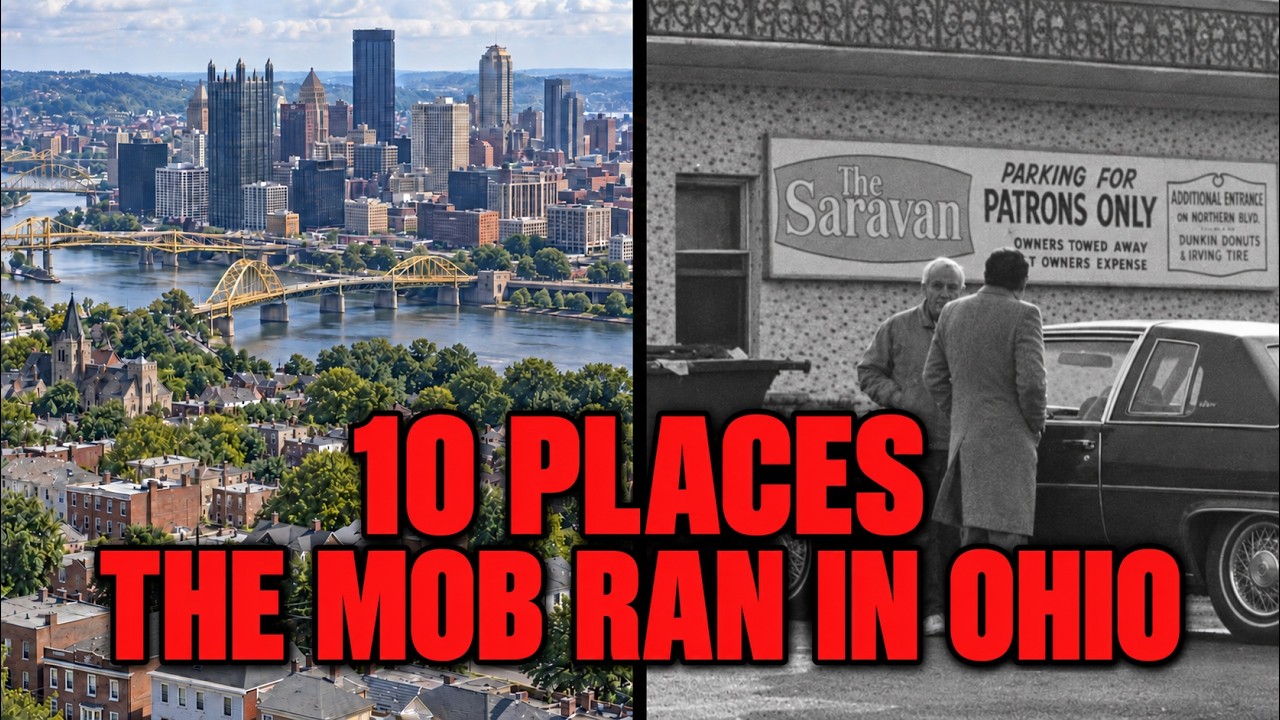
The third place is Toledo, in the far northwest corner of the state. Toledo did not produce its own mob. One was brought in from outside. In the early 1930s, a Detroit gangster named Thomas Licavoli, known as Yonnie, moved south to take over Toledo's bootlegging and its rackets. The men already running them got in his way. On December 1, 1932, gunmen fired a machine gun into the car of a local bootlegger named Jack Kennedy. Kennedy survived. His girlfriend, Louise Bell, did not. Seven months later, on July 7, 1933, Kennedy was walking along Edgewater Drive in the Point Place area with a woman named Audrey Rolls. This time the gunmen did not miss. More than five hundred people came to his funeral.
A county prosecutor named Frazier Reams spent the next year building the case. In 1934 a Toledo jury convicted Licavoli of conspiracy to murder and sentenced him to life in the Ohio Penitentiary. He served most of it. In 1969 Governor James Rhodes commuted his sentence. Two years later Licavoli was paroled, and he died in 1973.
The fourth place is just outside Cleveland, past the city line in the village of Newburgh Heights. It was a casino called the Harvard Club, and on a good day between five hundred and a thousand people gambled there. Its address was the foundation of the whole operation. It sat outside the city, beyond the reach of Cleveland police, and the county sheriff had a stated policy of leaving it alone. On January 10, 1936, Cuyahoga County Prosecutor Frank Cullitan decided to raid it anyway. The sheriff refused to help. So Cullitan hired private detectives and swore them in as special constables.
The operators of the Harvard Club would not open the door. According to the Plain Dealer the next morning, they kept the county prosecutor tied up for nearly six hours while trucks hauled the gambling equipment out the back. Late that evening, Cleveland's new safety director arrived with city police to back the prosecutor. His name was Eliot Ness, and he said he had come as a private citizen. A month later the Harvard Club reopened at a new address farther down the same avenue, with free limousine service from downtown. It lasted another five years. The judge who finally ordered it shut down, in 1941, was named Frank Lausche. Remember that name.
The fifth place is the river town of Steubenville, in the southeast near the West Virginia line. By the 1930s it had a nickname: Little Chicago. Water Street was its red-light district. Market Street held the back rooms of storefronts where cigars were sold up front and gambling ran behind. By one local count the city had eleven gambling joints. In the back room of the Rex Cigar Store on Market Street, a young Steubenville man dealt cards and ran a craps table, earning about $125 a week at his best. His name was Dino Crocetti. He became Dean Martin.
He was not the only one who learned the business there. Another dealer in the same town, Dino Cellini, later ran casinos in Havana for Meyer Lansky. A saying about the town was said to circulate as well: if you want to get away with murder, go to Jefferson County. Nobody could say exactly when the back rooms closed. They faded in the 1950s under Senate investigators and new federal gambling laws. What they left behind was a generation of men who knew how to run a casino.
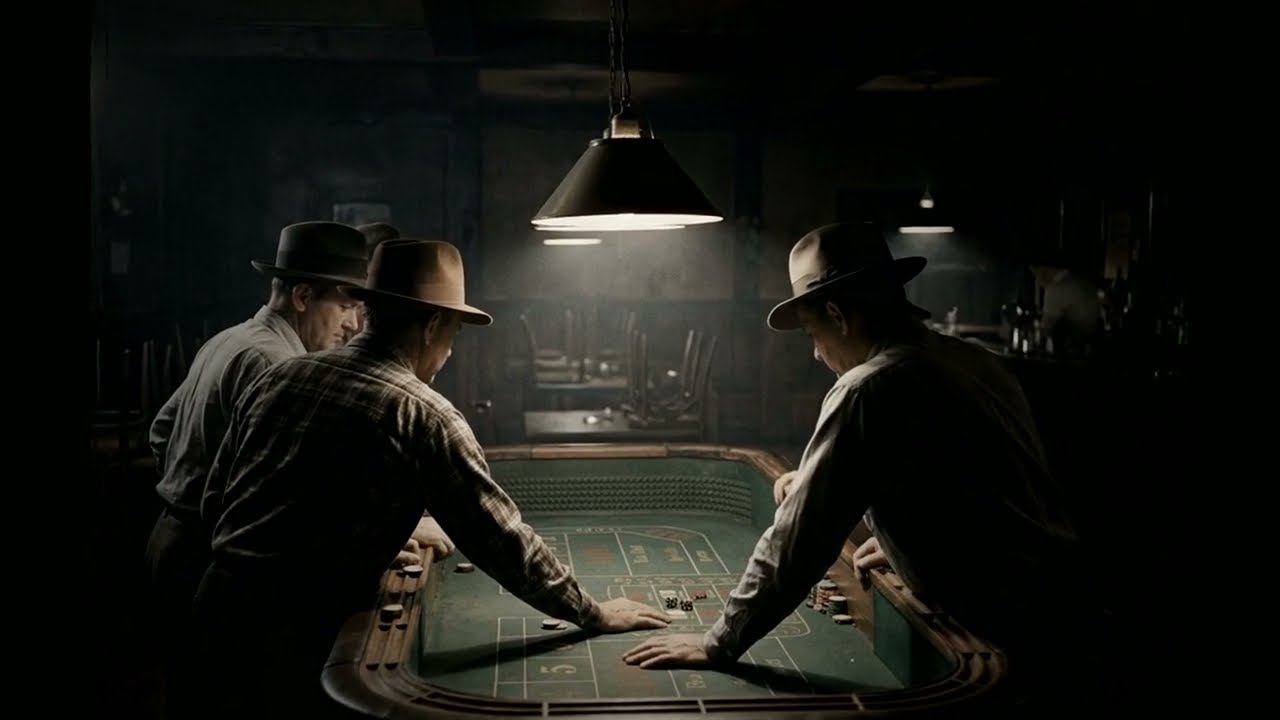
The state's finest illegal casino is the sixth place. The Mounds Club stood on Chardon Road in Willoughby Hills, just across the Lake County line, again beyond the reach of Cleveland police. It opened in 1930. Its recorded owner was Thomas McGinty, and members of the Cleveland Syndicate were known to be silent partners. A Cleveland magazine described its offerings as fine dining, gambling, and first-class entertainment in a luxurious setting.

Before dawn on September 29, 1947, masked men carrying submachine guns cut through the electrified fence around it and went inside. Hundreds of guests were present. The gunmen took everything. Estimates of the haul ranged from $300,000 to half a million dollars. The case was never solved. No one was ever charged. Two years later, Governor Frank Lausche, the same man who had shut down the Harvard Club as a judge, sent state liquor agents with a court order. In July 1949 they padlocked the doors.
And here the Mayfield Road thread comes full circle. The men behind the Mounds Club did not give up. They took their money west and in 1950 invested in a new casino in Las Vegas called the Desert Inn. A party center now occupies the Mounds Club site.
That same summer, the seventh place fell to the same governor. The Jungle Inn stood in Liberty Township in Trumbull County, between Youngstown and Warren. It was run by two brothers, Mike and John Ferra, and a man named Tony Delsanter. The Cleveland mob was alleged to hold a share as well. In August 1949 Lausche's state liquor agents shut it down for good. When the Senate's Kefauver Committee came to Cleveland for hearings in 1951, the Jungle Inn was one of the places senators wanted to hear about. One of its owners paid a price that had nothing to do with the law. On June 10, 1961, Mike Ferraro was practicing golf outside his home in Warren when a car pulled up and the men inside fired a shotgun.
The eighth place sits across the road in the city that gave this whole story its most famous name. Through the 1950s, the Pittsburgh and Cleveland families fought over Youngstown's illegal business, especially gambling, which locals called the bug. They fought with dynamite. Over more than a decade, reporters documented between seventy-five and eighty-two mob bombings in the city. Homes, porches, businesses, and cars were hit. In March 1963, the Saturday Evening Post gave Youngstown a name the city never lived down: Crimetown, USA. The magazine said the city had seen seventy-five bombings and eleven murders in a decade and that nobody seemed to care.
The previous November, something had finally forced the federal government to pay attention. On November 23, 1962, the day after Thanksgiving, a Cleveland-linked extortionist named Charles Cavallaro, known as Cadillac Charlie, was in his car in the garage of his home on Roslyn Drive in north Youngstown with two of his sons. When he turned the ignition, the car exploded. The bomb killed Cavallaro and his eleven-year-old son, Tommy. His other son, twelve-year-old Charles Jr., survived. He is still alive and still talks about that morning. It was the first time in Youngstown that an underworld bomb killed a child, and it crossed a line nothing else had. Attorney General Robert Kennedy ordered the FBI in.
In February 1963, an FBI wiretap caught New Jersey mob members complaining about it, not about the bombing but about the killing of a child. As one historian later put it, they understood they had made a public relations mistake, not a crime, a mistake.
Now ask the question again with eight places in view. The same pattern shows up in every one. The casinos were built just across a line, a city limit or a county line, where police could shut them down but could not reach them, and those who could reach them did not want to. The mob never needed to control an entire state. It needed to control the handful of officials standing at each of those lines. And when an official would not bend, they removed him.
The ninth place brings the list back to where it started. In the Collinwood neighborhood on Cleveland's East Side, a bomb went off shortly after 4 a.m. on May 12, 1975, destroying the building on Waterloo Road where Danny Greene lived and ran his business. Greene and his girlfriend escaped the second floor with minor injuries. He set up two trailers on the empty lot and flew an Irish flag above them. Greene was an Irish American union worker and extortionist who had decided he would no longer answer to the Cleveland mob. The next two years were a war, fought almost entirely with bombs. By one count, thirty-six bombs went off across the Cleveland area in 1976 alone. Greene took the war to local television. He would say he stood between two worlds, the establishment and the street.
In May 1977, his associate John Nardi, a Teamsters official, was killed by a bomb in a car parked beside his own outside the union hall on East 22nd Street. Then came October. The team had tapped Greene's phone and heard him book the dental appointment. On October 6, they parked a bomb-laden car in the space beside his outside Brainard Place in Lyndhurst. When he came out, it was detonated by remote control. The two men who planted it were Ray Ferritto and Ronald Carabbia. A witness drew a sketch. Someone wrote down a license plate number. Within weeks police caught Ferritto, and Ferritto did what many other men in this story eventually did. He became a government witness.
The charges reached the very top of the Cleveland family. In 1982 its head, James Licavoli, was convicted on federal racketeering charges. He died in prison. The spot on Waterloo Road is still there. A mural now marks the site.
The tenth place on the list is not a club or a street or a hotel. It is a county government. By the 1980s, Youngstown had fallen under the control of the Pittsburgh family. The man on the ground was Lenny Strollo. In the neighboring city of Campbell, he ran the All American Club, which federal prosecutors called the largest illegal casino in the country and which took in about $20 million a year. It closed in 1987. But the real prize was never the casino. The real prize was the people who were supposed to stop it.
Two days before Christmas in 1996, newly elected county prosecutor Paul Gains was shot at his own home in Boardman. He survived because the gunman's pistol jammed. That was the mistake. Two years later, facing federal charges, Lenny Strollo pleaded guilty and became a government witness. He admitted to arranging the contract on Gains. He admitted to a murder. And then he explained who else had been paid. County Sheriff Phil Chance was convicted of racketeering in 1999 for taking mob money for his election campaign. A former county prosecutor, James Philomena, pleaded guilty to influencing cases. Between 1996 and 2002, more than seventy people were convicted. Three of them were judges. Even the local congressman, James Traficant, whom mob figure Charles Carabbia had secretly recorded years earlier, was convicted on ten counts in 2002 and expelled from the House by a vote of 420 to 1.
One of the federal prosecutors in those cases, Julia Stiller, described what the mob's grip had cost the valley. She said it was why shopping malls were never built and projects never happened. The mob always owned everything.
The answer to the question is here, and it is narrower than the legend and colder than the movies. The mob did not control Ohio by being everywhere. It controlled Ohio from just across the line, one county at a time, one sheriff and one prosecutor at a time. A casino outside the city limits. A judge who looked away. A sheriff whose policy was to let things be. When a governor finally moved against the casinos, the money did not stop flowing. It went to Las Vegas and helped build the Strip. And when the men left behind tried the old method on a prosecutor in Boardman, the gun jammed and a whole county fell apart.
Look at those ten places today. The hotel where national bosses met is now luxury apartments. The finest illegal casino in Ohio is now a party center. The site where Danny Greene's home was bombed carries a mural. And the parking lot in Lyndhurst where he was finally killed fills with people on their way to work every morning. The places are all still there. The men who owned them are not.