New York City in the 1940s was a place where the night streets were ruled by order, not words. In Harlem, that order was enforced by a man known as Bumpy, a figure whose authority was quietly understood. His war with the mafia had been raging for over a week, but it was not about territory in the traditional sense—it was about control. It was about deciding whose doors opened and whose stayed closed.
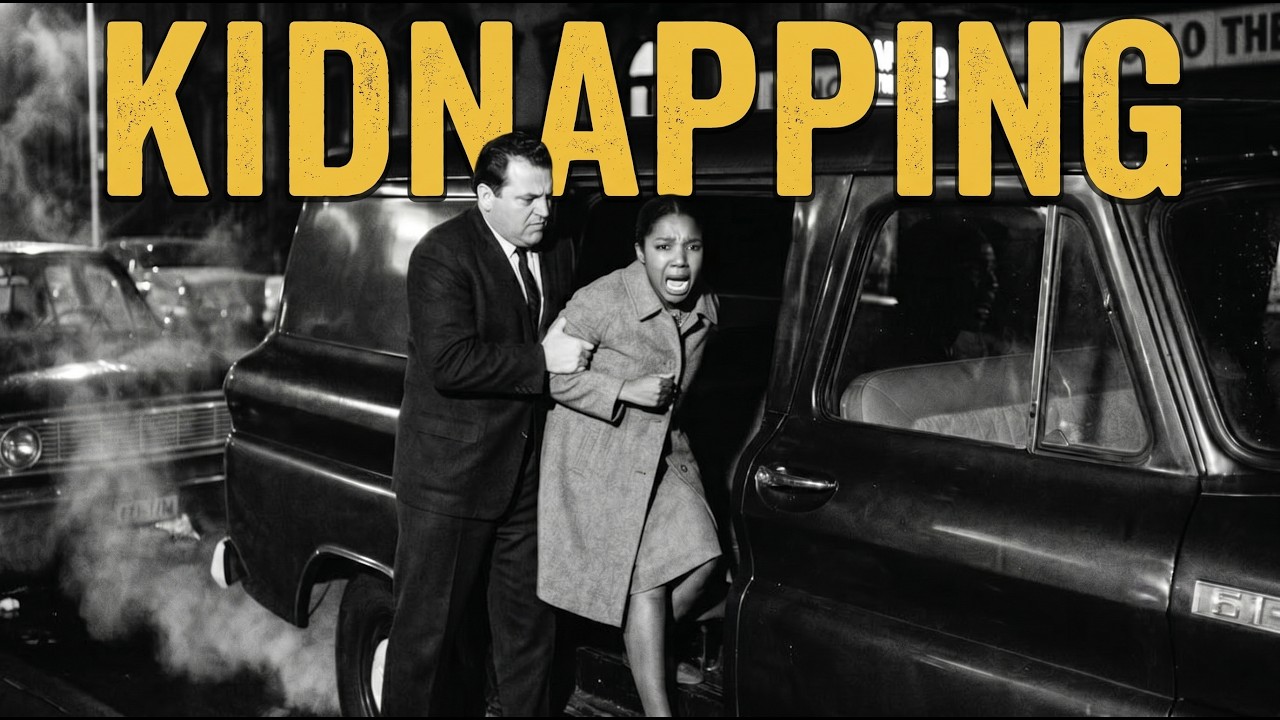
That night, the trouble began with small disruptions. A man failed to show up for work. A car took an unusual route and vanished into unfamiliar blocks. A spot that never closed early shut down an hour ahead of schedule.
These were not random occurrences; they were signals in a language Bumpy understood fluently. Bumpy’s man Red arrived quickly, placing two items on the table without a word: an empty cash box and a scrap of paper with an address. “It’s loud over there,” Red said. Bumpy did not raise his voice.
“Loud is when somebody wants us looking one way,” he replied. “When things start breaking quietly, that’s work. ”
They drove out and spotted two men on a corner. They were outsiders, identifiable by their movements.
They made no move, just watched, as if the street already belonged to them. Red wanted to approach, but Bumpy stopped him, knowing that outsiders want you to make the first move. Shots rang out in the distance—two or three short cracks, like a signal. Pedestrians did not panic or run; they simply quickened their pace.
Harlem knew the difference between fear and a warning. When Red asked if it had started, Bumpy corrected him. “That’s a test,” he said. “They’re feeling out how much nerve we’ve got.
”
They turned into a courtyard with a single lamp burning above a door. Inside, the quiet was wrong—too even, as if it had been laid down deliberately. Red spotted fresh tire tracks by the wall. Bumpy found something else: a woman’s scarf on the ground.
He picked it up carefully. “This isn’t about money,” he said. A messenger kid emerged from the dark, gasping for breath, holding out an envelope. Inside was a note with a single meaning: give us what we want, and you get back what you value more.
Bumpy folded the paper and put it in his pocket. His face stayed calm, but his eyes darkened. “Now it’s a real war,” he said quietly. “Before they were trying to take the neighborhood.
Now they’re trying to take me. ”
He told Red to gather a select few—men who could stay quiet and drive fast. “Tonight we’re not looking for a fight,” he said. “Tonight we’re looking for a door.
”
Later that night, Red brought two more men and spread a hand-drawn map across a car hood. It detailed streets, courtyards, entryways, and who stands where—a map you cannot buy in a store. The last time anyone saw Bumpy’s daughter was 6:40 that evening. The driver claimed he only looked away for a second.
Two men walked up, and she was gone. The driver was still alive, but shaken and marked with bruises, as if someone had held him down. “Too clean,” Bumpy observed. “When they steal for business, they make noise.
When they steal like an operation, there’s silence and memory disappears. ” He ordered the driver brought to him, without a doctor, for a conversation that would help the man remember what he had been helped to forget. At a small office over a shop, the driver was questioned. Bumpy placed the fallen scarf on the table.
The driver insisted he saw nothing, but Bumpy pressed. The driver eventually recalled two men—one with a calm, local voice, and another who wore gloves and did not speak. A sweet-smelling rag clouds his memory after that. Before he lost consciousness, he heard them mention “the blue entrance” and that their people were there.
Bumpy understood. “This isn’t an alley,” he said. “This is a place where outsiders pass as insiders. ” A blue entrance was a habit, and habits leave traces.
Red set out to sweep clubs, hotels, and warehouses, looking for any building with a separate entrance where guards do not ask questions. Bumpy stayed behind, making short calls with questions that cannot be answered with “I don’t know. ”
Around 23:08, a car parked outside the office—too neatly. A knock came: twice, a pause, once more.
A man in an overcoat stood on the threshold. He did not look friendly, nor did he look like an enemy. He handed Bumpy a small box, the kind used for jewelry. “Inside isn’t a threat,” he said.
“A hint, if you know how to read. ” Then he left. Inside the box were a child’s hair clip and a note with three words: “Blue entrance, midnight. ” Bumpy phoned Red.
“We’ve got a thread,” he said, “and it leads exactly where they want us to go. ” When Red asked if it was a trap, Bumpy replied, “It’s an invitation. ” He gave Red another instruction: while they move on the blue entrance, make a few of the mafia’s men disappear. Let them have a sleepless night too.
It was pressure meant to make them start making mistakes. Close to midnight, Bumpy and his people went on foot, a block away from their target. The building had a separate side door painted a deep, dark blue—not for customers, but for people coming on business. A guard stood there, confident and unbothered.
Bumpy approached him slowly. When the guard insisted the place was closed, Bumpy gave his name. It caused a pause longer than it should have been. Inside, someone was deciding whether to open the door.
“I’m here for a child,” Bumpy told the guard. “If she’s here, open. If she’s not, tell me who put you on this door. ” The guard admitted the girl was not there.
“Here, they just pass them on,” he said. Under pressure, and with noises from the alley signaling Bumpy’s men were already causing problems, the guard gave up the next link: a black car with no front plates takes people through a service tunnel to a warehouse by the water. Bumpy had the guard open the door anyway, to make it look like they went in. Inside, a narrow corridor held two more men, one with a pistol and one with a radio.
Bumpy demanded an address. After a brief, tense standoff, the man with the radio gave it up: the warehouse by the water, where three men were waiting. Bumpy picked up the radio and spoke into it. “Your blue entrance isn’t yours anymore,” he warned.
A voice came back, calm and foreign, carrying the tone of an office rather than the street. The voice offered a way to end it: give up the neighborhood, get your daughter back. Bumpy rejected the offer. “You took the one thing nobody bargains with,” he said.
He dropped the radio on the floor. The car headed for the water. As they approached the warehouse, the gate with the white number was slightly open—too convenient, too confident. Red suspected another trap.
“Of course it’s a corridor,” Bumpy said. “Only tonight we’re not going where they’re leading us. Tonight we lead. ”
Inside, the smell of wood, fuel oil, and cold filled the air.
Flashlights snapped into their faces, and a voice ordered them to stop. Bumpy raised his hands to chest level, not begging, just enough to give them confidence for a breath. “I came for my daughter,” he said. A silhouette approached, carrying the same certainty as the voice on the radio.
It offered a deal: sign a renunciation of the neighborhood, and she leaves with him. Bumpy agreed, but added a condition: he wanted to see his daughter first, in the light. They brought the girl out. She was alive, scared, but holding herself together.
Her hair was a little messed, and on her coat was the familiar clip. When she saw her father, she did not scream. She simply breathed, like she had finally remembered how. Bumpy took half a step forward.
“That’s it,” he said quietly, but loud enough for all to hear. “Now you don’t dictate anything to me. ”
He snapped his fingers once. Behind the warehouse wall, a hard clang of metal rang out—then another, then a third.
Engines howled outside. A harsh cargo siren cut through the air. The men holding their lights began to flinch, unsure how many were outside. The warehouse control point suddenly looked less like a trap and more like a cage.
The silhouette tried to command, ordering the girl moved. But Bumpy moved instantly, and Red fired at a flashlight, killing the beam. A second shot killed another. Darkness became their ally.
Gunfire broke loose, short and jagged, chewing wood and punching crates. Bumpy moved toward his daughter’s voice, firing once into the wood beside the hand gripping her shoulder, making it let go. He pulled her in and turned her behind him. “Close your eyes and hold on to my coat,” he said calmly.
She did not cry. She nodded, trying very hard to be strong for him. Red shouted for the left exit. Outside, headlights flared at the gate.
Bumpy’s two men held their position, firing short bursts to keep anyone from closing in. Bumpy got his daughter into the backseat and slammed the door. The car tore off. Only after a few blocks did Bumpy allow himself to look back.
His daughter sat with her fists twisted into his coat, staring at him with wide eyes. “That’s it,” he told her softly. “It’s over. ” She nodded a little, and only then did her lip tremble.
She had wanted to be strong all the way through, and she was. Red asked what came next. Bumpy looked ahead at the dark road where streetlights had gone back to being just streetlights. “They can try to take a neighborhood,” he said.
“They can try to steal money, but you don’t touch family. ” He paused. “And the one who stood in the shadow,” he added, “now I know his face. ”
The car disappeared into the night.
The intrigue did not vanish; it only changed shape. An office man had shown his face, which meant he had a reason to come back. And Bumpy had a reason to wait.