On May 10, 1940, Nazi Germany invaded the Netherlands. German airborne forces seized tactical points to support the advance of ground troops, while heavy aerial bombardment struck Rotterdam. The destruction of the city's historic center culminated on May 14, and with the Germans threatening to bomb Utrecht in the same manner, the Dutch forces surrendered the following day.
That same day, a fanatical Dutch nationalist was freed from prison by the Nazi occupiers. He threw himself into the machinery of the new regime with unwavering loyalty and soon became one of the most powerful voices of Nazi propaganda in the Netherlands. His name was Hermanis Raiden.
Hermanis Hark Stainhard Raiden was born on December 6, 1896, in the town of Forsa in the Netherlands. He completed his studies in Utrecht, receiving a law degree in 1923, and later married Velamina Ankhanita Hark Stainhart.
Raiden was a convinced national socialist who glorified the peasantry as the essential characteristic of the Germanic people. In the spring of 1932, he joined the National Socialist Movement, the NSB, a Dutch counterpart to the German Nazi Party, receiving membership number 252. As of February 1, 1933, he became the leader of the NSB district in Amsterdam.
The NSB was founded on December 14, 1931, by Anton Mussert and Cornelius Van Karka. Modeled after the German Nazi Party, it promoted authoritarian leadership, nationalism, and anti-communism. Initially, the party avoided open anti-Semitism to gain broader appeal, and in its early years it attracted a modest following, especially among the middle class and former military officers disillusioned with the Dutch parliamentary system.
By the mid-1930s, however, the NSB shifted further to the right, adopting the racial and anti-Semitic rhetoric of the Nazis. This change alienated many early supporters but brought the party closer ideologically to its German counterpart. The NSB never became a mass movement in the Netherlands. In the 1935 elections it won nearly 8 percent of the vote, its peak of popularity. By 1937, the party had lost many sympathizers and received only 4 percent of the vote in the parliamentary elections, placing it firmly on the periphery of Dutch politics.
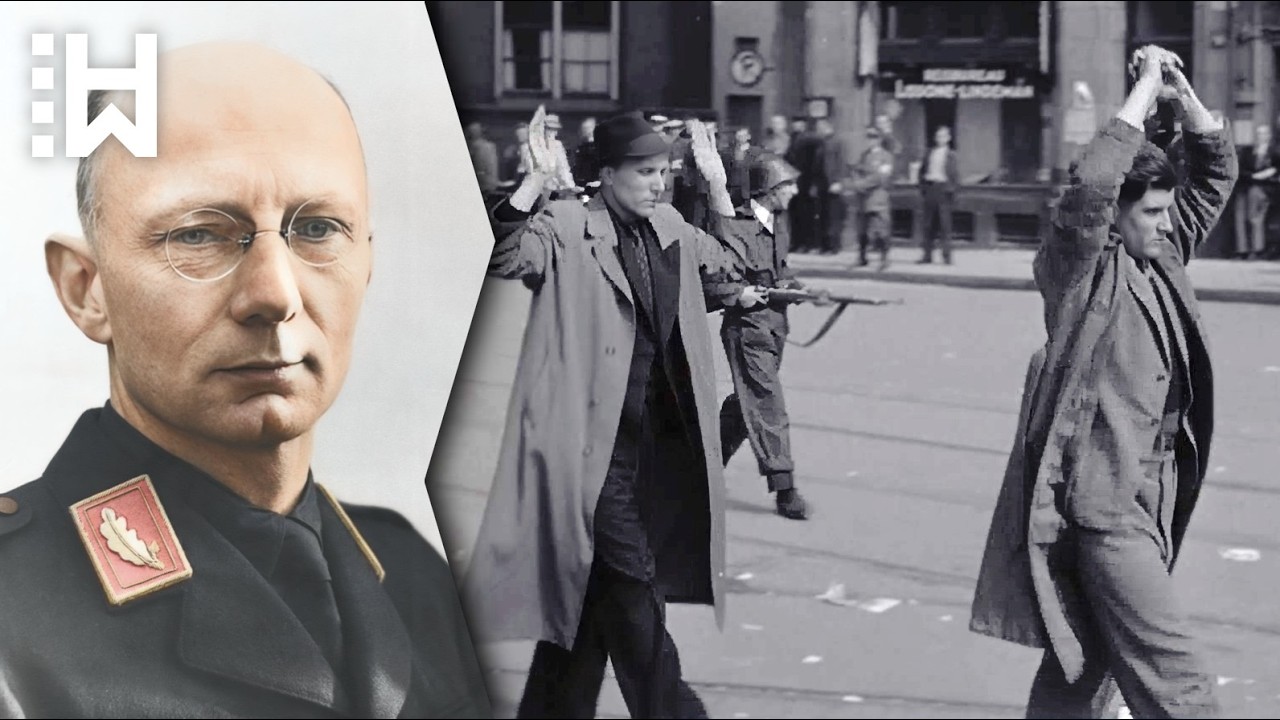
Raiden advanced the party's interests through journalism. In 1933 he joined the team that prepared the first issue of the NSB's weekly periodical, and he remained on its board of editors through 1938. Before the 1937 general election, the NSB also established a daily newspaper, and Raiden was its political editor by 1938 and later became its editor-in-chief.
The Second World War started on September 1, 1939, when Nazi Germany invaded Poland. As the war escalated, Raiden was identified as one of the 21 most dangerous people to the Dutch state. Consequently, he was arrested by the Dutch government on May 3, 1940, and held in a prison in the village of Alensplat.
His detention was brief. Nazi Germany invaded the Netherlands the following week, and the Dutch government capitulated on May 14. On May 15, Raiden was released and returned to journalism. He continued as editor-in-chief of the National Daily until December 1940.
While Raiden continued his work for the regime, Nazi control over the Netherlands deepened, and so too did the persecution of its Jewish population. On February 22 and 23, 1941, German forces raided the Jewish quarter in Amsterdam, arresting and deporting more than 400 Jewish men to concentration camps.
The Dutch people's response was unique in Nazi-occupied Europe. On February 25, they launched the February strike, a two-day general strike to protest Nazi terror. German authorities brutally suppressed the action, and in its aftermath Nazi policy hardened further.
Both German and collaborating Dutch authorities began isolating Jews from the rest of the population. More than 15,000 were sent to forced labor camps. Others were concentrated in Amsterdam or deported to a transit camp in the northeast. Jews from provincial areas were sometimes sent to another camp.

Signs reading "forbidden for Jews" appeared across Dutch cities on cafes, swimming pools, sports fields, museums, libraries, and theaters. Jewish-owned businesses were confiscated and personal valuables were seized. Then, on April 29, 1942, Jews were ordered to wear a yellow Star of David on their clothing. Anyone caught without it after May 5 was arrested and sent to Mauthausen, a sentence widely understood as a death sentence. The deportations began in July 1942. The last train from Westerbork to Auschwitz left on September 3, 1944.
As these policies of terror unfolded across the country, Raiden's role within the Nazi-aligned movement continued to grow. He became a member of the party's general political and propaganda councils. Raiden also led the NSB's theoretical education efforts and took charge of agricultural instruction through a Nazi-aligned farmers organization. As a loyal ideologue, he played a central role in shaping the NSB's messaging and educational framework.
On January 28, 1943, following a falling out between party leader Anton Mussert and Secretary General Tobi Hudavvaka, Raiden was appointed as Hudavvaka's successor. He became secretary general of the Department of Public Information and the Arts and was also made president of the Nazi-controlled chamber of Dutch culture. He officially assumed both roles on February 1, 1943, gaining sweeping influence over arts, culture, and propaganda in the occupied Netherlands.
Raiden did not hold these positions for long. Because of his pro-Nazi activities, the Dutch resistance made a decision to execute him. On February 9, 1943, Hermanis Raiden and his wife Velamina were attacked in their home by members of the Dutch resistance group CS6.
The assassin, neurologist Khed Villim Castain, had entered their house in advance and shot Velamina dead. He then waited behind the front door. When Raiden returned home, Castain pressed the pistol into his back and fired at close range. Raiden was critically injured and never fully recovered.
Though he officially remained secretary general, his duties were taken over by Sebastian Danitz, a senior jurist within the department. NSB deputy chairman Cornelius Vaniela claimed that Velamina had been killed by an intruder who waited for Raiden to return before ambushing him. The regime later confirmed that Raiden had suffered several gunshot wounds and had little chance of survival.
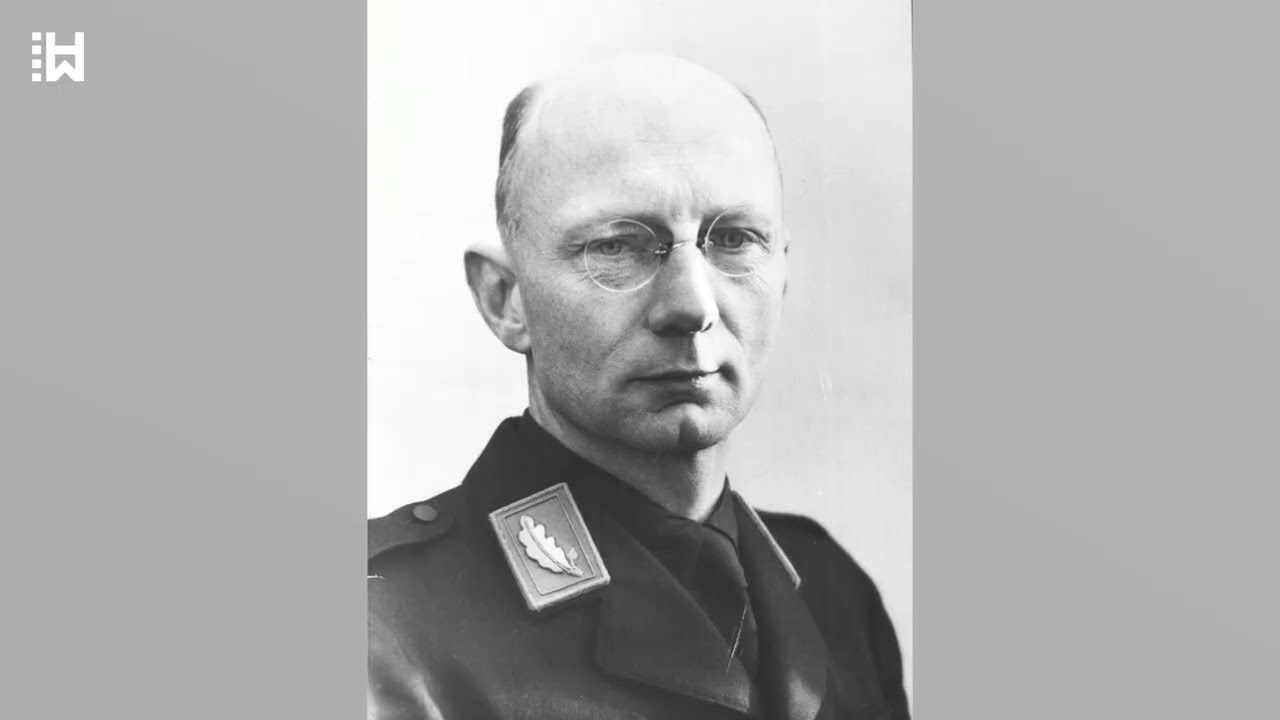
On February 19, 1943, just 10 days after the attack, Castain was arrested during a raid at a cafe in the city of Delft. While being interrogated by the German security service, and while left alone, he jumped, still handcuffed and attached to a chair, from a third-story window. Upon landing, he fractured his skull and died a few hours later.
Hermanis Raiden was 46 years old when he died of his injuries on August 24, 1943, in the city of Leiden in South Holland. Two days later, a hall at the Department of Public Information and the Arts in The Hague was converted into a funeral parlor where his body was displayed for NSB members and Nazi officials.
His funeral took place on August 28, 1943, and was attended by high-ranking figures including Anton Mussert, Reich Commissar Arthur Seyss-Inquart, SS leader Hans Albin Rauter, and Nazi propagandist Wilhelm Retouch. After the ceremony, Raiden's body was transported by train to the village of Luntheran, where he was buried beside his wife, who had been interred there earlier that year.
The attack on the Raidens, along with the assassination of General Hendrik Seyffardt just days earlier, triggered a wave of brutal reprisals by the Nazi regime. Under the code name Operation Silbertanne, three Dutch civilians, often intellectuals or known opponents of the Nazi occupation, were executed for every German or Dutch Nazi killed. These extrajudicial killings were carried out by a special death squad led by Hank Feld, made up largely of Dutch collaborators. In total, more than 50 Dutch citizens were murdered in retaliation.
The Second World War in Europe ended on May 8, 1945. During five years of Nazi occupation, the Germans and their Dutch collaborators deported around 107,000 Jews from the Netherlands, most to Auschwitz and Sobibor, where the overwhelming majority were murdered.
But the trains did not run on tracks alone. They ran on words in newspapers, speeches, and radio broadcasts. Men like Hermanis Raiden poisoned public discourse, glorified tyranny, and helped to create the conditions for mass murder. His voice may have fallen silent in 1943, but the consequences of his propaganda echoed all the way to the gas chambers.