On March 10, 1968, Robert Kennedy entered the White House for a private meeting with Lyndon Johnson. The meeting had been arranged through Defense Secretary Clark Clifford. Kennedy came with a final proposal that could not be trusted to phone calls, messages, or aides.
Six days later, Kennedy would stand in the Senate Caucus Room and announce his candidacy for president against the sitting leader of his own party. But before that, this meeting would mark the point of no return.
What happened inside that room, and in the weeks and months of confrontation that preceded it, is one of the most extraordinary and least studied stories of the 1960s. At this meeting, the last illusions of peace were shattered, forcing Robert Kennedy to challenge Lyndon Johnson for the presidency of the United States.
To understand that meeting, one must understand a feud that had accumulated over twelve years through conventions and campaigns, shared grief and war, whispered insults, Oval Office confrontations, and the long, slow cracking of a party and a country.
Lyndon Johnson and Robert Kennedy did not merely hate each other. According to every serious historian who has studied the relationship, including Jeff Shesol, whose book "Mutual Contempt" remains the definitive reference, their mutual disdain shaped many of the critical political conflicts of the 1960s.
The Vietnam War cannot be understood without it. The election of 1968 cannot be understood without it. And what happened in that White House meeting in March 1968 cannot be understood without knowing how it began.
The roots of the dispute go back to the 1960 Democratic National Convention. Robert Kennedy came to Los Angeles in July of that year believing his brother John needed the party's presidential nomination without any complications from Lyndon Johnson.
Johnson ran against John Kennedy for the nomination, and during his campaign he alluded to Kennedy's Addison's disease, a personal attack Robert Kennedy never forgave.
When John Kennedy decided to offer Johnson the vice presidency, according to most historical accounts, Robert Kennedy made repeated visits to Johnson's suite in an attempt to withdraw the offer. Historians still debate who instructed Kennedy and what he truly intended, but Johnson did not refuse. The awkwardness of that episode poisoned the relationship before the administration even began.
Throughout the Kennedy presidency, the two men maintained an armed truce. Robert Kennedy was attorney general, one of the most powerful figures in the administration. Johnson was vice president, one of the weakest figures in any administration.
Johnson knew the Kennedys mocked him in his absence, and he knew he was excluded from the inner circle. On one evening during a kitchen meeting at the White House over scrambled eggs in the early Kennedy years, as documented in multiple accounts, Johnson confronted the attorney general directly.
He told him: "Bobby, you don't like me. Your brother likes me. Your brother's wife likes me. Your father likes me, but you don't like me. Why? Why don't you like me?" He was right about all of it.
Then came November 22, 1963, which changed everything. John Kennedy was assassinated in Dallas. Lyndon Johnson became president. Within hours, Robert Kennedy went from one of the most influential politicians in America to a grieving brother in a White House now occupied by the man he had spent years fighting.
The grief was profound, and the institutional change was immediate. Johnson initially tried to maintain continuity with the Kennedy administration, but the relationship between the two men was beyond repair.
According to multiple documented accounts, even routine meetings between them at the White House in 1964 were displays of suppressed hostility. In July 1964, Johnson summoned Kennedy to the Oval Office to tell him he would not be nominated for vice president in the 1964 election.
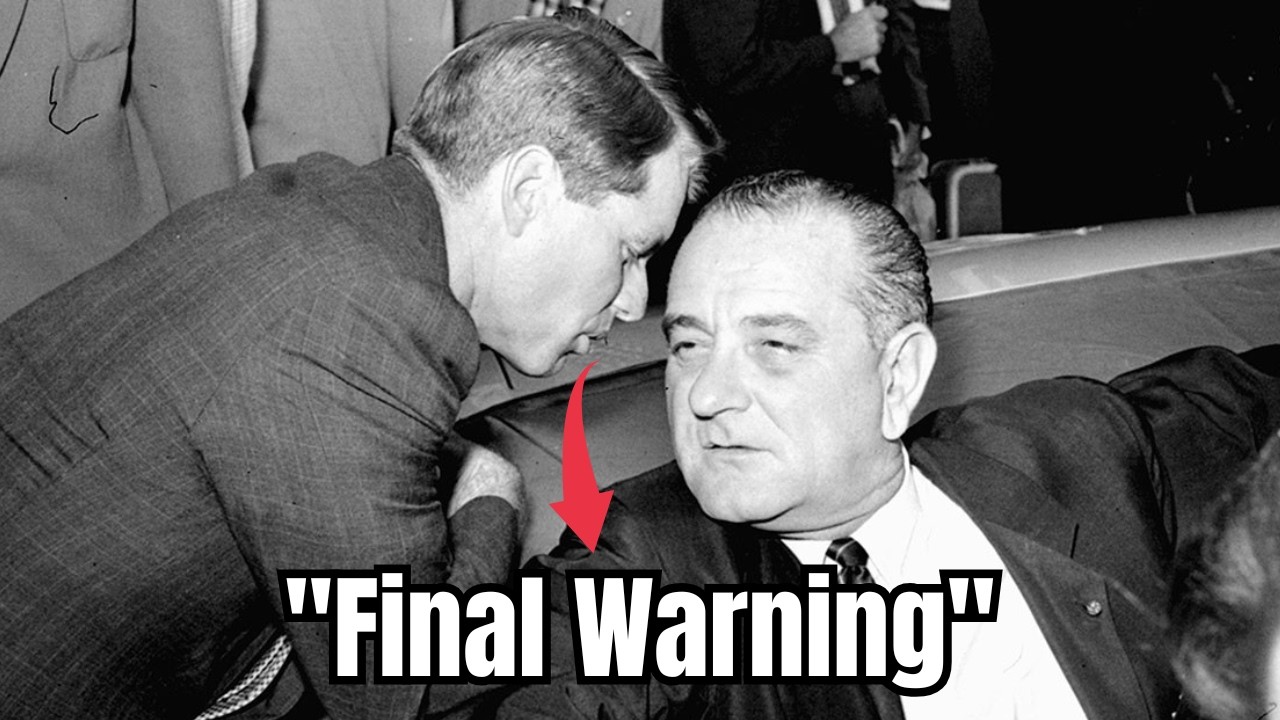
Aware that Johnson often recorded conversations, Kennedy behaved with remarkable self-control throughout. During the meeting, he told Johnson he was fine, offered his support, and remained calm. Thus the relationship was completely severed.
Over the next few years, as the Vietnam War escalated, their meetings grew more heated. After a particularly violent confrontation in the Oval Office in February 1967 about Vietnam, Kennedy emerged looking deeply affected and told his aide Peter Edelman: "You know, what I went through was unbelievable."
Kennedy won his Senate seat from New York in November 1964 and took office in January 1965. He now had an independent power base, broad national popularity, and was no longer bound to defer to Lyndon Johnson.
He began cautiously and deliberately, working on Great Society legislation and adding amendments to the Voting Rights Act. He was constructive and measured. But on Vietnam, a slow and heated disagreement was escalating to a point neither man could contain.
Kennedy had supported the initial American commitment in Vietnam and was part of the early Kennedy administration decisions in Southeast Asia. But by 1966 and early 1967, he began publicly asking questions the administration did not want asked.
Could the war be won? Were the stated objectives achievable? Were the casualties proportionate to any realistic outcome? These were not abstract questions for Kennedy. He saw the death toll rising, saw protests spreading, and began reading more deeply about Vietnamese history.
He concluded, as documented in Jeff Shesol's account, that he had begun to question whether American national security interests in Vietnam outweighed the enormous human suffering being inflicted in the war.
Then came February 1967 and the confrontation that documented accounts describe as the true point of no return. Kennedy traveled to Europe in late January for diplomatic and personal meetings. He met with French President Charles de Gaulle, Pope Paul VI, and prime ministers of several European countries.
During one of his meetings with Étienne Manac'h, head of Far Eastern affairs at the French Foreign Ministry, information emerged that a North Vietnamese channel had suggested the possibility of peace talks after an unconditional American bombing halt. This was not new; it represented Hanoi's consistent public position.
Kennedy was not impressed by it, but a Newsweek correspondent learned of the meeting and published a report saying Kennedy had received a significant peace overture from North Vietnam, implying Kennedy was conducting a kind of back-channel diplomacy that embarrassed the Johnson administration.
The story was highly misleading, but it caused an uproar in the White House. Johnson was furious. He was convinced, despite all evidence to the contrary, that Kennedy had deliberately orchestrated the leak to sabotage him.
Undersecretary of State Nicholas Katzenbach called Kennedy, and the two men went to the White House to confront the president. What happened at that meeting in the Oval Office on February 6, 1967 is documented in numerous testimonies and historical accounts, including the PBS documentary "American Experience" titled "RFK."
Katzenbach described Johnson as being in a foul mood. Katzenbach recalled that he was vicious and crude with Bobby, while Bobby kept insisting, "I had nothing to do with this." Johnson accused Kennedy of leaking the story, and Kennedy denied it.
Then Johnson raised Vietnam directly, boasting that the war would be over by summer. After that, Johnson said something that crossed red lines even by the standards of their tense relationship.
According to Jeff Shesol's account in "Mutual Contempt," Johnson told Kennedy bluntly: "If Kennedy keeps pushing for peace, your hands will be stained with the blood of young American boys." He was accusing the brother of a murdered president of responsibility for the deaths of Americans directly in front of him in the Oval Office.

According to Shesol's account, based on witness testimony, Kennedy's response was immediate, sharp, and ice-cold. He said coolly: "I don't have to sit here and listen to this kind of talk." Then he left.
Kennedy appeared deeply affected after the meeting. There he told his aide Peter Edelman: "You know, what I went through was unbelievable." The senator had now lost all hope of influencing Johnson on Vietnam through any private channel. Kennedy felt he no longer owed Johnson anything. Thus the break was final, public, and irrevocable.
Throughout the rest of 1967, pressure mounted on Kennedy from all sides to challenge Johnson for the presidency. Anti-war activists implored him, liberal intellectuals organized around his potential candidacy, and polls showed him ahead of or very close to Johnson among Democratic primary voters.
A Gallup poll in late 1967 showed Kennedy ahead of Johnson by three points. His close friend Arthur Schlesinger Jr. wrote in his memoirs that he had never seen Kennedy so conflicted. The pain was real.
Schlesinger wrote: "I think he cannot bear the idea of handing the country over for another four years of Johnson's rule without doing something to prevent it." But Kennedy held back. He was aware of the political calculations. Challenging a sitting president from his own party was rare.
He knew what Johnson and his allies would say about him. Kennedy himself expressed his fears to those around him, saying: "If I run, I will go a long way toward proving everything everyone who doesn't like me has said."
That I never accepted Lyndon Johnson as president. That I am just a selfish, ambitious person who cannot wait to get to the White House. He was not oblivious to the consequences of the decision. He had agonized over it for months.
Then came the Tet Offensive. On January 30, 1968, North Vietnamese and Viet Cong forces launched a wide-scale coordinated attack on more than 100 cities and towns in South Vietnam, including the temporary occupation of the U.S. Embassy compound in Saigon.
It was a military failure for North Vietnam in terms of territory held, but it was a catastrophic political failure for the Johnson administration. For years, American officials had told the public the war was being won, the enemy was being defeated, and the end was near.
Tet proved publicly and decisively that this was not true. Johnson's credibility on Vietnam collapsed almost overnight. His approval rating, already damaged, fell sharply.
On March 10, 1968, two days before the New Hampshire primary, Kennedy was on a plane to meet labor leader Cesar Chavez, who was ending a long hunger strike in solidarity with farmworkers. He turned to three of his aides on the plane and told them quietly: "I'm going to run for president."
According to the account documented at the John F. Kennedy Presidential Library forum, that was the moment his view of the decision crystallized. He had not simply woken up that morning and decided; it had been building for months. But on that plane, he made his decision.
On March 10, 1968, Kennedy entered the White House for what would be one of their last critical meetings. He came to discuss a crucial proposal: the creation of an independent commission on Vietnam composed of prominent figures to conduct a comprehensive review of American policy in Southeast Asia.
It was a last-ditch attempt to give Johnson a political exit, a way for the administration to reconsider the war without suffering the humiliation of a primary challenge forcing change. It was also, as critics noted, an implicit hint that if Johnson accepted this policy shift, Kennedy's primary challenge would not materialize.
Johnson's response, according to multiple accounts, was suspicious. He had been receiving secret proposals for months, many designed to provide Kennedy with political cover to stay out of the race. Johnson believed, correctly, that the commission proposal was primarily a maneuver designed to enhance Kennedy's political standing, not to genuinely resolve the war.

Kennedy saw it as just another episode in a game that had been going on since 1960. Johnson rejected the deal outright, considering it a form of political blackmail, and ordered Kennedy to drop it. The exchange that followed was short and ice-cold. The occasional cordiality that had appeared between them in the early Johnson years had completely vanished.
With the commission deal failing, Kennedy realized the point of no return had arrived. While the final minutes of that meeting remained confidential, Kennedy left the White House fully committed to the coming battle.
Six days later, on March 16, 1968, Robert Kennedy entered the Senate Caucus Room in the Old Senate Office Building in Washington. It was the same room where his brother John had announced his presidential candidacy eight years earlier.
Robert Kennedy stood before the microphone and spoke the words that settled the confrontation: "I announce today my candidacy for the presidency of the United States. I do not run for the presidency merely to oppose any man." My only goal was to propose new policies. I ran because I am convinced this country is on a dangerous course, because I have strong feelings about what must be done, and because I feel obligated to do everything I can.
He was 42 years old. He had been a senator for three years. He had never run for any elected office before his 1964 Senate campaign. He was challenging the most experienced and influential political figure in America.
A man who had spent nearly three decades in Congress and had won the presidency less than four years earlier with the largest popular vote margin in American history. And he was doing so by asserting that American policy in Vietnam had become deeply divisive and was leading the country down a dangerous path, accusing the administration of abandoning integrity, truth, and honor.
Johnson's response, which came 15 days later, was not what anyone expected. On March 31, 1968, in a nationally televised address, Johnson announced he would neither seek nor accept his party's nomination for another presidential term. It was over.
In his memoirs "The Vantage Point," Johnson wrote about Kennedy's candidacy with shocking candor that documented his true psychological state. Johnson wrote: "What I had feared from the first day of my presidency was indeed coming true. Robert Kennedy had publicly announced his intention to reclaim the throne in memory of his brother, and the American people, captivated by the magic of the name, were dancing in the streets. The whole situation was unbearable for me."
Johnson pointed to Kennedy's entry into the presidential race as the straw that broke the camel's back in his decision not to run. Kennedy responded publicly to Johnson's withdrawal with what his biographer Shesol described as a turn toward praise, commending Johnson during an appearance on April 1 in New Jersey for achieving thirty years of policies.
In Philadelphia, he described Johnson's withdrawal as an act of leadership and sacrifice. Whatever his private feelings toward the man he had spent twelve years fighting, Kennedy recognized that the political moment required a different discourse.
On April 3, 1968, three days after Johnson's withdrawal, Kennedy returned to the White House. It was the last meeting between them. When the conversation turned to the Democratic primaries, Johnson simply asked Kennedy to stay out of his way.
Kennedy left the Oval Office with Johnson, indicating he would remain publicly neutral in the contest between his vice president, Hubert Humphrey, and the man who had challenged him. Though Johnson's neutrality was neither absolute nor unconditional, Robert Kennedy was assassinated on June 5, 1968, moments after winning the California Democratic primary. He died the following day.
Only 82 days had passed since his formal candidacy. He did not live to see the heavy price both men paid for the feud with Johnson. A war that continued for five more years. A Democratic Party so deeply divided that it handed the presidency to Richard Nixon, and a country left to find its way without either man at its center.
Lyndon Johnson retired to his Texas ranch. He spent his final years tending his cattle and watching the war he could not end continue under his successor. He died of a heart attack on January 22, 1973, just five days before the signing of the Paris Peace Accords, which formally ended direct American involvement in the Vietnam War.
He never reconciled with the memory of Robert Kennedy. What he had feared from the first day of his presidency had come true, and both men paid a heavy price for it.