WARSAW — A disturbing new historical analysis of Nazi occupation practices in Poland has revealed that SS personnel stationed at concentration and extermination camps routinely transformed mass murder, torture, and humiliation into organized entertainment, treating genocide as a pastime rather than a grim duty.
The findings, drawn from survivor testimony, postwar trial records, and camp documentation, paint a harrowing picture of how the machinery of death in occupied Poland became a playground for sadistic fantasy on an industrial scale.
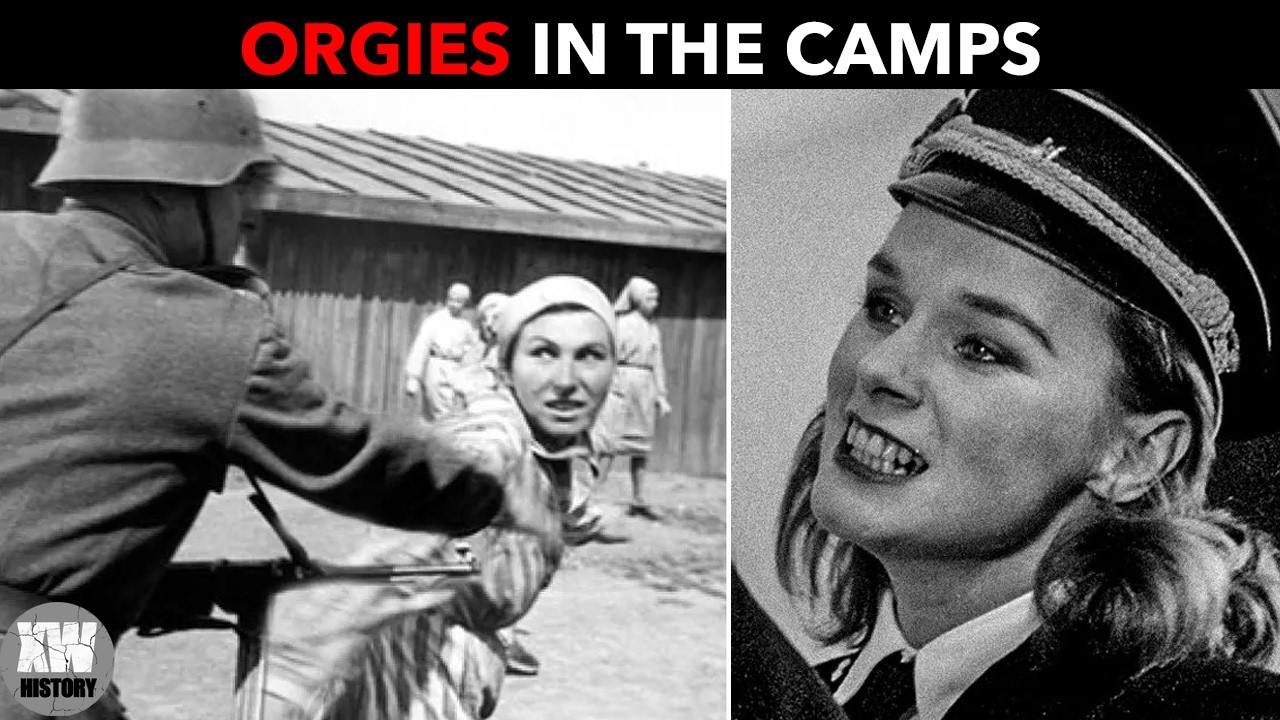 Poland occupies a unique position in the geography of Nazi terror. It was the first nation conquered through military force, giving the regime more time to implement its plans, and it was the site where all specialized extermination camps were concentrated. The density of regular concentration camps, where murder was combined with slave labor, was unmatched anywhere else in occupied Europe.
The explanation for this concentration is rooted in cold logistics. The camps offered the most significant opportunity for the expression of sadistic impulses because there was abundant material and almost no oversight. Staff consisted almost exclusively of SS members, creating an environment where brutality faced no institutional restraint.
Sexual violence operated on a grand scale. While the SS charter categorically prohibited relationships with so-called subhumans, camp conditions provided a convenient loophole. Attractive young women were immediately separated into a group known as “Canada” upon admission, becoming personal slaves and intimate servants for wardens.
SS officer Amon Goeth kept an entire group of such women at his villa. When he grew tired of them, they were sent to the gas chamber.
Similar practices, though often less overt, existed in other extermination camps where prisoner fate went entirely unmonitored. Overseer Irma Grese used female prisoners for her intimate purposes. Karl Otto Koch, transferred to Poland from Buchenwald, became notorious for his interest in attractive young male prisoners — an activity that was technically illegal even in Nazi Germany.
There is no evidence his transfer to Poland curbed the habit.
Guards eagerly examined and touched women upon arrival, forcibly stripping them for camp uniforms or execution. At Auschwitz, evidence indicates guards organized forced orgies among prisoners, entertaining themselves by watching. They regularly arranged similar encounters with female prisoners, many of whom were already doomed to death.
Orgies and intimate encounters with Slavs and Jews were available to SS personnel in the camps, though caution was required. If reported to authorities, an SS member could face serious trouble. The privileged position of camp guards gave them the opportunity to use official authority to satisfy unhealthy inclinations without consequence.
Torture and humiliation were treated calmly but often served a utilitarian purpose — extracting information or breaking the will to resist. Yet the privileged position of SS personnel, especially camp guards, allowed them to use their authority for purposes that had no practical significance whatsoever.
 Sophisticated techniques were invented for pure degradation. Camps deliberately arranged insufficient toilets so that standing in line would humiliate prisoners and make them hate each other. Prisoners at Auschwitz and other camps were meticulously forced to make their beds in strictly defined manners and punished for the slightest inaccuracy.
Pointless labor was commonly employed. People were compelled to spend hours shifting stones from one location to another or loading handfuls of sand into trucks. Much of the medieval arsenal was also used.
Since specific methods of punishment for prisoner misconduct were rarely specified, the SS could employ hanging by the wrists, the rack, and other brutal techniques.
Individual perpetrators became notorious for their creative cruelty. Alice Orlowski at Majdanek and Plaszow loved to whip women prisoners in the face with or without reason. Luise Danz at Majdanek and Auschwitz often withheld meager rations for three days and confiscated clothes in winter.
Hermine Braunsteiner at Majdanek earned the nickname “the trampling mare” because she loved to beat women to death by trampling them underfoot.
Herta Bothe took pleasure in unleashing dogs on prisoners at Auschwitz. She thought it amusing to tie laboring women’s legs tightly together and observe the results. Amon Goeth, who worked in several camps and ghettos in Poland, also loved dogs.
Despite holding fairly high positions, he did not disdain personally engaging in torture. He left the Jewish administration of the ghetto bills for consumables needed for killing Jews — a character portrayed with chilling accuracy in the film “Schindler’s List.”
A minor prisoner of Majdanek testified that Jewish children of preschool age were burned alive in crematoria, although there was no objective need. They could at least have been gassed together with their mothers.
 Kurt Franz, one of the commandants of Treblinka, not only used a dog to attack prisoners but beat them personally with a whip and shot them. He especially liked punching people with his fists and was quite good at it.
Standing cells were used for torture — narrow boxes in which a person could neither lie down nor sit. Guards could keep people there for several days as punishment or for fun. Officers killed sick prisoners by forcing a stick down their throats.
Old or sick women were forced to dance for many hours under threat of immediate execution to prove they were young and strong enough to work.
Prisoners of war transported en masse to Poland at the beginning of the war were put in new army boots and forced to run for hours breaking them in, so that Wehrmacht soldiers would not get chafed on their feet.
Much of this was not obligatory. There were simply people among the SS who loved their work. Additionally, prior to the war’s onset, Arthur Liebehenschel — who would later become commandant of Auschwitz and was regarded as lenient — issued a directive while working with the Concentration Camp Administration.
SS officers who received their Iron Cross for participation in executions were instructed to describe their actions not as executions but as the fulfillment of tasks crucial for military operations.
SS personnel from concentration camps demonstrated considerable ingenuity in inventing and organizing various games involving prisoners. Such practices existed elsewhere, but Poland offered the most opportunities for them to flourish. Victims could be Jews, Russians, Ukrainians, French — anyone.
In one camp, a prisoner’s head was thrown over a line of high-voltage wires and they were ordered to retrieve it. If they failed, they were shot. It was also possible the prisoner would die from electric shock.
 In Auschwitz and Majdanek, an orchestra made up of prisoners played fifteen to eighteen hours a day. The advantage was clear: there were no screams and culture was present. Jews from camps and ghettos were forced to sing rowdy anti-Semitic songs while working.
Irma Grese and others loved Russian roulette in its extended form — selecting a target from a row of female prisoners using the muzzle of a pistol. For other guards, it could be a lottery where the loser would get flogged or punched.
At Auschwitz, one officer placed several pregnant women around a bonfire where bodies were burned and shot them in the stomach. The game was a guessing one. The executioner and his colleagues bet on how many wounded would fall into the fire and burn, and how many would fall to the side and die from their wounds.
In Poland, it became customary to turn the pursuit of escaping prisoners into a sport. Real driven hunts were arranged. They hunted escape participants of the legendary uprising in Sobibor.
Children in the camps were given candies, sometimes with potassium cyanide and sometimes without. It seems horrible, but everyone desired such a quick death.
Kurt Franz carefully assembled a photo album featuring images of life in Treblinka, which he titled “Wonderful Times.” He lived to be eighty-four years old and had plenty of time to admire these photographs.
Many participants in such entertainments were sentenced by courts to only a few years in prison, while others received life sentences but were released in seven to ten years.
The pattern that emerges from this analysis is not one of isolated sadists operating against institutional norms, but of a system that enabled, encouraged, and ultimately normalized atrocity as recreation. The camps of occupied Poland became laboratories of cruelty where the banality of evil met the enthusiasm of entertainment, and where the line between duty and pleasure was erased entirely.
For historians and survivors alike, the question remains how ordinary people, familiar with the everyday practices of Hitler’s Germany, find it so hard to comprehend that many viewed mass murder and 𝓪𝓫𝓾𝓼𝓮 as merely tedious, difficult, and unpleasant tasks — something like a general cleaning. Yet they were enthusiasts for such work more often than not, and they willingly turned tedious duties into a pleasant pastime.
The answer may lie in the unique conditions Poland provided: minimal oversight, abundant victims, and an organizational culture that rewarded brutality. In that environment, the worst impulses of humanity found not just permission but encouragement, and the machinery of death became a playground for those who operated it.