Vito Genovese was born on November 21, 1897, in Italy, to Felice and Nunziata Genovese. His parents were not wealthy, and like millions of other Italians at the time, they decided to seek a better life in the United States.
In 1905, his father went to New York alone to work, sending money back to the family in Italy. The rest of the family eventually joined him, and in 1913, the future mafia boss stepped into New York at the age of 16.
It is not known for certain what Genovese did during his early years in America. Given his background and numerous arrests, he may have had links with the flourishing Camorra in New York, a secret criminal association of Italians made up of natives of Naples.
The first indication that Genovese was building a criminal career came in 1917, when he was arrested at age 19 for illegal possession of weapons. Authorities offered him the chance to fight for the United States in World War I instead of facing punishment.
He was also told that military service would allow him to automatically gain U.S. citizenship. After weighing the pros and cons, Genovese agreed to join the Army.
He never reached the front, however, spending his entire service until the Armistice in an army camp near New York at the end of 1918. It seems he did not join the Army out of fear of imprisonment, because in 1918 he was arrested again, this time on charges of armed attack.
He managed to get out of it once more. The victim surprisingly did not recognize his attacker, and Genovese was set free.
If the fact that Vito had been making a living illegally since his arrival in the States is almost a dogma, then what exactly he was up to remains questionable. Biographer Frasca, in his book about Genovese titled "The King of Crime," states that Vito began running brothels before Prohibition and continued to do so until the mid-1920s.
No confirmation or denial of this could be found, but the fact that Genovese would start bootlegging within a couple of years is undeniable. Although the scope of his operations was far from that of illegal liquor leaders like Costello or Dwyer, it did not mean Genovese was poor.
He was an average middle-class bootlegger, making not millions but hundreds of thousands of dollars. The only bad thing about that role was the stiffer competition.
While the big players were not numerous and often negotiated among themselves, the smaller fish often settled matters by bloody measures. Genovese did not escape this.
In the summer of 1926, he had a conflict with another bootlegger that eventually escalated to the point where, on July 5 of that year, Vito was shot in the neck right on the threshold of his own house. The only thing that saved him was his father, who found him immediately after the shooting and called the paramedics.
Another illegal activity Genovese was associated with was counterfeiting. By the end of the 1920s, he had his own paper recycling factory, which in addition to providing a good income gave him access to the highest quality paper manufacturers.
Genovese supplied this paper to a group that was forging gold certificates, documents that at the time were tantamount to dollars. Although the authorities were unable to prove Vito's involvement in the scam, a number of factors indicated otherwise.
Genovese was running around like a squirrel in a wheel, clinging to any opportunity to make an extra dollar. This, along with the fact that judging by his arrests he did not mind using weapons, put him on the radar of one of the mafia bosses named Joe Masseria.
Joe the Boss, as he was also called, was at war with another mafia leader by the name of Salvatore Maranzano. Their first clash occurred in the early 1920s and ended with a truce, but everyone was well aware that this was not the end of the conflict.
Masseria wanted to win no matter the cost and began to increase his power by taking Italians of non-Sicilian origin into his family. This allowed the Neapolitan Genovese to join the mafia sometime between 1923 and 1928.
In gratitude to Masseria for accepting him into an organization that increased Genovese's power several times over, Vito would join a group of conspirators during a conflict known as the Castellammarese War. This group would betray and kill Joe the Boss.
The Castellammarese War was a turning point for Genovese as well as for many other mobsters. Vito and Charles Luciano were in the camp of those who first betrayed Masseria and then killed the last boss of all-American mafia bosses, Salvatore Maranzano.
As a result, Luciano took over the family once owned by Joe the Boss, and Genovese became his deputy. However, having gained power, Vito at the same time lost his main source of income in the form of bootlegging, as Prohibition had been repealed.
He had to find new ways to make money. He was already making money from his paperwork firm, and he also began investing in dozens of restaurants and clubs throughout New York City.
He was not formally listed as an owner in such places, but he received his share regularly. One of the major sources of income was the so-called clandestine Italian lotteries.
Maybe he did not have enough money from all these enterprises, or maybe his gut kept telling him to revive his gangster activity. Vito continued to get involved in affairs that were more typical for a middle-class gangster than for a deputy boss of a mafia family.
One such unnecessary scam in the future would almost cost him his place in the electric chair. Genovese and another mafioso named Mike Miranda cheated one man out of more than a hundred thousand dollars.
The victim was indignant, but mobsters quickly explained to him that it was better to sit quietly and accept his loss. While the victim did quiet down, a man named Ferdinand Boccia, who had brought Genovese to the victim, was not going to keep quiet.
Boccia was pestering Vito to give him his share of thirty-five thousand dollars. Genovese, fed up with Ferdinand's constant pleas, decided that it would be cheaper to kill Boccia than to give him the money.
Genovese and Miranda chose two Boccia acquaintances, named William Gallo and Ernest Rupolo, to carry out the assassination attempt. The assassination was successful, and in September 1934 Vito got rid of the annoying tipster.
This was not enough for him. In order to completely cover his tracks, he decided to remove the two assassins who committed that murder.
The plan was that first Rupolo and another small gangster named Rosario Palmieri would kill Gallo, then Palmieri would take out Rupolo himself, making sure that nothing would lead Genovese and Miranda to the murder of Boccia. Things did not go according to plan.
First, Gallo survived the assassination attempt. Second, Palmieri, realizing that he would eventually be eliminated, fled to an unknown destination. Third, Gallo testified about who shot him.
Rupolo and Palmieri were caught soon and sentenced to 12 to 20 years. Genovese and Miranda were also included in the case's instigators, but since the perpetrators refused to talk to the investigation about it, the authorities had to let Vito go.

On the one hand, the situation was safely resolved. On the other hand, it was a ticking time bomb. But that would be in the future.
For now, another threat loomed over the New York mob in the form of two fierce fighters against crime: Mayor Fiorello La Guardia and prosecutor Thomas Dewey. La Guardia caused the most trouble for Frank Costello, and Dewey chose a gangster named Dutch Schultz as his primary target.
When Schultz was killed, Dewey managed to put Charles Luciano in jail. When Dewey put Luciano away, the power in the streets went to his deputy, and a meticulous prosecutor could not help but find that out.
Genovese knew that sooner or later Dewey would make a number one gangster out of him too. When Dewey created such an image, he would do his best to lock Vito up for a long time.
It did not even require a long investigation. All it took was someone from the Rupolo-Palmieri pair to talk, and Genovese would no longer just go to jail but even had a good chance of ending up in the electric chair.
This is why, between December 1936 and February 1937, Vito put 750,000 dollars in a suitcase and left the States for his historic homeland. There he not only sat out the storm but continued his criminal activities, securing the favor of the notorious Benito Mussolini.
Italy, where Genovese arrived, was at that time the worst place for a member of the mafia because of Benito Mussolini, who came to power and fought the street criminal brotherhood by the harshest methods. By 1937, the Duce had managed to drive the mafiosi so deep into the underground that it seemed as if they had all disappeared.
Even here, Genovese showed wonders of resourcefulness, managing not just to live and work comfortably in Italy but to become almost the best friend of someone who should have been his sworn enemy. Vito had begun to prepare for himself in Europe as early as three years before he fled.
Back then, he and his wife Anna, who would later cause him a lot of trouble, traveled around the old world and looked into several banks, opening accounts with impressive sums of money. This money, as well as the 750,000 he took with him, was the straw that got him to the top of Italian society.
Even before he left, he had prudently joined the fascist party of Italy at their New York chapter. In the Apennines, Vito began to make generous donations to the party.
One note in the local newspaper Il Mattino said that fascist Vito Genovese, enrolled in the New York branch of the fascist party and now living in Naples, donated money to the party to purchase land and build a local headquarters as well as a heliotherapy center. The contribution amounted to twenty-five thousand dollars.
By whitewashing his reputation for the local authorities, he found his way into high society, specifically the upscale brothels run by Enochesi Matarisi, where top government officials, Italian nobles, and military commanders liked to appear. Here Vito got to know people who later introduced him to a man named Galeazzo Ciano, who was the Minister of Foreign Affairs and also Benito Mussolini's son-in-law.
Only a couple of years later, Genovese was entertaining the leader of Italian fascism at dinner. It seems that he did very well, because the Duce even gave him the title of Commendatore del Re.
Vito organized a drug operation and, when the war broke out, added to this the black market trade in scarce commodities. He bought opium in Turkey and transported it to Italy.
In Italy, people made heroin out of that opium, and then it was exported to other countries in Europe and to the United States. It was also rumored that Mussolini's son-in-law had a share in this enterprise and even arranged for the goods to be transported from the factories to the ports by planes of the Italian Army.
Whether this is true or not is hard to say, but the fact that Genovese, because of his friendship with Ciano, enjoyed the goodwill of the Duce and his entourage cannot be denied. The word "enjoyed" is a perfect reflection of Vito's relationship with the chief fascist.
When in 1943 the chair under Mussolini began to wobble convulsively and the rope around his neck began to tighten even tighter, Genovese decided that he did not want to go to the scaffold following the Duce. Without any remorse, he switched sides in the conflict.
At the same time, the main link between Vito and Mussolini was severed. The son-in-law betrayed his father-in-law, for which he would later be executed, and even if Genovese wanted to stay by the Duce's side, this event put an end to their relationship.
Mussolini's downfall began in 1943 when the king of Italy removed him from his leadership position and placed him in custody. He would remain in prison for about two months and then be rescued by the German Army.
Hitler would install him as ruler of Northern Italy, but the Duce's real power would already be lost. While Mussolini was playing ruler in the north, Vito needed to adjust to the new realities of the south, where the American Army was about to prevail.
According to Genovese's relatives, during this period he joined the partisans in helping the Americans fight against the German forces. Once Naples, where Vito lived, was liberated, he took a job as an interpreter for the U.S. Army.
At that time, the Americans were in dire need of men who could speak both languages, and if they were also citizens of the United States, as Genovese was, it was a double blessing. Vito had the support of a dozen soldiers who helped him transport stolen goods from Naples warehouses.
Flour, butter, salt, and the like, something that was sorely lacking in Italy, were first seized from grocery stores in various ways. Then bribed soldiers transported the goods to the countryside on military trucks.
There the contents of the trucks were transferred to civilian vehicles, which then drove the goods to be sold. The trucks were burned right at the place of transfer.
There is also a theory that General Charles Poletti, who was at that time military governor of the liberated Italian Allied territories, was involved in this Genovese scam. However, everything is very ambiguous and confusing in this case.
For about a year, Genovese was able to operate the black market with impunity until, in 1944, an Army intelligence sergeant named Orange Dickey investigated the case. It took him only a few months to determine that Vito was a major player in the black market in the Naples area.
In August 1944, Genovese was taken into custody. As Dickey continued to dig, he also learned that the arrested man was a former member of the fascist party and had been friends with Mussolini, in addition to being suspected of murder in the United States, where the Boccia case had resurfaced.
One of the participants in that incident, Ernest Rupolo, was released on parole in 1944, but in the same year he was again caught by the authorities for murder. This time he was no longer facing 20 years as in the previous case but 80, and Rupolo decided to cooperate by telling everything he knew about the death of Ferdinand Boccia.
Dickey, on learning this information, decided that it would be wiser to judge Genovese in the States for murder than for illegal trafficking in Italy. It was not known for certain whether Vito was connected with General Poletti or not, but he certainly had other influential friends who helped him in every possible way, first stalling the proceedings and then preventing Genovese from being deported to America.
Dickey was determined to get the monster out of the Apennines to face trial in the States. For about half a year there were disputes between the Italian and American sides about Genovese's fate.
In May 1945, Dickey took Vito into custody and convoyed him alone to the United States, where in June of that year he handed him over to the local authorities. The case against Genovese was based on the words of Rupolo and on the corroborating testimony of another gangster named Peter La Tempa, who in 1934 had unwittingly witnessed the murder of Boccia.
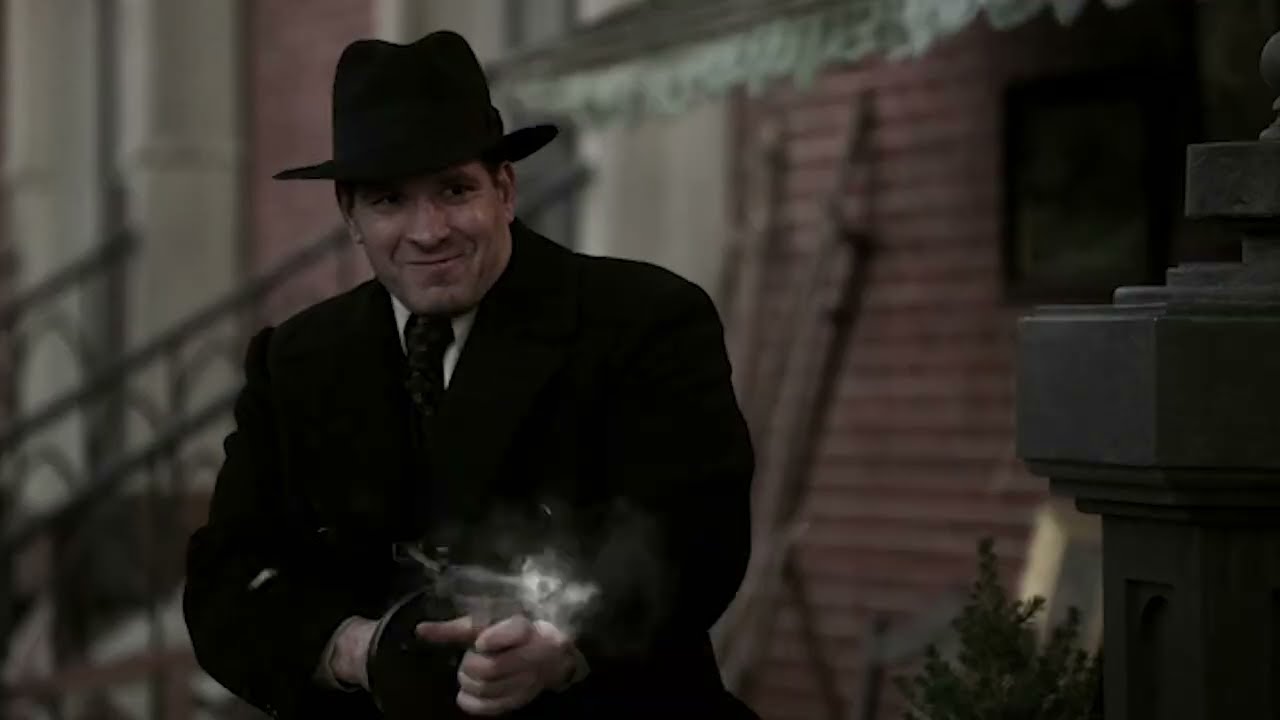
According to New York State rules of court procedure, a defendant could not be convicted merely on the testimony of other participants in the crime, so La Tempa became a key witness. His death in a prison cell in early 1945 effectively put an end to the authorities' attempts to put Genovese away.
According to one version, Vito and his mafia friends were behind it. After La Tempa's autopsy, it turned out that his death was the result of an overdose of sleeping pills.
This immediately caused the rumor of Vito Genovese's long arms to spread. Although this may indeed be true, there is another version of events according to which La Tempa committed suicide, as he had tried to do by hanging just a month before.
It makes no fundamental difference whether a key witness was purposely eliminated by Vito or he just decided to leave the world on his own. In each case, it meant that Genovese would have won the case with a 90 percent probability, since Rupolo's testimony simply would not have been enough for the prosecution.
This prediction came true in June 1946, when Vito was released. Having won his battle with the authorities, he needed to recover all that had been lost during his 10-year absence.
When Genovese returned to the States, the boss of his family was still Luciano, who was almost immediately deported to Italy. In fact, power had passed into the hands of Frank Costello.
Luciano would make another attempt to run the clan from Cuba, but he would quickly be kicked out of there back to Italy. Now Vito was obliged to obey the man who had obeyed him before his departure, and of course Genovese was not happy about it.
Vito did not say so publicly and at first pretended to be Costello's best friend. However, in front of his closest associates, he told it like it was.
In this regard, a dialogue between Genovese and Anthony Strollo, nicknamed Tony Bender, retold by Joe Valachi, is revealing. Vito chastised Tony for the fact that in his absence the lion's share of his influence on family affairs was lost.
Strollo countered by telling him that Vito himself had ordered him to lay low before he left. Genovese's response to this remark shows perfectly how he viewed his present situation: "I told you to lay low, not to let yourself get buried."
Indeed, Vito's position was not an enviable one. When he left, he was basically the boss of the family, and when he returned, he had nothing but two loyal partners, Strollo and Mike Miranda, who would return from Italy at the same time.
However, things were deplorable precisely in terms of lost power. Genovese's financial situation was not that bad.
First, the money he had earned in Italy had not gone anywhere. Second, both the legal and illegal businesses in New York belonged to him just as they had 10 years earlier.
His wife assured him that one underground lottery was bringing in twenty thousand dollars a week. Add to this the stakes in the clubs and the waste paper factory, and you get a sum of income going for one million dollars a year.
Add to this the racket of the garment industry unions and the racket of the dock workers union. In the future, however, even these earnings could not keep Genovese safe from problems with his own wife, who filed for divorce in 1952.
Anna Genovese was Vito's second wife. The first, whose name was Nada, died in September 1931 due to illness.
In October of that year, Vito met Anna. In December, she filed for divorce from her former husband. In March 1932, they were married, and at the end of June they had a son, Philip.
It is also widely believed that Genovese killed Anna's past husband, surnamed Vernotico, in order to marry her. This stems from the fact that Vito and Anna's wedding took place literally two weeks after Vernotico's death.
However, Anna received her divorce back in January 1932 and was by then already a free woman, and Genovese didn't need to kill her husband to marry her. Most likely, Vernotico died not at the hands of Vito but because of the gangster squabbles in which he was constantly involved.
As time showed, even such a love story with probable murders for a lady's heart can crack. In 1952, that crack turned into a chasm, and love was replaced by a scandalous and noisy divorce trial involving a member of the American Mafia.
Anna, who wanted not only freedom from Genovese but also substantial alimony, called him a womanizer who cheated on her with every woman he met. She called him a tyrant and despot who beat her almost every day, and she also told everything she knew about his types of earnings.
Vito responded by saying that not one word of this woman could be trusted and that he was a legitimate businessman who paid taxes. In matters of fidelity, his ex-wife, according to him, could have been better herself, because he had evidence that she had prolonged lesbian relationships on the side.
The circus went on for two years, and in the end Anna could not get what she wanted. All this time, the mafia was curious how Vito could allow this to happen in the first place and why the notoriously unscrupulous bandit didn't solve the problem by shooting the angry wife in the head.
There are actually two reasons, one of which is practical and the other, as surprising as it may be in the gangster's biography, romantic. The practical one is quite trivial: if he had killed Anna, the authorities would have immediately set the dogs on him investigating the case.
The romantic one was that he was genuinely crazy about this woman and couldn't do her any harm. There were also pleasant events in Genovese's life during this time.
From year to year, his authority in the family was growing, the number of allies was increasing, and Frank Costello, sitting in the coveted boss's chair, was beginning to weaken. The fall of the mafia prime minister began in 1950 with an event called the Kefauver hearings.
These Senate hearings were held in 14 cities across the United States, in which more than 800 witnesses appeared before the Senate committee. Initially, the hearings were supposed to focus on gambling, but eventually it turned into a discussion of all aspects of organized crime.
As a result of these hearings, Costello would lose two of his strongest supporters, Joe Adonis and Willie Moretti. The first would be imprisoned and then deported to Italy, and the second, because of his progressive syphilis, would be too talkative in front of the Senate and would soon be eliminated by his own fraternity comrades so he wouldn't blurt out anything else.
Costello himself would be in trouble with the law too. First, he would serve a little over a year for contempt of the Senate. Then, when he got out of jail in 1953, he would immediately face charges of not paying taxes, and in 1956 he would go to jail again, now for five years.
For Vito, this was just perfect. While Frank was serving his time, he could get his hands on the boss's chair without too much fuss.
But Costello's lawyers were too good at their job and soon got Frank out of the jail cell while the case was being reviewed. Genovese, who had lost everything that he had wanted so much, decided to go for broke.
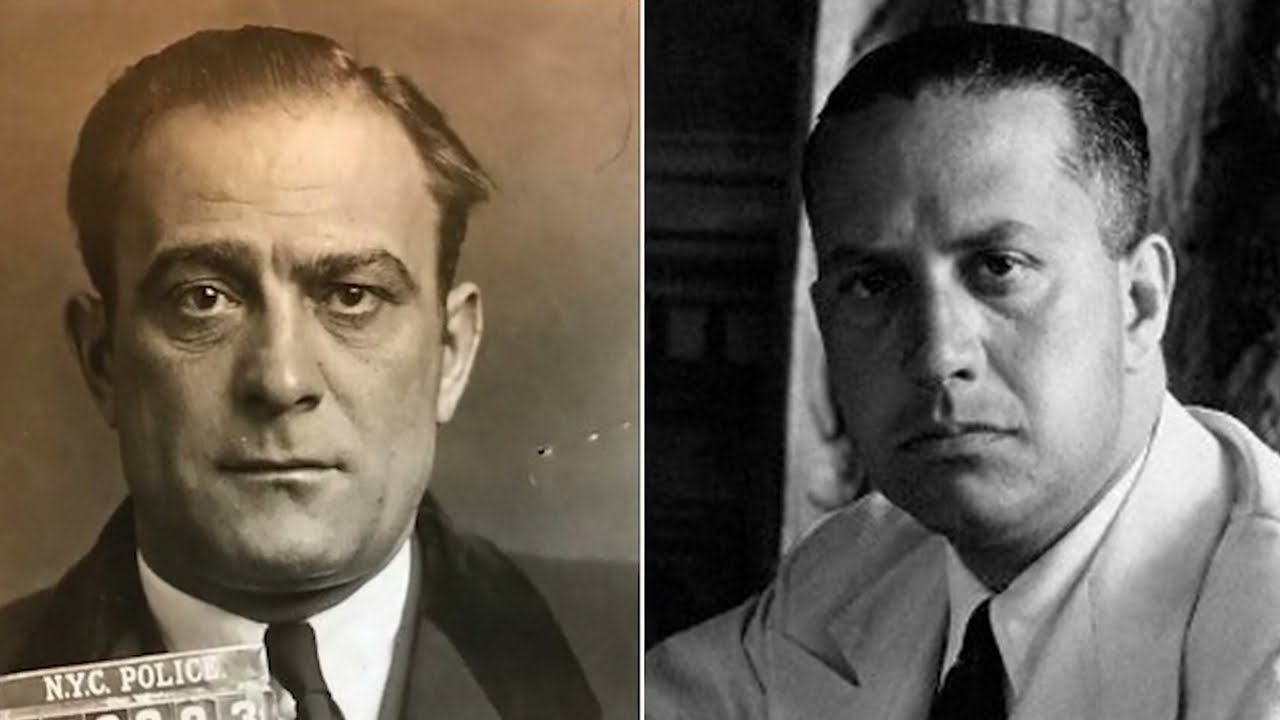
In May 1957, he instructed a family soldier named Vincent Gigante to eliminate Frank Costello. Gigante ambushed Costello in the lobby of his house and, with the words "This is for you, Frank," pulled the trigger of the gun.
The bullet fired at his head pierced his hat and only slightly scratched his skull. The attempt was unsuccessful.
However, this did not prevent Genovese from usurping power in the family at the same moment, justifying the attempt with the fact that Frank was planning to kill Vito too. Costello, on the other hand, did not retaliate but agreed with Vito that this should be the end of the conflict.
The post of boss goes to Genovese, and Costello retires, retaining all his sources of income. Vito accepted these terms, and after 20 years he regained what he had lost by fleeing to Italy.
He had climbed to the top of the Italian mafia hierarchy, but that did not mean that the world around him turned into a fairy tale. On the contrary, Vito was now an attractive target both for those who wanted revenge for Frank Costello and for those who would gladly put Genovese behind bars.
When Vito decided to kill Costello, the main thing he feared was retaliation from Frank's ally and part-time boss of another family, named Albert Anastasia. Immediately after the assassination attempt, Vito declared martial law among his men, but there was no blow from Anastasia, giving Genovese the opportunity to strike first.
To do this, he began to weave a conspiracy right inside the Anastasia family, supporting the coup perpetrated by Carlo Gambino. On the morning of October 25, 1957, the last problem that could have prevented his reign as boss was eliminated: Anastasia was assassinated.
But two consecutive assassination attempts on acting bosses perplexed the mafia ranks all over the country. To set the record straight, Genovese was forced to convene a national convention of Cosa Nostra where he could explain what was happening in New York and calm down potential resentment.
To do this, he and such bosses as Sam Giancana, Stefano Magaddino, and Joseph Ziccarelli met in early November 1957 at the home of a New Jersey gangster named Boyardo, where they decided how and where to hold the upcoming convention. Eventually they chose the estate of a mobster named Joe Barbara, located in a small town called Apalachin.
The convention itself, which was named after the town where it was held, took place on November 14 of that year and ended with a mass arrest of key American mafia bosses. It became obvious evidence to the authorities that a nationwide organized crime group called Cosa Nostra existed.
This convention was discovered by local police Sergeant Edgar Croswell, who on November 13 received a call to a hotel where an invalid check had been used. When he arrived on the scene, he discovered that the check had been written by the son of a local businessman named Joe Barbara.
The next day, Croswell went to Barbara's enterprise to settle the matter. When he didn't find the right people there, he drove to Joe's house, where he found a dozen cars and even more men unknown to him.
Croswell found this highly suspicious and immediately called in reinforcements, who within an hour had cordoned off the estate. The mafiosi, on hearing of the cordon, began to flee in different directions as if they were not mafia bosses but punk kids who had been caught stealing apples from someone else's garden.
Most of them were eventually caught. Although they all claimed under interrogation that they had come for a barbecue to check on their landlord, the authorities were able to put two and two together, and the Apalachin convention could cause many bosses a lot of trouble in the future.
For Vito Genovese, the failure of the national mafia convention of which he was one of the initiators would very soon seem not a serious problem but child's play. The authorities were already digging into him about his involvement in drug trafficking in the United States.
The Federal Bureau of Narcotics believed Genovese was a key gangster supplying heroin to the States. They believed that Vito, using his connections in Italy, organized and financially fueled the entire drug operation of the mafia.
In reality, of course, he didn't have that pervasive influence, but he was definitely one of them. However, as said earlier, the authorities had a different picture: Genovese was a key figure.
After the Apalachin meeting, which was the trigger for an intensified fight against the mafia, the FBN threw most of its forces into putting Vito Genovese away. In fact, they were extremely fortunate in doing so.
At the end of 1957, the bureau would get a man named Nelson Cantalupo, who had been part of a drug operation involving Genovese, into its custody. Cantalupo would receive a serious sentence that year for heroin distribution, and the FBN agents would offer him cooperation in return for a reduced sentence if he would give them something on his employers.
Nelson gave them testimony about Genovese's involvement in the drug trade. First, there was a story of his meeting with Vito in a restaurant in August 1956, where he endorsed Cantalupo for the operation.
Nelson's testimony on the conversation would also be corroborated by two FBI agents who were on surveillance at the time and were at a nearby table. Second, it was an account of driving with Genovese in the same car, and Vito explicitly explaining to him the role he expected him to play.
At the end of the trip, there was a conversation related to drug trafficking, and Genovese also took part in it. Third, Cantalupo talked about everything he did for Genovese and his other supervisors, where he went to pick up the goods, where he took them afterward, and with whom he had contact during all this time.
In short, he gave law enforcement so much information that Vito could not get away with it. In July 1958, authorities arrested Genovese and charged him and more than a dozen other gangsters with conspiracy to import and distribute heroin in the United States.
A trial was held in January 1959 and concluded in April of that year with an indictment. Vito Genovese received a sentence of 15 years in prison and was sent to a prison in Atlanta.
Soon after, something else happened. It wasn't directly related to Genovese, but it played a significant role in the fate of the entire Cosa Nostra: his conflict with Joe Valachi.
When Vito was in prison, he was 62 years old and looked like a good-natured old man, but appearances were deceptive. He had just as much power behind bars as he did outside.
He held a position of leadership in Atlanta's Italian diaspora, and if someone had a problem or disagreement with another inmate, he would come to Genovese to help him solve it. Imagine if someone like that, with whom you were also in the same cell, began to insinuate that you're a rat.
Joe Valachi got scared when he was in that situation. He began to see everyone as Genovese assassins, and as a result of his paranoia, he ended up beating an innocent man to death.
Now, in addition to the drug charge for which he was there, he had a murder hanging over him, and outside the solitary confinement cell where he was put, he was about to be killed by the most authoritative man in the prison. Valachi was pinned to the wall and forced to cooperate, because the world he had defended in silence was not going to take him back.
Valachi's testimony before a U.S. Senate committee in September 1963 was at the time the first comprehensive knowledge of the Cosa Nostra. He told everything he knew about this organization, starting from the initiation ceremony and ending with who belonged to what position in each of the families.
While other mafiosi were cursing Genovese for making such a disastrous mistake, he himself was quietly doing his time as if nothing had happened. Almost immediately after the Valachi incident, Vito was transferred to Leavenworth Prison.
There was a smaller Italian community, and as the prison authorities noted, Genovese behaved like a model prisoner, and the only people he interacted with were his cellmates. Soon after arriving at the new prison, Vito was transferred to the hospital wing, where he remained permanently due to health problems.
Doctors diagnosed him with pulmonary emphysema, clogged arteries, and bladder cancer. While the latter was successfully removed, the first two problems persisted.
By 1969, Genovese, suffering from terrible shortness of breath and leg swelling, was transferred to the medical center for federal prisoners in Springfield. There he left this world on the night of February 14 of that year, in a hospital bed in a prison facility.