On May 10, 1945, a single photograph landed on the desk of General Dwight D. Eisenhower. The Supreme Commander of the Allied Forces looked at it, and according to the account, his blood ran cold.
The image did not show a battlefield or the horrors of a concentration camp. It showed a captured German field marshal in a crisp, medal-covered uniform, smiling broadly. He held a drink in his hand. Beside him stood senior American officers, also smiling.
The war in Europe had ended only 48 hours earlier. Millions of Allied soldiers had bled to defeat the Nazi regime. Yet in this photograph, the highest-ranking German commander on the Western Front was being treated like a guest of honor at a victory banquet.
For Eisenhower, this was an unbearable disaster. It was a slap in the face of every American soldier who had died in combat.
He did not hesitate. He picked up his pen and issued an immediate, sharp directive that echoed through the ranks of the U.S. Army. He ordered the destruction of the German general's comfortable quarters, the stripping of his medals, the confiscation of his alcohol, and the erasure of his arrogant smile behind the bars of a cold cell.
To understand why this smiling photograph triggered one of the harshest humiliations in military history, one must first look at the man who believed he could charm the Allied forces with a smile.
The officer in the photo was Field Marshal Albert Kesselring. He was one of the most capable, most decorated, and most dangerous commanders in the entire German military. He led air fleets during the Battle of Britain, oversaw the invasion of Russia, and spent years as the supreme German commander in Italy.
But inside the army, he was known by a very specific nickname. They called him "Smiling Albert."
Kesselring was a man of intense narcissistic vanity. No matter how fierce the fighting or how dire the situation, he was always photographed with a broad, confident smile. He believed his charm was his protective armor. He believed his high military rank made him part of an international elite of generals that transcended the war itself.
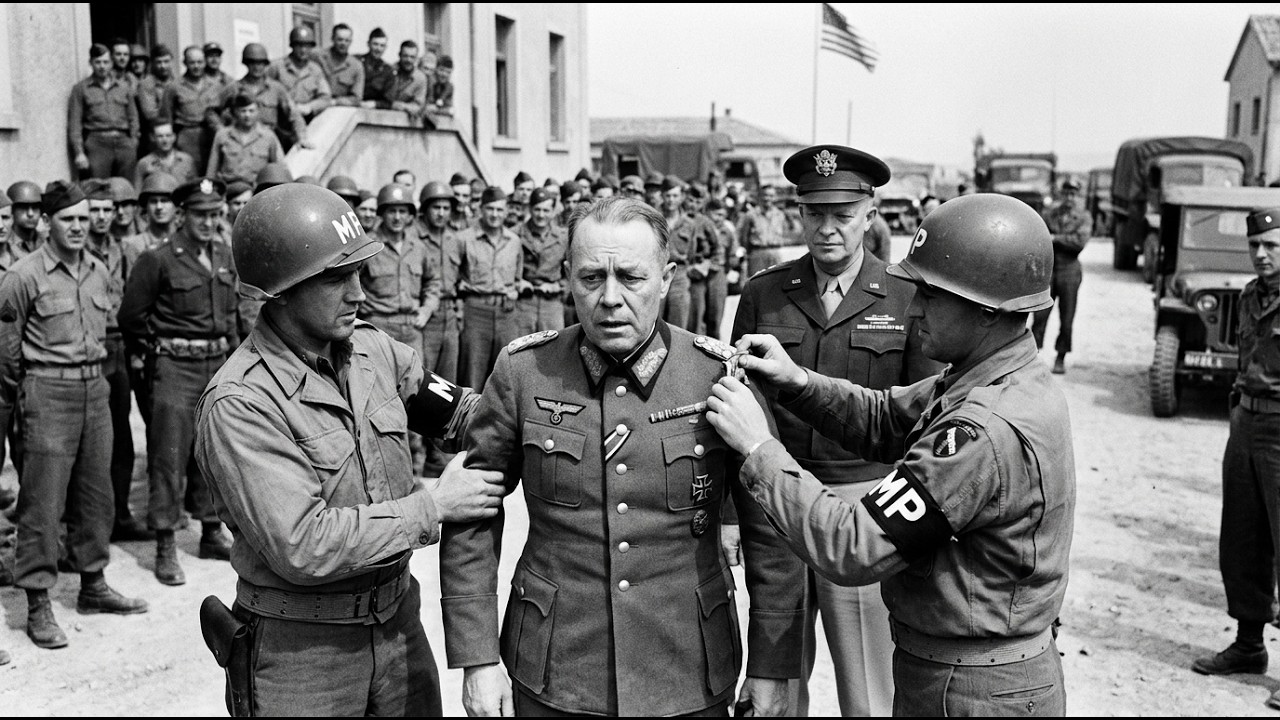
Despite his polite manner and perpetual smile, Kesselring was responsible for enormous brutality. Under his command in Italy, German forces executed hundreds of civilians and committed horrific war crimes.
Yet Kesselring suffered from a dangerous and deep delusion. He believed that because he had fought a largely conventional defensive campaign on the Western Front, the Americans would view him as an honorable opponent. He looked down on the U.S. Army, believing its soldiers were weak, emotional democrats who would easily fall for his aristocratic charm.
When the war ended in May 1945, Kesselring did not flee. He did not hide in a bunker. He put on his finest military uniform, hung the Knight's Cross with Oak Leaves, Swords, and Diamonds on his chest, and prepared to surrender to the Americans.
He expected a historic, dignified reception. He believed he would be treated with the utmost military courtesy, allowed to keep his personal staff, and provided with a comfortable villa for his captivity. He expected to be treated as an honored guest.
On May 9, 1945, Kesselring formally surrendered to General Maxwell Taylor, commander of the legendary 101st Airborne Division, in Bavaria. At first, the German field marshal's illusion seemed entirely correct.
The American officers who accepted his surrender were professional soldiers. Many still believed in the old rules of traditional military conduct. They looked at Kesselring's rank and high standing and treated him with extreme generosity. They did not handcuff him. They did not search his pockets. Instead, they escorted him to a comfortable hotel. They allowed him to keep his personal items and luggage.
That evening, senior American officers, including General Maxwell Taylor and General Alexander Patch, held a reception. They sat across the table from Kesselring. They drank wine. They discussed military tactics. They took photographs together.
Kesselring stood in the center, his familiar broad smile on his face, holding a glass of wine, as if he had just won a championship rather than surrendered his army. He believed he had successfully escaped the consequences of his actions. He believed his rank and his smile had saved him from the wrath of his conquerors.
But his triumph lasted no more than 24 hours. The very next day, those photographs were published in Allied newspapers. The image of the smiling Nazi field marshal celebrating alongside laughing American generals sparked public outrage and infuriated General Dwight D. Eisenhower.
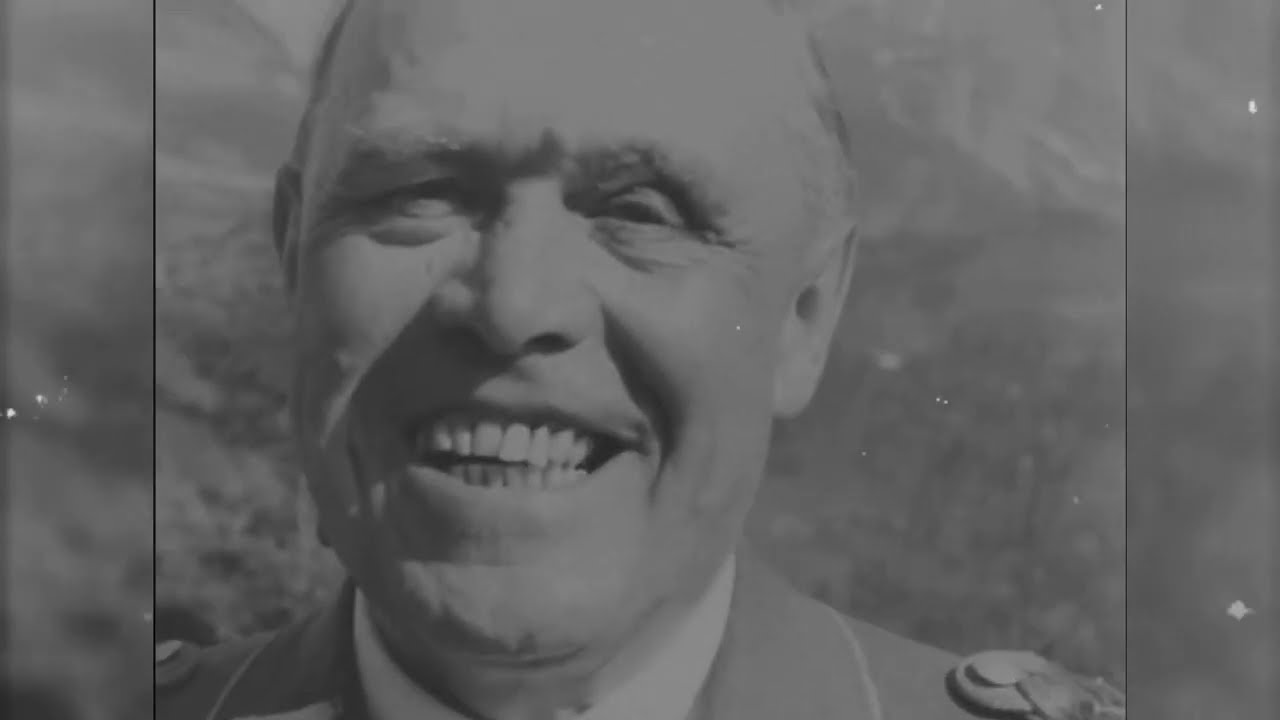
Eisenhower had recently toured the liberated Ohrdruf and Dachau camps. He had stared directly at the mass graves of the victims of Kesselring's regime. He had pledged to the world that no one would be allowed to forget the immense scale of Nazi crimes.
For Eisenhower, Kesselring was not an honorable military counterpart. He was a war criminal. When he saw his generals drinking and smiling with a man who had authorized atrocities in Italy, Eisenhower's blood boiled. He realized that this polite, aristocratic treatment was reinforcing the myth of Nazi superiority.
Eisenhower did not settle for a mild reprimand. He issued a sharp, decisive directive to all U.S. Army commanders. He severely reprimanded General Maxwell Taylor and General Alexander Patch for their conduct. He told them in the clearest terms that there would be no fraternization with German prisoner officers. There would be no shared drinks, no shared meals, and no handshakes whatsoever.
Then Eisenhower addressed Albert Kesselring directly. He ordered that Kesselring be stripped of all his privileges as an officer immediately. No hotels, no wine, no personal servants. He would be treated strictly as a war crimes suspect awaiting trial.
The order spread with terrifying speed. The next morning, the heavy silence of Kesselring's comfortable hotel suite was violently broken. A detachment of heavily armed American military police, led by a stern American officer, burst through the door.
They did not salute. They did not stand at attention. The German field marshal rose, and his smile faded as American military intelligence personnel surrounded him with rifles pointed at his chest. The American officer ordered him coldly: "Gather your things. You are moving."
Kesselring tried to protest. He demanded to know the reason for this treatment. He mentioned his rank. He demanded to speak to General Taylor, the man who had shared a drink with him only hours earlier. The American officer simply ignored his protests.
Military intelligence personnel immediately began searching his belongings. They confiscated his fine wine, his elegant uniforms, and his personal items. They tore the rank insignia and silver medals from his chest and threw them into a cardboard box. They took his field marshal's baton, the ultimate symbol of his pride. Kesselring's personal servants were pulled from the room and sent to ordinary work details.
Albert, the man with the legendary smile, was led out of the hotel under armed guard. He looked around, expecting to see a comfortable car waiting to transport him. Instead, he was pushed into the back of an ordinary, dirty military truck and sat alongside regular enlisted prisoners.
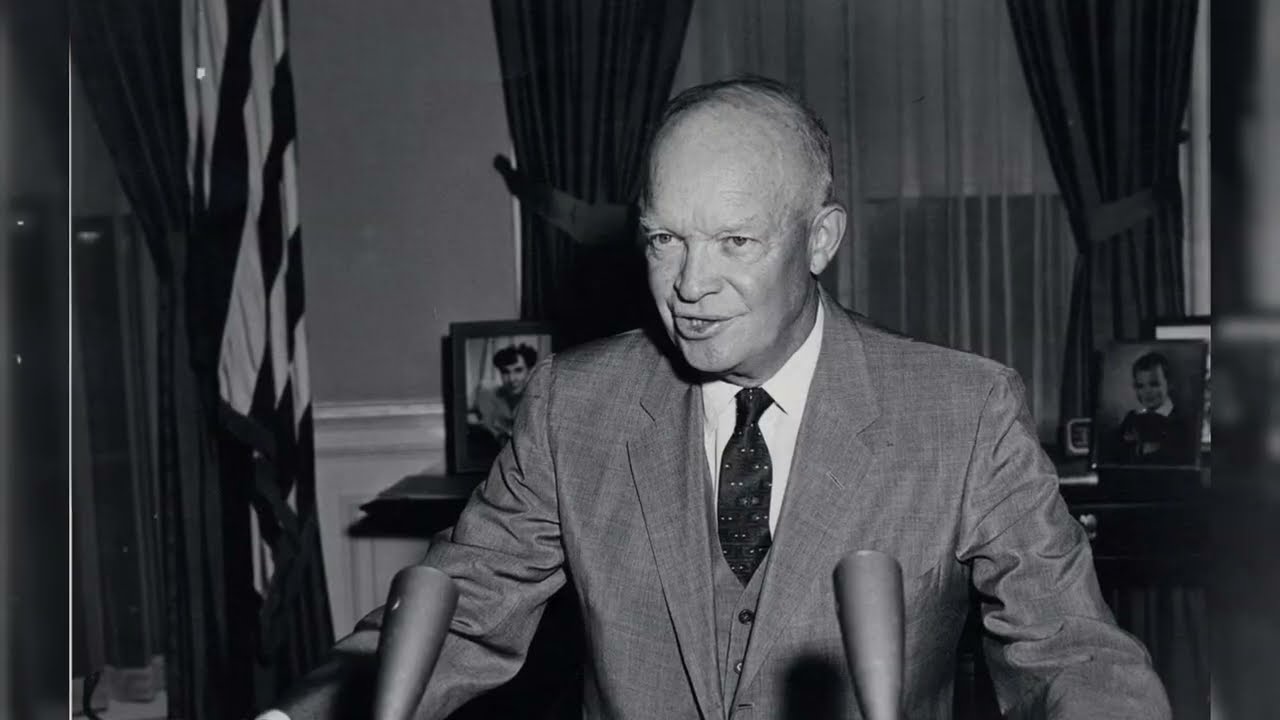
He was taken to a cold, unfurnished, heavily fortified prison. There were no carpeted floors. There were no thermal baths. There was only a hard canvas cot, a single blanket, and a metal tin of standard prisoner rations.
He had been subjected to the utmost humiliation. Without firing a single shot, the Americans had stripped this senior officer of his pride, his comfort, and his status.
The psychological impact on Kesselring was devastating. Throughout his life, his identity had been tied to his uniform, his rank, and his supposed superiority. By treating him as an ordinary, insignificant criminal, the Americans forced him to confront the reality of his crimes.
He was eventually transferred to Nuremberg, and then to a military court in Venice to be tried for the massacres committed under his command in Italy. During his trial, the smile disappeared completely. Photographs of Kesselring from that period show a broken, thin, and deeply anxious old man. He sat in the dock with his head bowed, his hands trembling as he listened to survivors testify about the horrors his forces had inflicted on victims' families.
He was convicted of war crimes and sentenced to death by hanging. His sentence was later commuted to life imprisonment thanks to political intervention, and he was eventually released in 1952 due to deteriorating health. He spent the rest of his life in the shadow of his inglorious defeat.
He had entered captivity believing he was a god of war capable of deceiving his conquerors with a smile. He left it a convicted criminal, exposed to the entire world as a coward who had hidden behind the honor of a uniform he had stained forever.
There is a profound and unforgettable lesson in the silent humiliation Albert Kesselring endured. We often imagine that justice in war is achieved only through the clash of weapons or the execution of sentences. But sometimes, the strongest justice is achieved through a firm, categorical refusal to play the enemy's game.
General Eisenhower understood that some crimes are too grave, and some regimes too evil, for even the slightest military courtesy to be offered without betraying the victims. By refusing to shake Kesselring's hand, by stripping him of his medals, and by throwing him into an ordinary cell, the U.S. Army shattered the myth of racial superiority. They proved that no matter how decorated you are, and no matter how much you smile in the face of defeat, the truth will catch up with you.
And when it does, your position will not protect you from the judgment of history.