When Nazi Germany invaded the Netherlands on May 10, 1940, the attack came months after the start of the Second World War. German bombers struck military airfields and barracks around The Hague as part of the assault.
Adolf Hitler justified the attack with the false claim that Britain and France were planning to invade Germany through the Netherlands and Belgium. During the invasion, the German Luftwaffe used paratroopers to seize tactical points and support the advance of ground troops across the country.
On May 15, 1940, the Netherlands surrendered and signed a capitulation agreement. Soon afterward, the Nazis began occupying the entire country and introduced new anti-Jewish laws aimed at excluding Jewish residents from society and restricting their livelihoods.
Systematic deportations of Dutch Jews to extermination camps began in July 1942. Unable to bear what was happening to their country and its people, some Dutch citizens joined the resistance.
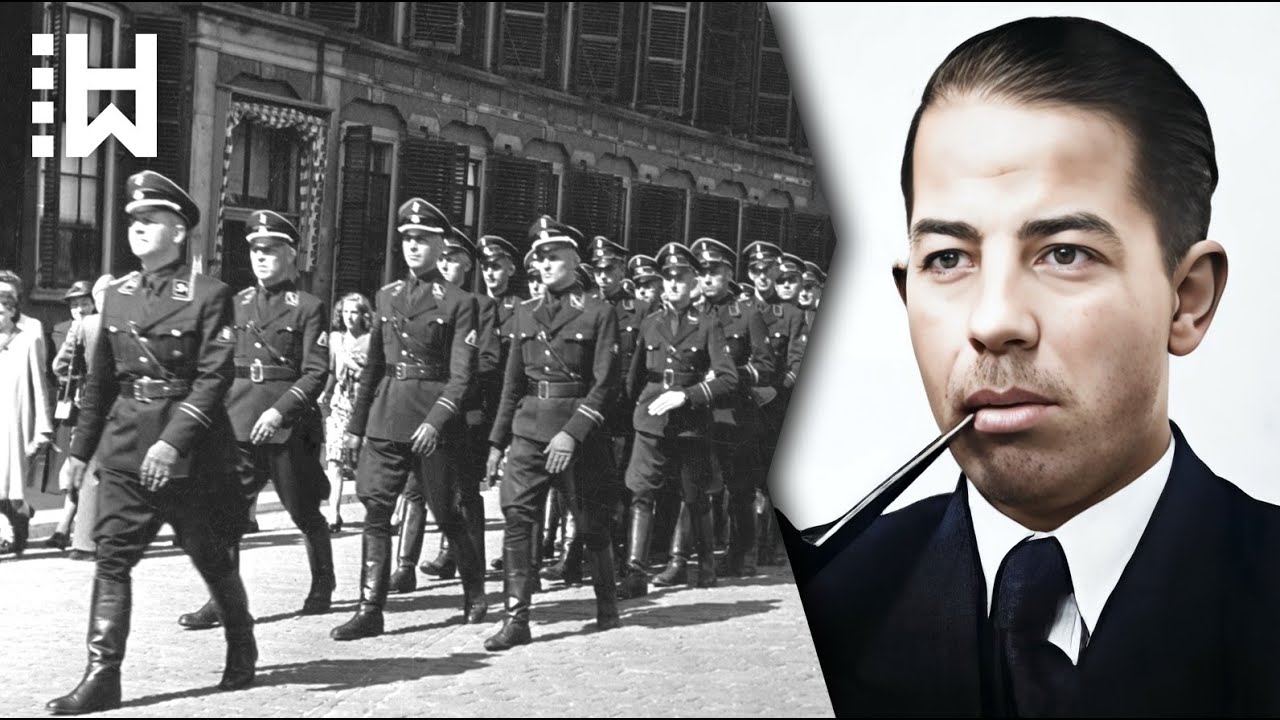
One of them was a young neurologist and committed anti-fascist who decided he had to act, and who even killed Nazis. His name was Gerrit Willem Kastein.
Kastein was born on June 25, 1910, in the Dutch city of Zutphen. As a child he was bright and serious, studied diligently, and after completing his general education decided to devote his life to medicine.
He began his medical studies at the University of Groningen and later continued in Heidelberg, Germany, and Leiden in the Netherlands, where he received his diploma in 1937. During his time in Germany, Kastein met a German woman named Elizabeth Zaxe. They married and had two children together.
Kastein's career as a neurologist first took him to Leiden and then to The Hague. Even before the start of the Second World War, his convictions drew him into public life. He first joined the socialist party and later became a member of the Communist Party of the Netherlands.
He wrote articles for the party magazine, lectured on the dangers of fascism, and campaigned against racism. He was not active only as a writer; he also fought actively against Nazism. He helped secretly smuggle communists out of Nazi Germany, and in 1936, when the Spanish Civil War broke out, he went to Spain.
As a neurologist, he joined a medical team helping the Republicans fight the fascist units led by Spanish dictator Francisco Franco. In Spain he worked with the wounded, and after his return he shared stories of brutality and courage with others, which only deepened his hatred of fascist ideology. In 1938 he published a book condemning racism and warning of the consequences of political apathy.
The Second World War began on September 1, 1939, when Nazi Germany invaded Poland. In May of the following year, Germany attacked the neutral Netherlands. Within hours, important points were attacked and confusion spread among soldiers and civilians.
Rotterdam, an important port city, became a main target. As German units approached, the Dutch government tried to negotiate, but the Germans demanded complete surrender. On May 14, 1940, in an effort to break Dutch resistance, German bombers carried out a devastating raid on the center of Rotterdam, setting large parts of the city on fire and killing hundreds of people.
Thick smoke rose several kilometers into the air, and the destruction shocked the entire country. Under the threat that the same fate would befall other cities such as Utrecht and Amsterdam, Dutch commander-in-chief General Henry Winkelman decided to capitulate the following day. Queen Wilhelmina and the Dutch government had fled to London a few days earlier to continue the fight against Nazi Germany from exile. Only the province of Zeeland held out somewhat longer, but it too was eventually occupied.
After the capitulation, the Netherlands came under German military occupation. Daily life changed almost overnight. German soldiers patrolled the streets. A strict curfew was introduced, and all public gatherings were controlled. Until the end of the war, the occupation authorities targeted Jewish citizens, political opponents, and anyone suspected of resisting the Nazi government.
Many Dutch people felt deeply humiliated and could not believe that their neutral country had been defeated so quickly. Some hoped the war would end soon. Others had already begun to think about how they could defy the new rulers.
In this atmosphere of shock and fear, as the Netherlands fell under German military domination almost overnight, Gerrit Kastein was more convinced than ever that he could not remain passive. The sudden collapse of Dutch defenses and the brutal bombing of Rotterdam convinced him that the Nazis would stop at nothing to break the spirit of the country.

For a man already committed to fighting fascism, the capitulation of May 15, 1940, was not only a military defeat but also a moral challenge. While many around him tried to adapt or hoped that life would eventually return to normal, he clearly saw that the occupation would only strengthen the Nazis.
Just a few days after the capitulation, on May 17, 1940, he took part in a secret meeting of Communist Party members in The Hague, where they discussed how to reorganize resistance activities. He understood that with the queen and government in exile, there was no legitimate Dutch authority to protect freedom inside the country. It was then that Kastein came to believe that ordinary citizens had to resist in every possible way.
The fall of the Netherlands transformed him from a respected neurologist into a determined resistance leader, willing to risk everything to stand against the forces that had turned his homeland into occupied territory. Kastein became involved in resistance activities, and the first attempt by Nazi security authorities to arrest him took place on September 2, 1941. He was warned in time, however, went into hiding, and continued his resistance work.
In 1942, Kastein cooperated with a resistance group known as CS6, named after the address Corellistraat 6 in Amsterdam, where several resistance members lived and often met. CS6 specialized in gathering military intelligence and planning assassinations of key Dutch collaborators with the Nazi regime.
Kastein also worked closely with non-communist resistance groups. Through these groups, he intended to deliver photographs of German defensive installations along the Dutch coast to the Dutch government in London. However, the resistance group's courier, Anton Vanerwals, later turned out to be a double agent. He did not deliver the photographic film to the exile government in London but directly into German hands.
In late 1942, Nazi leaders were preparing to create a Dutch Nazi administration to support the German campaign on the Eastern Front. The Germans believed that by appointing loyal Dutch officials and terrorizing the local population, they would be able to suppress any uprising in the occupied Netherlands.
The CS6 group decided that open collaboration with Nazi Germany had to be punished as a warning to others and to disrupt German plans. On February 5, 1943, they attacked General Hendrik Seyffardt, a retired Dutch officer who had agreed to serve the Germans.
Seyffardt was an interesting figure. Before the war he had also served as chief of the general staff of the Dutch army and retired in 1934. During the German occupation of his country, he returned to service and served them as a willing collaborator and as a figurehead for the 23rd SS Volunteer Panzer Grenadier Division Nederland, a Waffen SS unit created from Dutch citizens on the Eastern Front.

After approval by the Dutch exile government, Seyffardt was shot twice on the evening of February 5, 1943, after opening the door of his home in The Hague by student Jan Verleun, who was on the mission with Gerrit Kastein. Seyffardt died in hospital the following day.
A few days later, Kastein and CS6 members prepared another attack, this time targeting Hermanus Reydon, a member of the Dutch National Socialist movement and a journalist who collaborated with the Nazis. Reydon was seriously wounded and died of his injuries in August 1943. His wife Wilhelm died during the attack.
These attacks enraged the Germans, who launched a campaign of reprisal killings and terror in response. Nazi firing squads and Dutch collaborators executed prominent civilians, former soldiers, doctors, and priests accused of sympathizing with the resistance. Instead of destroying morale, these brutal acts spread even greater bitterness and hatred toward the occupiers.
In one thing, however, the Germans succeeded: they caught Kastein. On February 19, 1943, Kastein was to meet another communist resistance fighter in Delft, near The Hague. They were to discuss a plan to simultaneously set fire to all labor offices in the Netherlands in order to complicate the deportation of Dutch men for forced labor to Nazi Germany.
German security services had, however, previously detained this resistance fighter, and during a search a note about the meeting was found in his notebook. At exactly the agreed time, Kastein entered the café and was immediately detained by the Germans and taken to a car with a false license plate parked outside.
In the car waited an agent of the SD, the intelligence service of the Nazi party. As Kastein was to get in, a scuffle broke out, during which he managed to pull a pistol from his jacket pocket and fire. He seriously wounded the German agent. When the car drove away, a small pool of blood remained on the street.
After a search, the SD found a notebook with a record of a meeting with communist resistance fighter Lukas Spoor, which was to take place later that day. Kastein agreed to attend the meeting. It was held in a café in The Hague. SD officer Johannes Hoffman got out there and went into the café, which was 10 meters from the road.
Kastein, whose hands were bound, managed to pull out a pistol and shoot another SD officer in the leg. He then jumped up and escaped, but was quickly caught. He was loaded into a car, and as the car drove away, four armed men ran out of the café. The car drove off, and when Kastein was asked to get out, he managed to seize another pistol and shoot himself in the chest, but the bullet ricocheted.
After this scuffle, Kastein was taken for interrogation. At that moment he definitively decided to sacrifice his life rather than reveal any resistance secrets to the Nazis. On February 21, 1943, during interrogation by the German security service, while he was left alone in the interrogation room, the 32-year-old Kastein jumped from a third-floor window, still bound and tied to a chair. He suffered a fractured skull on impact and died a few hours later.
Although he died relatively young, he is still remembered today as one of the greatest heroes of the Dutch resistance during the Second World War.