The stand at the Alamo is remembered as a defining moment in the fight for Texan independence, but the path to that legendary siege was shaped by a series of escalating failures, miscommunications, and political tensions that left a small garrison hopelessly outmatched. The friction began long before the first shots were fired. As white southern settlers pushed into Mexican Texas, they sought land to establish cotton plantations in a thriving regional industry. Mexican authorities allowed settlement, but only under strict terms: newcomers had to convert to Catholicism and register as Mexican citizens.
Many settlers disregarded these conditions once they were established. They also brought enslaved people with them, despite Mexico abolishing slavery in 1829. Residents continued to violate Mexican law by holding slaves and claiming lands beyond their authorized boundaries, creating growing resentment with their hosts. At the same time, the Mexican government was shifting its structure.
Facing economic difficulties and rising lawlessness, conservatives moved away from a decentralized model similar to the United States toward a more centralized authority. With this new government came stricter enforcement of tariffs, anti-slavery laws, and immigration rules. Those policies hit border settlers hard, as many were undocumented immigrants running businesses with slave labor. The settlers condemned the measures as dictatorial and launched a rebellion.
Mexican leaders, in turn, blamed the unrest on American immigrants who had unlawfully entered their territory and ignored Mexican law. The Texas Revolution’s first major clash came at the Battle of Gonzales in October 1835. Tensions had actually ignited days earlier over a single cannon. An American colonist had previously persuaded Mexican authorities to provide his colony with a six-pound cannon for defense against raids from indigenous groups they considered hostile.
When Mexican officials discovered the colonist had sent delegates to conventions they viewed as treasonous, they ordered a Mexican army colonel to retrieve the cannon. What likely seemed like a routine recovery mission instead sparked an armed clash. The Texans refused to hand over the cannon and made their position unmistakable by displaying a flag over it that read, “Come and take it. ” Within days, more than 60 Texans launched a successful surprise assault on the Mexican forces, and the rebellion was underway.
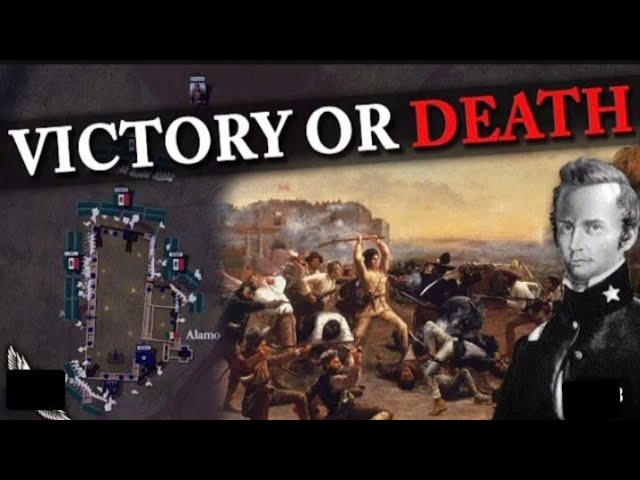
The structure at the center of the conflict was not originally designed for war. Commonly called a fort, the Alamo began as a mission serving as a religious outpost for supply management and communication. It became a temporary fortification only after attacks from local Native American groups. The repurposed mission was built to withstand raids from tribes, not heavy artillery, and it lacked proper firing ports.
Catwalks allowed defenders to shoot over the walls, but they left riflemen exposed and were far from ideal for a sustained defense. After the Battle of Gonzales, many settlers who had joined the fight went home. They were unprepared for a prolonged campaign and lacked provisions. The army shrank to fewer than 200 men, far fewer than needed to hold a structure like the Alamo.
Command of the fort changed hands several times in the months before the siege. In December 1835, Sam Houston, commander-in-chief of the Texas Army, ordered James Neil to take command of the Alamo. Neil complied but soon left to care for his ailing family, passing command to Lieutenant Colonel William B. Travis, the highest-ranking officer present.
The promotion did not sit well with Colonel James Bowie, namesake of the Bowie knife. Several soldiers shared his view and quickly voted him into the commanding position, believing his fierce fighting reputation made him the better leader. But instead of taking charge, Bowie celebrated by drinking excessively and causing a disturbance in camp. He eventually agreed to share leadership with Travis.
By early 1836, Mexican President Santa Anna was furious over the rebellion. He saw the insurgents as unlawful immigrants who had disrespected Mexican culture, values, and laws and were now trying to seize part of his country. He demanded the rebels surrender or face consequences. When they refused, they were formally labeled traitors.
Santa Anna swore no prisoners would be taken and sent a letter to that effect to U. S. President Andrew Jackson, though it was not widely circulated. Jackson reportedly never informed American recruits that Mexico intended to show no mercy.
The Alamo’s commanders knew they were not ready. They were short on supplies and manpower and understood the danger when Mexican forces arrived. Neil appealed to General Houston, but Houston believed he could not spare the men needed for a defense and declined. Instead, he ordered Bowie and a small contingent of about 30 men to remove the fort’s artillery and demolish the structure.
When Bowie arrived, he found he lacked the animals needed to transport the artillery. He became convinced the location held crucial strategic value and presented his case directly to the Texas Provisional Government, arguing the fort needed more troops and weaponry to survive a siege. The appeal failed. The provisional government was in disarray and could not rally support.
Even if assistance had been approved, it may not have changed the outcome, as both Bowie and Travis badly misjudged how much time they had before Santa Anna arrived. The siege began on February 23, 1836. Rumors of the approaching army had already driven residents from nearby Bexar. Travis was doubtful of the reports but placed a lookout in the San Fernando Church bell tower.
Hours later, scouts spotted Mexican troops about a mile and a half outside town. The Texans were still scrambling to gather manpower, weapons, and supplies. Santa Anna marched into San Antonio with roughly 1,500 troops. The Alamo’s defenders numbered just 188, many of them untrained volunteers.
When Santa Anna raised the red flag signaling no quarter, the defenders held their position. Travis responded by firing a cannon at the Mexican forces. Bowie considered the provocation unwise and sent an emissary to negotiate with Santa Anna. Travis, resenting the interference, sent his own emissary.
Both were received by Mexican troops and told that any surrender would have to be unconditional. Confronted with that reality, the two commanders set aside their differences and defiantly fired the cannon together. They had hoped Bowie’s battle-hardened leadership would steady the defense.
But Bowie fell ill on the second day of the siege and was physically unable to support his men.