Newly uncovered military records and firsthand veteran accounts have shattered the long-accepted narrative surrounding Private Roy William Cobb, the Easy Company soldier immortalized as a bitter, cowardly antagonist in HBO’s “Band of Brothers,” revealing instead a decorated combat veteran whose true story was buried beneath decades of faulty research and dramatic embellishment.
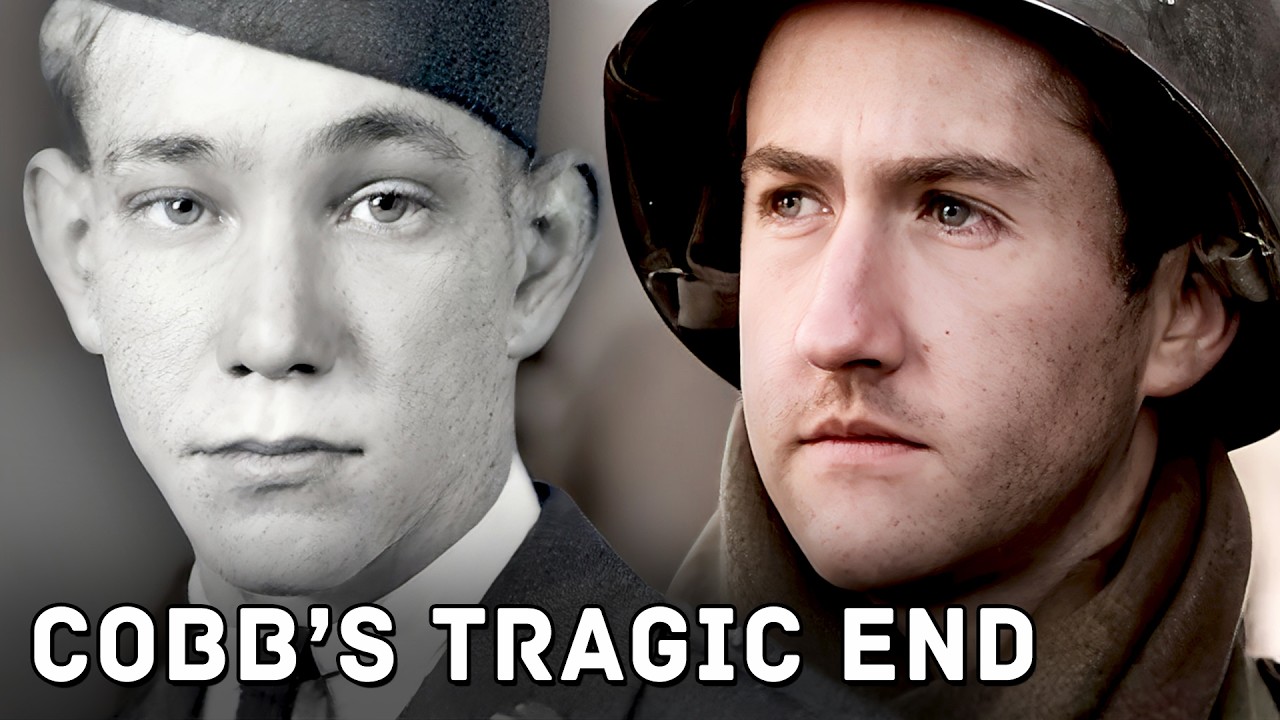
The findings, compiled from service records, census data, memoirs, and contemporaneous newspaper reports, paint a starkly different portrait of a man who served his country for nearly a decade, earned a Bronze Star and Purple Heart, and died in a tragic drunk-driving accident in California at just 42 years old—not the court-martialed, dishonorably discharged malcontent viewers were led to believe.
Roy William Cobb was born on March 4, 1922, in Harlan County, Kentucky, the son of Perry Cobb, who died when Roy was only two years old. His mother, Nancy, remarried a coal miner named Lonnie Roscoe Scarborough, and the family grew to include six more children. Cobb, who went by the name Ray, attended school only through the seventh grade before enlisting in the Army around 1938 at age 16, falsifying his birth date to November 4, 1919, to meet the minimum age requirement.
By January 1940, Cobb held the rank of private in Battery C, 68th Field Artillery Battalion at Fort Knox, Kentucky. His unit was redesignated as armored in July 1940, coinciding with the formation of the 1st Armored Division. From June to August 1942, he was hospitalized with tertian malaria at the 5th General Hospital near Belfast, Ireland, while assigned to the Signal Corps.
According to historian Stephen Ambrose, Cobb then served with the 1st Armored Division during Operation Torch in North Africa in November 1942—a detail that, if accurate, would make him the only member of Easy Company to have experienced both a beach landing and an airborne assault. Ambrose also claimed Cobb’s troop ship was torpedoed on his return voyage, though no record of such an incident has been found.
What is documented is that Cobb volunteered for the paratroopers in 1943, attended jump school at Fort Benning, Georgia, with Company A of the 515th Parachute Infantry Regiment, and received a promotion to private first class in November 1943 at Camp Mackall, North Carolina. He joined Easy Company, 506th Parachute Infantry Regiment, while they were stationed in Aldbourne, England, in the months before D-Day—meaning he was never with Easy Company at Camp Toccoa, Georgia, in 1942, as the series falsely depicts.
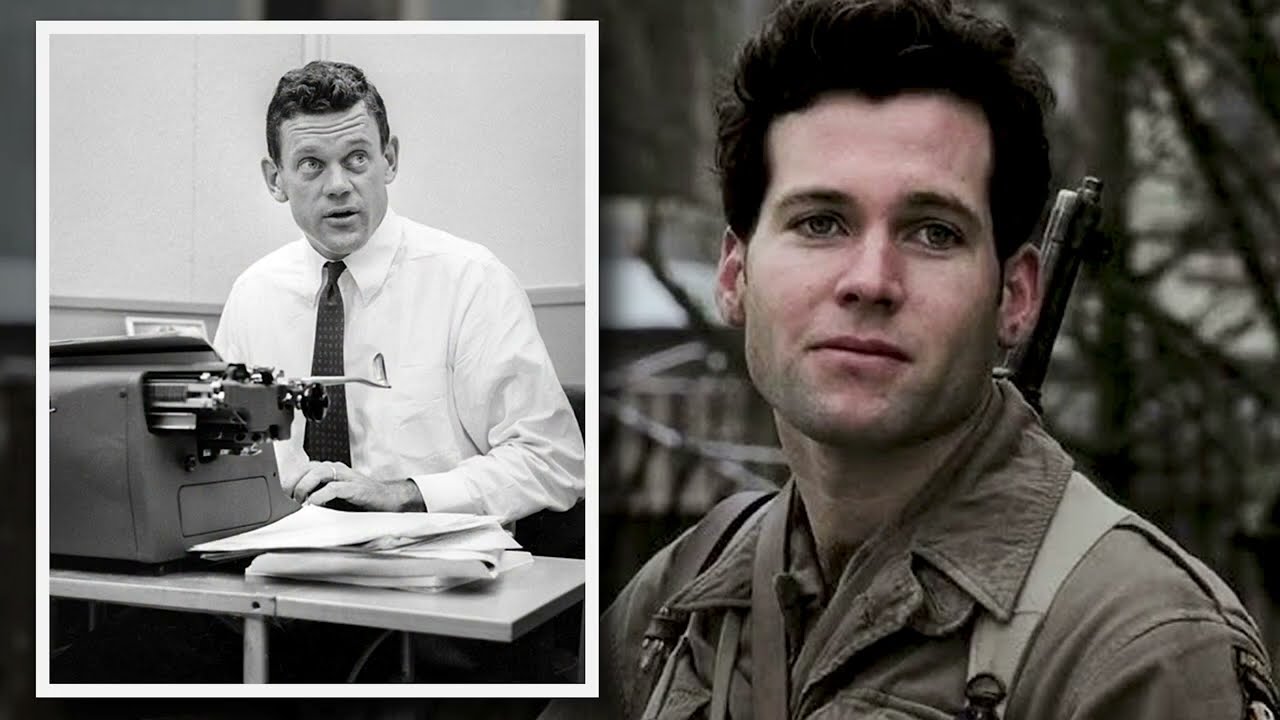 During the D-Day drops over Normandy, Cobb, a light machine gunner, swapped seats on the C-47 with George Luz, who was worried about maneuvering to the door with his heavy radio equipment. The decision proved disastrous for Cobb, who was struck in the leg by flak that penetrated the fuselage. He was unable to stand and never made the jump he had trained two years to perform.
Two days later, he received the Purple Heart.
Contrary to his portrayal in the series, fellow soldiers described Cobb as a capable and generally well-liked combat soldier. Private David Kenyon Webster wrote in his memoir that Cobb was “invariably good-natured and friendly” outside of specific incidents. Dick Winters called him “hard-nosed” and “a regular army man who clearly understood combat.”
Clancy Lyall, who was assigned to look after Cobb, said he was “quite good as a combat soldier” and “a nice guy except when he got a bottle of booze.”
Winters specifically commended Cobb’s actions during the October 5, 1944, Crossroads battle in the Netherlands, stating he “delivered extremely effective long-distance fire on the retreating Germans.” For his actions there, Cobb received the Bronze Star, believed to have been awarded for his role in the defense of the town of Uden.
The series’ depiction of Cobb’s drunken altercation in Hagenau, France, in February 1945 also diverges sharply from reality. While the show portrays Cobb threatening Webster and Lieutenant Henry Jones, the actual incident involved Cobb getting into a fight with Private Bob Marsh at Observation Post 2 after drinking schnapps. Ambrose’s account claiming Cobb then confronted Lieutenant Jack Foley and was arrested is almost certainly incorrect, as Foley and Sergeant John Martin were not present at that location.
Webster’s account indicates it was actually Donald Wiseman who mouthed off to Foley and argued with Captain Ronald Speirs. The Easy Company morning report dated February 23, 1945, confirms Wiseman was confined to the regimental stockade on February 17—with no mention of Cobb being arrested. Ambrose appears to have confused the men or received incorrect information during interviews conducted five decades after the events.
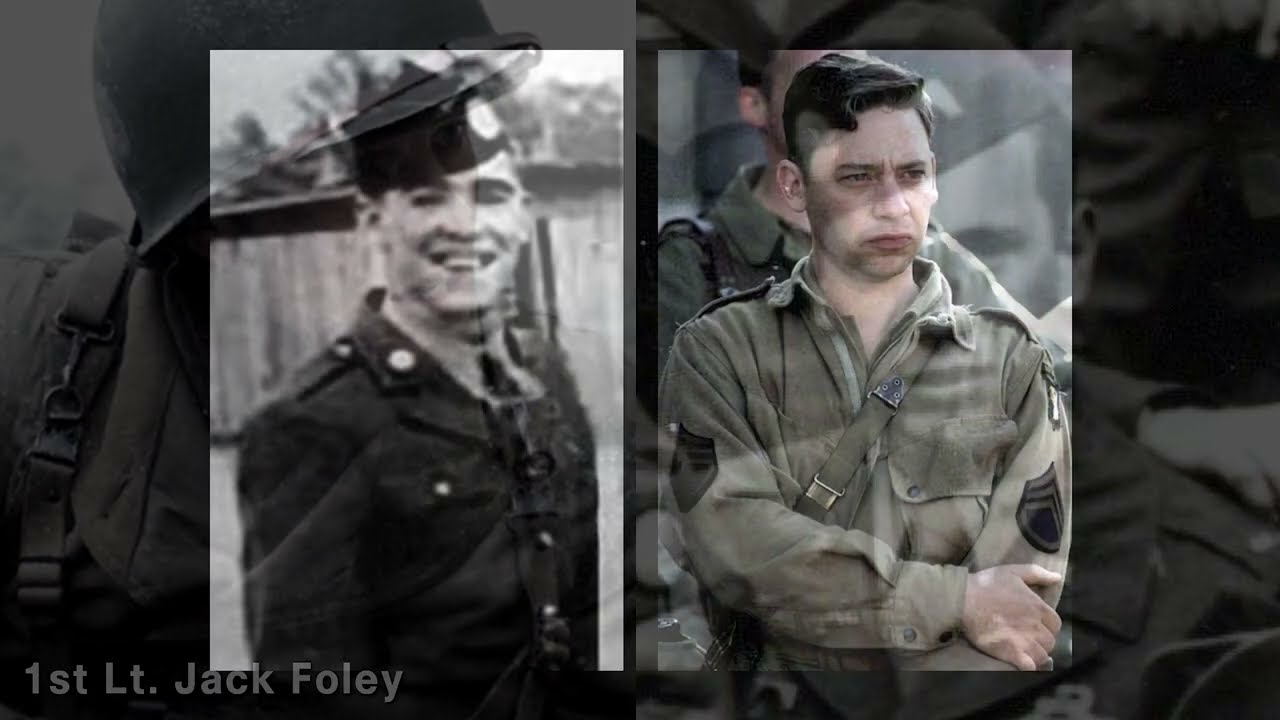
Further undermining claims of a court-martial and dishonorable discharge is the fact that Cobb received a Good Conduct Medal on April 12, 1945—less than two months after the Hagenau incident. He also appears in a photograph of Easy Company taken in Kaprun, Austria, in July 1945, still clearly serving. According to Lyall, Cobb made corporal after Hagenau and became an assistant squad leader.
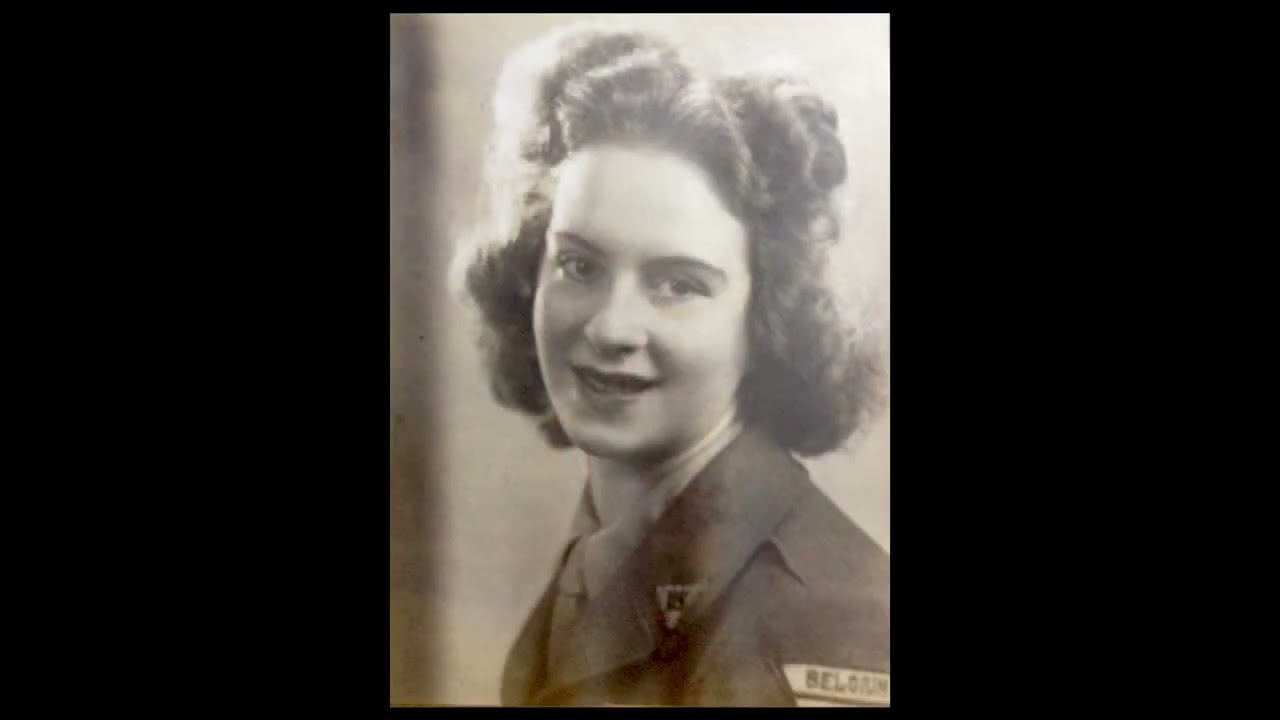
Military records definitively confirm that Cobb re-enlisted in the Regular Army on January 9, 1946—something impossible had he received a dishonorable discharge. While stationed in post-war Europe, he met and married Marie, a Belgian woman four years his junior who had served in the British Auxiliary Territorial Service during the war. Their son Raymond was born in Belgium in 1947.
Cobb was honorably discharged on February 27, 1948, and returned to Harlan County, Kentucky, with his wife and son, where he struggled to find work as a coal miner. Their daughter Rose was born in 1949, followed by a son named Gary. By 1950, the family was living with Cobb’s mother, and the census from that year listed a 28-year-old Roy Cobb as a prisoner in the Harlan County Jail under the name Ray Cobb—the reason for his incarceration remains unknown.
Around 1953, Cobb moved to California alone, and his marriage appears to have ended. Marie subsequently moved to Michigan, became a physical therapist, and worked at Beyer Memorial Hospital in Ypsilanti until retiring at age 83. She never remarried and died in 2012 at age 86.
On April 23, 1964, tragedy struck. According to the Sacramento Bee, Cobb and three other men had been drinking whiskey that afternoon when they got into a car driven by 36-year-old Kenneth Fetty. The Berkeley Gazette reported that Fetty, intoxicated, argued with 26-year-old Frank Essick, also drunk, and pulled off Elkhorn Road about eight miles north of Sacramento to fight—running over a reflector marker in the process.
 The car stalled atop the signpost.
After the two men fought, they attempted to free the vehicle. Fetty got behind the wheel while Cobb, 23-year-old Barry Dyer, and Essick pushed. For reasons unknown, Fetty shifted into reverse, and the car shot backward into a steep drainage ditch, pinning Dyer underneath and Cobb between the bumper and the ditch wall.
Both men suffered crushed chests and internal injuries and died before reaching Sacramento Hospital. Cobb was 42 years old and working as a farm worker.
Fetty was booked on suspicion of drunk driving and felony manslaughter. A probation report revealed an extensive record of prior arrests for intoxication, including three drunk driving arrests and a 1959 purse-snatching arrest. He was sentenced to prison the following month for involuntary manslaughter but was arrested again for drunk driving in 1969 and 1971, receiving jail time on both occasions.
Roy Cobb’s body was returned to Kentucky, where he was laid to rest in Odd Fellows Cemetery in Pineville. His obituary made no mention of Marie as a surviving family member, and the application for his veteran’s headstone was completed by his mother—further evidence the marriage had ended years earlier.
The research, which drew heavily from Webster’s “Parachute Infantry,” Lyall’s biography “Silver Eagle,” and extensive work by online researchers, concludes that Cobb was a victim of what critics call shoddy research by Ambrose and a lack of fact-checking by the series’ screenwriters. Like Herbert Sobel, Norman Dike, and Albert Blithe, Cobb was transformed into a one-dimensional villain because the writers needed antagonists and conveniently chose men who were already dead and unable to defend themselves.
In the end, the record shows Roy Cobb was a good combat soldier, generally well-liked by his peers, who struggled with alcohol but was never court-martialed or dishonorably discharged. He continued serving his country through the Allied occupation until 1948. Whatever toll the war, PTSD, and drinking took on his civilian life, those who knew him agree he deserved to be remembered for the man he truly was—not the fictional antagonist a television series turned him into.