On November 25, 1963, two women in black veils stood a few feet apart behind the coffin of a murdered president. One was 34, the widow, holding her small daughter's gloved hand. The other was 73, the president's mother.
To the cameras and the enormous crowd, they were one family bound by the same unbearable loss. What no camera could see was that they had never once agreed on what that loss meant.
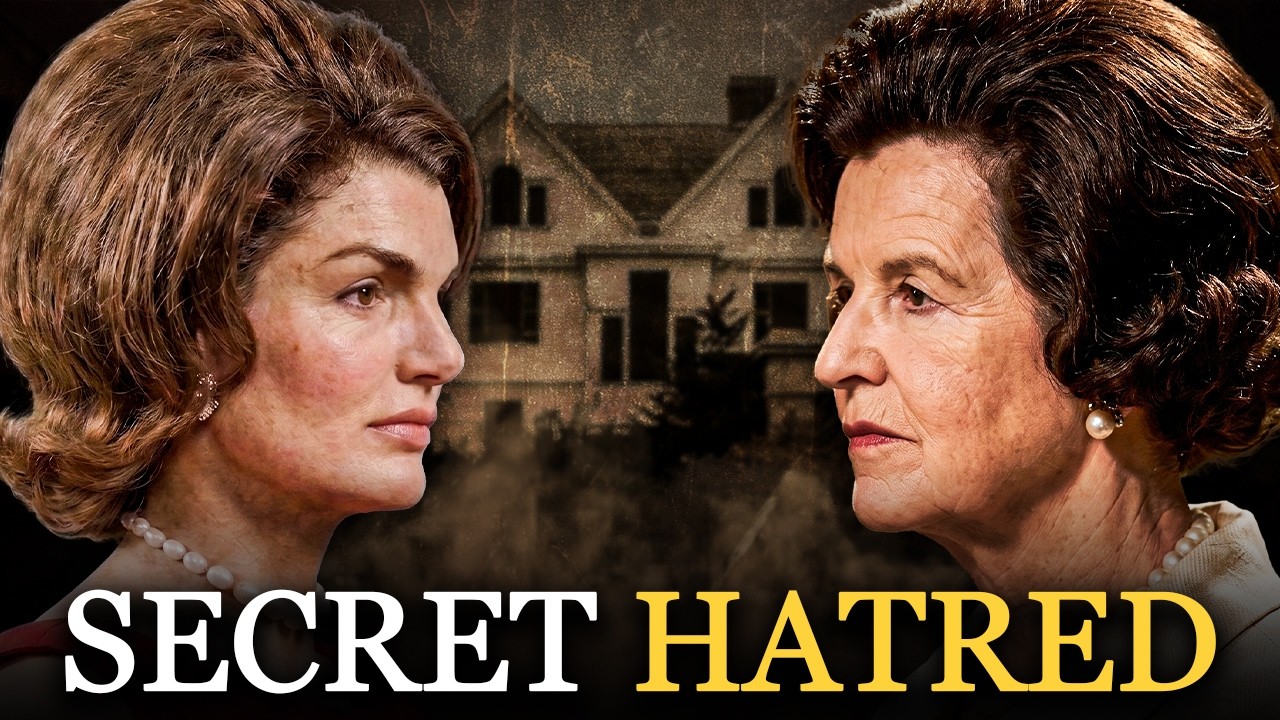
The distance between Rose Kennedy and Jacqueline Bouvier was not made by grief. It was there long before grief gave them a reason to stand in the same frame.
By the early 1960s, the Kennedys were the closest thing the United States had to a royal house. They stood for youth, money, and Catholic arrival at the summit of a country that had spent generations keeping Irish Catholics out of its best rooms.
The photographs told a single seamless story: sailboats at Hyannis Port, touch football on the lawn, children and political men and a family so large and loyal that nothing could reach inside it. Joseph Kennedy's relationships with powerful publishers, including Henry Luce, helped keep his son and daughter-in-law on the covers of the magazines that shaped how the country understood itself.
That unity was partly real. It was also a performance, maintained with the same discipline the family brought to everything else.
Rose Elizabeth Fitzgerald was born on July 22, 1890, in the North End of Boston, into politics the way other children are born into a trade. Her father was John Francis Fitzgerald, known as Honey Fitz, who rose from the crowded Irish wards to become mayor of Boston.
She grew up close to power, but also close to the small daily humiliations the older Protestant establishment reserved for Boston's Irish Catholics. Acceptance in her world was not inherited. It was manufactured, earned through discipline, presentation, education, and relentless public visibility.
Joseph Patrick Kennedy came out of another ambitious Irish Catholic family, moved through Boston Latin School and Harvard, and built a fortune with a speed and ruthlessness that made him both admired and feared. He made money in banking, Wall Street, Hollywood, and real estate.
In 1945, the family bought Chicago's Merchandise Mart for roughly $17 million, a building of some 4 million square feet then described as the largest privately owned office building in the world. Joseph established family trusts in 1926, 1936, and 1949. By the time he died, one trust carried provisions for 28 grandchildren, and contemporary estimates placed his estate as high as half a billion dollars.
Money like that buys insulation. What it does not buy is a governing code. That Rose supplied.
She married Joseph Kennedy on October 7, 1914, and between 1915 and 1932 gave birth to nine children: Joseph Jr., John, Rosemary, Kathleen, Eunice, Patricia, Robert, Jean, and Edward. She did not simply raise them. She documented them, keeping detailed records of each child's height, weight, illnesses, and schooling on index cards.
Her affection was real, but it arrived through structure. Love in Rose's household was expressed as attention, as improvement, as the refusal to let any child drift. Her Catholicism was not decoration. She believed appearances carried moral weight, and that illness, grief, and betrayal were not to be displayed in ways that invited pity.
Her husband's affairs were widely known inside the family circle, and Rose did not leave him. She once said that no one would ever feel sorry for her, a single sentence that holds her entire character inside it.
Jacqueline Lee Bouvier was born on July 28, 1929, in Southampton, New York, into money and charm and a marriage already coming apart. Her father, John Bouvier III, known as Blackjack, was a stockbroker of enormous charm and unreliable finances. Her mother, Janet Lee, eventually divorced him.
Jackie was 10 when the marriage ended, and the child who had been lively and social became quieter, more watchful, more private. Where Rose decided the answer was to hold the structure together at any cost, Jackie decided the answer was to build a self that no structure could reach.
She found that self in books, horses, drawing, history, and languages. By 11, she had won national recognition as an equestrian. She attended the Chapin School, Miss Porter's, and Vassar, and during a junior year abroad she lived in Paris and studied at the Sorbonne.
France gave her something her parents' marriage never had: an identity that did not depend on anyone else's approval, built out of beauty, intellect, and taste. She graduated from George Washington University in 1951 and that autumn took a job at the Washington Times-Herald as the "inquiring camera girl," walking the city with a camera and asking strangers questions about politics, marriage, and money.
The man who brought the two women into the same house was John Fitzgerald Kennedy, born on May 29, 1917. For the first decades of his life he was the sickly one, the second son. Joseph Jr. had been the family's designated first president until August 12, 1944, when his aircraft exploded on a wartime mission. The burden of the family's ambition shifted onto the son who had spent his childhood too ill to carry it.
Jack carried the same restlessness that had run through his father, the same instinct to compartmentalize a life into rooms that never met. Rose had responded to her husband's affairs by protecting the marriage and the name. Jackie had watched infidelity help destroy her parents.
They married on September 12, 1953, at St. Mary's Church in Newport, Rhode Island. More than 800 guests filled the church, and over 1,200 were received afterward at Hammersmith Farm. Joseph Kennedy ordered the four-foot wedding cake and helped turn the day into a society spectacle.
Jackie wore an ivory silk taffeta gown made by Ann Lowe, a black designer whose workroom had flooded shortly before the ceremony. The gown used roughly 50 yards of fabric. Jackie had wanted something simpler and more modern. She did not get it. The families wanted a traditional spectacle appropriate to a political marriage.
It was a small thing, a dress. It was also the whole story in miniature. Jackie was being celebrated. She was also being dressed and positioned for a role designed by other people.
The early marriage was harder than the photographs admitted. There was illness, travel, and long stretches apart. John endured serious back operations, and Jackie helped push forward the research and writing that became Profiles in Courage, which won the Pulitzer Prize in 1957.
She suffered difficult pregnancies and loss before Caroline was born on November 27, 1957. John Fitzgerald Kennedy Jr. arrived on November 25, 1960, a little more than two weeks after his father won the presidency.
Motherhood became the one territory where Jackie would not yield an inch. At the White House, she set up a kindergarten and built routines meant to keep the machinery of politics away from her children's days.
Rose too had believed motherhood was the central work of her life, but the two women meant entirely different things by the word. Rose had raised nine children as members of a dynasty, available to photographers and campaigns. Jackie wanted Caroline and John to have something as close to an ordinary childhood as could be managed inside a house that was anything but ordinary.
As first lady, Jackie did something the family had not authorized and could not fully control. She built her own court. She formed a fine arts committee, researched the history of the objects inside the White House, hunted down furniture of genuine historical importance, and insisted her project was a restoration, not a redecoration.
The project raised more than $1 million over the years of the administration. On February 14, 1962, she led a televised tour of the restored house, and roughly 80 million people watched her do it. She was given an honorary Emmy.
It was not merely good publicity. It was proof that Jackie possessed a kind of authority the family had never handed her and could not take back.
The summers told the same story in a different language. For Rose, the Hyannis Port compound was cohesion made physical. Everyone came home and entered the same rhythm. For Jackie, it was more complicated. She loved the sea and sailing, but also reading, riding, and travel in Europe, and the compound's intimacy left almost no room for a daughter-in-law to withdraw without her absence becoming a statement.
Later biographers would dramatize the friction with specific quarrels, including a much-repeated story about Rose ordering the outdoor water shut off while Jackie was washing her hair. That anecdote comes through a later and controversial book and belongs in the category of family lore rather than confirmed event.
The deeper conflict needs no anecdote. Rose believed participation demonstrated loyalty. Jackie's careful, selective participation looked to a woman like Rose exactly like judgment.
Before the presidency, Rose could regard Jackie as a young and somewhat difficult daughter-in-law who would eventually adapt to the family's ways. After Jackie became first lady, that expectation collapsed. She had her own staff, audience, press relationships, international prestige, and authority over the president's household.
Rose remained the mother of the president and the symbolic founder of the family's way of life. But she no longer controlled the most visible image of a Kennedy woman in the world.
On December 19, 1961, at the house in Palm Beach, Joseph Kennedy suffered a severe stroke. He survived, but the man who had controlled the money, careers, and marriages lost the power of speech and would remain profoundly disabled for the last eight years of his life.
At the exact moment her son sat in the White House and her daughter-in-law's authority was widening, Rose was in Palm Beach organizing nurses, masses, and family visits around a husband who could no longer say a word.
Neither woman fought in the open, because open conflict was the one thing both had been trained their whole lives to avoid. Rose did not attack Jackie publicly. Whatever resentment she carried moved through private channels: criticism, the pressure of a schedule, and the pointed silence that was one of her most effective instruments.
Jackie, for her part, did not confront anyone. She simply became more selective about what parts of herself and her children the family would be allowed to touch. John, who might have mediated, chose not to, because the arrangement suited him.
In her private letters to an elderly Irish priest named Father Joseph Leonard, Jackie left the clearest surviving evidence of her real opinion. She wrote that Rose would, in her words, rather say a rosary than read a book. It was Jackie defining herself against Rose point by point: curious where she found Rose conventional, independent where she found Rose obedient.
What is not in dispute is the letter. That one Jackie wrote herself.
Underneath the tension ran a darker precedent neither woman had to name. Joseph Kennedy's affairs had taught Rose to detach her husband's behavior from the survival of the marriage, to stay, to endure, to convert private humiliation into public authority. John's affairs were forcing Jackie toward the same test, and Rose's whole life was the instruction.
Jackie did not merely dislike Rose. She was afraid of becoming her: honored, secure, surrounded by children, and required to turn her own pain into loyalty to a name.
In the summer of 1963, Jackie was pregnant again, and for the first time in years there was a softness between them. Then, on August 7, 1963, she went into labor early. Patrick Bouvier Kennedy was born five and a half weeks premature, and his lungs could not do the work of breathing on their own.
He was moved to a hospital in Boston, and John went with him. For 39 hours the smallest member of the family fought a fight no one could help him win. Patrick died at four minutes past four in the morning on August 9. Jackie was still recovering and could not be there. Rose was traveling in Europe.
John placed inside the tiny white coffin a gold St. Christopher medal and a money clip Jackie had once given him, so the child would be buried holding something of hers.
For a few weeks after, the loss did what politics and family pressure never had. It brought John and Jackie closer than they had been in years. They spoke about the future, about another child someday, about Thanksgiving at Hyannis Port and Christmas in Palm Beach. They were given three months.
In the weeks after they buried their son, John was gentler with her. He reached for her hand in public, which he almost never did. By several accounts, he became more openly affected by his wife's suffering than he had been through earlier losses, and Jackie let him closer than she had in years.
For years, the marriage had run in a quiet architecture of concealment that everyone around them helped maintain. Wealth and power had built a kind of privacy around John Kennedy that ordinary men never possessed, and inside it he had lived a compartmentalized life inherited from his father.
What made the autumn of 1963 different was that for the first time, John seemed to be choosing her over the pattern. It was not a grand renunciation. It was a hand held in public, a plan made in earnest.
They chose the family's Christmas card for that year, the first to carry a photograph of their own children. It would never be mailed.
At the White House, Jackie had built a wall around the things she loved. There was a small kindergarten on the third floor so Caroline could have something like an ordinary school day. There were pets, and the ponies Caroline adored, one of them named Macaroni, who was allowed to wander the South Lawn. Jackie fought a constant low-grade battle with the cameras, releasing the photographs she chose and withholding the ones she did not.
Caroline was almost six. John was not yet three, a small boy who loved helicopters and liked to hide under his father's desk in the Oval Office.
Before the holidays, there was Texas. The trip was politics, plain and unglamorous. The Democratic Party in Texas had split into warring camps, the conservative wing around Governor John Connally and the liberal wing around Senator Ralph Yarborough, with Vice President Lyndon Johnson caught between them.
John Kennedy needed Texas in 1964. The trip was a peacemaking mission dressed up as a triumphal tour, and the single most valuable asset he could bring to it was the woman beside him. Jackie had not campaigned like this since before Patrick, but she agreed to go, and her agreement mattered to John more than the schedule showed.
On November 21, John and Jackie flew to Texas, and the trip that everyone had worried about began, against expectation, to go well. They moved through San Antonio and then Houston, where the crowds were large and warm, and where Jackie addressed a gathering of the League of United Latin American Citizens in Spanish.
That night they flew on to Fort Worth and checked into the Hotel Texas. The walls of their suite had been hung overnight with original paintings borrowed from local collectors and museums, a Monet and a Van Gogh among them, chosen because the city knew the first lady loved art.
On the morning of November 22, Jackie found the catalog left for her and telephoned one of the organizers to thank him. It was one of the last uncomplicated pleasures of her life.
The morning broke gray and wet. John went down first to speak to a crowd gathered in the parking lot in the rain. When someone asked where the first lady was, he said it took her longer to get ready, but that she always looked better than the rest of them when she did. The crowd laughed.
Then Jackie came down, and there was a breakfast at the Chamber of Commerce, and the short flight to Dallas. She wore a pink suit with a matching pillbox hat, an outfit chosen for visibility.
At Love Field, the weather had cleared into bright sun, and the crowds pressed against the fences were warm, far warmer than the president's advisers had feared in a city with a reputation for hostility. Someone handed Jackie a bouquet of red roses, unusual in a state whose flower was the yellow rose, and she carried them into the open limousine.
The motorcade formed up. The president and first lady took the backseat. Governor Connally and his wife Nellie sat ahead of them. As the cars rolled slowly through downtown Dallas toward Dealey Plaza, Nellie Connally turned around and said to the president that he certainly could not claim Dallas did not love him.

It was approximately half past noon.
As the limousine moved through Dealey Plaza, gunfire struck the president. Governor Connally was hit as well. Jackie turned toward her husband. In the chaos, she moved across the back of the open car, and a Secret Service agent named Clint Hill ran forward and climbed onto the vehicle as it accelerated, pushing her back down and throwing his body over the two of them as the driver raced toward Parkland Memorial Hospital.
At Parkland, doctors worked over the president in Trauma Room 1. Jackie moved between the corridor and the doorway. When a priest arrived, she was there for the last rites. John Fitzgerald Kennedy was pronounced dead at 1:00 in the afternoon. He was 46 years old.
In the moments after, Jackie's focus narrowed to a single thing no protocol could argue her out of. She would not leave without him. His body would not stay behind in Texas. She stayed beside the casket in the pink suit now marked with the evidence of what had happened, and she would not change out of it. By several accounts, she said she wanted them to see what had been done.
On CBS, the anchor Walter Cronkite read the bulletin confirming the death, removed his glasses, and paused before he could go on. Schools let children out early. Church bells rang. A public that had spent three years consuming the Kennedys as entertainment discovered that it had, without quite noticing, come to love them.
More than 1,500 miles away at Hyannis Port, the news reached the family in fragments, out of order, refusing to be believed. Roughly half an hour after Air Force One lifted off from Dallas, Lyndon Johnson and Lady Bird Johnson telephoned Rose to offer what could be offered, which was almost nothing.
Joseph was nearby. His stroke had taken his words two years before. He could understand what had happened but could not say a single thing about it. The family decided at first not to tell him, and for a day the architect of the whole enterprise sat in the house at Hyannis Port while the country around him convulsed.
Aboard Air Force One, before the plane left Dallas, Lyndon Johnson took the oath of office. A federal judge named Sarah Hughes administered it. Jackie stood beside him for the photograph the country would see, still in the stained pink suit.
Then the plane flew back to Washington through the dark. Jackie sat in the rear cabin beside the casket, declining to be tended or sedated. It was the last stretch of time in which John Kennedy belonged to his wife and not yet to history.
When the aircraft landed at Andrews Air Force Base, roughly five hours after the president's death, Robert Kennedy was there in the dark. When the doors opened, he went straight through the plane, past everyone, to find her. The two of them came down together with the casket in the floodlights while the nation watched on television.
At 34 minutes past four in the morning on November 23, the casket arrived at the White House. A mass was said in the East Room. Almost immediately, before she had slept, Jackie began to design her husband's funeral.
She studied the records of Abraham Lincoln's burial. She issued precise instructions about the caisson, the procession, the lying in state, the music, the military formations, the route, and the grave. Where Rose had spent her life expressing love through documentation and control, Jackie now expressed grief the same way.
On November 24, the casket was carried to the Capitol Rotunda. Through that day and into the night, hundreds of thousands of ordinary people filed past it, waiting for hours in the cold for a few seconds beside the coffin. The accused assassin himself was shot dead that same day in a Dallas police basement in front of the cameras.
On November 25, three days after Dallas, the funeral procession moved from the Capitol to St. Matthew's Cathedral and then to Arlington National Cemetery. Jackie walked behind the caisson on foot through the streets of Washington, and the heads of state of much of the world walked behind her, because she had arranged it so.
There was the flag-draped coffin on the horse-drawn caisson. There was the riderless horse, Black Jack, with a pair of boots reversed in the stirrups. Behind Jackie walked Charles de Gaulle of France, Haile Selassie of Ethiopia, kings and prime ministers and princes, made to follow a 34-year-old widow through the streets.
Outside the cathedral, Jackie leaned down and said something to her small son. John Jr., who was three years old that very day, raised his hand and saluted his father's coffin as it passed.
At Arlington, at the grave, Jackie asked for an eternal flame, a fire that would never be allowed to go out, and she lit it herself. She had seen one at the Arc de Triomphe in Paris, in the France that had given her an identity when her own family could not. It is still burning.
Each woman met that week in the way her whole life had prepared her to. Jackie turned shock into decision, into ritual, into the construction of a memory she was already beginning to control. Rose reached for the only language she had ever trusted in the face of catastrophe: Catholic observance, family solidarity, and the composure that refused to invite anyone's pity.
John was the second child Rose had lost to violence, after Joseph Jr. She had buried a son in the war and a daughter in a plane crash, and now she stood inside another funeral at 73, doing what she had always done, which was to endure without letting the endurance show.
The assassination did not reconcile Rose and Jackie. What it did was make the question of reconciliation almost beside the point. The balance between them, already shifting for years, had now settled with a finality neither could undo.
Six days after her husband was shot, on the night of November 29, Jackie sent for a journalist. His name was Theodore White, and he wrote for Life. She summoned him to Hyannis Port, to the compound that was the heart of everything Rose had built, and sat with him for hours while the rain came down outside.
She told White that her husband, at night before sleep, had liked to play the cast recording of a Broadway musical called Camelot, and that the lines he returned to were the ones about a brief and shining moment that should not be forgotten. She wanted the country to remember his presidency that way, and she asked White to make certain the words survived his editing and reached the page.
When the article ran in Life, the metaphor took hold with a speed and permanence no press office could have engineered. It became the emotional shorthand for the thousand days of the Kennedy administration, the frame through which a grieving country agreed to remember him.
Consider what that word left out. It left out the illness, the constant medication, the back that never healed. It left out the other women and the marriage that had nearly broken under them. It left out the political calculation and the loneliness, and the years Jackie had spent building a self her husband's family could not touch.
Rose had spent her whole life protecting the family's image by suppressing its private disorder. Jackie, in a single rainy evening at Hyannis Port, performed a more sophisticated version of the same act. The difference was where she placed the center of the story. Rose had always protected the collective, the family, the name. Jackie protected her marriage and her lost husband, and she made the country protect it with her.
In the decades that followed, historians pushed against the Camelot image, arguing that it had sanitized a presidency of real flaws and a man of real appetites. They were not wrong, but the myth held anyway, because it had never really been an argument about facts. It was a widow's decision about how her husband would be grieved, made six days after he was killed.
In 1964, Jackie moved with Caroline and John Jr. to New York City, to an apartment on Fifth Avenue overlooking Central Park, and began building the life she had wanted before she ever met John Kennedy. That same year, she sat for a series of long recorded conversations with the historian Arthur Schlesinger, speaking candidly about her husband and his presidency, and then sealed the tapes, deciding the country could have them only long after she was gone.
Her strongest tie to the family she was leaving behind was Robert. In the years after Dallas, Robert Kennedy became the person who held Jackie and her children to the Kennedys. Then Robert ran for president himself, and in June 1968, in a hotel kitchen in Los Angeles, he was shot and killed, five years after his brother.
Jackie had now buried two of the men who defined the family, and something in her heart had passed the point of pretending. She said in the plainest terms that if this was what happened to Kennedys, she wanted her children out of the country that kept killing them.
Four months later, on October 20, 1968, Jacqueline Kennedy married Aristotle Onassis, the Greek shipping magnate, on his private island of Skorpios. The reaction in the United States was disbelief and something colder than disbelief. A country that had made her the perfect widow felt betrayed by her decision to belong to someone else.
Rose's Catholic convictions and her lifelong devotion to the family image make disapproval plausible, and Jackie had now done the one thing Rose never had. She had walked out through the emotional and symbolic walls of a Kennedy marriage and chosen a life the family had not designed for her.

Joseph Kennedy died on November 18, 1969, at 81, in the house at Hyannis Port, finally released from the eight silent years the stroke had imposed on him. His wealth remained where he had put it, distributed through the trusts he had engineered across decades.
With his death, Rose became at last and without qualification the senior figure of the Kennedy family. She was 79 and would live for more than a quarter century more, appearing at public events, supporting charities, and promoting the memory of her children through the language of faith and duty and endurance.
Jackie did not compete for that role. The Onassis marriage brought her wealth and a fortress of privacy, but the man himself was often absent and often difficult. In 1973, Onassis lost his only son Alexander in a plane crash and never recovered. By the time he died in 1975, the marriage had cooled to something distant.
Jackie came back to New York for good and did something that surprised almost everyone. She went to work. She took a job as an editor, first at Viking Press and later at Doubleday, reading manuscripts, developing books, and keeping a professional schedule that was, for a woman whose face was known on every continent, remarkably ordinary.
Over nearly two decades, she acquired and shepherded dozens of books, from works on art and dance and Egyptology to the memoir of Michael Jackson. The work answered needs she had carried since before she was famous: books, intellectual work, privacy, an identity that did not depend on any man or any marriage.
Rose's authority had always come from being a Kennedy wife and a Kennedy mother. Jackie's deepest satisfaction in the end came partly from proving she could exist as neither.
The White House restoration had never been only a broadcast. Out of it came a permanent institution, the White House Historical Association, a permanent curator, a guidebook whose sales funded the work, and a standing committee to protect the collection she had assembled.
Both women were builders of institutions. They simply built them in different houses, in different languages, for different reasons.
In 1974, at 84, Rose published a memoir, Times to Remember, a bestseller that recounted the family's rise and its griefs in the measured, devout, unflinching voice she had used all her life. She wrote about her marriage, her children, and her faith. She did not write a frank reckoning with a daughter-in-law who had eclipsed her.
In 1990, a documentary titled Rose Kennedy: A Life to Remember presented the matriarch's long life to a new audience and earned an Academy Award nomination.
Rose suffered a stroke in 1984, and her final years were a slow withdrawal into declining health inside the compound she had built her life around. She died at Hyannis Port on January 22, 1985. She was 104 years old.
That number meant she had outlived almost everything she had constructed. She had buried her eldest son, killed in the war. She had buried her daughter Kathleen, killed in a plane crash. She had buried her sons John and Robert, both murdered in front of the country. She had buried her husband and sat beside him through the years he could not speak.
Jackie died first. She had been diagnosed with non-Hodgkin lymphoma early in 1994, and when it became clear the treatments had failed, she left the hospital and went home to her apartment on Fifth Avenue to die among her books and her family. She died there on May 19, 1994, at 64, and was buried beside John Kennedy at Arlington, in the plot where 30 years earlier she had arranged for the two children they had lost, Patrick and a stillborn daughter, to be moved so the family could lie together.
Rose outlived her by eight months. The older woman who had believed all her life that survival meant staying inside the family and enduring whatever it cost lived long enough to watch the younger woman build an entire life outside it, and then lived eight months beyond her.
No source establishes that Rose regretted anything or forgave anything or came at the end to understand the daughter-in-law she had never approved of. The fact is simply allowed to stand.
The children they had fought over grew into the answer to the question that had divided the two women, and the answer was heartbreaking, because neither model of protection turned out to be enough.
Caroline built a serious life in law, writing, philanthropy, and eventually diplomacy, a private and careful woman who spent decades guarding her parents' legacy. John Kennedy Jr., the little boy who had saluted his father's coffin, became a lawyer and then the founder of a magazine, a public figure who carried the family's charm and its burden in equal measure.
On July 16, 1999, he died at 38 at the controls of a small plane that went down in the dark off Martha's Vineyard, killing him, his wife Carolyn Bessette Kennedy, and her sister Lauren Bessette. He had no children.
Rose had believed a Kennedy child was safest enclosed inside the family. Jackie had believed a Kennedy child was safest protected from it. Neither of them was proven right.
The generation Rose had raised to compete and to win kept paying across the decades. Robert's son David died of an overdose in a Palm Beach hotel in 1984, while Rose was still alive up the coast. Robert's son Michael died in a skiing accident on the last day of 1997. Each death had its own ordinary, preventable cause, and each one landed on a family that had been taught by Rose above all to absorb loss and carry on without letting it show.
In 2011, the recorded conversations Jackie had sealed in 1964 were finally released, 47 years after she spoke them, and the country heard her at last in her own unguarded voice, sharp and funny and sometimes unkind. The recordings made one thing unmistakable: she had spent those years watching the family and the men around the president far more closely than any of them had ever bothered to watch her. The aloofness Rose had mistaken for weakness had been attention all along.
That same year, a television mini-series called The Kennedys dramatized the family, turning the slow unspoken war between the two women into direct confrontations the historical record does not support. In 2016, the director Pablo Larraín made a film called Jackie, with Natalie Portman in the title role, concentrating on the assassination, the funeral, and the interview at Hyannis Port. It left Rose almost entirely at the edge of the frame, an accurate reflection of the result.
Of the two children Rose and Jackie had argued over, only one lived to grow old, and she did it by following her mother's example rather than her grandmother's. Caroline married the designer Edwin Schlossberg in 1986 and raised three children, Rose, Tatiana, and Jack, largely out of the public eye.
Caroline Kennedy served as United States Ambassador to Japan from 2013 to 2017 and as Ambassador to Australia from 2022 to 2024, and she remains the honorary president of the John F. Kennedy Library Foundation. On the last day of May in 2026, she stood at the Kennedy Library in Boston to present the Profile in Courage Award and used the occasion to speak about her daughter, Tatiana Schlossberg, a writer who had died that past December at 35 after a terminal cancer diagnosis.
Her son, Jack Schlossberg, is 33 and the only grandson of John and Jacqueline Kennedy. In 2026, he entered electoral politics for the first time, running for the Democratic nomination in New York's 12th Congressional District, and finished third in a crowded primary field. It was another Kennedy stepping toward public life, but under conditions Joseph and Rose would hardly have recognized. The machine that had built the family was long gone. What remained was the name.
The compound at Hyannis Port still stands on its stretch of Cape Cod coast, the physical embodiment of Rose's belief that a family survives by returning to one another. The rooms Jackie restored in the White House still carry her conviction that objects and spaces can hold history in place. And at Arlington, Jacqueline Kennedy lies beside John, near two of the children they lost before they could grow, beneath the flame she chose that would not be allowed to go out.
More than 60 years on, it is still burning, and people still come to stand beside it in the quiet, most of them far too young to remember any of what put it there.
What does not remain is any complete private record of what passed between the two women. Rose never published a frank account of her daughter-in-law. Jackie's surviving letters and recordings reveal her criticism but never a full chronology of the conflict. The people who claim to know supplied their stories late, after both women were beyond contradicting them.
The feud survives only in fragments: a private sentence about a rosary in a book, two households that never quite merged, two irreconcilable ideas of how to raise the same children, and the unmistakable transfer of power that followed the sound of the shots in Dallas.
Rose Kennedy and Jacqueline Kennedy were not opposites in every way. Both understood the uses of beauty, of ritual, of silence, of the carefully managed surface. Both stayed in marriages wounded by the same kind of betrayal. Both believed to the center of themselves that protecting their children was the most important work a mother could do.
What divided them was never whether to protect, but what protection meant. Rose protected the institution because she believed the institution was the thing that would carry the family through any suffering. Jackie protected a private interior life because she had seen early and up close what an institution could demand from the people trapped inside it.
There is no neat moral here, and there was no final reconciliation on the record. Only two women beneath black veils in the November cold, standing inside the same grief, each already at work preserving her own version of what had been lost.