Andy Griffith built his career on a warm, folksy image that made him one of television’s most trusted stars. As Sheriff Andy Taylor in Mayberry, he represented calm, common sense, and small-town decency. But the life he lived off camera was far more complicated, marked by marital turmoil, anger struggles, an affair with his on-screen love interest, and professional dry spells that left him panicked about his future. Born on June 1st, 1926, in Mount Airy, North Carolina, Griffith came from modest beginnings.
His family struggled financially, and as a baby he slept in dresser drawers until his parents could afford furniture. Growing up on the blue-collar south side of town, he felt the sting of being seen as coming from the wrong side of the tracks. Shy and unsure of himself, he found confidence through making classmates laugh and through music. The arts became his path forward.
A minister at Grace Moravian Church, Ed Mickey, taught him to sing and play trombone, nurturing his talent through high school. Griffith later studied at the University of North Carolina at Chapel Hill, initially considering the ministry before committing to music. He performed in student operettas, joined the Carolina Playmakers, and graduated with a Bachelor of Music degree in 1949. During those years, he met Barbara Bray Edwards, another drama and music student.
The two worked together in the outdoor drama “The Lost Colony,” where Griffith played Sir Walter Raleigh and Barbara played Queen Elizabeth. They married in August 1949 on Roanoke Island. Barbara later explained they had made a simple arrangement: whichever of them found career success first would pursue it, while the other supported the home. For several years, Griffith taught music and drama at a high school in Goldsboro.
But his own performing ambitions kept growing. He developed a country character called Deacon Andy Griffith and performed long comic monologues. His routine “What It Was, Was Football,” about a confused country preacher trying to understand a football game, became a hit when released in 1953, reaching number nine on the charts by 1954. That success led to television variety appearances and a starring role in a TV version of “No Time for Sergeants” in 1955.
The production moved to Broadway later that year, earning him a Tony nomination. During this period, he met Don Knotts, who had worked in radio as a character named Windy Wales. Griffith recognized Knotts’s voice from listening to the show while traveling, and the moment began a friendship that would shape both their careers. Griffith’s film debut in 1957 showed a dramatically different side of him.
In “A Face in the Crowd,” directed by Elia Kazan, he played a power-hungry drifter who rises through television and uses fame to gain political influence. Years later, Griffith said the film gained more appreciation over time than it received on release. It proved early that he could play anger, ambition, and danger just as convincingly as comedy, something audiences would remember differently once Mayberry made him famous. The biggest turning point came in 1960.
Griffith appeared on “Make Room for Daddy” as a small-town sheriff who was also a justice of the peace and newspaper editor. The episode worked as a pilot for “The Andy Griffith Show,” which quickly became a massive hit. Griffith played Sheriff Andy Taylor, a widower raising his son Opie in the fictional Mayberry, North Carolina. Ron Howard played Opie, Frances Bavier played Aunt Bee, and Don Knotts became Deputy Barney Fife.
The show gave viewers a comforting, nostalgic vision of small-town America. It never ranked lower than seventh in the Nielsen ratings and ended its final season at number one. Knotts won five Emmy Awards for his work as Barney, and Bavier also won an Emmy. Griffith himself was never even nominated during the show’s original run.
Behind the scenes, he worked closely on shaping the scripts without receiving writing credit and understood early that Knotts should carry the broader comedy while Griffith played the straight man. Ron Howard remembered Griffith as someone who took creating seriously while keeping the set joyful. But the atmosphere was not always as peaceful as Mayberry looked. Griffith loved pranks but also had a temper.
He once put his fist through a wall during the second season and reportedly spent years in therapy to control his anger. Some coworkers remembered being nervous around his moods. In 1963, a new actress arrived and changed the dynamics of the show in ways viewers could not see. Aneta Corsaut was cast as Helen Crump, Opie’s schoolteacher.
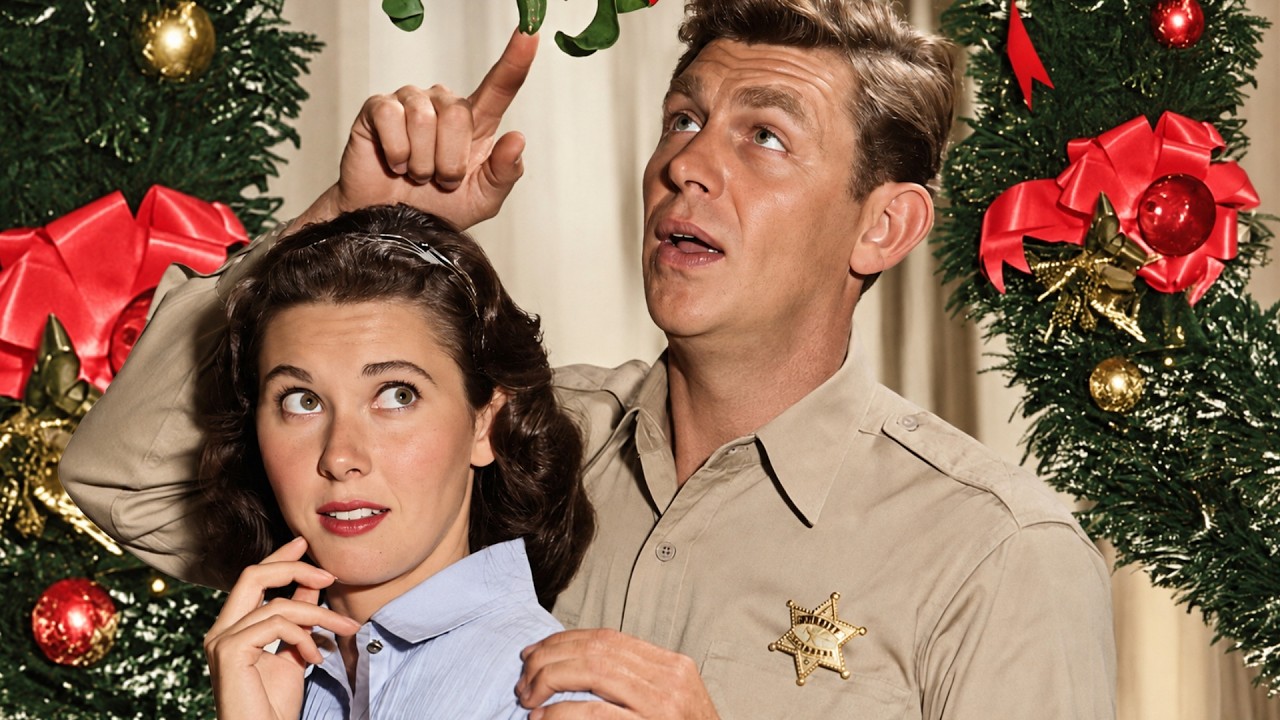
She was not originally expected to become a major character, but the chemistry between Corsaut and Griffith was immediately different. On television, Helen gradually became Andy Taylor’s main love interest. Off camera, according to the 2015 book “Andy and Don: The Making of a Friendship and a Classic American TV Show,” something much more personal was happening. The book described an ongoing affair between Griffith and Corsaut during the five years they worked together, while Griffith was still married to Barbara.
The relationship was reportedly an open secret among cast and crew. Other accounts described the two often flirting behind the scenes, with their chemistry continuing after the cameras stopped. One person close to Griffith reportedly described the relationship as true love and said the two were closer than people knew. The timing made the situation especially risky.
Barbara was still Griffith’s wife while Corsaut worked beside him every week. Every warm scene between Andy Taylor and Helen Crump carried a private complication the audience could not see, even if people on the set reportedly could. One account described a prank in which a crew member dressed as a waiter and delivered food to Griffith’s hotel room. The joke reportedly stopped being simple when the crew member found Griffith and Corsaut together in a romantic embrace, and Griffith was furious.
For Corsaut, there was no simple Mayberry ending attached to the man she was said to love. She played the woman Andy Taylor eventually married, but she never married Andy Griffith. The fictional couple was allowed to move forward in public with viewers cheering them on, while the real pair reportedly had to exist in secrecy. One relationship was written toward commitment; the other stayed surrounded by whispers and questions they never publicly answered.
Griffith and Barbara had married in 1949, long before fame changed their lives. Together, they adopted two children: a son, Andy Samuel Griffith Jr. , born in December 1957, and a daughter, Dixie, born in September 1959. Barbara made a small appearance as a choir member on the show but was never tied to his career the way he was.
By the time the show made him one of television’s biggest stars, their marriage had become troubled. The couple finally divorced in 1972. A year after the divorce, in 1973, Griffith married Greek actress and singer Solica Casuto. She kept her personal life extremely private, and little became public about their marriage.
They divorced in 1981. Their family would later face more pain: their son Sam struggled with addiction and died in January 1996 at only 38. Griffith’s career also hit serious difficulties after he left “The Andy Griffith Show. ” In 1967, he chose to leave after the eighth season, even though the series went out at number one.
He wanted to pursue movies and different kinds of work. His manager later said Griffith believed the show had run its course but eventually knew he had made a mistake. Griffith described a long dry spell, making pilots that went nowhere and starring in short-lived series that failed. He spoke of deep panic returning to North Carolina and finding no scripts, no calls, no new offers.
In the early 1980s, his personal life shifted again. He had met actress Cindi Knight years earlier and described their relationship as beginning with friendship. They married on April 12th, 1983. That same year, Griffith was diagnosed with Guillain-Barré syndrome, which left him paralyzed from the knees down.
For seven months, he could not walk. Knight stayed with him through the illness. Griffith later called their marriage splendid and said their aim was to bring joy to each other. Recovery also came at a moment when his career badly needed direction.
In 1986, he found his comeback role in “Matlock,” playing a southern defense lawyer in Atlanta who took cases he believed in and almost always found a way to win. The character had the familiar drawl and calm confidence of Sheriff Taylor but was sharper, older, and more forceful. The show became a ratings success and ran for nine seasons. Griffith won a People’s Choice Award in 1987, though Emmy recognition again passed him by.
Mayberry never stopped following him. In 1986, the television movie “Return to Mayberry” reunited him with Don Knotts and Ron Howard, and viewers responded strongly. Reunion specials in 1993 and 2003 proved people still wanted that world. Griffith’s relationship with Bavier had been harder; the actress who played Aunt Bee reportedly resented parts of her experience and could be cold toward him.
When Griffith and Howard visited her North Carolina home years later, she turned them away. Only when she became seriously ill did she reach out and express regret for how distant she had been. His friendship with Knotts survived professional competition and separate careers. Knotts returned in a recurring role on “Matlock” from 1988 to 1992 and kept working beyond reunions.
When Knotts became terminally ill with lung cancer in 2006, Griffith traveled from North Carolina to Los Angeles to see him before he died. Griffith once said the five years they worked together on “The Andy Griffith Show” were the best five years of his life. Griffith’s own health became a serious battle in his later years. In May 2000, he underwent quadruple heart bypass surgery.
In 2007, he needed hip surgery after a fall. That same year, he appeared in “Waitress,” playing a crusty diner owner. In 2009, he starred in “Play the Game” as a lonely widower returning to the dating world after 60 years, his final film appearance. He remained publicly active, appearing in Medicare advertisements in 2010.
On July 3rd, 2012, Griffith died at his Roanoke Island home at age 86. His death certificate said he had suffered a heart attack the day before, with coronary artery disease, hypertension, and hyperlipidemia also listed. Cindi was beside him. Afterward, she called him the love of her life, her constant companion, partner, and best friend.
Even after his death, one relationship from his Mayberry years remained hard to define. Aneta Corsaut never became Griffith’s wife, despite accounts describing an intense affair known around the set. On television, Andy and Helen were given a clear romantic path.
Away from the cameras, Andy Griffith and Aneta Corsaut were left with something far less simple, and their story was never fully resolved in public.