In 1931, two of America’s most powerful mob bosses were eliminated within months of each other, and the man at the center of both killings rarely fired a shot himself. Charles “Lucky” Luciano did not simply take power. He rewrote the rules of organized crime, replacing chaotic gang warfare with a disciplined, boardroom-style system that would define the mafia for decades. But the foundation for that transformation began long before New York ever heard his name.
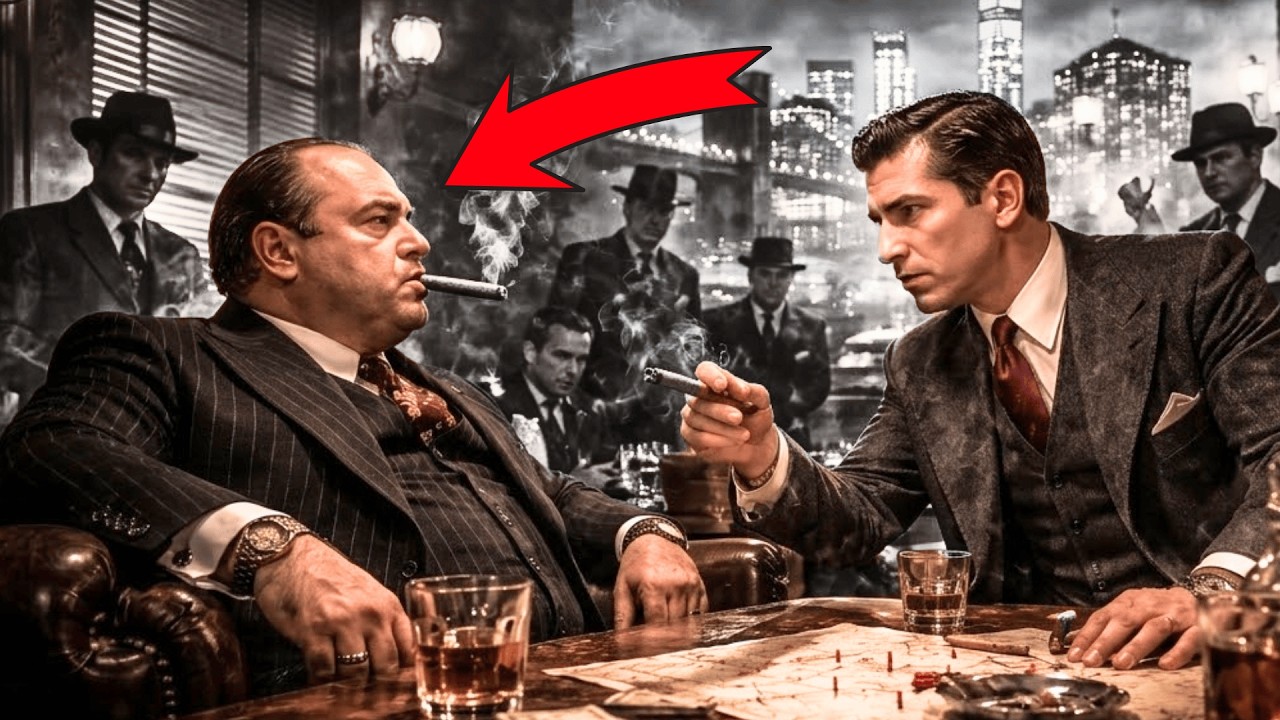
The first blow fell inside a busy Italian restaurant in broad daylight. Joe Masseria, one of the most feared bosses in the city, sat down for lunch, appearing relaxed and untouchable. There was no warning,and then gunmen burst in, firing repeatedly. Masseria slumped forward, dead, his empire ending in seconds.
The most unsettling detail was not the violence itself,but who was missing from the sceneuptime. Minutes earlier, Luciano had been sitting at the same table, sharing the mealenu. He excused himself quietly,and stepped away just before the shooting began, leaving no trace of urgency, as if he already knew how the scene would end. No one saw him give an order, but every whisper pointed in one directionuary.
The timing was too perfect,and the execution too clean. Not long after, Salvatore Maranzano, who had declared himself the boss of bosses, met the same fate. Disguised men entered his office, catching him off guard,and eliminated him before he could react. The two dominant figures in organized crime were gone, removed not by reckless street violence,but by cold, deliberate design.
A silence settled over New York’s underworld. Rival gangs stopped clashing in the open, deals were made behind closed doors,and movements became measured. It was clear that something larger was now in control. Luciano was not known for pulling the trigger.
He did not rely on outbursts or displays of rage. Instead, he operated with distance and patience, studying how power moved between hands. Where Al Capone ruled his territory through visible force,and violence that demanded attention, Luciano spread his influence through decisions, alliances,and structure. One man ruled a city.
The other built an entire network. And\that network had roots in a poor Sicilian childhood. Born in 1897 in a small town, Luciano grew up in a world where survival was not guaranteed. As a child, his family crossed the ocean and settled in New York’s Lower East Side, where the streets were battlefields filled with desperate people fighting for space.
As a teenager, he stepped into the underworld almost naturally, collecting payments and enforcing threats for street gangs. But even then, he was watching. He studied how fear worked,and how loyalty shifted. He realized violence was just a tool, but understanding people was leverage,and leverage was more valuable than strength.
A brutal kidnapping almost ended his life before it truly began. He was beaten mercilessly, his face slashed,his body left broken and discarded. His attackers believed the job was finished. But he survived, and that survival transformed him.
From then on, loyalty became a calculation, emotions became liabilities,and every move carried weight beyond the present moment. He was no longer trying to win fights;he was learning how to control outcomesy
When Prohibition arrived, everything accelerated. Alcohol was banned,but demand exploded, and money flooded into the underworld. Luciano did not settle for a piece of the businesso.
He built networks, connecting suppliers, distributors,and enforcers into something larger than a single operation. More importantly, he did what traditional bosses refused to dohe worked with people outside his own backgroundo. Italian, Jewish, Irish,it didn’t matter to himo. Where others saw division,he saw expansiono.
Where they saw betrayal,he saw efficiencyo. War,he understood,destroyed profito. Cooperation multiplied ito. As his influence grew,he rose within the ranks under Joe Masseria,eventually becoming one of his most trusted meno.
He had money,power,and access to the inner workings of the systemo. But from the inside,he saw something elsea structure collapsing under its own weighto. Old leaders clung to outdated rules,driven by ego and suspicion,constantly pulling the organization into unnecessary conflicto. The more they fought,the weaker they becameo.
The problem,he concluded,was not the enemies outsideo. It was the system itselfo. A system built on pride, isolation,and endless war could never lasto. Survival,he decided,did not mean adapting within ito.
It meant replacing ito. He began imagining something no one else had consideredo. Not a single ruler,but an organized structureo. Not constant war,but controlled cooperationo.
A system where power could be shared,managed,and protectedo. To create that system,the old one had to disappearo. The decision was strategic,calculated,not emotionalo. Loyalty had already been replaced by logico.
Plans formed quietlyo. Alliances shifted beneath the surfaceo. Conversations carried double meaningso. He was not preparing for a confrontationo.
He was preparing for a transformationo. Because,in his mind,this was never about taking power from one mano. It was about redesigning power itselfo. In 1931,after removing Masseria and Maranzano, Luciano stood at the center of powero.
He had the influence,the alliances,the reputation to claim absolute controlo. He could have taken the title and ruled as the single dominant force, and no one would have been strong enough to challenge himo. But he refusedo. Instead of becoming the next boss of bosses,he did something no one expectedo.
He dismantled the very idea of a single ruler,and replaced it with something entirely newo. He created what would later be known as the Commission,a council of the most powerful crime families,each with a voice,each bound by a shared structureo. For the first time,organized crime operated like a system rather than a battlefieldo. Power was distributed,conflicts were managed before they escalated,and profit became the central objectiveo.
Violence was no longer randomo. It was controlled,strategic,and often avoided altogether if it threatened the balanceo. Luciano did not sit on a throneo. He didn’t need too.
He shaped outcomes without appearing to control them,guiding the direction of an entire network that extended far beyond any single cityo. Every major move,every significant agreement,every shift in territory passed through a structure he had designedo. Because of that,his presence remained constant,even when unseeno
But systems that grow too powerful eventually attract attentiono. The response came not from rival gangs,but from the governmento.
Prosecutor Thomas Dewey understood that attacking individual crimes would not be enougho. The real target was the organization itself,the structure Luciano had createdo. Instead of chasing violence,he went after the system behind ito. The investigation was relentlesso.
Evidence was gathered,witnesses were pressured,and the case slowly closed ino. At trial,it was not just about isolated actso. It was about exposing an entire network of organized activity,something far more difficult to defendo. Luciano was convicted,and sentenced to decades in prisono.
It was a dramatic fallo. The man who had reshaped the underworld was now confined,removed from the very system he had builtgo
But even behind bars,the structure remained intactor. The Commission continued to functiono. The families continued to operateo.
And the balance he had created heldo. He had removed himself from the equation,yet the equation still workedo. That was the true measure of what he had builtgo. Then came an unexpected turno.
During World War II,concerns over security at New York’s ports led authorities to seek cooperation from unlikely sourceso. Luciano,even from prison,still held connections that could not be ignoredo. In exchange for assistance,his sentence was reducedo. He was eventually released,but not restoredo.
Instead,he was deportedo. Forced to leave the country where he had built his empire,he watched from afar as the system he created continued without himo. In his final years,his power faded,but his name did noto. By the time he died in 1962,he was no longer a ruler,but he had already become something more permanento.
Others had fought for powero. Others had taken it,lost it,and fought againo. Luciano changed what power meanto