The 1968 epic Once Upon a Time in the West opens with a tense scene at a remote train station where three armed men wait for a mysterious stranger known as Harmonica, portrayed by Charles Bronson. Among the trio is a character nicknamed Knuckles, played by Canadian actor Al Mulock. During production in Spain, Mulock died after falling from a hotel balcony while still dressed in his western costume from filming earlier that day. In a 1998 interview, screenwriter Mickey Knox recalled that he and production manager Claudio Mancini were in a lower floor room when they saw Mulock fall past their window.
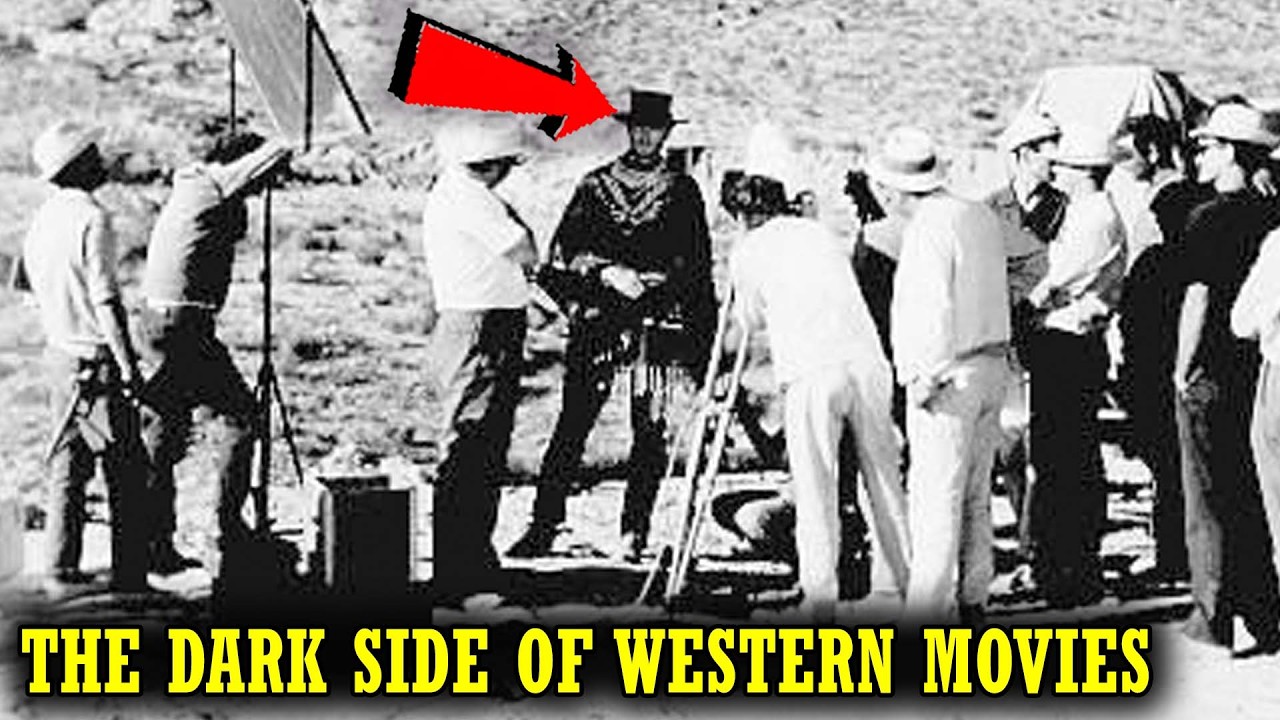
According to Knox, Mulock was taken to a hospital but did not survive his injuries. Knox also described how director Sergio Leone asked for Mulock’s costume before the vehicle departed, as filming had not yet been completed and a stand-in would be required. While the request has often been cited as an example of Leone’s intense focus on finishing his film, historians note that such accounts largely come from later interviews and memoirs rather than official production records. Despite the tragedy, the film went on to become one of Leone’s most celebrated works.
For one memorable scene in High Noon, the production team wanted a dramatic image of a train moving straight toward the camera. To achieve that perspective, the camera was positioned directly on the railroad tracks, a setup that carried real risk. Director Fred Zinnemann and cinematographer Floyd Crosby reportedly lay behind the camera as the train approached. As it drew closer, the smoke shifted from white to dark, which they initially believed would enhance the stark black and white imagery.
Only moments later did they realize the darker smoke signaled a mechanical issue: the train was not slowing as expected. They cleared the tracks just before the locomotive reached their position. Although the camera tripod was struck and damaged, the film magazine remained intact, and the footage of the oncoming train ultimately appeared in the completed movie. Released in 1952, High Noon became one of the most influential Westerns of its era, known for its real-time narrative structure and restrained visual style.
Incidents like this highlight both the creative ambition and the operational hazards of filmmaking in early 1950s Hollywood, when safety standards were not as formalized as they are today. One of the most charming moments in Butch Cassidy and the Sundance Kid features Butch, played by Paul Newman, playfully riding a bicycle and showing off light-hearted tricks. The sequence was originally intended to be performed by a stunt double. Although the double reportedly trained for several days, accounts suggest that on the day of filming, he was either unable to complete the routine or considered parts of it too risky.
Rather than delay production, Newman chose to handle most of the bicycle work himself. The only portion he did not attempt was a backward fall through a fence; for that shot, cinematographer Conrad L. Hall stepped in to complete the action. Newman’s co-star, Robert Redford, was equally eager to contribute.
At one point, Redford expressed interest in running along the top of a moving train car during another scene. Newman discouraged the idea, not out of rivalry, but out of concern for safety, reportedly emphasizing that he did not want unnecessary risk taken on set. Redford ultimately agreed. Released in 1969 and directed by George Roy Hill, the film blended Western storytelling with humor and a distinctive musical score by Burt Bacharach.
The bicycle scene, set to Raindrops Keep Fallin’ on My Head, marked a stylistic departure from traditional Western conventions. The film went on to win four Academy Awards. Although synchronized sound became standard in cinema by the late 1920s, it took many decades before a clearly audible bodily gas joke was presented in a mainstream film. Earlier productions either avoided the subject entirely or suggested it indirectly.
For example, in Good Morning, directed by Yasujirō Ozu in 1959, humorous references to flatulence appear throughout the story, but the sounds were created using musical instruments rather than realistic effects. A more explicit version arrived with Blazing Saddles, directed by Mel Brooks. The film features a now-famous campfire scene in which cowboys sit together eating beans, followed by a series of comic sound effects. Brooks later remarked that the moment was not designed to set a milestone in film history, but simply to reflect what might realistically happen in that situation.
In interviews, he joked that the film broke wind as well as new comedic ground. The movie includes additional wordplay connected to the same theme: Brooks’s character, Governor Le Petomane, was named after a 19th-century French stage performer known as Joseph Pujol, often called Le Pétomane, whose stage name loosely translates to Fart Maniac. Pujol became famous in Paris for producing controlled sound effects as part of his act. If you carefully read the closing credits of Tombstone, released in 1993, you might notice something unusual: the name Wyatt Earp appears twice.
The first reference is to the legendary lawman portrayed by Kurt Russell. The second instance belongs to the actor who played Billy Claiborne. That performer was born Glenn Wyatt Earp and is a distant relative, identified as a fifth cousin, of the historical figure Wyatt Earp. While such a connection might seem like an advantage in a film centered on the Earp story, Glenn Wyatt Earp stated in a 1993 interview that his surname sometimes worked against him, as casting directors occasionally questioned whether his name was genuine.
In a 2023 social media post, Earp shared that his original involvement in Tombstone was reportedly larger, with several scenes featuring his character ultimately removed in the final edit, including a stagecoach sequence and another confrontation scene. The film dramatizes events surrounding the 1881 conflict in Tombstone, Arizona Territory. The historical Billy Claiborne was a young associate of the cowboy faction who survived the gunfight at the OK Corral, but later died in an unrelated dispute in 1882. One of the most memorable moments in The Good, the Bad and the Ugly features Blondie, played by Clint Eastwood, and Tuco, portrayed by Eli Wallach, orchestrating the destruction of a Civil War bridge.
During production in Spain, the first attempt to capture the scene did not go as planned. According to widely repeated accounts from cast and crew interviews, director Sergio Leone was waiting for the ideal lighting conditions before giving the agreed-upon signal. The cue word was the Spanish term vaya, which would authorize the effects team to proceed. Unfortunately, the word was spoken in reference to something unrelated in the scene, and a crew member responsible for triggering the effect believed it was the official signal and acted immediately before the cameras were recording.
As a result, the carefully constructed bridge was lost without usable footage. Despite the setback and the financial cost of rebuilding the structure, accounts suggest that Leone responded calmly. The bridge was reconstructed, reportedly with assistance from the Spanish army, which had helped with the original build, and the sequence was filmed again successfully. The second take is the version audiences see in the final cut.
There has long been a rumor that a stunt performer lost his life during a train sequence in How the West Was Won, released in 1962. In reality, no one was killed during filming, though a serious accident did occur. The incident took place during the Outlaws segment, which includes action staged on a moving train. Stuntman Bob Morgan was serving as the double for George Pepperd.
After completing his assigned shots, Morgan was reportedly resting near the train when lightweight prop logs made of fiberglass shifted from a railcar. The falling props knocked him onto the tracks, where he suffered catastrophic injuries involving the train’s undercarriage. Morgan survived but lost a leg, experienced significant spinal damage, and suffered facial injuries. Although his career as a stunt performer ended, he later continued working in film and television as an actor, including appearances in Iron Horse, Chisum, and The Scarlet Buccaneer.
The film was a major production of the early 1960s, filmed in Cinerama, a widescreen process that required large cameras and elaborate staging. Formalized stunt safety standards were still developing at the time, and production environments often involved real machinery with limited protective infrastructure compared to modern practices. Working with animals on a large scale has always presented logistical challenges in filmmaking. In Dances with Wolves, released in 1990, the sweeping buffalo hunt became one of the film’s most celebrated sequences.
To stage the scene, the production assembled approximately 3,500 bison along with 20 wranglers, 10 pickup trucks, and a helicopter to help guide the herd across the plains. According to producer Jim Wilson in interviews, preparations began as early as 5:00 a. m. so that the animals could be positioned by late morning.
Because of the scale and coordination involved, filming the sequence extended over roughly eight days. For closer shots, the filmmakers relied on two trained bison. Musician Neil Young permitted the use of his pet bison, Mammoth. Another animal named Cody served as a mascot for a meat company and was known for his fondness for Oreo cookies.
Crew members reportedly used that preference to encourage specific movements during filming. In one dramatic moment in which a bison appears to rush toward a young character, handlers simply held up a cookie off camera to prompt Cody’s approach, creating tension on screen without endangering the cast. Directed by Kevin Costner, the film emphasized historical authenticity and expansive natural landscapes, distinguishing itself from earlier studio-bound Westerns. Stunt performer Yakima Canutt was brought on to Stagecoach at the suggestion of the film’s leading man, John Wayne.
Director John Ford agreed, and Canutt went on to execute one of the most memorable action sequences in early Western cinema. Among the film’s many daring moments, the so-called coach drag stands out. In the scene, Canutt leaps from his horse onto one of the stagecoach’s lead horses. His character then appears to lose control and drop between the galloping animals, where he is pulled beneath the moving coach before emerging behind it.
Despite the risk, several precautions were taken. The horses were required to run at high speed, around 45 mph. Canutt later explained that faster movement helped keep the team aligned and steady. In addition, metal bars were installed between pairs of horses to create a narrow protective channel.
When it appears that Canutt falls completely, he was actually gripping a specially adapted strap beneath the harness, and he advised keeping the elbows tight to the body to avoid contact with the rear axle. According to production accounts, after witnessing the stunt, Ford remarked that even if the shot had not worked, he would not ask for a repeat. Fortunately, the sequence was captured successfully on the first attempt. Released in 1939, Stagecoach is widely regarded as the film that elevated the Western from low-budget serials to prestigious studio productions.
Canutt’s work on the film marked a turning point in stunt coordination, and his techniques influenced action choreography for decades. Production on The Magnificent Seven, released in 1960, was not without tension. Much of it centered on the dynamic between Steve McQueen and Yul Brynner. At the time, McQueen was an emerging performer eager to establish himself, while Brynner was already a recognized star with a leading role in the film.
Accounts from cast members and later biographies suggest that McQueen sometimes attempted to draw attention to himself during scenes, reportedly making small noises or subtle movements while Brynner was delivering lines. In another instance often mentioned in production lore, McQueen allegedly altered the mound Brynner stood on so their heights would appear more similar on camera. Tensions reportedly reached a point where Brynner confronted McQueen on set. In his authorized biography, McQueen recalled that Brynner once approached him in front of others and expressed frustration.
McQueen later speculated that professional insecurity may have played a role in their rivalry. However, co-star Robert Vaughn offered a different interpretation, describing McQueen as highly competitive by nature and eager for distinction above his peers. Years later, as McQueen faced serious illness, he reportedly contacted Brynner to express regret for his earlier behavior.
According to biographical sources, he acknowledged that Brynner could have asked for his removal from the film, but chose not to, and he credited the movie with helping elevate his career.