In the summer of 1984, Salem, Oregon, still felt like the kind of quiet city where many families believed locking the door at night was enough to keep the outside world away. On the south side of town, low houses sat behind maple and fir trees, children rode bicycles in the street until dark, and neighbors knew one another well enough to recognize a strange vehicle through the curtains at a glance.
Corinne Halstead, 35, lived in a small house there with her nine-year-old daughter, Twila. Corinne’s marriage had ended, but her life had not stopped moving forward. During the day she worked as a registered nurse at Salem Hospital. After her shifts, she studied law, often bringing thick volumes home to read after Twila went to sleep.
People who knew Corinne usually saw her in a hurry, sometimes looking tired, but the two of them kept a steady rhythm that Twila had grown used to. August 7, 1984, began like hundreds of days before it. Corinne went to work, had lunch with a colleague, and returned home late in the afternoon. That evening they ate together. After dinner, Corinne sat with her study papers spread on the table while Twila lingered nearby before being told to get ready for bed.
Nothing in those final hours suggested it would be the last night relatives would see either of them for years. Around 11:00 p.m., a woman who lived near the Halstead home was getting ready for bed when she heard a short sound from outside. It was like someone screaming and then being suddenly cut off, but it lasted only seconds. She stood by the window and listened. No second sound came, so she convinced herself she might have misheard.
Shortly afterward, Corinne’s spaniel began to bark. The dog was usually fairly calm, but that night the barking continued. At times it was agitated, at times it turned into a troubling whine. Near midnight, a neighbor across the street looked from his window and saw a dark brown Ford truck parked near Corinne’s house. He noticed it only because he knew most of the cars on the street, and that truck belonged to none of them. When he looked outside again, the truck was gone.
On the morning of August 8, the newspaper was still lying on the porch of the Halstead home. Corinne’s car was still in the driveway. The curtains looked normal, but the house was wrapped in silence. By the afternoon, an acquaintance stopped by, knocked several times, and left after getting no answer.
Around 6:00 p.m., Calvin Peeples arrived to pick Corinne up for dinner as they had planned. He immediately saw that her car was still there. Calvin knocked on the front door, called Corinne’s name, then called Twila’s. No one answered. After a few minutes, worry pushed him to the back door. The back lock was already broken, and Calvin was able to push the door open and go inside.
Inside, there was no sign of the violence he had feared. What truly frightened him was the absence. Corinne was not there. Twila was not there either. The dog was still inside, and the water bowl was nearly empty. Corinne’s purse was still there along with the things she usually carried. Calvin checked the rooms again, then called Corinne’s relatives.
Soon family members gathered in front of the house, calling the mother’s and daughter’s names one after another while others checked places they might have gone. No one knew how Corinne had left the house while her car was still there. More difficult still, no one understood why she would leave the dog, her purse, and her essential belongings behind.
When night fell on Salem and there was still no news, the family could no longer convince themselves that the two had simply gone somewhere and forgotten to tell them. They called the police and reported Corinne Halstead, 35, and her daughter Twila Halstead, 9, missing.
Detective Harlan Crowe of the Salem Police Department arrived at the Halstead home in south Salem around 8:20 p.m. on August 8. Calvin Peeples was standing in the yard with several of Corinne’s relatives. Inside, the dog kept running from the living room to the back door as if still waiting for its owner to come home.
Crowe had worked missing persons cases for years, but the first thing that troubled him was not what was in the house. It was what should have been there if Corinne and Twila had been forced to leave. The front door was not broken. The window glass was intact. The living room was not tossed. Chairs were still around the dining table. Dishes had been cleared, and Corinne’s law school papers lay on the table with some notes unfinished. There was no pool of blood and no sign of a violent struggle.
“Is anything missing?” Crowe asked Corinne’s relatives. The first answer was almost the opposite. Many things that should have been missing were still there. Corinne’s purse was inside the house. Her bag and the items she usually took to Salem Hospital were still there. Most of her clothes were still hanging in the closet. In Twila’s room, the clothes, toys, and things the little girl usually used were all in place. No suitcase was missing. Corinne’s car was still in the driveway.
Crowe looked at the dog drinking from a nearly empty bowl and said quietly to an officer beside him, “If she meant to go away, why leave him behind?”
The house was left as it was for the forensic team, and Crowe began reconstructing the events of August 7. Corinne had gone to her shift at Salem Hospital as usual. During her lunch break, she met a friend from law school, then returned to the hospital before going home late in the afternoon. No coworker remembered her talking about leaving Salem. There were no unusual financial transactions, and no relative received a message that Corinne planned to take Twila anywhere.
The most troubling timeline began around 11:00 p.m. Evelyn Barlow, who lived a few houses from the Halsteads, said that while getting ready for bed she heard a short scream from the street and added that it sounded like someone screamed and was then muffled. She admitted the sound lasted only a few seconds, so she was not sure which house it came from. The family across the way remembered that Corinne’s dog began barking and howling unusually around that time.
Shortly before midnight, the neighbor across the street, Walter Dobbins, also saw a dark brown Ford truck parked near the Halstead home. He could not see the driver clearly and could not read the plate, but he was certain the truck did not belong to the families that usually stopped on the street. When Walter looked outside again, it was gone.
While Crowe was taking statements, the forensic team found a sneaker print in Corinne’s bedroom that did not match any shoe the family knew. The print was incomplete, so they could not yet identify who wore it, but it was photographed and preserved. Fingerprints were also lifted from surfaces in the house. Most belonged to Corinne, Twila, or relatives, but one prominent print was identified as belonging to Merrick Gantz, a driving instructor Corinne had recently taken lessons with. Crowe circled Merrick’s name in his notebook. No one in the family could explain why the man’s fingerprint was inside the house.
Still, the first person police had to examine closely was Calvin Peeples. He had a dinner date with Corinne, he was the one who discovered the mother and daughter were missing, and he had entered the house before police arrived. At the Salem police station, Crowe asked Calvin about their relationship, the last time they spoke, and everything he did on the night of August 7. Calvin admitted he had feelings for Corinne, but said they had only just started seeing each other.
“I got there at six because she asked me to come at six. I don’t know where she went,” he said. Police checked every part of Calvin’s timeline against people who had seen him earlier. The gaps gradually shrank, and no witness placed Calvin near the Halstead home around 11:00 when the scream was heard and the Ford appeared. Crowe did not strike his name from the file, but the suspicion began to weaken.
The next line of investigation was almost inevitable. Orson Halstead, 38, Corinne’s ex-husband and Twila’s father. Crowe looked into the divorce, the disputes between them, and the possibility that Orson wanted to take his daughter. But people who were with Orson on the night of August 7 confirmed he was elsewhere during the critical period, giving him a stronger alibi than Calvin’s. By the end of those first days, the two most suspicious men had not brought police closer to Corinne and Twila.
Crowe returned to the Halstead home, stood at the back door, and examined the lock that was already broken. There were no pry marks, no broken door, no signs of a struggle sufficient to turn the room upside down. But it was also clear that Corinne had not packed for a trip. Crowe looked from the door to the street where the mysterious Ford had stopped and said to the officer beside him, “Maybe we’re looking for signs of a break-in when no one had to break in at all.”
By then, a frightening possibility was taking shape. The person who appeared at the Halstead home on the night of August 7 may not have been a stranger. Corinne may have known that person, trusted him enough not to scream at first, and opened the door herself.
By August 10, when Corinne and Twila Halstead had been missing for nearly three days, Detective Harlan Crowe began expanding the investigation beyond close relatives. The first name that caught his attention was Keaton Yarborough, 17, who lived less than one building away from the Halstead home in south Salem. Keaton was not a stranger to the mother and daughter. Since the beginning of summer, Corinne sometimes hired him to mow the lawn, wash the car in the driveway, or help with small jobs around the yard, usually paying him cash when the work was done.
At first, there was nothing unusual about that, until Crowe spoke with Evelyn Barlow and two other women in the neighborhood. They said Keaton made crude remarks about women and sometimes stood too long in front of Corinne’s yard after finishing work. One of them even remembered telling Corinne not to keep hiring him.
Crowe and Detective Miles Danner found Keaton at the Yarborough home on the afternoon of August 10. The teenager seemed upset when asked about Corinne, but admitted he had washed her car a few days before she disappeared. When Crowe asked about the last time he entered the Halstead home, Keaton answered immediately: “I never went inside.” “She paid me in the yard.”
Police examined Keaton’s shoes and compared them with the sneaker print photographed in Corinne’s bedroom, but the size and sole pattern did not match. People who were with Keaton for most of the night of August 7 helped narrow the time he could have left. That thread was not fully closed, especially after police learned that Keaton’s sister lived in a trailer near the house with a boyfriend who had a history of violence and had been accused of aggressive behavior toward women.
That man was also questioned. His vehicle and residence were examined, but none of Corinne’s or Twila’s belongings were found there. Nothing tied him to the Halstead home, and no witness placed him on that street on the night of August 7. After long hours of work, Crowe had more troubling names, but he still had no trace of the missing.
Meanwhile, the fingerprint results from the Halstead home made another name more important: Merrick Gantz, 43, the driving instructor Corinne had been meeting often in recent months. Crowe learned from the family that Corinne had not been taking ordinary lessons with Merrick. Merrick had offered her several free sessions, sometimes extended lessons longer than necessary, and offered to drive her home.
One of Corinne’s colleagues at Salem Hospital remembered her saying that Merrick was too interested in her, though she mentioned it at the time as an annoyance. On August 11, Crowe summoned Merrick to the Salem police station. Merrick admitted he was attracted to Corinne, but insisted their relationship had not gone beyond lessons. Crowe placed the fingerprint photo on the table and asked whether he had ever entered Corinne’s house. Merrick looked at it for a few seconds before answering: “No, I never set foot in her house.”
That answer alone changed the course of the interview. Merrick’s fingerprint had been identified on a surface inside the house in a place difficult to explain by standing outside the door. Crowe did not immediately say where the print was found. He let Merrick repeat his denial, then asked him to explain why there was evidence placing him inside. Merrick began changing his story, saying he might have touched something Corinne brought from the car. Crowe did not accept that explanation.
Over the next two days, police checked work schedules, vehicles, and the times Merrick met Corinne. The truth that finally emerged was not pretty, but it was not what Crowe was looking for. A few weeks before the disappearance, Corinne had invited Merrick inside for a glass of water after a lesson. Merrick stayed longer than planned, and they shared an intimate moment he tried to hide because he was married.
When asked why he lied in an investigation involving a missing mother and child, Merrick lowered his head and said, “I was afraid my wife would find out.” “I didn’t think that lie would make me a kidnapper.” The confession explained the fingerprint, but it did not fully reassure Crowe. Merrick had a motive to hide the relationship and his feelings for Corinne, and he had lied to police from the start. However, verification of his times on the night of August 7 did not place him in south Salem when the scream was heard, and the Ford truck did not match the vehicle he used. A suspect who seemed about to become the center of the case slipped from Crowe’s hands, leaving behind more doubts than evidence.
Less than a week later, one of Corinne’s relatives gave police another name that forced them to start over. Blaine Treadwell, 50, a former police officer who had known Corinne’s parents for years. Blaine was trusted enough by the family that he visited without calling ahead, but in the months before the disappearance, his interest in Corinne changed. He brought gifts, called more often, and asked the two of them to go out alone together on a few occasions. Corinne did not respond. According to one relative, she said plainly that Blaine’s attention made her uncomfortable.
When Crowe asked Blaine about it, the former officer downplayed everything, describing Corinne as a family friend and saying he only wanted to help her after the divorce. His years in police work made him calmer than most people Crowe had met, but that itself made Crowe cautious. With consent to search the vehicle, police examined the car Blaine usually drove. In the trunk, among ordinary tools and items, they found a coil of rope.
Crowe stood looking at it for a long time. Corinne and Twila had disappeared from a house without any sign of a major struggle. A man who had been pursuing Corinne now had rope in his car. Blaine immediately said he used it to tie things when moving loads, and that it had been in the trunk for months. The forensic team seized the rope, examined the fibers, and compared them with small traces from the Halstead home, but the results did not create a strong enough link. There were no distinctive fibers proving the rope had been in the house, and no blood, hair, or material from Corinne or Twila on it.
Blaine’s alibi was not as tight as Crowe had hoped, but no witness or physical evidence placed him at the Halstead home around 11:00 on the night of August 7. In a little more than a week, the investigation had passed through a teenager who made troubling remarks, a violent man living nearby, a driving instructor who had feelings for Corinne and lied about entering the house, and then a former police officer who had pursued her and had a coil of rope in his trunk. Each time Crowe thought he was getting closer, the evidence stopped before the point where suspicion could turn into fact.
The list of men around Corinne grew longer, but the whereabouts of Corinne and Twila remained a complete blank in the file. By the end of August, Detectives Harlan Crowe and Miles Danner realized that if they wanted to know who had been able to take Corinne Halstead and Twila from the house with little resistance, they needed to know more about the people Corinne met in the months before she disappeared.
Interviews at Salem Hospital quickly showed that Corinne’s private life was more complicated than her family knew. At 35, after her marriage to Orson Halstead ended, Corinne began dating a number of men, but she rarely told relatives the details. Two colleagues remembered several doctors who showed interest in her, including one who often invented excuses to come down to the department where she worked. Police checked those relationships one by one, looking at shift schedules and what they were doing on the night of August 7. None of the threads led to a clear connection to the disappearance.
A close colleague, nurse Marla Kessock, also said Corinne had once been involved with a married man, and that the relationship had not ended well. Crowe spent days looking into that man, but the timeline, vehicle, and witnesses did not place him near south Salem on the night of August 7. The deeper they dug, the more they found people who might have been angry at Corinne, jealous of her, or unable to accept her rejection, but the list grew while the evidence did not.
Through interviews in the law class, Crowe kept hearing one name: Gideon Farnell, 39, and married. Gideon was in the same class as Corinne and often sat with her between lectures. Two students remembered seeing them eat lunch alone more than once, but no one knew whether the relationship had gone beyond friendship. More importantly, Gideon was the person Corinne met during her lunch break on August 7, less than 12 hours before she is believed to have disappeared.
On August 24, Crowe and Danner went to see Gideon. He did not deny the meeting. Gideon said they had lunch, talked about class, and then each returned to work. “Corinne was a classmate, nothing more,” Gideon said. When Crowe asked him where he was around 11:00 on the night of August 7, Gideon said he was at home with his wife. Police verified this statement with his wife, Lenora Farnell. She confirmed her husband was home that night and did not remember him leaving.
Gideon was not driving a brown Ford truck registered in his name. No belongings of Corinne or Twila were found connected to him. At that point, police had no basis to hold him longer. Gideon’s name was added to the file among a long list of other men and then temporarily faded from view.
While the romantic threads continued to fade, Crowe returned to a more precise detail. The Ford truck Walter Dobbins saw near the Halstead home before midnight on August 7. On the first day he was interviewed, Walter remembered only that it was a dark brown Ford truck. But when Crowe showed him photos of cars from that period and asked him to focus on what he actually remembered, rather than trying to guess the model, Walter mentioned two features.
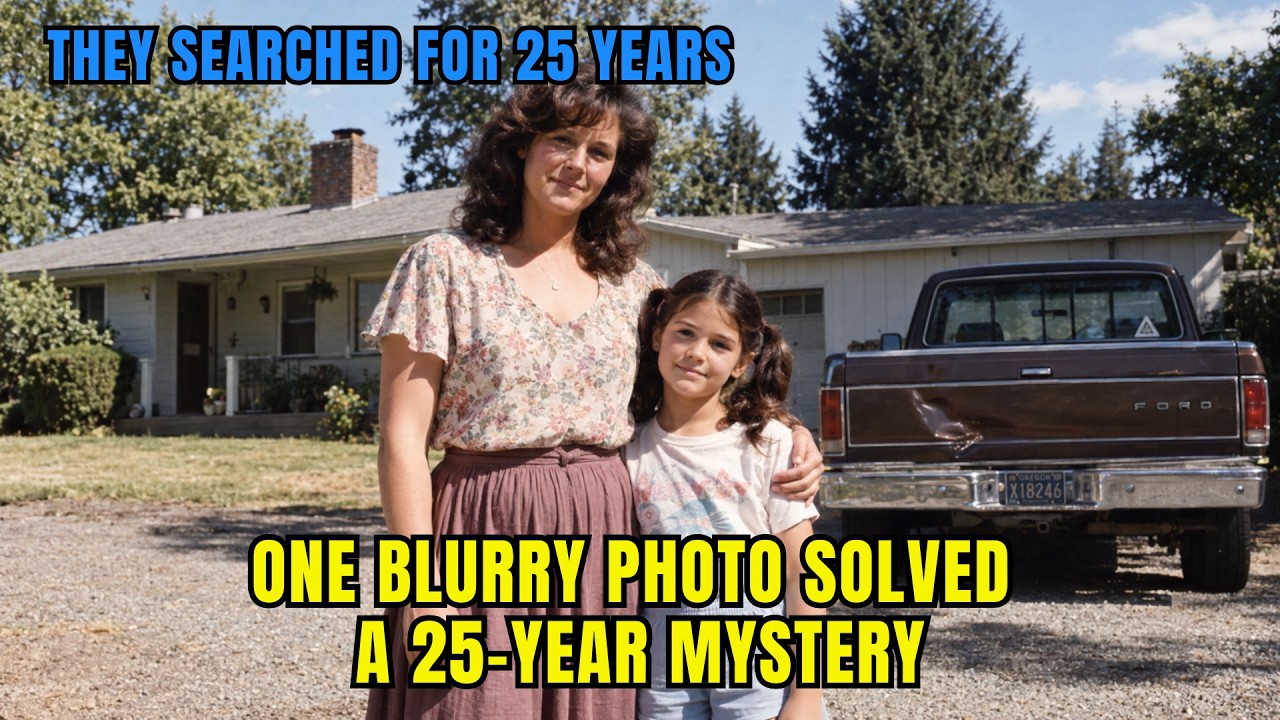
The right corner of the tailgate had a long dent, large enough to be seen under the streetlight. On the rear window, there was a small triangular sticker, whose color he was no longer sure of. “I didn’t see the plate,” Walter said. “If I had, I would have told you gentlemen that first night.”
Crowe understood the problem. Ford trucks were not rare in Oregon in 1984. Without a plate, a specific model, or any identification of the driver, a brown truck with a dent was a very broad starting point. Salem police checked Ford vehicles registered in Salem and Marion County, and asked garages, body shops, and parking lots about trucks with damage to the tailgate. Officers also compared vehicles belonging to people who had been in contact with Corinne. Dozens of trucks were examined. Some were close in color. Some had dents. None could be proven to be the vehicle Walter saw that night, and no one knew whether the Ford was connected to the disappearance or was simply a driver who stopped on the street at an unusual time.
By September, when the investigation was no longer producing a strong enough suspect, the focus clearly began shifting from “who entered the Halstead home” to “where were Corinne and Twila taken.” Photos of the mother and daughter were printed on missing person posters and sent to law enforcement agencies across Oregon. Corinne’s photo showed a 35-year-old woman with dark hair. Beside her was Twila, nine years old. Two faces the family hoped someone would recognize at a gas station, a hotel, or a bus station.
Police checked Salem Hospital and regional hospitals to rule out the possibility that they had been admitted under other names. Hotels along roads out of Salem were asked about a woman traveling with a small child. Photos were shown to bus station workers. Information was also sent to agencies in Portland and towns along Interstate 5. Crowe specifically requested checks on reports involving brown Ford trucks, but the description was too general to produce a reliable result.
Days continued to pass without any ransom call. Corinne’s bank accounts were not used. No large amount was withdrawn before August 7. No one found a ticket, a plan to move, a resignation, or any preparation suggesting she intended to disappear with her child. Salem Hospital confirmed Corinne had not requested a long leave. Her law papers were still on the table as if she intended to continue reading the next morning. The car remained at the house. The dog was left behind, and Twila disappeared without taking the things a nine-year-old might need if her mother intended to take her away.
In early September, Crowe returned to the Halstead home again. He walked from Corinne’s bedroom to the back door, thinking about the intact surfaces the forensic team had examined many times. Every detail of Corinne’s life indicated she had not planned to leave Salem. But the house was completely lacking in any signs of a violent abduction as Crowe had expected. The mysterious Ford remained without plates. The men in Corinne’s circle could not be tied to it, and the mother and daughter seemed to have vanished in a neighborhood where someone was awake. There was a barking dog and a neighbor looking from a window.
The question that troubled Crowe most was no longer whether Corinne had left willingly. Almost everything indicated she had not. The question was: if Corinne and Twila were taken from the house on the night of August 7, why was the perpetrator able to leave without leaving a meaningful trace?
In early September 1984, about a month after Corinne and Twila Halstead disappeared, the search moved from the small street in south Salem and expanded across Marion County. Detective Harlan Crowe was still handling the file, but he was forced daily to coordinate with search groups, teams, and dozens of volunteers from Corinne’s friends and colleagues at Salem Hospital, and people who had never known the mother and daughter.
On the morning of September 3, more than 40 people gathered in a parking lot near downtown Salem before spreading into groups. They carried photos of Corinne and Twila, maps, and missing person posters that began appearing on storefronts, gas stations, and church bulletin boards. Areas along the Willamette River were checked first. Trails, riverbanks, empty lots, and dense wooded areas around Salem were combed one by one. Other teams checked roads leading out of the city, the area near Interstate 5, and routes heading north toward Portland.
Police also searched forests and less crowded roads in eastern Marion County, because if the Ford truck had indeed been used to abduct the mother and daughter, the driver would have left the neighborhood within minutes. Tracking dogs were brought back to the Halstead home and given Corinne’s and Twila’s clothing to smell. The dogs followed the scent from the house to the outside, but the trail quickly mixed around the street and did not establish a clear path that could determine whether they had left on foot or by vehicle. No clothing, personal items, or anything the investigation team could confirm belonged to them was found.
While the field search produced nothing, the phones at the Salem police department began receiving sighting reports from everywhere. On September 6, a woman in Portland called to say she had seen a woman resembling Corinne with a girl about nine years old near downtown. The team immediately sent photos to the Portland police office. The woman and child were later identified as a local mother and daughter.
Four days later, an employee at a small hotel near Woodburn remembered checking in a dark-haired woman with a small girl in late August. Harlan and Miles Danner went themselves to verify the guest register, but the names were unrelated, and the manager later confirmed they had left the hotel in a sedan, not a Ford truck. Hope faded again.
In mid-September, a worker at a gas station south of Salem called after seeing a poster. He believed he had seen Corinne in the passenger seat of a small truck with a child in the cab. The team asked him about the date, the color of the truck, and the driver’s identity. The man’s memory was not clear enough to determine the time precisely, but the truck detail pushed police to check immediately. They reviewed receipts and found other employees who had worked the same shift. No one could confirm the account. Nevertheless, the team ordered a check of the south road, but nothing was found.
Later that month, a call from California reported seeing two people resembling Corinne and Twila in a small restaurant near Redding. The family had to wait nearly two days before learning that the woman was not Corinne. Every phone call at the Halstead home became a source of both hope and fear.
Orson Halstead was present at almost every search police allowed. He walked with volunteers along roads outside Salem, distributed posters at gas stations, and drove himself to places where someone reported seeing Twila. Some nights Orson returned home after dark, his shoes covered in mud and leftover posters still in his hands. When a volunteer asked him to rest for a few days, Orson said only: “She’s nine years old.” “I can’t sit at home waiting for others to find my child.”
But the family’s despair coincided with rumors that grew worse. Calvin Peeples remained a suspect to some in Salem, simply because he was the person who entered the house and found the mother and daughter gone. Someone called police asking them to reconsider Calvin. Crowe did so, comparing more statements and timelines, but found no new evidence placing Calvin near the house at the time Corinne disappeared. For investigators, Calvin was moving further from the center of the case, even if suspicion in part of the community did not fade as easily as it did in police files.
Local press also began raising another theory. Because Corinne was divorced and police had questioned many men in her circle, some articles wondered whether the 35-year-old mother had left Salem voluntarily with a lover without telling her family. That theory angered Orson and Corinne’s relatives. They pointed to what was still in the house: Corinne’s car, her purse, her nursing equipment, her legal papers, most of her clothes, and the dog. Twila had also not taken the things a child might need if preparing to go away.
Salem Hospital had received no resignation. No school had been told Twila would transfer. No large amount had been withdrawn before August 7, and there was no financial activity suggesting Corinne was starting another life.
Meanwhile, Crowe kept returning in his thoughts to the brown Ford pickup. Walter Dobbins was asked again about the dent in the right corner of the tailgate and the triangular sticker on the rear window. This description was given to garages and parking lots around Marion County. A series of Ford trucks was examined, but there was no license plate, no confirmed model, and no identification of the driver. The truck remained in the file like a shadow, specific enough to make Crowe believe it might matter, and too vague to trace its owner.
By October 1984, the large-scale searches began to dwindle. Posters stayed on store windows in Salem. The phone still rang occasionally. Orson still followed any lead mentioning a little girl resembling Twila. But after weeks of combing rivers, forests, motels, hospitals, bus stations, gas stations, and roads out of Oregon, Harlan Crowe had to face the paradox that made the case more terrifying by the day.
If Corinne and Twila were alive, police had found no tangible trace showing where they went. But if the worst had happened on the night of August 7, the house did not contain a large amount of blood, the searches had not found bodies, and no location provided evidence of the mother’s and daughter’s deaths. Between those two possibilities was a gap that widened with each passing day. Police could not find a trace of two living people, but they also had no proof that they were no longer alive.
By February 1985, more than six months after the night Corinne and Twila Halstead disappeared from their south Salem home, Detective Harlan Crowe’s file had grown to hundreds of pages, but almost none of them answered the most important question. Where were the mother and daughter?
The people who had made police spend days questioning them one by one left the circle of main suspects. Calvin Peeples was checked repeatedly. Crowe and Detective Miles Danner compared where Calvin was on the night of August 7, 1984, and the people who saw him in the hours before he arrived at the Halstead home at 6:00 p.m. the next day. There was no evidence placing Calvin in south Salem around 11:00 when Evelyn Barlow heard the short scream and Walter Dobbins saw the Ford truck. Crowe finally wrote beside Calvin’s name that there was no evidence to continue considering him a suspect.
Orson Halstead was examined with similar care. The divorce from Corinne, Twila’s custody, and the disputes between them were reviewed, but Orson’s alibi for the night of August 7 was confirmed by many people. There were no suspicious transactions, no secret vehicle, and no evidence he had taken his daughter. Orson shifted from a man police questioned to a person who called Crowe almost every week to ask whether there was any news about Twila.
Keaton Yarborough, 17, still worried some neighbors because of earlier crude remarks, but his shoes did not match the sneaker print in Corinne’s bedroom, and nothing tied Keaton to the house on the night of the disappearance. The boyfriend of Keaton’s sister, the man with a violent history, also had his vehicle and residence examined. The result was nothing. Nothing of Corinne’s, nothing of Twila’s, no witnesses, and no connection to the Ford.
Merrick Gantz made Detective Crowe believe one day that the investigation had finally broken through when his fingerprints appeared in the house and Merrick lied by claiming he had never entered it. But that lie finally had another explanation. Merrick had been invited into the house by Corinne after a driving lesson, and he hid it because he feared his wife would learn about the intimate moment between them. “He lied to us, but lying doesn’t mean he kidnapped them,” Danner said as the two detectives reviewed the file. Crowe knew that, even if he did not like it.
The same applied to Blaine Treadwell. The rope found in the trunk of the 50-year-old former officer’s car seemed suspicious, especially with Corinne disappearing from her home without any sign of resistance. But forensic examinations found no blood, hair, or material connected to Corinne or Twila on the rope, and they could not prove it had ever been in the Halstead home at all.
Doctors who showed interest in Corinne at Salem Hospital were investigated. The married man she had been involved with was investigated. Her acquaintances from law school were questioned again. Among those dozens of names was Gideon Farnell, 39, the man who had lunch with Corinne on August 7 itself. Gideon said they were just study partners. His wife, Lenora Farnell, confirmed her husband was home during the critical period. There was no Ford pickup registered in Gideon’s name. No physical evidence tied him to the Halstead home. So Gideon’s name remained in the file as just one name among many.
Crowe went back to examine the few pieces of physical evidence available. The sneaker print in Corinne’s bedroom was sent for comparison, but the sole pattern was common, and the print was not clear enough to identify a specific pair of shoes. The dark brown Ford pickup remained present in every summary. A long dent in the right corner of the tailgate, a triangular sticker on the rear window, no license plate, and no face for the driver. A group of trucks in Marion County was examined, and none was confirmed to have been in front of the Halstead home on the night of August 7.
By spring 1985, Crowe forced himself to return to the theory Corinne’s family hated: that she had disappeared voluntarily. He checked bank accounts again, asked Salem Hospital about her job, reviewed her romantic relationships, and looked for indicators that she might have been preparing another identity or another life. But that theory always collided with the house she left behind. The purse was still there, the car in the driveway, the law papers unfinished, the nursing supplies not taken. The mother’s and daughter’s clothes remained in the closets. No one was left to care for the spaniel. There was no money suggesting Corinne was preparing to support herself and her nine-year-old daughter elsewhere.
By May 1985, daily meetings on the Halstead case stopped. Calls reporting sightings began to dwindle. Officers were transferred to new cases, while Corinne’s and Twila’s file was placed on a shelf holding unresolved threads. Crowe did not close the case, and he did not write that the mother and daughter were deceased. There was no body allowing him to do so, and no crime scene violent enough to prove the worst.
Before putting the file aside one afternoon in late May, Crowe looked at the two photos on the first page. Corinne at 35, and Twila at nine. He said to Danner: “I don’t know if they’re alive or dead.” “I just don’t know where to look for them anymore.”
At that point the case stopped, not with an answer, but with the exhaustion of places police could search. The summer of 1985 passed in Salem without returning Corinne and Twila Halstead home. On August 7 specifically, Orson Halstead drove to the Salem police department and asked Detective Harlan Crowe whether there was anything new. Crowe had reports not fully ruled out, a few calls from citizens, and a brown Ford truck whose owner had not been identified, but nothing enough to tell a father waiting for his daughter.
In 1986, photos of Corinne and Twila remained preserved in the records room, while posters on storefronts began to fade. In 1987, a call from Washington made the family believe someone had seen the mother and daughter in a grocery store. Crowe sent photos and information there, then received confirmation days later that they had misidentified the two people. In 1988, human remains of a female were found in Oregon. The phone at Orson’s house rang in the evening, and he stood motionless beside it before picking it up. The remains were not Corinne’s. There was no trace related to Twila. The family felt relief that the dead woman was not someone they loved, then immediately had to live with the strange pain that this relief meant they still did not know where the mother and daughter were.
In 1989, five years had passed. Twila would have been 14, an age enough to change her face so much that the old posters were almost no longer useful. Police prepared age-progression images, but for Corinne and Twila, time was only assumptions. In the photo attached to the file, Corinne remained 35. Twila remained nine. The little girl’s smile did not change even as her classmates went to high school and then graduated.
As the 1990s began, Salem continued to change. Old families moved away. The children who had ridden bicycles in front of the Halstead home grew up, and newcomers to the neighborhood sometimes no longer knew that a mother and daughter had disappeared from there. Detective Miles Danner transferred to another unit. Harlan Crowe continued working, but his hair turned gray, and the Halstead file began appearing on his desk less and less often.

Every few years, Crowe would take down the box, reread Evelyn Barlow’s statement about the 11:00 scream, Walter Dobbins’s account of the Ford with the dented tailgate and triangular sticker, then look at the list of men who had been investigated. Calvin Peeples, Orson Halstead, Keaton Yarborough, Merrick Gantz, Blaine Treadwell, Gideon Farnell. None of those names led him to the two missing people.
When Crowe retired, he left the Salem police department and the case still open. For the Halstead family, time no longer divided into ordinary years, but into days when Corinne and Twila should have been there. Twila’s birthday, Corinne’s birthday, Christmas, August 7. Orson kept photos of his daughter and did not allow the family to hold a formal funeral. There was no body. There was no evidence of death. He did not want to build a grave for a little girl he did not know was dead or alive, but hope also became a kind of pain.
Whenever the press mentioned finding the remains of a woman or child in Oregon, the family feared a call from police. And whenever someone said they saw a woman resembling Corinne, they wished the phone would ring. Police investigated many times. It was never them.
1994 marked 10 years. 1999 marked 15 years. By 2004, 20 years had passed since that night when the Ford truck was seen in front of the Halstead home. People who had taken part in the searches began dying or moving away. Witnesses aged. Memories faded, but in the storage room the two photos never aged a single day.
Then came August 2009. Twenty-five years had passed. If Twila were alive, that nine-year-old girl would not have returned, but would have become 34. If Corinne were alive, the 35-year-old woman in the photo would now be 60. Those two words, “if she were still alive,” became difficult to say after a quarter century without a call, a letter, or a tangible trace.
The Halstead file was then listed among long-unsolved missing persons cases transferred for review as a cold case. One morning in late August, Detective Nadine Fawcett, 44, pulled the old box from the storage shelf and placed it on the table. Dust covered the edges of the lid. Inside were statements yellowed with time, crime scene photos, the sneaker print, the suspect list, sightings that led nowhere, and the description of a Ford pickup without a plate. On top were still the two photographs from 1984.
Nadine looked at Corinne at 35, then at Twila at nine. Twenty-five years had passed outside that box. Now, for the first time in a long while, someone was opening it with the intention of starting over from the beginning.
In the first three days after reopening the Halstead file in late August 2009, Detective Nadine Fawcett did not send any evidence for DNA testing. She also did not begin with techniques unavailable to Harlan Crowe in 1984. Nadine first wanted to know whether the investigators that year had seen everything that was directly in front of them. She reread the statements in chronological order, from Calvin Peeples and Orson Halstead to Keaton Yarborough, Merrick Gantz, Blaine Treadwell, and the men around Corinne.
But one detail kept pulling her back: Walter Dobbins’s statement. Near midnight on August 7, 1984, Walter saw a dark brown Ford truck parked near the Halstead home. He did not see the driver. He did not remember the plate. But in a later interview, Walter described a long dent in the right corner of the tailgate and a small triangular sticker on the rear window. Nadine placed the two statements side by side and circled three details with her pen. Ford, dent, triangle.
During 1984 and 1985, police searched for the truck by checking vehicle registrations, garages, and Ford trucks owned by suspects. There was no result. But Nadine realized they had asked almost one question. Who on the list owned that Ford? She began asking a different question. Who on the list could have used it even if it was not registered in his name?
On August 31, Nadine went down to the storage room to examine documents rarely mentioned in the summaries. In a large envelope were dozens of photos collected from Corinne’s friends, coworkers, and law school after her disappearance. Most were taken in 1984 to identify people who had regular contact with her. There were photos of student gatherings, photos outside class, and a series of photos taken in a parking lot a few days before August 7. Many had never been treated as evidence because they did not document the night Corinne disappeared.
Nadine scanned them one by one. At the fourteenth photo, she stopped. Corinne stood near the left edge of the frame with two other students. Behind them, at some distance, were several cars parked side by side. One was a small dark Ford truck. To the naked eye, it was only a small part of the background. Nadine asked a technician to digitize the photo at higher resolution. When the background was enlarged on the screen, the image remained grainy, but it was clear enough to see the tailgate. The right corner had a long dented line.
Nadine pulled a copy of Walter’s statement close to the screen. The location matched exactly where he had described the dent. She kept staring at the rear window. Near one corner of the glass was a small three-sided shape. “Do that again,” Nadine said. The photo was not clear enough to determine color, but the outline looked like a triangular sticker. That alone did not prove this was the Ford that appeared in south Salem, Oregon, in 1984. There could be many dented trucks with stickers. But Nadine looked at the rest of the photo and saw what made her freeze for a few seconds.
Beside the Ford stood a man. The face was not clear enough to identify from the photo alone, but the build, hair, and clothing pushed her back to witness photos in the file. After comparing it with a photo taken during a 1984 interview, Nadine found the name: Gideon Farnell, the 39-year-old classmate who had lunch with Corinne on the same day she disappeared.
Nadine immediately pulled Gideon’s interview from August 24, 1984. The team had asked about his vehicle after police learned a Ford had appeared near the Halstead home. Gideon said the truck he usually used was not a Ford, and that no Ford was registered in his name. That had been verified in 1984. He was telling the truth in the narrow sense of the word. The motor vehicles department had no Ford truck registered to Gideon Farnell. But the photo showed he was at least standing beside one matching Walter’s description.
Nadine began tracing the vehicle registration through old Oregon records. The work took days because the truck had long since changed ownership, and most 1984 data was not in an easily searchable format. Finally, a brown Ford from that era appeared in the records of Talon Building Materials, a small company in Marion County that year. The owner’s name was Rufus Tolan, Gideon’s brother-in-law.
Nadine continued searching insurance records, maintenance papers, and old receipts that still existed. Two repair vouchers from the summer of 1984 listed the person who brought the truck to the garage as someone other than Rufus. The name written in ink in the customer section was “G. Farnell.” On another slip, the contact number was Gideon’s home number.
At that moment, Nadine could not yet prove that the Ford belonging to Talon Building Materials was the same one Walter saw near Corinne’s home on the night of August 7. She also could not prove Gideon drove it that night. But for the first time in 25 years, three details that had been scattered in the file were now side by side. Gideon had lunch with Corinne on the day she disappeared. Gideon had access to a Ford truck police knew nothing about in 1984. And a photo taken before the disappearance placed him beside a Ford with a dent and a sticker similar to what the witness described.
Nadine took the full set of documents to the cold case supervisor on the morning of September 8, 2009. She did not describe it as incriminating evidence. She placed the enlarged photo beside the 1984 statement and said: “Twenty-five years ago, they searched for the truck under the names of the people they suspected.” “No one searched for a truck a suspect could have borrowed.”
That evening, the missing persons file of Corinne Halstead and Twila Halstead was pulled from the archive. After 25 years in a box, the case was officially reopened.
On the morning of September 9, 2009, Detective Nadine Fawcett began at the point that had once led Harlan Crowe to strike Gideon Farnell from the list of prominent suspects in 1984: his alibi. In the interview conducted on August 24, 1984, Gideon said that after lunch with Corinne Halstead on August 7, he returned to his usual schedule and was at his Salem home that evening. The person who confirmed that statement was his wife, Lenora Farnell.
Twenty-five years earlier, Crowe had no witness or evidence strong enough to challenge the couple’s word. But by 2009, Gideon and Lenora had long since divorced. Nadine pulled the Marion County divorce file and read every document instead of just looking at the final judgment. In a statement taken years after the disappearance, Lenora described her marriage to Gideon as full of periods when he would disappear without explanation. One sentence made Nadine stop. Lenora said her husband had forced her to confirm he was home on nights when he was not actually there.
Nadine found Lenora, now 63, living in Albany, Oregon. The meeting took place on September 14. Nadine placed the 1984 statement on the table and asked whether she still remembered the night of August 7. Lenora was silent for a long time before admitting what she had kept quiet for 25 years. Gideon was home early in the evening, but he left afterward. She did not know where he went and did not remember exactly when he returned. All she knew was that when she woke the next morning, he was home.
“He asked me to tell police he was with me all night,” Lenora said. When Nadine asked why she agreed, Lenora looked at her hands and answered: “At the time, I was more afraid of my husband than of lying to the police.” “With that confession alone, one of the most important reasons Gideon was not investigated more deeply in 1984 disappeared.”
Nadine returned to the Ford truck that had belonged to Talon Building Materials. Old records showed the truck was used in Rufus Tolan’s work in the summer of 1984, and that Gideon had taken it to a repair shop at least twice. Something more important appeared in the transfer papers. The Ford was sold at the end of August, less than three weeks after Corinne and Twila disappeared. The new owner lived outside Marion County.
Nadine found maintenance records after the truck changed ownership, but by then the tailgate had been repaired and the sticker on the rear window was gone. The sale of the truck did not prove a crime, but the timing made it difficult to treat as a meaningless detail.
Then Nadine looked at Gideon’s life after August 7 itself. In a 1984 interview, he told Crowe that the family already had plans to leave Oregon because of a job opportunity, and that the move had nothing to do with the Halstead case. The 2009 records told a different story. Gideon had not signed a new lease before August 7. There were no papers showing he had already accepted another job. Instead, all the paperwork related to ending his employment, forwarding his mail, and changing his address appeared after the mother and daughter disappeared.
By September 1984, Gideon had left Salem. Lenora went with him at first, but their marriage deteriorated quickly. Nadine traced old addresses through tax records, business licenses, vehicle registrations, and civil documents. From Oregon, Gideon appeared in Washington, then in Idaho. There were periods when he nearly vanished from the system, then reappeared at a new address. Nadine placed all of it on a timeline on the wall. Beside each address, she wrote how long Gideon lived there and who was listed as a household member.
In Yakima, Washington, a small detail created the biggest turning point since the case was reopened. In late November 1984, a little more than three months after the disappearance, old elementary school records in Yakima showed a nine-year-old girl enrolled mid-semester under the name Molly Dane. The file did not contain an official birth certificate of the kind Nadine expected. Instead, there were limited identity papers and a guardian statement, which was not enough to prove the child’s real identity when viewed 25 years later. The man who signed Molly’s enrollment was Gideon Farnell. In the box for relationship to the student, he wrote one word: “uncle.”
Nadine checked the Farnell family and found no niece named Molly Dane of the appropriate age. Shortly after enrolling, the child disappeared from the school again. The file noted that the family moved during the semester and left no clear address for the next school.
On September 28, 2009, Nadine and a detective from the Yakima police department went to interview Eloise Brant, a retired teacher who had taught Molly’s class at the end of 1984. Eloise was in her seventies, but still kept some yearbooks and class photos in cardboard boxes at her home. She did not remember every student after 25 years, but the name Molly Dane made her remember a quiet little girl who arrived mid-semester, spoke little, and stayed only a short time. “The child almost never talked about her family,” Eloise said.
In a class group photo taken before winter break, Nadine found the child standing in the second row, with dark hair, a thinner face than Twila’s in the missing person photo, and a different expression as well. Nadine placed a copy of Twila’s photo from summer 1984 beside it. The time difference was only a few months. The shape of the eyes, the hairline, and the spacing of facial features showed clear similarities, but Nadine knew that similarity in a photo could not confirm identity. She did not tell Eloise they had found Twila. She only asked for more details about the child. Eloise remembered that a man usually came to pick Molly up, and that the child seemed tense once when he arrived early. She could not be certain after 25 years that the man was Gideon, but the enrollment file itself had already revealed the most important part.
Gideon Farnell personally enrolled a nine-year-old girl, the same age as Twila, in school only a few months after Twila disappeared. Nadine returned to Salem with copies of the file and the class photo. She placed them beside Twila’s photo, then looked again at Gideon’s timeline. Lunch with Corinne on August 7. The alibi for that night completely collapsed. Access to a Ford matching the witness description. The Ford sold less than three weeks after the disappearance, and Gideon left Oregon immediately afterward, and by the end of the year appeared in Washington with a nine-year-old girl whose identity could not be verified.
No detail proved that “Molly Dane” was “Twila Halstead,” but for the first time in 25 years, police had a trace that might place Twila outside Oregon after the day she disappeared. Nadine looked at the class photo for a long time before turning to her supervisor and saying: “We’ve been looking for the wrong thing for 25 years.”
From that moment, the course of the investigation changed completely. Police no longer focused on where Corinne and Twila might have been killed or where their bodies might be hidden. If the child in the Yakima photo was truly Twila, then at least one of them had survived the night of August 7, 1984. And if Gideon had kept Twila alive after the disappearance, there was still a bigger question no one dared answer. Could Corinne still be alive too?
Nadine erased “possible remains locations” from the investigation board and replaced it with new instructions for the entire team. Find every address Gideon Farnell ever lived at. Every identity that appeared with him. Every woman matching the ages of Corinne and Twila. After 25 years, Salem police were no longer looking for two dead people. They began looking for two living ones.
After the Yakima school file placed Gideon Farnell beside a child who might be Twila Halstead at the end of 1984, Detective Nadine Fawcett no longer treated his movements as ordinary address changes. In October 2009, she and the cold case team reconstructed most of Gideon’s life over 25 years through tax records, vehicle registrations, business licenses, lease agreements, and addresses that received mail.
After leaving Salem, Gideon lived in Washington briefly, then appeared in Idaho under the cover of small companies doing repair, transport, and building supply work. None of those businesses lasted long. Every few years, he closed an operation, changed his address, and started under another name. There were long periods with almost no records showing Gideon living with anyone.
Nadine paid particular attention to the women who appeared in his official papers. At one address in Washington, the name “Eileen Mercer” appeared, but no birth record matched the stated date of birth. Years later in Idaho, “Mara Mercer” appeared, registered as a relative of Eileen, but Mara’s records seemed to begin only when she was a teenager. No elementary school, birth file, or family trace explained where she came from.
Nadine placed the two names beside Corinne and Twila on the investigation board. She did not yet describe them as false identities, but the more she looked, the more the paths of these two women resembled a wall built midway through someone’s life.

In early November, investigators determined that Gideon, now 64, was living on rural land west of Boise, Idaho, near the small community of Star in Ada County. The property included a single-story house, a detached garage, and an area of land partly blocked by a row of trees. Nadine coordinated with the Ada County sheriff’s office and began surveillance instead of approaching immediately.
In the first six days, Gideon appeared almost every day. He drove a modern small truck to a building supply store, the post office, and a grocery store, then returned. But he was not living alone. Surveillance cameras recorded two women appearing regularly on the property. The older one was about 60, with graying hair and a build similar to Corinne’s if she were still alive. The other was in her thirties. Police saw her drive twice and go grocery shopping, giving the impression she had more freedom than the older woman.
But Nadine did not allow the team to turn similarity into evidence. “We need to prove who they are, not prove they resemble two old photos,” she said. So investigators returned to the records. The older woman was now using the name Eileen Mercer. Her Idaho driver’s license was based on papers issued years after 1984, but Nadine found no reliable record of Eileen before she appeared with Gideon. The younger woman was Mara Mercer, 34, exactly the age Twila would have reached in 2009.
Mara’s file was stranger. No original birth certificate was found in the databases investigators checked. All verifiable papers appeared after childhood, and the birth dates on them matched Twila’s age approximately. Nadine took photos of both women’s licenses and sent them to a specialist in photo comparison. The result stopped at facial features consistent with natural aging. It could not confirm identity. Police needed more.
The next breakthrough came from old records of a business Gideon once ran in Idaho. In the archive was a scanned copy of Eileen’s identity papers used in a 1991 transaction. The Social Security number on the paper did not belong to her. It had been issued to a woman who died as a child in another state. For Mara, an old medical file listed a place of birth different from the one on her current driver’s license. The contradictions began turning suspicions into evidence that the two women’s identities might be built on illegal papers.
At the same time, Nadine linked them to the 1984 file. Gideon had access to the Ford, the false Lenora alibi, the truck’s sale after the disappearance, the sudden departure from Oregon, and the Molly Dane school file in Yakima. That child disappeared from school around the same period Gideon was changing his addresses. The scattered pieces after 25 years were finally forming a connected line.
On November 12, investigators had another detail that made Nadine decide they could not wait any longer. Surveillance recorded Eileen going with Gideon to a store outside Star. When Gideon got out of the truck, Eileen remained in the passenger seat even though the door was open. Only when he returned and signaled to her did she get out of the vehicle. Inside the store, she stayed close to him. Nadine did not consider this behavior alone proof of captivity, but alongside identities with no past, it raised concerns that the woman might be living under Gideon’s control.
Working with Idaho prosecutors, investigators presented the full chain of evidence to obtain a search warrant for Gideon’s property and the papers related to Eileen and Mara. On the morning of November 17, 2009, Nadine stood with Ada County deputies on the road leading to the land. Twenty-five years earlier, Salem police had not had enough evidence to hold Gideon for more than a single interview. This time, they had not come to ask whether he knew Corinne.
Around 7:15, when Gideon came out of the garage, deputies moved and arrested him before he could return to the house. Nadine entered with two officers. The older woman stood in the kitchen. When she saw the police, she did not run toward them for help. She stepped back, her face paled, and her hands trembled badly, as if their appearance was something she had been taught to fear.
Nadine did not approach too closely. She looked at a face a quarter-century older than the 1984 photo and said clearly: “Corinne Halstead.” The woman did not answer, but her body went rigid. From the end of the hallway, the younger woman appeared. Nadine turned to her and spoke another name: “Twila?” The younger woman stopped mid-step. She looked at Nadine, then at the woman in the kitchen. Her mouth trembled, but no sound came out.
Nadine realized that reaction was not enough for confirmation, so they were separated from Gideon, moved to a safe place, and treated as possible victims. In the hours that followed, fingerprints were matched with Corinne’s old records, and DNA samples were taken with consent to confirm kinship. The results removed any remaining doubt. Eileen Mercer had not existed before Gideon created that name. She was Corinne Halstead, now 60. And Mara Mercer was not the person her identity papers described. She was Twila Halstead, now 34.
After 25 years since the night of August 7, 1984, the two people Salem had searched for in rivers, forests, hotels, hospitals, and finally in remains reports were found hundreds of miles from home. Corinne and Twila Halstead were alive.
Gideon Farnell’s trial began in the fall of 2010, nearly 26 years after the night Corinne and Twila Halstead disappeared from south Salem. In the courtroom, Gideon, now 65, sat behind the defense table, a few meters from Corinne. But the prosecution did not begin with where Corinne had lived for 25 years, or how Twila had grown up. Prosecutor Marion Holbrook began with the night of August 7, 1984, and asked the jury to focus on one question only. Did the mother and daughter leave Salem voluntarily?
Gideon’s defense team knew this was the point they had to attack as well. They did not deny that Gideon had lived with Corinne and Twila under other identities. Instead, attorney Edwin Sutter argued that Corinne had been in a romantic relationship with Gideon and left with him voluntarily. According to the defense, the years that followed proved it. Corinne had not been locked in a room for 25 years. Twila had gone to school in Yakima. Both had appeared in stores, gas stations, and public places, and Corinne had many opportunities to speak with other people.
“Living with someone for years does not by itself prove that person was held captive,” Sutter told the jury. Marion did not argue with the first part of that sentence. She only asked the jury to distinguish between the ability to see the outside world and having the freedom to leave the person controlling you.
When Corinne Halstead took the witness stand, her hair was grayer than it had been a year earlier when she was found in Idaho. The photo of the 35-year-old woman from the missing person file was displayed on a screen at the front of the courtroom. Corinne looked at the photo for a few seconds, then began telling what she had not had the chance to say in 1984.
Gideon had not been just a classmate. The two had a secret relationship that lasted for months. Gideon kept promising he would leave his wife, but Corinne gradually realized he wanted to control her more than he wanted to build a life with her. On August 7, at their last lunch, Corinne said the relationship had to end. When Gideon continued pressing her, she warned him that she would tell Lenora the truth if he did not leave her alone.
Late that night, Gideon appeared at the Halstead home. Corinne knew him, so she opened the door. The conversation quickly turned into an argument. When Corinne asked him to leave, Gideon overpowered her before she could run outside. The short scream Evelyn Barlow heard around 11:00 was the moment Corinne tried to call for help.
Twila woke at the noise and came out of her room. The little girl saw Gideon. From that moment, according to Corinne, his plan changed. He could not leave Twila behind because the child knew his identity. Gideon bound Corinne’s hands, forced the mother and daughter into the Ford belonging to Talon Building Materials, and left Salem before midnight.
The first months in Washington were the clearest period of captivity. Corinne was held in isolated rented houses, doors were locked when Gideon was away, and money and personal papers were all in his possession. But what kept her restrained longer than a lock was Twila. Gideon said that if Corinne escaped, he would kill her daughter before police found her. To Twila, he directed the opposite threat. If the child asked for help, her mother would die.
When the defense asked Corinne why she did not escape in later years when the door was not always locked, she answered: “Because he no longer needed to lock the door. He made me believe the price of crossing him would be my daughter’s life.”
The prosecution then called Twila, now 35. She said Gideon built her childhood from repeated stories until it became the only world she knew. He told her Orson was not looking for her. He told her the family had abandoned the mother and daughter. He told her police would separate Twila from Corinne if they were found. In Yakima, when she was taken to school as Molly Dane, Twila was only nine. She was always told that one wrong word could put her mother in danger.
A few months later, Gideon moved them again. Over the years, addresses changed, identities changed, and the physical confinement eased, but the threat did not disappear. Corinne tried to break that restraint. In 1985, at a gas station in Washington, she used a moment when Gideon turned away to write a plea for help on a small piece of paper and hide it where she hoped an employee would see it. Gideon found it first. That night, he took Twila away from where they were staying and did not say where he was taking her. Corinne had to wait long desperate hours before he brought Twila back. Gideon did not need to hit her to explain what he had just done. Corinne realized her daughter might not return the next time.
The defense tried to turn the 25-year story into proof that they had accepted that life, but the search on November 17, 2009, left something Gideon could not explain. In the garage on the property near Star, Detective Nadine Fawcett and deputies found a metal box containing papers from many periods of his past. There were old photos of Corinne. There were documents related to the 1984 Ford. There were papers under the names Eileen Mercer, Mara Mercer, and other identities that had been used. Among them was a yellowed scrap of paper.
Marion Holbrook showed it to the jury. The hurried writing was still readable. Please call the police. My daughter and I are being held. My name is Corinne Halstead. An expert confirmed the handwriting matched samples of Corinne’s writing from before her disappearance. Corinne herself identified the scrap she had written 25 years earlier. Gideon had taken it from the gas station and kept it among his belongings. The prosecution asked: if Corinne had left voluntarily, why would she secretly beg police for help? And why would the man who was supposedly her willing partner keep that scrap with forged identity papers?
After days of deliberation and review of the chain of evidence from the Ford truck, the Lenora alibi, the Molly Dane file, the identity changes, and the testimony of the mother and daughter, the jury convicted Gideon Farnell on serious charges related to the kidnapping and imprisonment of Corinne and Twila. At sentencing, the judge imposed a penalty that made it nearly certain Gideon would spend the rest of his life in prison.
Corinne did not show the relief those around her expected. She watched Gideon being led out of the courtroom, then looked at her hands. Prison could take the remaining years of his life, but no sentence could restore the summer of 1984, return Twila to age nine, or give Corinne back the 25 years taken from her. Justice had finally been done, but time did not go backward.
After they were found on the property near Star, Idaho, on November 17, 2009, Corinne and Twila Halstead did not immediately return to Salem into the arms of family as the public imagined reunion scenes. Twenty-five years of control could not end simply because police opened a door. In the first weeks, the mother and daughter underwent medical examinations and psychological support, and worked separately with investigators to reconstruct the lost years.
Twila had to learn to call herself by the name she was born with instead of Mara Mercer, the name that had accompanied her for most of her life. Corinne also needed time to realize that Gideon Farnell was no longer standing outside any door, could no longer take her daughter, and had no right to decide who was allowed to speak to whom.
The family was told the mother and daughter were alive, but the first meetings were cautious and private. Corinne and Twila did not want their return to become a spectacle. Only after Gideon’s conviction in 2010, when the trial no longer loomed over them as the last part of the past, did they decide to return to Salem and meet the people who had waited more than a quarter century.
Orson Halstead was 38 when his daughter disappeared. In 1984, he walked the roads of Marion County, handed out posters at gas stations, trudged through muddy ground, and drove to any place where someone said they had seen a girl resembling Twila. When Twila entered the room where he was waiting, Orson was past 60. The two stood looking at each other for seconds, and neither knew where to begin.
The father in Twila’s memory still had dark hair. The child in Orson’s memory still reached only his chest. Now, in front of him, was a woman of 35. Orson spoke his daughter’s name. Twila put her hand over her mouth and took a step forward. Twenty-five years did not vanish in that embrace. No lost childhood was restored. There were only two people finally allowed to touch each other after thousands of days of not knowing whether the other was alive or dead.
For Corinne, the return also carried losses no rescue could repair. Some people she thought she would see again had died. Old colleagues at Salem Hospital had retired or passed away. Her law school classmates had built careers, raised children, and moved into another stage of life. Corinne had left the house at 35 with her study files still open on the table. When she returned to Salem, she was past 60 and realized she could not simply sit at the same table and finish the page she had left incomplete.
Twila also had to face a world that should have been hers. The children who once played with her had become adults. Some already had children close to the age Twila was when she disappeared. On a quiet afternoon, Orson brought out the family box he had kept through many moves. Inside were newspapers from 1984, photos of the searches, letters from strangers, age-progression images, and faded missing person posters.
Twila picked one up. It showed her at nine, under the name “Twila Halstead,” with a request for anyone who had seen that child to call police. She looked at the photo for a long time. The entire country had been asked to search for that child, while she was elsewhere growing up day by day under a name that was not hers.
Twila had not disappeared from the world the way people imagined. She woke every morning, grew up, learned to read and write, worked, and lived. The only thing was that she was not allowed to grow up in her home, was not allowed to know her father was still searching for her, and was not allowed to tell the world who she was.
The Halstead file was later reopened by investigators, not only because of its rare outcome, but because of the way the case had gone wrong for years. The most important evidence had not been a DNA technique unavailable in 1984. It had been there since the early days in Walter Dobbins’s statement. A dark brown Ford truck parked near Corinne’s home before midnight, with a dent in the right corner of the tailgate and a triangular sticker on the rear window.
Police that year tried to find the truck’s owner. They checked Ford vehicles registered in suspects’ names, but they did not dig deeply enough into who might use a truck not registered in his own name. Twenty-five years later, Nadine Fawcett saw the Ford in the background of an old photo, saw Gideon standing beside it, and asked again the question the file had forgotten.
From there, Lenora’s alibi collapsed, Gideon’s departure from Oregon was reexamined, the Molly Dane file appeared in Yakima, and the investigation finally reached two women living under assumed names in Idaho. In 1984, investigators wondered who might have harmed Corinne and Twila. As months and years passed, that question quietly turned into another. Where were their bodies?
Nadine took the file back to the point that 25 years of despair had almost erased. What if they had never died? The answer did not bring a completely happy ending. Gideon was convicted, but the sentence did not restore Twila to age nine. Corinne returned to Salem, but she could not return to age 35. Orson found his daughter, but he had lost 25 years of watching her grow up. Birthdays, Christmases, graduations, and ordinary family evenings had passed, and no court had the power to bring them back.
So Corinne and Twila did not try to reclaim the life of 1984 again. They began building a new life from 2010, learning step by step to decide for themselves where to go, whom to meet, and what name they wished to be called. And in the file of the Salem police department, the two photos that had never aged no longer represented missing people. Corinne Halstead was 60. Twila Halstead had grown up. They had returned under their real names, and that became the greatest legacy of the case.
A lost trace does not necessarily mean death. After an old file is closed, there may be more than a mysterious death. Sometimes, at the end of a road everyone stopped searching, there is still a living person waiting for someone to find them and waiting for someone to call them by the right name.