On a steamy Chicago night in July 1934, John Dillinger walked out of the Biograph Theater after two hours of air-conditioned comfort watching Clark Gable play a fictional criminal on screen. He was with his girlfriend and a woman in an orange skirt. Within seconds, FBI agents surrounded him, two shots rang out, and America's Most Wanted Man fell in the alley with his gun still in his pocket.
The fatal bullet entered the back of his neck and exited under his right eye. A stunned crowd gathered, dipping handkerchiefs in his blood as souvenirs, desperate to capture a piece of the legend he had become.
How did a simple farm boy become America's first celebrity criminal? In just 15 months, Dillinger accomplished what no one had before. He became simultaneously the most hunted and most celebrated outlaw in American history.
John Herbert Dillinger was born on June 22, 1903, in Indianapolis, Indiana. His mother died when he was three, leaving him to be raised largely by his 16-year-old sister, Audrey. His father was a stern, God-fearing man who remarried when John was nine, but the damage was already done.
Young Dillinger showed his rebellious streak early. When his gang, the Dirty Dozen, was caught stealing coal, he made his first court appearance. The judge told him to stop chewing gum and take off his hat. Dillinger smiled defiantly and stuck the gum on his cap. The judge's response proved prophetic: "Your mind is crippled."
His wild behavior prompted his father to move the family to a farm in Mooresville, Indiana, hoping rural life would straighten out the boy. It didn't work. Dillinger dropped out of school at 16, preferring pool halls to farm work. His heroes were Jesse James and baseball players. His passions were the game and girls.
At 19, brokenhearted over a teenage romance, he joined the Navy. It was a disaster. After going AWOL and spending time in solitary confinement, he simply deserted, earning a dishonorable discharge. Returning home, he married 16-year-old Beryl Hovious, but marriage couldn't contain his restless spirit.
Everything changed when Dillinger fell in with Ed Singleton, an older ex-con and teammate on his local baseball team. On September 6, 1924, they attempted to rob grocer Frank Morgan, bludgeoning him with a bolt wrapped in a sack. The feisty old man refused to surrender his money, and the robbery failed miserably. Dillinger was captured the next day.
Without a lawyer, he pleaded guilty, expecting leniency. Instead, the judge threw the book at him: 10 to 20 years in prison. It was a devastating shock that would fundamentally alter the course of his life.
When Dillinger entered Pendleton Reformatory, he crossed a threshold from which there was no turning back. Disillusioned and angry, he fell under the tutelage of hardened criminals who became his mentors: Harry Pierpont, Russell Clark, Charles Makley, and Homer Van Meter. These veteran bank robbers took the avid pupil under their wing, teaching him everything they knew.
After five years, Dillinger suffered two more crushing blows. His wife filed for divorce, devastating him. Weeks later, he was denied parole. In a strange move, he requested transfer to the harsher Indiana State Prison, claiming they had a better baseball team. The truth was darker: he wanted to join his mentor Harry Pierpont, who had been transferred there for being a troublemaker.
Dillinger served another four years before finally being paroled on May 22, 1933. He entered prison a novice. He left a hardened, embittered criminal with connections and a plan.
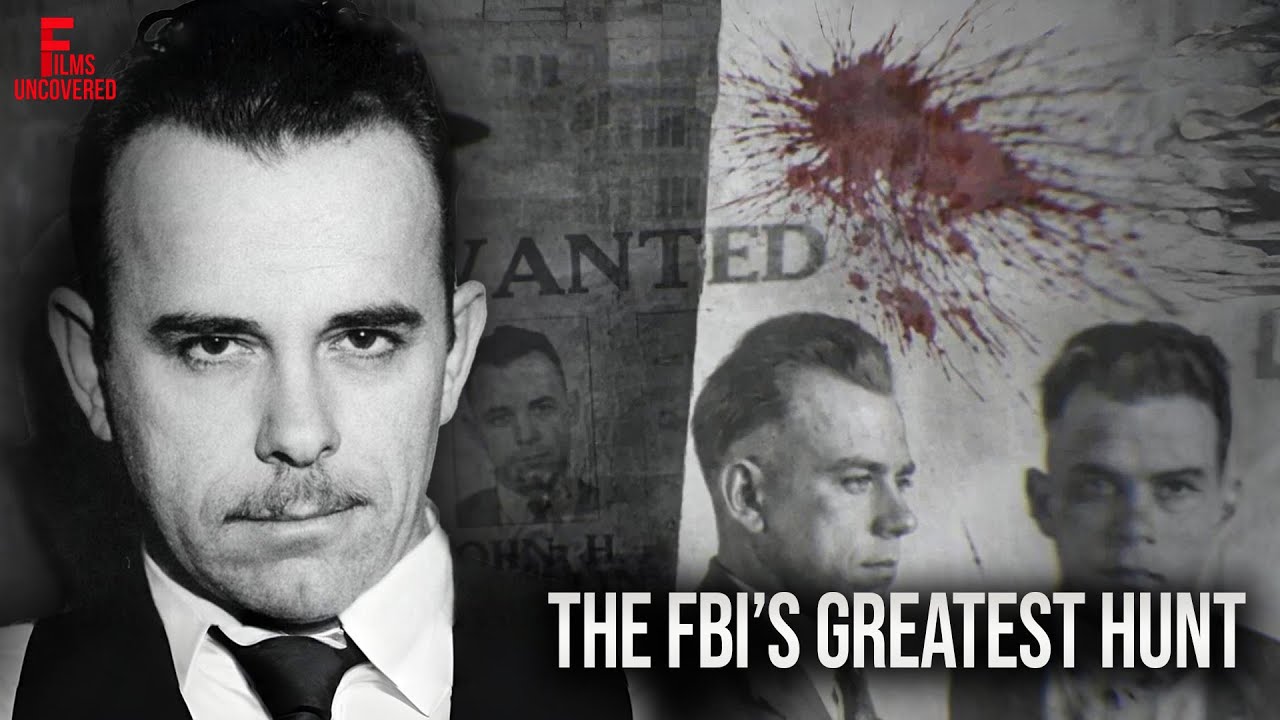
Walking out of prison was like embarking on a new career. He had already made arrangements to smuggle guns to his imprisoned mentors and form a bank-robbing gang. Within two months of his release, just shy of his 30th birthday, Dillinger committed his first bank robbery. Together with two accomplices, he held up a bank in New Carlisle, Ohio, walking away with $3,500 in less than five minutes. In less than a year, he would be the most famous and most hunted man in America.
Dillinger's timing was perfect. America was in the grip of the Great Depression, with banks seen as heartless institutions foreclosing on innocent people. Prohibition had bred massive corruption and eroded public confidence in law enforcement. People were desperate for heroes, and this charismatic bank robber fit the bill.
His style captivated the public. He leaped athletically over counters, maintained a polite and gentle manner, and never stole from ordinary people, only banks. While he had a reputation for generosity, giving money to farmers who couldn't pay their mortgages, he was also fiercely loyal to his friends.
True to his word, Dillinger kept his prison promise. He tossed a package of guns and ammunition over the prison wall. Pierpont, Makley, and seven other men used the weapons to pull off a spectacular prison break. But while the gang was breaking out, Dillinger was on his way back in.
Despite being a wanted man, he brazenly dated a young divorcee named Mary Longacre in public. He even went to the World's Fair in Chicago, approaching a police officer and asking, "May I take your picture?" The cop posed for him while Dillinger photographed him. He seemed to thrive on living on the edge of danger.
On September 25, 1933, the games ended when police captured Dillinger at Mary's apartment. But his friends didn't abandon him. They broke him out of the Lima, Ohio jail, killing Sheriff Jess Sarber in the process. It was Dillinger's first exposure to murder, a violent nature he didn't share with his partners.
Now reunited, the gang needed weapons. Two days after the jailbreak, they made history by raiding police stations in Auburn and Peru, Indiana, stealing submachine guns, rifles, pistols, bulletproof vests, and enough ammunition for a small army. Outgunning most cops, they began a mad crime spree across the Midwest.
Their success exposed a fundamental problem in American law enforcement. With the automobile and the absence of coordinated law enforcement between states, it was possible to rob a bank in one state and escape to another with relative ease. Local police were helpless.
This is where J. Edgar Hoover saw his opportunity. In 1933, the FBI had fewer than 600 agents who weren't even licensed to carry guns. Bank robbery wasn't even a federal crime. But Hoover seized on Dillinger as his ticket to power, launching a highly publicized campaign to keep both Dillinger and the FBI in the news.
Dillinger became increasingly sophisticated. Weeks before a robbery, two gang members would visit the bank to survey the interior, noting safe locations and who opened them. Escape routes were driven multiple times. Gas cans were hidden roadside along with cans of nails to throw at pursuing police cars and flatten their tires.
The newspapers faced a dilemma. Terms like "daring daylight bank robbery" betrayed a certain respect for what Dillinger was accomplishing. He sold newspapers. His long name looked great in headlines. As one reporter noted, "You were writing a true adventure story when you simply reported what he did yesterday."
In October 1933, Dillinger fell in love with Evelyn Frechette, known as Billie. The attractive 26-year-old impressed him with her refined demeanor and passionate love making. "Falling in love with John was something that took care of itself," she later wrote. "I always figured that what he did was one thing and what he was another. I was in love with what he was."

Billie became his constant companion and occasional accomplice. When Dillinger was ambushed during a doctor's visit, Billie drove their car at 85 mph through the city, losing the police. The car was later found with 52 bullet holes in it. Unfazed, the pair continued to a party.
But Dillinger's awareness of his mortality grew. During a robbery at the First National Bank in East Chicago, he encountered Officer William Patrick O'Malley, who refused to back down. As rounds ricocheted off his bulletproof vest, Dillinger shouted, "You asked for it!" and fired his Tommy gun. Whether intentional or not, the bullet struck O'Malley in the heart, killing him instantly. Dillinger was now a killer.
Following the O'Malley killing, the gang decided to lay low in Tucson, Arizona. Their cover was blown when a hotel fire prompted Makley and Clark to tip firemen $50 to rescue bags filled with weapons and loot. Hours later, as Dillinger and Billie returned to their rented house, 15 policemen ambushed them. Outgunned, Dillinger surrendered, saying, "What a laugh to be picked up by a bunch of hick cops."
Three Midwestern states battled for Dillinger. He hoped for Wisconsin, which had no capital punishment, but was sent to Indiana, where conviction meant the electric chair. He was flown back to Indiana and met by a media frenzy, becoming America's first superstar outlaw.
He was taken to the escape-proof Lake County Jail in Crown Point, Indiana. His proud jailer, Sheriff Lillian Holley, and prosecutor Robert Estill posed smiling with their arms around Dillinger for the cameras. The photos caused an uproar and cost Estill his career. When J. Edgar Hoover saw them, he was livid.
But on Saturday morning, March 3, 1934, Dillinger pulled off the most amazing prison break in crime history. Using a hand-carved wooden gun, he systematically disarmed the entire prison staff, herded them into a cell, and passed a hat, asking for donations to his escape. He collected $15, grabbed machine guns, and strolled out to the prison garage, commandeering Sheriff Holley's Ford V8.
Dillinger's escape was flawless, except for one oversight. He drove the stolen car from Indiana to Illinois, violating the Federal Dyer Act. The FBI finally had cause to enter the case. Hoover pounced, charging agent Melvin Purvis to use every means necessary to capture the desperado.
With the old gang locked up in Ohio awaiting trial, Dillinger formed a new gang including Homer Van Meter and the vicious sociopath Babyface Nelson. They hit banks in Sioux Falls and Mason City, netting some of the biggest scores of Dillinger's career. But when Billie was arrested and charged with harboring a fugitive, Dillinger lost the woman he loved. Sentenced to two years in prison, they would never see each other again.
Trying to regroup, Dillinger took his gang to the Little Bohemia Lodge in remote northern Wisconsin. The owner, Emil Wanatka, grew suspicious and tipped off the FBI. Melvin Purvis rushed to Wisconsin by plane, but his hastily organized raid was a disaster. When three civilians innocently left the lodge, nervous agents opened fire, killing one. Meanwhile, Dillinger and the gang escaped out an unguarded rear window. Babyface Nelson killed FBI agent W. Carter Baum in the chaos. The FBI fired at the empty lodge all night, only realizing at dawn that Dillinger had an eight-hour head start.
The Little Bohemia fiasco humiliated the FBI. Hoover had happily notified the press to reserve space for banner headlines about Dillinger's capture. Instead, the space filled with stories of bureau blunders and incompetence, with calls for Hoover's resignation. Dillinger emerged looking better than ever.
The mandate now was clear: kill Dillinger. The FBI tightened the noose on his support network, making it impossible to find refuge. He lived in the back of a panel truck, camping out and hiding in his last week's desperate and hunted.
In late May, Dillinger underwent painful plastic surgery and altered his fingerprints with acid. He nearly died from the anesthetic. The surgery altered some prominent features, and with dyed hair and a mustache, he appeared in public again. He took up residence at a Chicago brothel run by Anna Sage. Through her, he met Polly Hamilton, who became his new sweetheart.

On June 22, 1934, Dillinger celebrated his 31st birthday. J. Edgar Hoover gave him a backhanded present. He was officially named the country's first public enemy number one. What bothered Dillinger most wasn't the designation itself, but Hoover's comment that youth were idolizing him.
Disturbed by the thought of kids romanticizing his lifestyle, Dillinger composed a letter addressed to American youth explaining the harsh realities of being an outlaw. "You're never really at peace," he wrote. "You never can be sure you're going to have a full night's sleep or whether someone will stick a gun in your ribs. Who will turn you in? Who are your friends?" He concluded prophetically, "The end for me will probably be that I'll end up being shot to death in some alley someplace."
Anna Sage, facing deportation to Romania, saw opportunity in Dillinger and decided to turn him in. She contacted a corrupt East Chicago police sergeant named Martin Zarkovich, her former boyfriend and essentially her pimp. Zarkovich orchestrated a meeting with Melvin Purvis, still desperate to redeem himself after Little Bohemia.
They struck a deal. Anna would lead Dillinger into a trap, and Purvis promised to intervene in her deportation hearing. He allowed Zarkovich to participate, ostensibly to avenge Officer O'Malley's death. But Zarkovich's real motive was darker: silencing Dillinger to protect East Chicago's political corruption.
On that blazing hot Sunday, July 22, Anna tipped Purvis that Dillinger was taking Polly and her to the Biograph Theater. To ensure identification, she would wear a bright orange skirt, though history would remember it as red and Anna Sage as the lady in red, betrayer of John Dillinger.
For Purvis and 20 agents, it was a nerve-wracking two-hour wait. Among the first to leave the theater at 10:35, Dillinger was identified walking between Anna and Polly. Purvis signaled by nervously lighting a cigar. As the women dropped back, agents moved into position.
The evidence suggests it was more execution than arrest. Dillinger was shot in the back, the fatal bullet entering his neck and exiting under his eye. He fell in the alley and died, his gun still in his pocket. The FBI claimed he resisted arrest, but he never drew his weapon.
The scene became a spectacle. Officials posed with his corpse as spectators dipped handkerchiefs in his blood. The FBI received as much criticism as praise, with angry letters complaining that bushwhacking a man, even one of Dillinger's notoriety, went against American values.
Hoover made morbid trophies of Dillinger's personal items, pointing out he had only $7.70 when killed, supposedly proving crime doesn't pay. But witnesses reported Dillinger carried $7,000 to $8,000 that night. Chicago police had apparently stolen his money.
His corpse was put on public display. Thousands passed through to look at the legend. So many death masks were made that the skin on his face wore away. At his funeral in Mooresville, admirers beat up a reporter for not showing proper respect.
Within months, the rest of the Dillinger gang were dead: Van Meter, Makley, Pierpont, and Babyface Nelson. Despite promises, Anna Sage was still deported to Romania. Melvin Purvis became the most famous G-Man in America. But there was only room for one famous G-Man. Hounded by Hoover, Purvis resigned less than a year after Dillinger's death.
It was Hoover who benefited most from John Dillinger's life and death. Using the outlaw's colorful career, he built the FBI into the powerful establishment it remains today. But while Hoover would consolidate power for generations, it's this Indiana farm boy whose short career became the flash point in American crime history.
With John Dillinger, the modern era of crime fighting was born and the era of romantic desperados died. He was true to himself, a bank robber and police killer transformed by Depression-era desperation and media hype into something more. As one commentator noted, "If there is such a thing as a good bad guy, Dillinger was a good bad guy." When they finally brought him down, people were genuinely saddened. He had captured the public imagination in a way no criminal had before or perhaps ever will again.
In just 15 months, John Dillinger became more than a criminal. He became America's first celebrity outlaw, a legend soaked up in blood-stained handkerchiefs by a stunned crowd on a steamy Chicago night.