During World War II, the Allied armies generally did not allow women anywhere near the line of fire. There were exceptions, including female agents of the British Special Operations Executive and the American Office of Strategic Services who parachuted behind enemy lines to support the French Resistance. Women in Britain also manned searchlight batteries and anti-aircraft guns, and large numbers of women in both Britain and America served in auxiliary army, air force, and naval services in supporting roles that freed more men for the front.
One of the most dangerous jobs open to women was nursing. British and American military nurses often came under artillery, mortar, and sniper fire as they staffed aid stations and field hospitals, many of them close to the frontline and within range of German guns. A number were killed or injured. In the days after D-Day on June 6, 1944, more than 500 British and American Army nurses came ashore to help handle the huge volume of Allied casualties during the fighting in Normandy.
Among the most daring nursing roles was that of the flight nurse. The US Army Air Force created the first training program in the autumn of 1942, and the first 39 flight nurses graduated in February 1943. Many more passed through the new school of air evacuation at Randolph Field, Texas, before the war ended. In Britain, a similar program used volunteers from the Women's Auxiliary Air Force, nicknamed the Flying Nightingales after Florence Nightingale. The US Navy also established a comparable school at Naval Air Station Alameda, California.
Unlike in the British Armed Forces, all US Army nurses were commissioned as officers so that they would be treated better by the enemy if captured. Flight nurses received six to nine weeks of military training that included map reading, field survival, camouflage, and survival skills for a downed aircraft, such as ditching and crash landing procedures and how to use a parachute. The parachute instruction was theoretical; they did not actually undertake parachute training. Much emphasis was placed on physical fitness, getting used to the noise of military weapons, living in the field, and dealing with simulated enemy attacks, because the airfields they flew into were frequently under attack.
US medical air evacuation squadrons were divided into four flights, each led by a male flight surgeon with six teams of flight nurses and male surgical technicians. Flight nurses wore a flight surgeon's wings with a maroon N for nurse attached. Evacuation flights used specially modified C-47 and C-46 aircraft converted internally to carry stretchers. During a flight, the flight nurse was the senior medical person on board, commanding a male surgical technician, handling IVs and oxygen, and dealing with emergencies such as shock, hemorrhaging, or the need for sedation.
Flying itself was dangerous, and many flight nurses saved lives when aircraft ditched in the ocean or caught fire. Flight nurses loaded patients onto life rafts at sea, evacuated burning aircraft after crash landings in the North African desert, and loaded stretcher cases under Japanese fire in Burma. One flight nurse even parachuted clear of a stricken aircraft over China. In one famous incident, a C-47 carrying 13 nurses and no patients became lost on a flight from Sicily to Italy and crash landed in Albania behind German lines. Saved by Albanian partisans and Allied personnel parachuted in to assist, the nurses, flight crew, and surgical technicians walked for two months, hunted by German patrols across mountainous, snowy terrain, before being rescued. In total, 16 American flight nurses were killed in World War II.
Both British and American medical evacuation aircraft were not marked with red crosses, so they could also carry military supplies in and wounded out. That meant the aircraft could legally be targeted by German fighters or flak. On occasion, they were.
Reba Whittle was born in Rocksprings, Texas, in 1919 and became an Army Reserve nurse in San Antonio. College-educated and 5 feet 7 inches tall, she was actually under the required weight but was accepted because of her educational background and assigned to active duty in 1941. Until early 1943, she worked as a general duty war nurse in various base hospitals in New Mexico and California before volunteering for the school of evacuation. She completed six weeks of training in October 1943 and was assigned overseas to the 813th Medical Aeromedical Transportation Squadron at RAF Grove in England. Between January and September 1944, Whittle flew 40 missions in C-47s, logging 500 hours in the air, including 80 in combat.

On Wednesday, September 27, 1944, she embarked on a routine mission from Grove to advanced landing ground A-92 at Saint-Trond in Belgium. At some point during the flight, a navigational error put the C-47 off course. Besides the flight crew and Whittle, a surgical technician was on board. The plane carried supplies to unload at Saint-Trond and would then load stretcher cases for the return flight to England. That was the plan.
The C-47 had drifted about 70 kilometers, or roughly 46 miles, from Saint-Trond when everything changed. The aircraft was actually close to the heavily defended city of Aachen in western Germany. Whittle was asleep at the rear of the plane when she was awakened by incredibly loud detonations as German flak shells exploded around the C-47. She glanced at her surgical technician, who had blood flowing from his left leg. The noise inside the fuselage was tremendous, and Whittle saw that the port engine was on fire. She began to pray as the plane descended rapidly for a crash landing.
The pilot managed a difficult crash landing in a snowy field about 4 kilometers, or 2.5 miles, outside Aachen. Everyone aboard was a casualty. One of the pilots was dead, and the other had multiple injuries. Surgical technician Sergeant Hill had shrapnel wounds to his arm and leg. Whittle was concussed and had lacerations on her face and back. The C-47 was burning, and the survivors crawled from the wreckage.
At first, Whittle and her companions thought the soldiers coming toward them across the fields were British, but they soon realized they were German. One German immediately wrapped a bandage around Whittle's head as she bled profusely. The German soldiers were shocked to discover that one of the Americans was a woman officer. The injured Americans were placed in a German truck and driven to the nearest village, where they received medical treatment.

What followed was a long journey aboard a cold, dirty German army truck, with frequent stops in villages and towns for meals or discussions about what to do with the prisoners. Eventually the Germans moved them to a hospital for further treatment. The Germans were unsure how to handle a female Allied prisoner. An army doctor told Whittle, "Too bad having a woman as you are the first one and no one knows exactly what to do." The entire German prisoner of war system was designed for male captives. The only Allied women held were civilians interned in special camps in old castles, citizens of enemy nations.
For the moment, Whittle and the rest of the crew were sent to the central Luftwaffe interrogation center at Oberursel near Frankfurt. All captured enemy aircrew were interrogated to try to extract intelligence before being sent on to a prison camp, just as the Allies did with German airmen. Following a polite interrogation, the Germans transferred Whittle to the hospital attached to the interrogation center, which was used to treat wounded Allied servicemen. After some debate, the Germans decided that an American nurse could be used to help Allied POWs.
Whittle was transferred to Stalag 9C, specifically the camp's detached reserve hospital at Obermasfeld. She arrived on October 6. On October 19, she was transferred again, this time to Reservelazarett 9CB, another hospital that was part of the wider camp at Meiningen. She assisted the camp doctors treating burns patients and those who had lost limbs.
The capture of a US woman officer drew the interest of the protecting power, Switzerland, as representatives of the International Red Cross regularly inspected German POW camps. The Red Cross gave details of Whittle's location and status to the US State Department, which opened negotiations through the Swiss to have the Germans repatriate her. Repatriation of prisoners deemed too ill, injured, or psychologically unfit to Switzerland occurred regularly during the war, on the reasoning that such men would be of no further use to the Allied war effort. Whittle was perfectly fit and could have resumed her work as a nurse if released, but the Germans found housing and administering a single Allied female soldier too much bother and preferred to send her back.
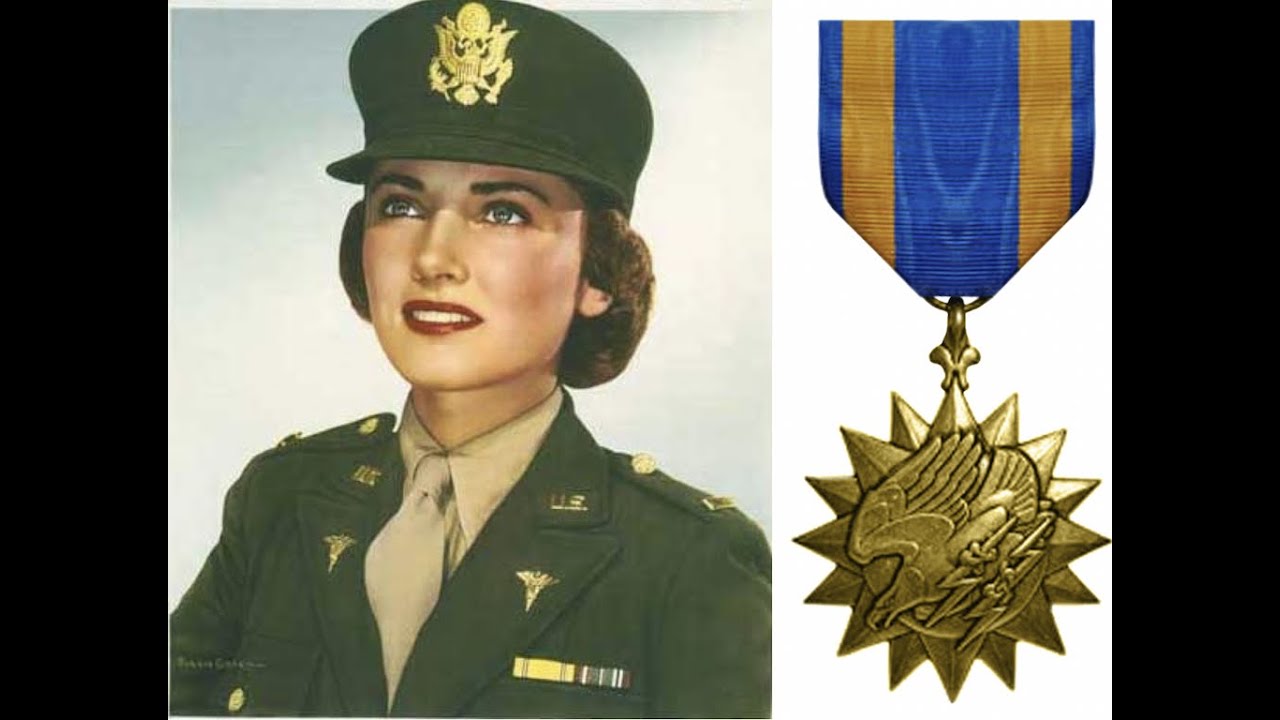
That duly occurred on January 25, 1945, when Whittle was shipped on a train with a batch of repatriated cases to Switzerland. From there, she was able to board a plane to England for onward shipment stateside. Whittle received several decorations for her ordeal. She was awarded the Purple Heart for wounds received in the crash and the Air Medal for her 41 missions on C-47s evacuating the wounded. She was also promoted to first lieutenant in March.
But the concussion she suffered in the crash left her with lasting problems. Though returned to active duty in Miami Beach, Florida, headaches led to her flight status being suspended. Whittle received a telegram from President Franklin D. Roosevelt thanking her for her service and recognizing her ordeal as a POW of the Germans for four months. She was transferred to work as a ward nurse at an army hospital in California. She married and eventually was discharged from active duty, receiving an honorable discharge on January 13, 1946.
Her post-army life was marked by physical and psychiatric problems. She received several payments from the US Veterans Administration following lobbying. Reba Whittle died from cancer in 1981, officially unrecognized as a World War II POW despite the president's telegram. She was eventually accorded that recognition two years after her death, in 1983.