In November 1928, a French luxury liner crossed the Atlantic carrying three passengers who dined at the same table. One was Joseph P. Kennedy Sr., already among the wealthiest private financiers in America. Beside him sat his wife of 14 years, Rose Fitzgerald Kennedy, mother of seven children and daughter of a former mayor of Boston. Across from them sat Gloria Swanson, one of Hollywood's most famous actresses and Joseph's mistress.
For six days, Rose smiled at Swanson, dined with her, asked politely after her health, and said nothing. No fellow passenger recorded a crack in her composure. Rose knew. Most biographers of the family have concluded that she knew, though not one ever located a letter, a diary page, or a remark to a friend in which she admitted it.
She would lose a son to an exploding bomber, a daughter to a plane crash, two more sons to assassins, and a fourth child to a surgeon's incision. Yet the single wound she never discussed with anyone belonged to the man sitting beside her at that table.
Rose Elizabeth Fitzgerald was born on July 22, 1890, into a Boston that drew its social boundaries with precision. Irish Catholics filled the wards and parish halls while the Protestant families of Beacon Hill kept the drawing rooms, clubs, banks, and colleges for themselves. Her father, John Francis Fitzgerald, climbed the Democratic machinery of the North End until voters elected him mayor in 1906. The nickname he collected along the way, Honey Fitz, explained his method. He sang at weddings, wept at funerals, remembered 10,000 names, and never forgot a grudge.
Rose grew up as her father's political instrument. She stood beside him on platforms and poured tea for ward captains. She later recalled her hope of attending Wellesley College, a hope that collapsed when the family chose a convent instead. Most biographers credit Cardinal William O'Connell, Archbishop of Boston, with the advice that a Catholic girl belonged in a Catholic school. Her father decided; she obeyed. That pattern would repeat across the next eight decades with different men and identical results.
They met in the summer of 1906 at Old Orchard Beach in Maine, where both families took their holidays. Rose turned 16 that summer. Joseph Patrick Kennedy, born in September 1888, reached 18 a few weeks later, already carrying the compressed ambition of a boy whose father owned saloons and delivered votes. Nothing about a seaside introduction between two teenagers announced a dynasty.
Honey Fitz understood precisely whose son stood in front of his daughter. Patrick Joseph Kennedy, known across East Boston as PJ, ran a ward organization that competed directly with the Fitzgerald machine on the other side of the harbor. The two men shared a religion, a party, a city, and a hunger for the same offices, and Boston politics of that era converted such overlap into open war.
Honey Fitz opposed the courtship for eight years. He opposed it loudly and with the full administrative power of a mayor who could relocate his daughter to another continent whenever young Joseph Kennedy drew too close. In 1908, Rose enrolled at Manhattanville College of the Sacred Heart in New York, a placement her father arranged with the affection of a man building a fence. Two years later, she crossed the ocean to a convent school at Blumenthal in Prussia and afterward to another in Paris.
German came first, then French, then the particular Catholicism of the pre-Vatican II convent with its rigid schedules and its teaching that a woman's suffering purchased currency in the next world. Boston lay 4,000 miles behind her. And Joseph Kennedy wrote to her anyway, letter after letter across the ocean her father paid for. The distance changed nothing.
Boston folklore preserves a line from Honey Fitz about young Joe Kennedy, a sentence involving worst enemies in marriage, repeated in a hundred retellings and never once recorded at the time by anyone present. Historians now treat the phrase as embellishment rather than transcript, though the sentiment behind it matches everything else on the record. Honey Fitz wanted a different husband. He spent the better part of a decade proving it through geography, tuition payments, chaperones, and the careful scheduling of European tours.
Joseph waited, and while he waited, he climbed. At 25, he took control of the Columbia Trust Company in East Boston, a small bank his own father helped to found, and newspapers described him as the youngest bank president in America. The claim flattered him and probably overstated the truth. Either way, Joseph Kennedy now ran a bank, and a mayor who dealt in influence understood the arithmetic of that perfectly well.
The strategy failed. On October 7, 1914, Rose Fitzgerald married Joseph Kennedy in the private chapel of Cardinal O'Connell, who six years earlier had steered her toward the convent. Rose had turned 24 that July. Joseph turned 26 a month before the ceremony. There were no cathedral crowds, no press stampede, nothing a mayor's daughter of that era might reasonably expect. The ceremony passed in front of a small gathering, quickly and without spectacle.
The couple moved into a modest house at 83 Beals Street in Brookline. A comfortable address in a comfortable suburb, purchased with money Joseph earned in banking. Nine children would follow. Rose crossed that threshold carrying the conviction drilled into her at Blumenthal and Paris: that a wife absorbs whatever a wife receives. Whether Joseph crossed it with any conviction at all remains a question his biographers still argue over. He wanted sons, capital, political access, and a surname the Brahmins could not refuse. Rose delivered the first of those four requirements with a speed that consumed her twenties entirely.
Joseph Kennedy pursued money with the concentration other men reserved for religion. He rose through Boston banking while barely into his twenties, moved into shipbuilding during the war, and then into the stock market, where the loose rules of the 1920s allowed a clever operator to manufacture fortunes out of other people's optimism. Work kept him away from Brookline for weeks at a stretch. Rose, alone in the house with the children, learned the shape of a marriage conducted largely by telegram.
The children came without pause. Joseph Patrick Kennedy Jr. in July 1915. John Fitzgerald Kennedy in May 1917. Rosemary arrived in September 1918 during the influenza pandemic, and several biographers report that a delayed delivery starved the infant of oxygen for a span of minutes that would define the rest of her life. Kathleen, whom the family called Kick, arrived in February 1920. Four children in six years, and Rose turned 30 only that summer in a house she seldom left.
Joseph missed most of it. Through the war, he ran a shipyard at Fore River, sleeping at the plant for weeks together. In the autumn of 1918, influenza swept through Boston while Rose delivered their third child with the doctor delayed elsewhere in the hospital. Rose recovered. The nation counted its dead. The schools closed, the churches emptied, the theaters shuttered. And a young mother in Brookline nursed an infant nobody yet recognized as damaged.
The church forbade contraception. Her husband wanted heirs. Her father would tolerate no complaint from a married woman. And Boston in 1920 supplied no vocabulary for what she felt. Convent training supplied the rest. Exhaustion belonged to the ordinary condition of a Catholic wife rather than to any injustice worth naming. Rose did not complain where anyone could hear her. No letter, no diary page, no confessor, and no friend of hers ever recorded a single word of protest against the life her husband arranged.
Strain surfaced early. Joseph's absences stretched from days into weeks, and the frequent pregnancies left Rose physically depleted in a house she rarely left, except to walk to mass. Money never posed a problem, and everything else did. Friends who visited Brookline in those years noticed a young wife of unusual poise and unusual isolation. She ran a nursery that grew larger every 18 months while her husband built a fortune in a city she barely saw.
Late in 1920, Rose Kennedy left her husband. She carried a fifth child at the time, a daughter who would arrive the following July under the name Eunice, and she carried 30 years of a life in which nobody ever asked what she wanted. The older children traveled with her. Her destination lay three miles away at her parents' house in Dorchester, and she intended, according to family accounts, to end the marriage.
Her father refused to take her in. No transcript of the conversation exists, and the words attributed to him descend through oral family lore, passed principally through Rose's sister Agnes and recorded decades afterward by the biographer Lawrence Leamer. In that version, Honey Fitz reminded his daughter that she chose her bed and would lie in it, and that a Catholic woman does not divorce. Historians treat the wording with caution, and nobody disputes the outcome.
Rose returned to Brookline within weeks. The marriage continued for another 49 years. Across the 12 years that followed her return, she bore five more children: Eunice, Patricia, Robert, Jean, and Edward. Nine in all. Whatever protest she carried into Dorchester in 1920, she left it in her mother's front room. Something closed in her that winter, and the woman who walked back through the door at Beals Street bore only a partial resemblance to the girl who once poured tea for ward captains.
She stopped asking. In place of asking, she constructed a life that required nothing whatever from her husband. A schedule, a faith, a set of rituals, and eventually a filing system. Her father lived until 1950 and died at 87, so far as anyone knows convinced he had acted rightly.
By 1927, Joseph Kennedy controlled a film studio and a fortune built on stocks, and Hollywood interested him more with every passing month. He met Gloria Swanson that year. Swanson ranked among the biggest stars in American film, a woman of 28 whose face sold more magazines than any politician's. Within months, Joseph controlled her finances, produced her pictures through a company called Gloria Productions, and shared her bed. Both of them wore wedding rings, and neither pretended otherwise in private.
In November 1928, the three of them sailed for Europe together aboard the Ile de France. Joseph arranged it. Rose accepted the arrangement and spent the voyage in the company of the woman whose name Boston whispered whenever her husband entered a room. She did it without a raised voice and without a word to anyone. Photographs from that period show the two women standing side by side, both smiling. Swanson later wrote that Rose treated her with unfailing warmth throughout the crossing.
Swanson puzzled over that warmth for the rest of her life. In her memoir, published more than 50 years afterward, she turned the problem over and never solved it, landing finally on three possibilities and refusing to choose among them: a saint, a fool, or an actress finer than herself. Every biographer since has picked one of the three, and the choice a writer settles on describes the writer rather than Rose Kennedy.
Swanson departed the story around 1930, and the pattern did not depart with her. Gossip in Hollywood and in the capital attached Joseph's name to secretaries and actresses across the following 30 years, and to more than one woman employed inside his own houses. His sons absorbed the lesson so thoroughly that two of them carried the same habits into the White House. Rose never addressed any of it. Not to a priest, not to a sister, not to a friend, and not to a child. Her daughter Eunice, questioned about her father's affairs long afterward, answered that her mother never mentioned the subject, then repeated the word never three separate times, as though a single denial lacked the strength to carry so much weight.
Rose Kennedy attended mass every morning for roughly 80 years, in Brookline, in Bronxville, in Hyannis Port, and in Palm Beach. She walked to church whatever the weather, sometimes covering several miles on foot before the household woke. The theology she practiced belonged to a church that no longer exists. It demanded submission, rewarded suffering, forbade divorce absolutely, and promised an accounting in the next world for every humiliation swallowed quietly in this one.
The Catholicism of Rose's generation drew a hard line around marriage and permitted nothing to cross it. Annulment existed in theory and almost never in practice for a woman of her station. Divorce meant excommunication from the only community that granted her an identity, and a Catholic wife who abandoned her husband forfeited her children, her family, her standing in the parish, and any reasonable hope of heaven. Rose understood the terms. She accepted them at 24 and never revisited them across the following 70 years.

From the early 1920s onward, she traveled to Europe alone once a year for six to eight weeks at a stretch. The children remained behind with governesses in Massachusetts or New York. Rose shopped in Paris, prayed in Rome, studied the couture houses, and sent back instructions. Barbara Perry, one of her biographers, advances a theory that the trips worked as contraception the church could not condemn, since a wife who spends two months abroad conceives no children. Other historians reject the reading, and no letter from Rose supports it.
At home, she ran the household through paper. A file of 3×5 index cards, one card for each child, recorded weights, illnesses, dental appointments, vaccination dates, and shoe sizes, updated in her own hand across three decades. When a child required correction or instruction, Rose wrote the message on a slip of paper and pinned it to his clothing. She rarely raised her voice. She rarely used it at all if a note could carry the point instead. The children grew up understanding that their mother communicated by memorandum.
By the 1930s, the couple slept in separate bedrooms, an arrangement they carried from the Bronxville house down to Palm Beach and finally to Hyannis Port, where each of them would eventually die. The arrangement never varied again. Meanwhile, the children learned to describe a marriage that none of them ever actually witnessed. John Kennedy, campaigning for the presidency, told the country he never once heard a cross word pass between his parents. He told the truth in a narrow sense, since cross words require conversation.
Rosemary Kennedy turned 23 in 1941. She read at a fourth-grade level and wrote long affectionate letters in an unsteady hand. By 1941, she suffered violent mood swings and episodes of rage that terrified a family built on the appearance of control. At night, she slipped out of her convent school. Joseph Kennedy, then 53, feared scandal above almost everything, and a daughter wandering the capital after dark threatened the political futures he had already mapped out for his sons.
He consulted physicians. Two of them, Dr. Walter Freeman and Dr. James Watts, promoted a new operation that severed connections in the frontal lobe of the brain. In November 1941, they performed it on Rosemary at George Washington University Hospital. Watts described the operation years afterward to the writer Ronald Kessler. They entered through the top of the skull, and the patient remained awake under a mild tranquilizer, reciting on command while the surgeon cut. The doctor stopped only when her responses stopped.
The operation still carried the shine of novelty in 1941. Freeman and Watts promoted it across American hospitals as a cure for agitation, depression, anxiety, and disorder of nearly every description, and the medical press of the period treated the two men as pioneers rather than as the wreckers a later generation would call them. Tens of thousands of Americans underwent the operation before it fell out of use. Joseph Kennedy consulted the profession and told almost nobody else.
Rose's knowledge of the operation divides her biographers more sharply than any other question about her. For decades, the family maintained that Joseph acted alone, and Rose herself insisted she learned nothing until the operation ended, a claim Doris Kearns Goodwin accepted in her 1987 history of the two families. Kate Clifford Larson, working from the medical correspondence, reached a different conclusion. Rose sat through the psychiatric consultations. She read the assessments and understood in all likelihood that surgeons planned to open her daughter's skull, whatever she chose to remember afterward.
The operation destroyed her. Rosemary emerged unable to speak more than a few words, unable to walk without help, incontinent, and permanently dependent on the care of strangers. The family placed her at Craig House, a private psychiatric facility in Beacon, New York, from 1941 until 1949. In 1949, they moved her to St. Coletta in Jefferson, Wisconsin, where she would live for another 56 years. Joseph Kennedy never visited his daughter after the operation, and Rose kept away for more than 20 years.
Rose Kennedy carried a rosary to mass every morning for the rest of her long life. Her third child sat in a Wisconsin institution, ruined by an operation her husband authorized and she perhaps permitted. The subject never once surfaced in the family's conversation or correspondence for decades afterward. The household practiced silence the way other families practice religion. It cost nothing and it protected everyone except the person it erased.
On August 12, 1944, Lieutenant Joseph P. Kennedy Jr. climbed into a bomber packed with 20,000 pounds of explosive and lifted off from an airfield in Suffolk. He would bail out over the English coast, and the bomber would fly on by radio control toward a German rocket site. That plan never reached its second stage. The bomber detonated in midair before he reached the jump point, and nothing of him came back. He died at 29, and his father had spent every one of those years preparing him for the presidency.
Joseph Kennedy Sr. collapsed. He shut himself in his bedroom at Hyannis Port and lay there in the dark for days, refusing food. The man who bent markets and studios to his will discovered something that money could not reach. Rose behaved differently. She attended mass as usual, walked on the beach, greeted the neighbors, and then gathered the family together to deliver an instruction that would govern the Kennedys for the next quarter century: no tears in this house.
The rule originated in 1944, not in 1963 and not in 1968, though the popular version of the story assigns it to the assassinations. Rose issued it over her firstborn. Grief, she reasoned, indulged the self at the expense of the living, and a family with public duties could not afford the spectacle of a mother weeping. The surviving children obeyed for the rest of their lives, and the discipline held through Dallas in 1963 and through a hotel pantry in Los Angeles in 1968.
She lost her eldest son in 1944, her second daughter in 1948, her second son in 1963, and her third son in 1968. She appeared in public after each of those deaths with dry eyes and a composed face. The country read her composure as strength, and some of it deserved the name. Forty years of practice supplied the rest.
Kathleen Kennedy, called Kick by everyone who loved her, fell for an English aristocrat during the war. William Cavendish, Marquess of Hartington, heir to the Duke of Devonshire, belonged to one of the most prominent Protestant houses in Britain, with a lineage of anti-Catholic politics behind it. Rose opposed the marriage with everything she owned. She threatened disownment, enlisted priests, wrote letters, and finally refused to attend the wedding on May 6, 1944. Cavendish died in Belgium four months afterward, shot by a German sniper.

Kick, widowed at 24, remained in England. Rose regarded the death as an answer from heaven, and her daughter understood exactly how her mother read it. Four years later, Kick fell in love again. She chose Peter FitzWilliam, the eighth Earl FitzWilliam, a Protestant and a married man whose own divorce proceedings dragged on in the background, which placed him beyond every line her mother ever drew. Rose threatened to cut her off from the family money and to erase her from the family entirely.
Joseph characteristically negotiated. He agreed to meet the couple in Paris in May 1948 and to consider the matter. The plane carrying Kick and FitzWilliam toward that meeting flew into a storm over the Rhône Valley on May 13, 1948, and crashed into a mountainside. Kick died at 28.
Rose's reaction survives in the accounts of those around her. She read the crash as a judgment from heaven upon a daughter who defied her church, and she declined to travel to England for the funeral. Her stated reason involved medical tests. She checked into the New England Baptist Hospital in Boston while her daughter descended into a grave at St. Peter's Churchyard in Edensor, on a Derbyshire hillside belonging to the Devonshire family. Joseph Kennedy stood at that grave alone, the only Kennedy who attended.
On December 19, 1961, Joseph Kennedy played 18 holes of golf in Palm Beach and complained of dizziness on the drive home. Before the afternoon ended, a massive stroke dropped him. He survived it. The damage paralyzed his right side and wrecked the speech centers of his brain, so that the man who commanded studios, banks, ambassadors, and a president could produce exactly one word for the remaining eight years of his life: no.
Rose turned 71 that summer. Her husband lived until 1969. Across those eight years, she supplied almost none of his daily care. Ann Gargan, his niece, moved into the house and took charge of him day to day. Professional nurses handled the rest. Chief among them, Rita Dallas later published an account of the household and found in it a distance between husband and wife that she never fully explained to her readers.
Dallas recorded the schedule. Rose attended mass at 7, played golf in the morning, took her meals apart, and visited her husband at fixed hours for a fixed number of minutes. She spoke to him about the weather and the grandchildren, and then she withdrew. The wheelchair that carried one of the richest men in America sat wherever the nurses left it, and Rose arranged her day so that she never needed to look at it for long.
Twice during those eight years, the house filled with reporters. In November 1963, a bullet killed the second son in Dallas. In June 1968, another killed the third son in a Los Angeles hotel pantry. Both times, the family wheeled Joseph Kennedy in front of a television set so that a man who could not speak could watch the funerals of the sons he built. Rose attended the Requiem Mass for both. She wore black and took communion, and she returned to her schedule the following morning.
Joseph Kennedy died on November 18, 1969, at the age of 81 in the house at Hyannis Port. He never spoke a full sentence again after 1961. The man who arranged his daughter's lobotomy, conducted his affairs in front of his wife, financed the campaigns of three sons, and directed the lives of nine children from behind a telephone spent his last eight years dependent on women he could no longer command. One of those women prayed for him every morning without once sitting long at his side.
In 1974, at 84, Rose Kennedy published a memoir titled Times to Remember. The book sold well. It described a happy marriage, an attentive husband, a devoted father, and a family blessed and then tested by God. It omitted Gloria Swanson entirely, along with every other woman, along with the operation performed on Rosemary, whose condition the text presents as a natural affliction of mental retardation rather than the result of an operation.
Her account of the marriage rests on a single sentence. Rose wrote of her husband, he left me in peace to manage my children and my household. Read one way, the sentence pays a compliment. Turned over, it records a bargain in which a woman traded her marriage for a jurisdiction, accepted the humiliation, kept the children, and never again asked for anything her husband did not already intend to give her.
The public account of Rosemary required its own maintenance. Ronald Kessler, investigating the family decades afterward, quoted a former director of the National Institute of Mental Health who explained the terminology: describing Rosemary as mentally retarded rather than mentally ill protected John Kennedy's political prospects. Since voters of that era treated hereditary insanity as disqualifying, the distinction rescued a presidency. It cost a woman six decades inside institutions, and nobody in the family corrected the record while Rose Kennedy lived.
In 2006, the John F. Kennedy Presidential Library opened 300 boxes of Rose Kennedy's private papers. Eleven years had passed between her death and the unsealing of those boxes. Historians expected the serene woman of the memoir. The letters and diaries delivered instead a mother frantic about her children's health, a wife marooned for weeks in empty houses, a Catholic recording spells of depression, and a woman who mentioned none of it to a priest, a friend, a daughter, or a printing press. The private record contradicts the published one on nearly every page.
The family eventually turned the wound into a cause. Eunice, the daughter who insisted her mother never spoke of anything, founded the Special Olympics in 1968 and pushed the country toward a kinder vocabulary for people like her sister. Rose lived long enough to watch that movement spread across the world. She never publicly connected it to the operation, and she never wrote a single page explaining why the Kennedy who most needed protection received the least of it.
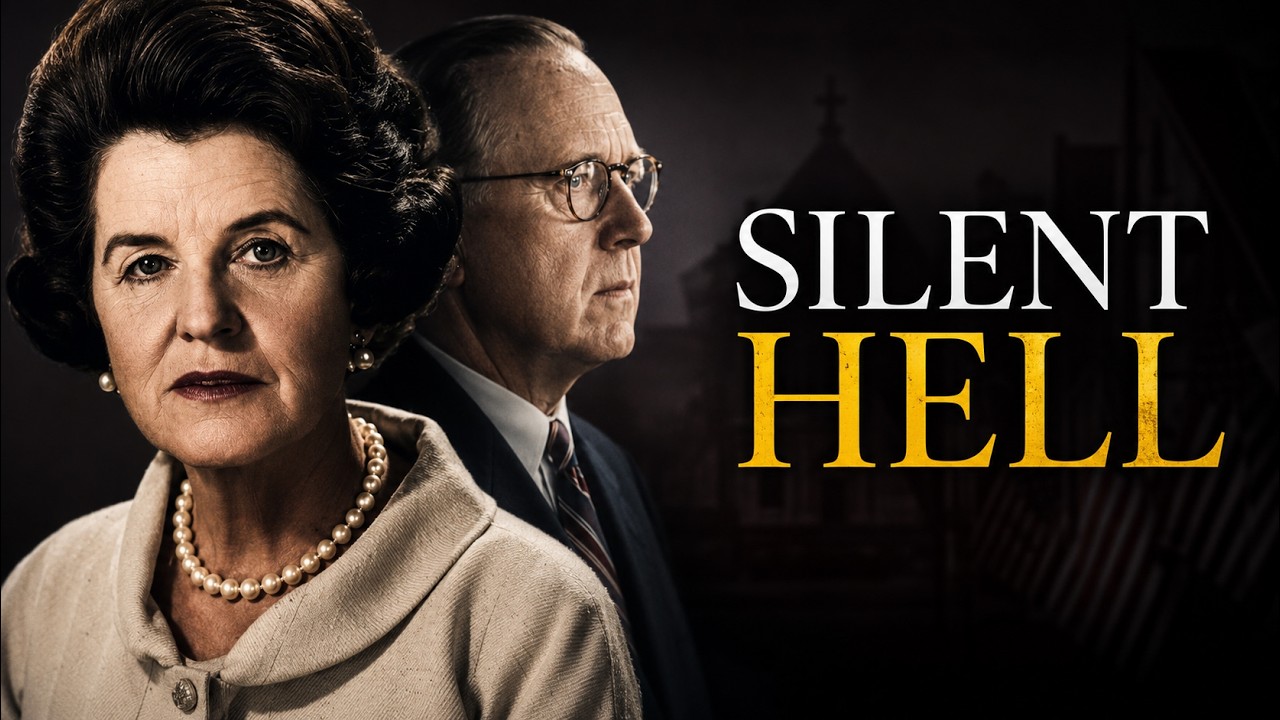
Her biographers divide over what to call her. Doris Kearns Goodwin portrays a woman who chose not to see, retreating into ritual and schedule to preserve her sanity. Barbara Perry rejects the pure victim, arguing that Rose built the Kennedy mystique with her own hands and treated the production of perfect children as her life's work. David Nasaw describes a cold and functional patriarchy in which Joseph ran everything while his wife withdrew into faith and travel. Lawrence Leamer, the biographer who named the marriage a silent hell, credits her discipline and her faith while insisting she paid a terrible price for both.
Rose Fitzgerald Kennedy died on January 22, 1995, at Hyannis Port. She reached 104, 55 of those years married to Joseph, 26 of them widowed. She outlived four of her nine children, while a fifth lived on in a Wisconsin institution, unvisited by her mother for 20 of those years. The public called her the matriarch. She left behind 300 boxes, and inside them, written in her own hand and sealed for a generation, lay the tears she forbade her family to shed.