The Colombo family has long been regarded as the most warring of the five families in New York. Among the conflicts that shaped it, the Gallo war of the late 1950s and early 1960s stands out as one of the most consequential.
The roots of the war lay in the leadership of Joe Profaci, who was awarded his position as boss when Lucky Luciano created the Commission in the mid-1940s. Profaci was not widely respected. He was described as greedy and, in the view of many of his men, simply not a good boss.
Profaci ordered every member of his family to pay a monthly tribute of $25, regardless of whatever else they were doing. At the time, that sum amounted to a couple of hundred dollars in today's money. It was a significant amount, and it was demanded for no reason other than that Profaci was the boss.
The traditional arrangement was different. When a member made money on a street deal, he paid a share up to the family. If the family put up money or acted as a partner, the terms changed. But a flat tribute to the boss, like a king collecting from subjects, was something many members resented, especially the younger men.
The Gallo brothers were among those who refused. A major flashpoint came in 1959, involving a man named Frankie Shots, also known as Frankie Marco, who ran a lucrative numbers business in Red Hook. Marco said he would not pay a tribute on top of the piece of his action he already gave up.
The Gallo brothers sided with Marco. Then Profaci went to the Gallos and ordered them to murder Marco, promising them his policy business in return. Marco was killed, most likely by the Gallos, but Profaci went back on his word and refused to hand over the numbers racket.
The Gallos were furious, and with good reason. They had made a deal, killed a man, and been denied the promised reward. At that point they aligned with the Persico crew, known as the Garfield boys, and turned against Profaci.
In February 1961, the war fully unfolded. Larry and Albert Gallo kidnapped several of Profaci's top men. Accounts place the number at four or five. Among those taken were the underboss Joe, Profaci's brother Frank, Sally the Chic Masache, and a soldier named Johnny Simone. There is also a belief, though not confirmed in the records, that Joe Colombo was among them.
The hostages were held at the Gallos' social club at 51 President Street. The Gallos demanded improved financial conditions and refused to pay the $25 tribute. Their position was simple: Profaci was a boss, not a king, and they would pay only when there was a deal.
The standoff dragged on for weeks. Crazy Joe Gallo wanted to kill one of the hostages and demand $100,000 for the release of the others. His older brother Larry overruled him, arguing that killing a hostage would accomplish nothing.
Eventually the Gallos agreed to meet with Profaci's representatives. They asked for Charlie the Sig Licero and for the narrator's father, with whom they were friendly and who they respected. The two men negotiated the release of the hostages, who were unharmed, and the war was temporarily diffused.
Profaci did not honor the agreement. He began hitting Gallo loyalists. In 1961, Joe Jelly Gioiello was lured to a fishing trip by a couple of Profaci men and killed. Then an attempt was made on Larry Gallo's life at the Sahara Club in East Flatbush.
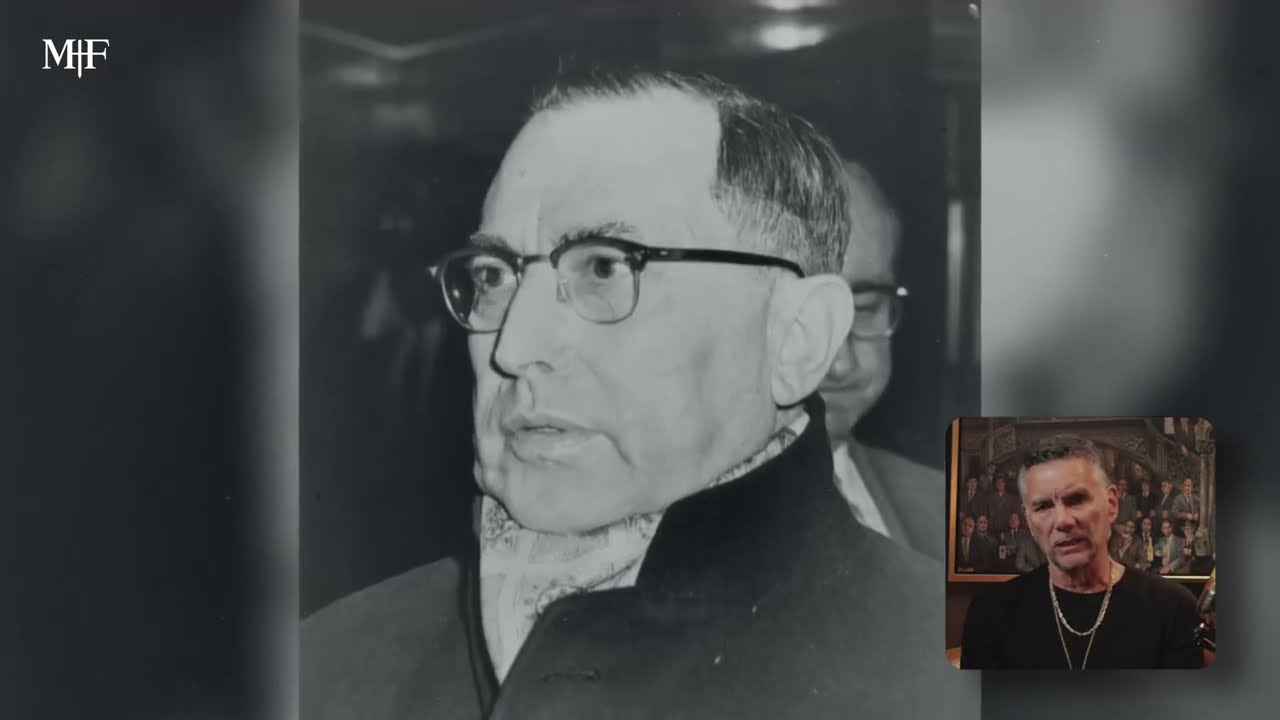
Carmine Persico, accompanied by Sally D'Ambrosio, went to kill Larry Gallo and was choking him when a police officer walked in. Persico fled. Persico had been loyal to the Gallos but switched sides to Profaci, an act of betrayal that earned him the name Carmine the Snake.
With that, the conflict escalated into a full-blown war of assassinations and attempted hits that went on for years. Joe Gallo was imprisoned after a trial and conviction, receiving seven to fourteen years on what was believed to be conspiracy and extortion charges. Joe Profaci died of cancer in 1962, but the war was never officially ended.
Joe Magliocco became acting boss after Profaci's death and was not well liked. In 1963, Persico survived a car bombing and was later shot, though he did not die. The effects of that shooting left him without full use of his hand.
The Commission eventually stepped in and imposed peace, making clear that no more violence in the family would be tolerated. A boss never has to listen to the Commission, but defying the other four bosses carries obvious costs, so the order was heeded.
Magliocco was later removed as boss over a plot against the other bosses. He had wanted Joe Colombo to kill Carlo Gambino and the other bosses so he could take over all of New York. Colombo refused, took the contract to Gambino, and the Commission called Magliocco in. He was told to step down and get lost, and that he would not be killed out of respect for his position.
Joe Bonanno, who was also part of the plot, was likewise told he was done and on the shelf. He moved to Phoenix, and later wrote a book laying out the structure of the organization. That book, and Giuliani's visit to Bonanno after reading it, is said to have provided the blueprint for going after the Commission.
Joe Colombo, a Profaci loyalist, was named boss of the family. The change of name to the Colombo family was not his doing; it was the FBI that chose to call it that, just as the Genovese family kept its name.
In 1963, a formal peace agreement was brokered between the Gallo faction and the Colombo faction by Raymond Patriarca, boss of the Patriarca family in New England. The war was allegedly over.
Joe Gallo was released from prison in 1971 and made clear he had not been part of that agreement, so as far as he was concerned the war was not over. He sought financial compensation for the Gallo faction, which Colombo refused. Gallo was still upset, and the unrest that followed is sometimes called the second Colombo war.
On June 28, 1971, at the Italian-American Civil Rights League rally at Columbus Circle, Joe Colombo was gunned down. Leadership initially blamed Joe Gallo, a theory that fit the moment. Jerome Johnson was the shooter, and it was alleged that Gallo, who had been close to black inmates in prison, had set it up. Colombo did not die then; he lingered for seven years before dying, largely unable to function.
On April 7, 1972, Joe Gallo was killed at Umberto's Clam House in Little Italy. The murder was never solved, though it was widely believed to have come from the Colombo faction, which blamed him for the Colombo shooting.
After Joe Gallo's death, his brother Albert and the remaining Gallo crew were expelled from the Colombo family. They were not killed, but they were cast out. In 1975, the surviving Gallo faction was allowed to join the Genovese crime family, a rare move. After that, the Gallos were largely decimated and rarely heard from again.
Questions have long surrounded the Colombo shooting. There is a belief, based on what is described as strong evidence, that it was not Joe Gallo who was responsible but the FBI. The bureau is said to have hated Colombo, the league, and the picketing, and to have wanted him removed as the league gained steam with thousands of members and the makings of a national movement. Colombo's sincerity is defended against claims that he was lining his pockets.
The Gallo war remains a defining chapter in the history of the Colombo family, a conflict born of a tribute demand, fueled by betrayal, and never fully settled.