In March 1961, a CIA operative placed an envelope on a table at the Fontainebleau Hotel in Miami Beach. Inside were poison pills and 10,000 dollars in cash. Across the table sat three of the most dangerous men in America: Sam Giancana, boss of the Chicago Outfit; Santo Trafficante Jr., Florida's most powerful mobster; and Johnny Roselli, a Hollywood fixer with ties to Las Vegas, the film industry, and multiple murders.
The United States government was hiring the mafia to commit murder.
At the exact same moment, Robert F. Kennedy, the president's brother and US attorney general, was launching the most aggressive campaign against organized crime in American history. Prosecutions for racketeering by his organized crime section rose by 300 percent above 1961 levels. Convictions of organized criminals grew by 350 percent.
One part of the Kennedy administration was prosecuting the mafia. Another part was paying them to kill a foreign leader.
The story begins not with the Kennedys, but with Dwight Eisenhower. In 1959, Fidel Castro seized power in Cuba. He nationalized American businesses, shut down the casinos, and turned Cuba into a Soviet ally just 90 miles from Florida.
For the CIA, Castro was a communist threat. For the mafia, he was something worse. He had cost them millions.
Before Castro, Havana was the jewel of organized crime's empire. The mafia had lucrative investments in Cuban casinos. Sam Giancana ran operations there. Santo Trafficante controlled much of Havana's underworld. Johnny Roselli had connections throughout the Caribbean gambling scene.
When Castro shut it all down, the mobsters lost fortunes. Giancana had lost out on a shrimp boat operation he was trying to build, as well as on a plan to offer gambling on tourist boats traveling from Miami to Cuba. As an heir to Giancana's estate, his daughter could say that they lost everything to Fidel Castro. The mere mention of Castro's name in the Giancana house would make him flip his lid.
The CIA recognized an opportunity. The mafia wanted Castro dead. The CIA wanted Castro dead. Why not work together?
In September 1960, Sam Giancana, a successor of Al Capone in the Chicago Outfit, and Miami syndicate leader Santo Trafficante, who were both on the FBI's Ten Most Wanted list at that time, were indirectly contacted by the CIA about the possibility of Fidel Castro's assassination. The CIA couldn't approach the mobsters directly. It was too risky, too obvious.
So they used an intermediary, Robert Maheu, a former FBI agent who worked for Howard Hughes. On September 14, 1960, Maheu met with Roselli in a New York City hotel and offered him 150,000 dollars for the removal of Castro.
Johnny Roselli was the perfect go-between. Known as Handsome Johnny, he was a man who dated a lot of actresses, including Lana Turner and Donna Reed. He had Hollywood connections, Vegas connections, mafia connections, and something else: a twisted sense of patriotism.
Roselli was an Italian immigrant. He had made his fortune in America. When the CIA came calling, claiming to represent international businesses hurt by Castro's expropriation, Roselli believed he was serving his adopted country.
The mobsters refused to take any money. Despite the efforts to keep CIA involvement a secret, the mobsters quickly figured out that the CIA was involved. But they had another motive. They thought if they helped try to kill Castro for the CIA, they would get a get-out-of-jail-free card. Giancana was convinced by Frank Sinatra that JFK would go easy on them. This assumption would prove catastrophically wrong.
On March 12, 1961, the plan moved forward. William Harvey arranged for CIA operative Jim O'Connell to meet Sam Giancana, Santo Trafficante, Johnny Roselli, and Robert Maheu at the Fontainebleau Hotel. O'Connell brought poison pills manufactured by the CIA's technical services division. Small, tasteless when dissolved, deadly.
The plan was simple. Get the pills to someone in Castro's inner circle, someone with access to his food or drinks. Poison him. Make it look natural. It was Giancana who suggested poison pills as a means to Doctor Castro's food or drinks. Such pills were given to Giancana's nominee named Juan Orta. Giancana recommended Orta as being an official in the Cuban government who had access to Castro.
But there was a problem. Roselli's purpose was not just to assassinate Castro, but to set up the mafia's partner in crime, the United States government. Accordingly, he was laying a long, bright trail of evidence that unmistakably implicated the CIA in the Castro plot. This evidence, whose purpose was blackmail, would prove critical in the CIA's cover-up of the Kennedy assassination.
The mobsters weren't stupid. They were creating leverage, insurance. If the government ever came after them, they could threaten to expose the CIA's role in plotting murder. And they would need that insurance because while the CIA was recruiting mobsters in Miami, Robert Kennedy was planning to destroy them in Washington.
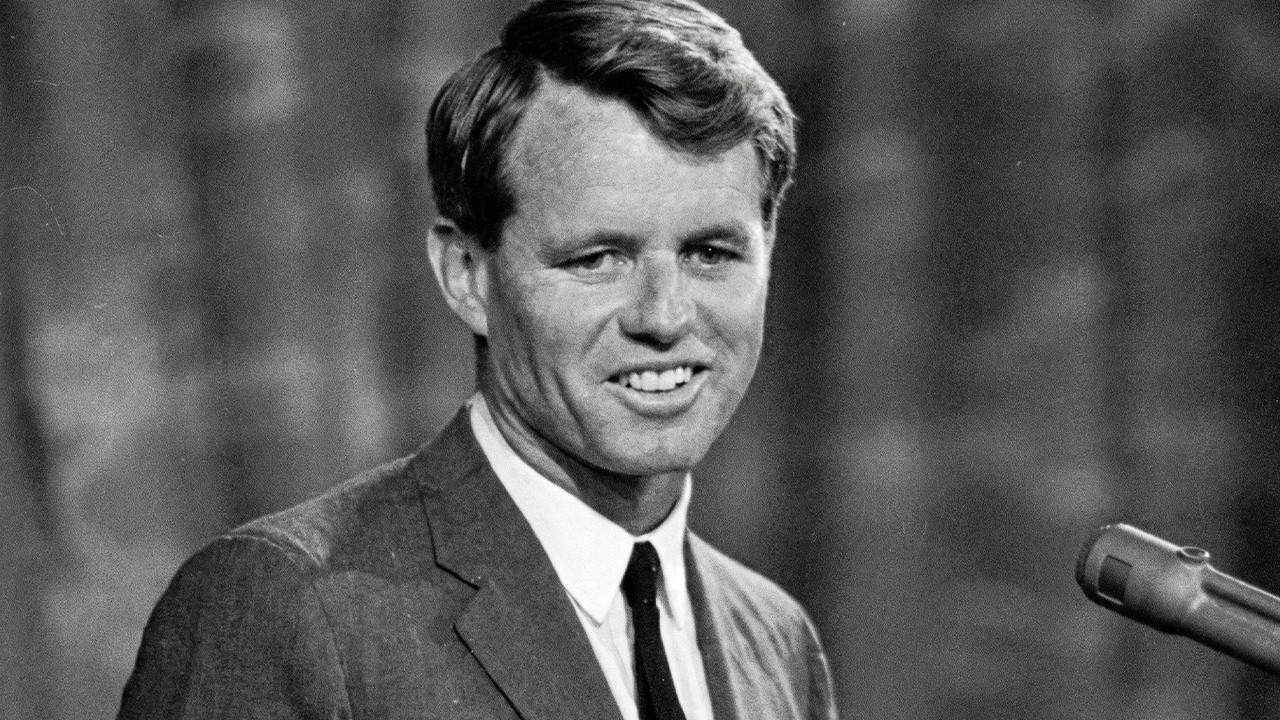
On January 20, 1961, John F. Kennedy was inaugurated as president. His first major appointment was his 35-year-old brother Robert as attorney general. The appointment was controversial. Bobby Kennedy had never argued a case in court. He had never tried a criminal trial. Critics called it nepotism.
But Robert Kennedy had something more important than courtroom experience. He had obsession. Previously, individual gang members had been investigated for crimes. But this was the first time the government had attempted to take on a whole criminal organization.
When Bobby became attorney general, the crime and racket section of the Justice Department employed only 17 people. By 1963, it had swelled to 60, and Kennedy had opened federal investigative bureaus in cities outside of Washington charged with gathering information on racketeers.
Kennedy's strategy was unprecedented. He was the first attorney general to encourage the government's investigative agencies, the DOJ, the FBI, the IRS, and others, to work together to investigate large-scale crimes and national crime syndicates.
He faced immediate resistance. FBI Director J. Edgar Hoover had spent decades claiming the mafia didn't exist. Hoover was more interested in catching communists. He was interested in bank robberies, auto thefts, things where the media made him look good when he went up to Congress for money.
Kennedy forced Hoover's hand. He coordinated all 26 federal law enforcement agencies. He opened files on top racketeers. He created task forces. He got wiretaps. He seized financial records. And he went after specific targets: Jimmy Hoffa, Teamsters Union president; Sam Giancana, Chicago boss; Santo Trafficante, Florida don; Carlos Marcello, New Orleans kingpin. The very men the CIA was working with.
In May 1961, Bobby announced his first drive to root out racketeers in Chicago with a special prosecutions unit assigned to bust an automobile theft ring allegedly involving suspected loan shark Leo Rugendorf, mob triggerman Felix "Milwaukee Phil" Alderisio, and Sam Battaglia and Joseph "Joe Pig" Pignatello, a courier for mob underboss Sam Giancana.
Think about the timing. Two months after O'Connell gave Giancana poison pills to kill Castro, the CIA was paying Giancana while the Justice Department was investigating him.
In 1961 and 1962, Congress approved seven anti-crime laws authorized by the attorney general. In the first six months of 1963, 171 racketeers were indicted, as against 24 in 1960. During his term, convictions against members of organized crime rose by 800 percent.
Bobby Kennedy wasn't playing. This was total war, and the mafia knew it. Despite the foot-dragging of FBI Director J. Edgar Hoover, the Justice Department indicted 116 members of the mob.
But here is where it gets complicated. The FBI didn't know about the CIA-mafia plot. Neither did Bobby Kennedy. At least not at first.
A level of cooperation between the mafia and the CIA was first exposed early in the planning process when a technician illegally wiretapping a Las Vegas entertainer's telephone for Giancana was arrested and sought help from the CIA. The CIA became involved and succeeded in having charges dropped, but the FBI investigated the matter.
As the FBI reported to Attorney General Robert Kennedy about the incident, the bureau warned that any CIA-mafia arrangement and the need to keep it secret could subject the US federal government to underworld blackmail. Robert Kennedy was furious, but he was trapped.
The FBI recorded Kennedy's concern that the CIA action adversely affected the Department of Justice. Because of this matter, it would be difficult to prosecute Giancana or Robert Maheu then or in the future. The CIA's secret alliance was sabotaging Bobby's war on organized crime.
The mobsters knew it and they exploited it several times and with varying degrees of success. Giancana and Roselli sought to use the CIA relationship to their personal advantage. In 1963, when Sam Giancana sued the FBI to halt its surveillance, Giancana was required to take the witness stand and was legally subject to cross-examination. Perhaps because of Giancana's role in the Castro matter, the Department of Justice reportedly ordered the prosecutor not to question Giancana. The mobster who worked for the CIA couldn't be questioned under oath because he might expose the plot.
Meanwhile, the plot itself was failing spectacularly. Allegedly, after several unsuccessful attempts to introduce the poison into Castro's food, Orta abruptly demanded to be let out of the mission, handing over the job to another unnamed participant. The first poison plot failed, so they tried again.
In April 1962, William Harvey, a real-life CIA spy nicknamed America's James Bond, took control of the anti-Castro operations. Harvey told Johnny Roselli that Santo Trafficante and Sam Giancana had to cease involvement in the project to kill Castro. But Harvey needed Roselli.
In April 1962, Roselli was contacted by Harvey, who wanted to revive the idea of poisoning Castro. Roselli suggested giving poison pills to Tony Varona, who would forward the pills to a chef in a restaurant frequented by Castro. This suggestion was adopted, although the chef placed the pills in the freezer, making them unusable. The second poison plot failed.

The CIA developed James Bond-like killing devices at the behest of the Kennedys, who loved the Bond novels. There was a lab at the CIA actually exploring ideas like exploding cigars, gadgets that could be killing devices, poison diving suits, toxic pens, and chemical sprays to make Castro's beard fall out, hoping humiliation would destroy his image.
One attempt involved a chemical with comparable effects to the drug LSD sprayed in the air of the room where Castro would broadcast from his radio station, with the goal of making him lose composure and speak erratically while on air. All of it failed. It became like the gang that couldn't shoot straight.
According to CIA director Richard Helms, Kennedy administration officials exerted heavy pressure on the CIA to get rid of Castro. The Church Committee stated that it substantiated eight attempts by the CIA to assassinate Fidel Castro in 1960 and 1965.
But Cuban intelligence chief Fabian Escalante had a different count. Escalante estimated the number of assassination schemes or actual attempts by the Central Intelligence Agency to be 638 and split them among US administrations as follows: Dwight D. Eisenhower, 38; John F. Kennedy, 42.
638 attempts, none successful. Why? Because Castro's intelligence service was better than anyone expected. Because the Cubans had infiltrated the Cuban exile groups the CIA was using. And possibly because Santo Trafficante was playing both sides.
Santo Trafficante Jr. was the Florida don who joined Giancana and Roselli in the CIA plot, but may have been a double agent for Castro. Think about that. One of the mafia bosses the CIA hired to kill Castro might have been working for Castro all along.
In February 1963, William Harvey was removed from the operation and sent to Italy. Harvey was convinced that Robert Kennedy had been responsible for his demotion. A friend of Harvey's said that he hated Bobby Kennedy's guts with a purple passion. The CIA operatives hated Bobby Kennedy. The mobsters hated Bobby Kennedy. Everyone involved in the secret war against Castro had reason to despise the attorney general.
And then November 22, 1963, Dallas, Texas, 12:30 p.m. John F. Kennedy was shot. As the men were coming out of the meeting about the CIA-Castro plot, they were given terrible news. President Kennedy had been assassinated.
Minutes before hearing the shooting of John F. Kennedy, RFK had just ended a meeting on organized crime with Justice Department officials at his estate at Hickory Hill. When Ed Guthman, spokesman for the Justice Department, rushed to Hickory Hill to speak with his boss that day, RFK said, "There's so much bitterness." Bobby Kennedy's first thought: Did his war on organized crime get his brother killed?
On November 22, 1963, rumors began to circulate that Giancana and other gang bosses such as Santo Trafficante, Carlos Marcello, and Johnny Roselli were involved in the crime. The Warren Commission investigated. They interviewed thousands of witnesses. They examined ballistics. They analyzed Oswald's background. But there was one thing they didn't know. The CIA didn't tell them.
The Church Committee in 1975 finally revealed this to the public, noting the CIA had deliberately kept such plots from the Warren Commission. Why? Because revealing the CIA-mafia connection would have opened Pandora's box. It would have exposed illegal assassination plots. It would have revealed that the US government hired criminals. It would have shown that the mobsters had blackmail material on the CIA. And it would have made the mafia suspects.
Think about the logic. If the CIA hired the mafia to kill Castro, and if Bobby Kennedy was simultaneously prosecuting those same mobsters, and if JFK was killed shortly after, the connection was too dangerous to explore. So the CIA hid it from the Warren Commission, from Congress, from the American people. The secret festered.
CIA director Allen Dulles and three different CIA directors lied about this secret murder plot so it would never be learned by the public. Then in June 1975, the Senate created the Church Committee to investigate intelligence abuses. Johnny Roselli was called to testify.
On June 24 and September 22, 1975, Roselli testified before the US Senate Select Committee about the CIA plan to kill Castro. Shortly before Roselli testified, an unknown person shot and killed Giancana in the basement of his Illinois home. This happened just days before Giancana was to testify before the committee.
Sam Giancana was murdered on June 19, 1975. Seven shots to the head and neck, one in the mouth. In a traditional mafia hit, a bullet in the throat signifies that the victim had been talking, and a bullet in the mouth means he will never rat again. Giancana was silenced before he could tell Congress what he knew.
Roselli testified anyway. He told the Church Committee about the poison pills, about the CIA meetings, about the failed attempts. Then in July 1976, Roselli disappeared. On August 3, Roselli was missing. On August 7, 1976, fishermen discovered Roselli's body stuffed in a 55-gallon oil drum floating in Biscayne Bay near Miami. He had been strangled, shot, dismembered, his legs sawed off, and stuffed into the drum with his torso.
The manner of Roselli's death fit a mafia pattern. He was beguiled to his death by someone he trusted. The dumping of his body in the bay was another message. The killers either wanted to give the impression that he had deliberately vanished or they wanted to punish his relatives for his misdeeds, perhaps his violation of omerta.
Two of the three mobsters recruited by the CIA were now dead, murdered within 13 months of each other. Both killed after being called to testify about the Castro plots. One fact was indisputable. Santo Trafficante was the only survivor of the three mobsters recruited by the CIA to kill Fidel Castro. Trafficante lived until 1987. He died of natural causes. He never revealed what he knew.

In 2007, the CIA finally released the "family jewels," internal documents detailing decades of illegal activities. The declassified documents showed that in September 1960, the CIA recruited mobsters in exchange for Castro's head. The documents confirmed what conspiracy theorists had claimed for years. The CIA had hired the mafia. They had lied about it to investigators. They had concealed it from the Warren Commission.
But the documents still don't answer the fundamental questions. Did the CIA-mafia connection have anything to do with JFK's assassination? No credible evidence supports that theory. Nothing substantial has ever linked the CIA's plotting against Castro to the Kennedy assassination.
But the connection didn't have to be direct to be poisonous. The CIA's decision to hire mobsters created a situation where the mafia had leverage over the US government. CIA operatives had to protect mob contacts from prosecution. Bobby Kennedy's war on organized crime was sabotaged by his own government. Critical information was hidden from assassination investigators. Potential suspects couldn't be properly investigated.
The reason Castro knew that the CIA had plotted with Chicago mobster Sam Giancana and Hollywood boss Johnny Roselli to kill him may have influenced Cuban actions. Some theories suggest Castro ordered Kennedy's death in retaliation, but there's a simpler explanation for why the CIA-mafia connection matters.
It shows how secret operations corrupt legitimate government functions. It shows how intelligence agencies create conflicts of interest that undermine justice. It shows how classified programs poison investigations that need transparency.
Robert Kennedy spent three years prosecuting organized crime. Convictions rose by 800 percent. Congress passed seven anti-crime laws. The Justice Department indicted 171 racketeers in the first six months of 1963. But Bobby couldn't fully prosecute the men most deeply involved in criminal enterprises because those same men were assets of the CIA.
The FBI warned that any CIA-mafia arrangement could subject the US federal government to underworld blackmail. That's exactly what happened. When the Warren Commission investigated Kennedy's assassination, the CIA withheld information not because the CIA killed Kennedy, but because revealing the mafia connection would expose illegal operations.
The result was a half-truth investigation. Critical leads unexplored. Potential connections hidden. For 12 years, Americans didn't know the CIA had hired the mafia. For 12 years, conspiracy theories flourished in the absence of truth. And when the truth finally emerged in 1975, it only fueled more suspicion. Because if the CIA had lied about hiring the mafia, what else were they lying about?
The JFK files suggest John Giancana and Roselli believed that cooperating with the government in such a high-risk venture as Castro's assassination would earn them a kind of get-out-of-jail-free card that would keep the feds off their backs as they pursued their criminal activity at home. And for a time, their arrangement seemed to work. The mobsters were right. Their CIA connection did protect them for a while. But in the end, their arrangement with the government got two of them killed and it poisoned American history.
Let's be clear about what we know and what we don't.
What we know: The CIA recruited mafia leaders to kill Castro starting in September 1960. The plots continued through 1963 with Kennedy administration knowledge and pressure. Robert Kennedy waged an unprecedented war on organized crime from 1961 to 1963. The CIA hid the mafia connection from the Warren Commission. Sam Giancana and Johnny Roselli were both murdered after being called to testify about the plots. The CIA's deception undermined multiple investigations.
What we don't know: Whether the CIA-mafia connection had any role in JFK's assassination. Why Giancana and Roselli were killed, whether by mob internal politics or to silence witnesses. The full extent of what Trafficante knew and did. Whether any CIA officers genuinely believed the mobsters could have been involved in Dallas.
Declassified documents in 2017 revealed that US Attorney General Robert Kennedy hesitated to recruit the mafia and assassination attempts on Castro due to his push against organized crime. Bobby Kennedy knew about the plots by 1962. He objected, but he couldn't stop them. The operations had been authorized before he became attorney general. The Cold War demanded Castro's removal, and Bobby's own brother, the president, wanted results.
So the attorney general, who built his career fighting the mafia, had to tolerate his government hiring them. The paradox is perfect. The same administration that declared war on organized crime also made organized crime a partner in covert operations.
One historian put it simply: the CIA and the Cosa Nostra were different sides of the same coin. Both operated in secrecy. Both used violence. Both considered themselves above the law. The only difference was which flag they claimed to serve.
Through the prism of these two mobsters, a much larger portrait emerges of America's top spying agency spinning out of control when the nation most needed its vigilance. The CIA built a secret camp next door to the Miami Zoo for anti-Castro operations. They developed James Bond-like killing devices. They conducted midnight boat raids from Florida with Cuban exiles carrying bombs and long-range rifles.
Historically, the CIA's murder plot against Castro marked America's first foray into the assassination business. And they did it all while lying to Congress, deceiving the attorney general, and compromising criminal investigations.
The CIA-mafia alliance didn't kill John F. Kennedy. Lee Harvey Oswald did that. But the alliance killed something else: the ability to fully investigate Kennedy's murder, because the government that should have been searching for truth was too busy hiding its own crimes.
The Church Committee noted that the CIA had deliberately kept such plots from the Warren Commission, hinting at the possibility that CIA know-how or assets could have intersected with mafia networks. We'll never know what the Warren Commission might have discovered if the CIA had told the truth. We'll never know what leads they might have followed if they'd known about Giancana, Roselli, and Trafficante's government connections.
Instead, we have 60 years of conspiracy theories, reasonable skepticism about official narratives, and justified mistrust of institutions that lied. The CIA-mafia plots didn't create those conspiracy theories. The CIA's decision to hide them did.
History isn't just about what happened. It's about what we were allowed to know. And for 60 years, we weren't allowed to know the truth about JFK's secret war.