On the morning of August 7, 1976, three fishermen working Dumfoundling Bay, just north of Miami Beach, noticed something wrong on the water. A 55-gallon steel fuel drum was floating where it should not have been. It had chains attached, meant to hold it on the bottom. They had failed.
The fishermen called the police. Officers opened the drum and found a man inside. His legs had been sawed off at the hip, and his body had been bent in half so it would fit. He had been strangled. The coroner later determined the cause of death was asphyxiation.
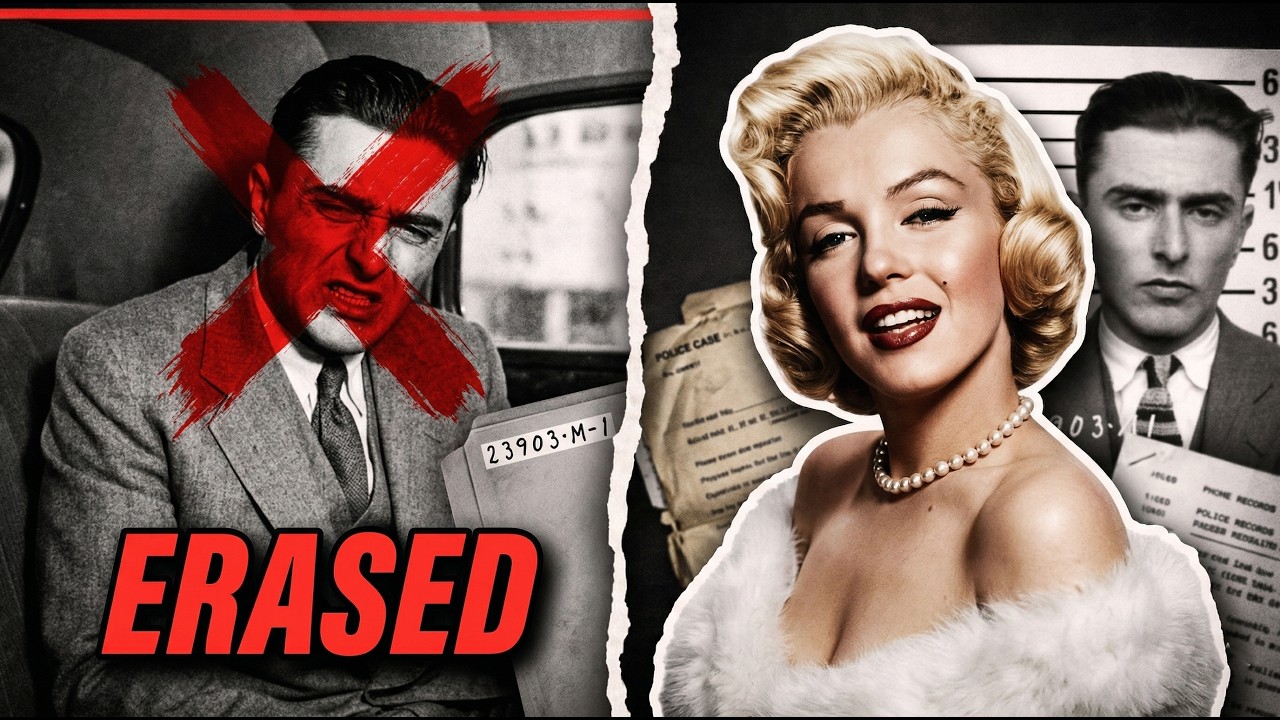
The FBI ran the fingerprints. The name that came back stopped people cold. The man in the drum was Johnny Roselli, 71 years old, one of the most connected figures in the American underworld.
Roselli was not just another mob figure with a territory and a crew. He was the Chicago Outfit's ambassador to Hollywood, the man who helped turn the movie capital into a machine that paid tribute to organized crime. He later dined with movie stars and CIA officers at the same table. His knowledge of American secrets ran so deep that the United States Senate was genuinely afraid of what he might say next.
He moved between the Mafia and the CIA, between a Hollywood sound stage and a clandestine meeting in a Miami hotel room, as if he belonged in both worlds equally. He carried a business card that read "strategist." The word was chosen carefully, because that is exactly what he was.
He spent 50 years inside the most dangerous machinery America ever produced. He outlasted Al Capone, Frank Nitti, Joe Kennedy's Hollywood connections, J. Edgar Hoover's FBI, and the Kennedy administration's war on organized crime. He was still operating, still being subpoenaed by the Senate, at 70 years old. Then he talked. Then he was gone.
The question of exactly what he said, exactly what he knew, and exactly who needed him silent has never fully been answered.
Before Johnny Roselli was the Mafia's man in Hollywood, before he was the CIA's point of contact for a plot to kill a foreign head of state, he was a skinny immigrant kid named Filippo Sacco. He lived in a working-class neighborhood in Somerville, Massachusetts, with his mother, in a country that barely knew he existed.
His father, Vincenzo, had come to America first. By the time young Filippo arrived with his mother, Mariantonia, in 1911, he was 6 years old. His father died in 1918, leaving the family with nothing. In 1922, the boy who would become Johnny Roselli had his first arrest. He was 17.
Somerville in the 1910s was a place of narrow streets, cramped apartments, and men doing brutal work for barely enough to survive. The neighborhood had its own gravity. You knew what kind of life was available to you, and most of it was not good.
Filippo Sacco had no father by the time he was 13, no money, and no path anyone had bothered to clear for him. What he had was intelligence, the kind that looks at a situation and immediately sees how it fits together, where the leverage points are, and who needs what from whom. In the wrong environment, that intelligence finds the wrong application.
By the early 1920s, he had absorbed the lesson that the men in his world who had real things, not just wages but autonomy and power and presence, were men who operated outside the rules everyone else followed. He ran toward that. He did not stumble into it. He chose it.
After his first arrest, he moved fast. He went to New York briefly, watched, and learned. Then he came to the only city in America that was running wide open and flush with bootlegging money and raw ambition. He came to Chicago.
That is where he shed everything. The name Filippo Sacco disappeared. He chose the name John Roselli, drawn from the signature on Italian Renaissance paintings he admired. He did not pick a name at random. He picked the name of an artist. He was already constructing a persona that existed entirely at his own design.
In Chicago, nobody knew what he had been. He could be whoever he decided to be. And he decided to be someone nobody would ever take lightly again.
In 1927, in the orbit of Al Capone's operation in Los Angeles, the two men met for the first time. Capone saw something in this young man: precision, composure, and the ability to walk into any room, any crowd, any social stratum, and belong there. Those are rare qualities in the underworld, where most men know only one register.
Capone brought him in formally in 1928, assigning him to Los Angeles as the Outfit's liaison. Roselli played the role perfectly. He ate at the best restaurants. He wore custom-tailored suits. He played golf at the right clubs with the right people. He was charming without being loud about it.
The FBI, which tracked him for decades and believed him responsible for 13 murders, noted in file after file that Roselli almost never raised his voice. He did not have to.
The gift Roselli brought to the Chicago Outfit was not muscle. There was plenty of muscle. What Roselli brought was access, specifically access to Hollywood. Once Chicago saw what that access was worth, everything changed.
By the early 1930s, Hollywood was a city of enormous money and almost no organized labor protection. The studios were kingdoms, and the moguls who ran them behaved accordingly. The International Alliance of Theatrical Stage Employees, known as IATSE, represented the projectionists, stagehands, electricians, and every worker who kept those machines running. The leadership of that union was rotten.
By 1934, a man named George Brown had taken the presidency of IATSE, and alongside him operated a Chicago pimp and fixer named Willie Bioff. Roselli had briefed the Outfit's leadership on exactly how Hollywood's labor landscape worked, where the pressure points were, and what the studios were most afraid of losing. The information was worth millions.
The scheme worked in three steps. First came control. The Outfit did not just influence IATSE. They physically eliminated the leaders of the projectionists union and the theater janitors union in Chicago and replaced them with compliant men. You control the projection booths, you control whether movies play at all.
Second came the demonstration. On November 30, 1935, IATSE called a phony projectionists strike against Paramount theaters in New York. It was staged. But the studios did not know that, and the message was received with perfect clarity. The following day, an emergency meeting of union leaders and studio negotiators produced the first closed shop agreement in Hollywood's history.
Third came the collection. Nick Schenck, the chief of Loews Incorporated, which owned the MGM theater chain, paid $143,500 in the first round. Paramount paid $138,000. Warner Brothers paid $91,000. RKO, after a targeted theater strike shut down their operations, paid $87,000 to make it stop.
Then Bioff and Brown went back to the well. In April 1936, they walked into Nick Schenck's Manhattan office and told him they wanted $2 million or they would close every Loews theater in the country. Schenck negotiated them down. The settlement was $1 million structured as annual payments of $50,000 from Fox, Warner Brothers, MGM, and Paramount, and $25,000 per year from RKO, Columbia, and the smaller studios. Year after year, automatic and invisible.
The biggest studios in America, the names on the Golden Age of Hollywood, were writing regular tribute checks to the Chicago Outfit. Every film those studios produced, every dollar those theaters generated, had a cut flowing north to the mob. The man who made the introduction, who handed Bioff and Brown the road map, was Johnny Roselli.
He kept Harry Cohn at Columbia off the list entirely, a favor that earned him a loyalty useful for years. He was not just greedy. He was building a position. Every studio executive who owed him something was a relationship he could draw on. He was accumulating structure as much as money. Power is relationships, and he understood that before most men in his world did.
In March 1943, a federal grand jury handed down indictments. Roselli, Brown, Bioff, and six other Outfit members, including Paul Ricca, were charged with extortion and conspiracy. The total amount of the scheme the government documented was just over a million dollars. Roselli was convicted. He served time until his release in 1947.

When he got out of federal prison, his parole required him to hold legitimate employment, so he went back to Hollywood. A producer friend placed him at Eagle Lion Studios, a small independent operation in Los Angeles. He was listed on the books as an assistant purchasing agent, drawing $65 a week.
In reality, he co-produced two films. The first was "Canon City," a prison escape picture shot in a hard documentary style that critics later called groundbreaking. The second was "He Walked by Night," one of the most praised crime films of the 1940s, the film that helped launch the career of director Anthony Mann. Both were released in 1948. Both were film noir classics, both produced in significant part by a man the studio publicly listed as a purchasing assistant.
Then there was the Friars Club. In 1963, Frank Sinatra, one of Roselli's oldest friends in the entertainment world, sponsored him for membership at the exclusive Friars Club of Beverly Hills. Once inside, Roselli discovered a card cheating scheme already in progress, run by a Las Vegas associate named Maurice Friedman.
Observers had been installed in the attic above the card room. They peered through peepholes in the ceiling, read the cards of the players below, and relayed the information via hidden electronic signals to a player at the table. The scheme bilked wealthy members out of millions of dollars. Victims included Harry Karl, the husband of actress Debbie Reynolds, and Zeppo Marx.
Roselli told Friedman he wanted his cut. In July 1967, FBI agents tailing Roselli discovered the operation. Roselli was convicted and fined $55,000. At this point, he was in his early 60s and had already been in federal prison once. He did not appear to regard this as a warning.
In September 1960, a man named Robert Maheu approached Johnny Roselli. Maheu was a former FBI agent who had become a private fixer for the billionaire Howard Hughes and simultaneously a cutout for the Central Intelligence Agency. The CIA uses the word "cutout" for an intermediary who provides distance between the agency and its messiest operations.
Maheu had been tasked with approaching Roselli specifically, because the CIA wanted to hire the Mafia to kill Fidel Castro. The meeting took place at the Fontainebleau Hotel in Miami, in the Boom Boom Room. Maheu laid out the proposal. The CIA was offering $150,000 as a kill fee for the Cuban leader.
Roselli conferred with his associates. Then he told Maheu they would do it for free. They would do it as patriots. The mob stood to gain from a post-Castro Cuba. The Havana casinos, which had generated enormous revenue for the mob before Castro nationalized them in 1959, were sitting there waiting. A dead Castro meant a new Cuban government, and a new Cuban government meant the casinos. The patriotism was real. It just had a price tag attached.
Roselli brought in two other men: Sam Giancana, the boss of the Chicago Outfit, and Santo Trafficante, who ran the mob's operations in Florida and had deep Cuba connections. The CIA's lab produced six poison pills designed to dissolve in a drink and leave no trace. The pills were passed to a contact inside Cuba who was supposed to put them in Castro's food. The contact got cold feet. The pills were never used.
That was just the first attempt. Throughout 1961 and into 1962, under CIA officer Bill Harvey and an operation called Zenith Enterprises run out of Miami, Roselli was involved in midnight boat raids launched from Florida and paramilitary training sessions at Key Largo. Inside the agency, it was called Project Johnny.
Roselli was doing this while simultaneously being investigated by federal immigration authorities for the fact that he had for decades been living in the United States illegally. He had never legally immigrated under any name. His entire identity as John Roselli was a construction. When the government tried to deport him, the CIA quietly intervened. You cannot deport a man who is currently helping you attempt to kill a foreign head of state.
Then November 1963 arrived. President Kennedy was shot in Dallas. Lyndon Johnson shut down the CIA's covert action programs. Operation Mongoose ended. Roselli, now approaching 60, was left holding secrets that no government official wanted aired, connected to operations that no official wanted acknowledged.
The walls started closing in from every direction. There was the Friars Club conviction and the ongoing immigration case. And on June 19, 1975, the man who knew everything Roselli knew, who had sat in the same rooms and shared the same secrets, Sam Giancana, was shot seven times in the basement kitchen of his Oak Park, Illinois, home. He was cooking sausage and peppers when it happened.
Giancana was killed the night before he was scheduled to testify before the United States Senate Select Committee on Intelligence, the Church Committee, which was investigating exactly what the CIA had done in the 1960s. The killer was never identified. Nobody was ever charged.

Roselli was watching. He understood what the message was, and he testified anyway. On June 24 and September 22 of 1975, Johnny Roselli sat in front of the Senate Committee and told them about the CIA plots to kill Castro. He was in his 70s, impeccably dressed, speaking carefully, but speaking.
He came back again on April 23, 1976, to talk about something even more dangerous: what he knew about the Kennedy assassination and whether the CIA-Mafia operation had any connection to what happened in Dallas. The committee was shaken enough by that session to schedule a follow-up appearance. They sent word that they needed to recall him. He was already gone.
On July 28, 1976, in Miami, Roselli went missing. The people who would normally know where he was did not know. Ten days passed. Then came the drum in Dumfoundling Bay.
The FBI investigation that followed named specific killers. Frank Schweihs, who carried the nickname The German, was identified as the primary executor. Vincent Inzerillo and two others were named as part of the crew. The contract itself was sanctioned by Tony Accardo, the Chicago Outfit's consigliere.
The reason Accardo gave, as it was eventually documented, was that Roselli had become a public source of embarrassment to La Cosa Nostra. Not a traitor, not an informant in the strict legal sense. An embarrassment. A man who kept talking to the government, who kept appearing in newspapers, who kept making the Outfit visible in ways it could not afford. Not one person was ever charged or prosecuted for the murder of Johnny Roselli.
Santo Trafficante, who had sat in those CIA planning rooms alongside Roselli, who had handled the poison pills, died of natural causes in 1987. He was never charged with anything related to the CIA operations, never testified, never answered for any of it. Tony Accardo, who sanctioned the murder, died in 1992 of natural causes in Chicago at the age of 86.
Willie Bioff, the pimp who had been the public face of the IATSE extortion, tried to cheat the ending. After his release from prison, he moved to Arizona and changed his name to William Nelson. On November 4, 1955, he walked out of his Phoenix home, started his pickup truck, and was blown to pieces by a bomb wired to the ignition. Distance and a new name had not been enough.
George Brown, the IATSE president who had testified against his mob handlers, went into hiding. Then he drank himself to death. No bomb needed.
The Church Committee revelations about CIA-Mafia collaboration produced real legislative consequences. President Gerald Ford signed Executive Order 11905 in February 1976, which explicitly banned the United States government from ordering the assassination of foreign leaders. That executive order exists in part because of what Johnny Roselli told the Senate. The man they stuffed in a barrel helped write the policy that made what they did to him officially illegal.
Rosselli spent 50 years constructing himself from nothing, from a nameless immigrant kid in a Massachusetts city that had no use for him. He built a persona so complete that the most powerful intelligence service in the world needed him. That is not just a gangster story. It is something more complicated and more tragic, because every year of that construction was built on violence.
On the IATSE workers whose wages were cut to fund the mob's tribute payments. On the wealthy men methodically cheated at a card table. On the people in Cuba and Miami whose lives were disrupted or ended by operations Roselli helped run. The elegance of his persona was financed by all of that. Both things were always true at the same time.
That is the story of organized crime's deepest infiltration of American life. The mob did not just run illegal casinos and loan shark operations. At its peak, it sat inside the unions that built the entertainment industry, inside the intelligence operations that shaped American foreign policy, inside the Senate hearing rooms that were supposed to provide oversight. Roselli was the thread connecting all of it. And the people who knew that had him killed before anyone could pull the whole thread loose.
Dumfoundling Bay is a different place now. The water is still there. The fishermen who found that drum probably never stopped thinking about what they pulled out of the water that August morning. But if you know the whole story, if you know about the boy named Filippo Sacco who came off a boat in 1911 and decided somewhere along the way that he was going to matter, you look at that bay differently.
Johnny Roselli knew things about the Kennedy assassination that the Senate never got to hear. He was dead before the follow-up hearing. What he actually knew, and whether the CIA knew that the Mafia knew it, remains one of the unanswered questions at the center of this story.