In the spring of 1862, Confederate soldiers in the Shenandoah Valley began calling themselves a name they did not choose and did not particularly like: Jackson’s foot cavalry. They rode no horses. They had no special equipment, no lighter packs, and no privileges denied to the rest of the Confederate army. What they had was a commanding general who understood something most officers on both sides of the Civil War did not, and who was willing to push his men to the edge of physical collapse to prove it.
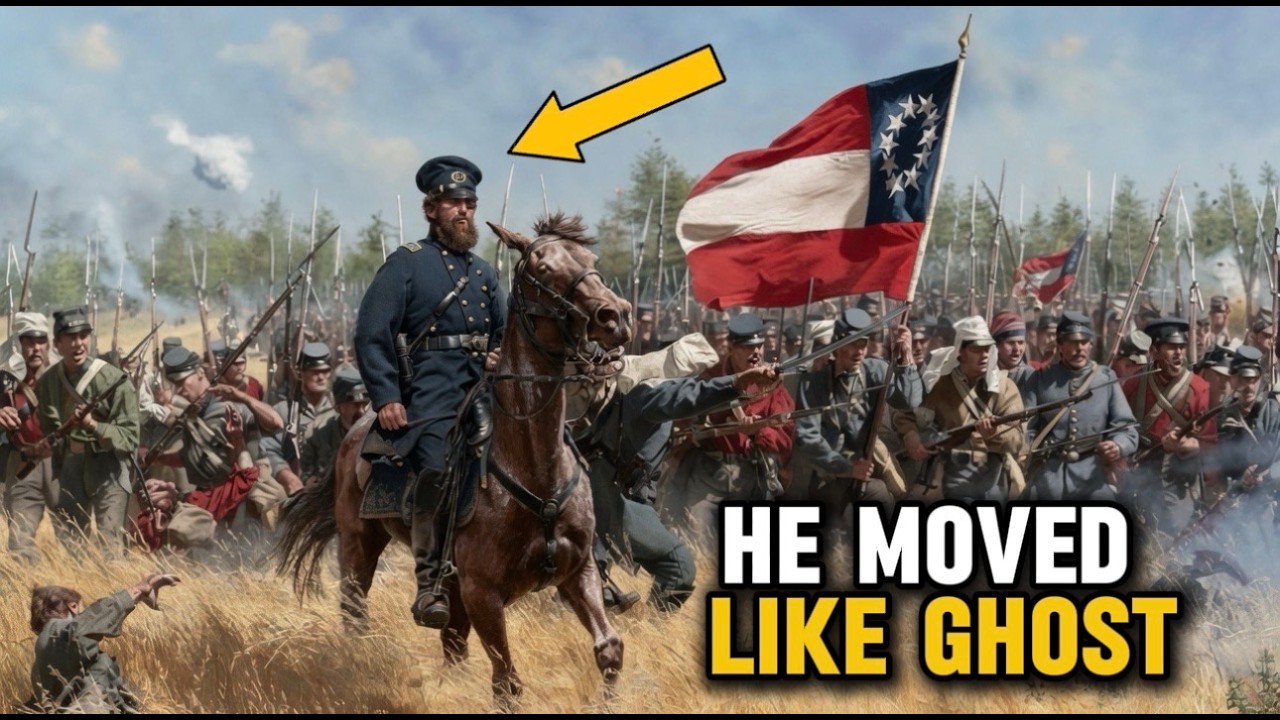
Thomas Jonathan Jackson moved his army faster, farther, and more unpredictably than any other commander in the conflict. He did so deliberately, and in a way that turned ordinary infantry into a force the Union army could not precisely locate, let alone outmaneuver tactically. By the end of the Valley Campaign in June 1862, Jackson’s men had marched roughly 600 miles in about 90 days, fought and won five battles against three separate Union armies that outnumbered them, and tied down tens of thousands of federal troops that Abraham Lincoln desperately wanted at Richmond instead. None of that happened by accident.
None of it happened because Jackson’s men were somehow different from other soldiers. It happened because Jackson treated marching as a weapon in itself, decades before any military theorist wrote the idea into a field manual, and he was willing to be hated for it. Jackson graduated from West Point in 1846, finishing 17th out of 59 cadets after starting near the bottom and working his way up through what classmates described as sheer stubborn effort rather than innate brilliance. That detail matters more than it appears.
He was not a man who absorbed military theory effortlessly. He labored for everything he understood, which meant that when he developed convictions about how an army should move, those convictions had been tested and retested in his mind until they hardened into something like religious certainty. He served in the Mexican-American War under Winfield Scott and watched Scott’s army cross difficult terrain at a pace that surprised Mexican commanders expecting a slower, more traditional campaign. Jackson absorbed a lesson that stayed with him for the next fifteen years: speed itself could act as a force multiplier, allowing a smaller army to fight tactically like a larger one.
When the Civil War began, Jackson was teaching at the Virginia Military Institute, a job at which he was, by most accounts, mediocre. Students found his lectures rigid, his discipline harsh, and his classroom manner strange and humorless. He sometimes raised one arm above his head, a habit tied to his belief that it improved his circulation. He constantly sucked lemons for reasons rooted in his own theories about digestion.
He prayed before meals, before battles, and before writing letters. None of this suggested a man about to become one of the most feared field commanders in American history. But the same rigidity that made him a poor lecturer made him an extraordinarily precise general, because Jackson did not believe in compromise. March discipline was the area where this belief appeared first and most consistently.
The standard assumption among Civil War armies, North and South, was that an infantry column could cover 10 to 15 miles per day, depending on roads, weather, and the condition of the men. Exceeding that meant risking straggling, exhaustion, and arriving at a destination too worn out to fight effectively. This was conventional wisdom, and it was conventional for good reason. Soldiers carried 40 to 60 pounds of equipment.
Virginia roads were often unpaved, rutted, and turned to mud with rain. Supply wagons moved slower than men on foot, and an army that outran its supply train risked arriving hungry. Jackson treated that conventional wisdom as a ceiling that existed because no one had seriously tried to break it, not because it reflected a fixed limit of human capacity. His marches during the Valley Campaign routinely exceeded 20 miles per day, and there were stretches where his army covered more than 30 miles in a single day’s movement.
The march from Mount Solon to Port Republic and the subsequent movements through the valley in May and June 1862 became legendary precisely because they violated what every West Point-trained officer believed an infantry force could endure. The mechanism behind this was not some mysterious capability Jackson’s men possessed and other Confederate or Union soldiers lacked. It was logistics, discipline, and a ruthless willingness to leave behind anything that slowed the column, enforced with a strictness that bordered on cruelty and that Jackson never apologized for. Jackson started his marches before dawn, often at three or four in the morning, long before Union commanders, accustomed to more traditional schedules, expected any movement at all.
He trained his officers to minimize the gaps and halts that accumulate and multiply across a long column. The kind of delay where one regiment stops for ten minutes to deal with a blocked road becomes thirty minutes by the time it works its way back through 5,000 soldiers stretched over several miles. Modern military logistics experts call this phenomenon “accordion delay. ” It is one of the most basic reasons long marches fail to cover the distance commanders intend.
Jackson’s staff was instructed to identify and remove obstacles immediately to keep the leading regiment’s pace steady, treating any unnecessary halt as a failure of leadership rather than an unavoidable nuisance. He stripped his columns of excess baggage in ways that infuriated his men. Personal items, extra rations, and anything not needed for immediate combat were left behind or thrown by the roadside. Soldiers who fell out of the march for reasons Jackson considered insufficient were treated harshly, sometimes arrested, and in some cases threatened with execution for straggling.
That punishment was so far outside the norm in the Confederate army that it generated formal complaints from officers under his command. Jackson did not back down. He believed, with the same stubbornness that carried him from the bottom of his West Point class to 17th place, that the speed of any army depended only on its slowest elements, and he was prepared to make an example of the men who became those slowest elements. This is the part of Jackson’s reputation that gets skipped over in storytelling that focuses on his battlefield brilliance and his later status as a Confederate icon.
His soldiers did not love him during long stretches of the Valley Campaign. They were exhausted. Their feet bled through worn-out shoes. They marched through rain, heat, and cold on rations that frequently ran short, because Jackson’s logistical discipline could not solve the problem of feeding 15,000 men moving faster than supply wagons could reliably follow.
Letters from soldiers home during this period are full of complaints about Jackson’s harshness, about men collapsing in their tracks from exhaustion, and about a commanding general who seemed indifferent to physical suffering in the service of goals his men often did not understand until later. What changed their opinion of him was not rest but results. And the results came at a pace and with a margin that made the suffering later seem purposeful rather than random. Jackson’s opponents in the Shenandoah Valley operated on standard assumptions about infantry movement, which meant they were constantly planning to meet an enemy that, by the time their plans were executed, was no longer where they expected him to be.
Nathaniel Banks, the Union commander in the valley, found himself outmaneuvered repeatedly, not because Jackson was more tactically brilliant in any single battle, but because Jackson’s army appeared at a location days before Banks believed was logistically possible. John C. Frémont and James Shields, the other two Union commanders Jackson faced during the campaign, ran into exactly the same problem. The coordinated movements designed to trap Jackson between several converging Union forces collapsed because the timetable Union commanders operated on assumed traditional march rates, while Jackson was moving about 50 percent faster than those estimates allowed.
At the Battle of Front Royal on May 23, 1862, and then at the First Battle of Winchester two days later, Jackson’s army appeared at points in the valley that Union commanders believed were still days away from any Confederate threat. The psychological effect on Union forces in the valley compounded with each engagement. By late May, federal officers were reporting Jackson in places where he was not, because the uncertainty about where his fast-moving columns were had itself become a kind of weapon. Some Union scouts, unable to explain how an infantry force could threaten two towns 30 miles apart at the same time, simply assumed Jackson was leading an army far larger than he actually was.
That assumption was reinforced by his speed without him needing to deploy a single additional soldier to create it. Lincoln, watching from Washington, became convinced that Jackson’s movements in the valley posed a serious threat to the capital itself and diverted significant Union forces away from George McClellan’s campaign against Richmond specifically to deal with a Confederate force that, in absolute numbers, was a fraction of the size of the army threatening the Confederate capital. Jackson’s roughly 15,000 to 17,000 men achieved, through speed alone, a strategic diversion that pulled tens of thousands of Union troops from their positions. That is the essence of why Jackson’s march discipline mattered beyond the tactical level.
An army that moves twice as fast as its opponent expects does not merely arrive at battle sooner. It changes what is strategically possible. It allows an outnumbered force to concentrate against isolated parts of a larger enemy army before that enemy can unite. It also creates uncertainty that forces the opponent to defend everywhere at once, a posture no army can sustain.
Confederate numbers in the valley never matched the total Union forces massed against Jackson. But Jackson never had to fight those forces combined, because his speed allowed him to choose which isolated part to engage and when. The final week of the campaign illustrates this approach at its clearest. In early June 1862, Jackson found himself caught between Frémont’s army to the west and Shields’s division advancing from the east, both heading into the valley with the aim of catching him between them near Port Republic.
A single bridge over the South Fork of the Shenandoah River was the crux of the dilemma. Whoever controlled it controlled whether Jackson’s army stayed united or was split and destroyed piecemeal. Jackson rushed to concentrate part of his force to secure that crossing, using the geography of the river and the bridge together to fight Frémont and Shields in two separate battles rather than facing a combined superior force. At Cross Keys on June 8 and Port Republic on June 9, Jackson’s army defeated both Union commands within roughly 24 hours of each other.
That sequence of events was possible only because his infantry could move between the two battlefields faster than the Union forces could coordinate with each other. Neither Frémont nor Shields ever managed to close the gap. The march that got Jackson’s men to that bridge in time, executed after weeks of accumulated exhaustion that should have made any further effort impossible, is the clearest example of what the entire campaign was about. Union commanders and troops alike were left with a simple, unsettling conclusion: the Confederate army they were pursuing could be anywhere, at any time, regardless of what the maps and the math said.
The cost of this approach showed up in straggling rates that, on Jackson’s worst marching days, exceeded anything recorded in either army during the war. Some accounts from his own staff officers describe columns where a significant portion of the army that began a day’s march fell out before reaching the destination. Men collapsed from exhaustion, dehydration, and inadequate footwear on roads that destroyed shoes within weeks. Jackson’s solution to this problem was not to slow the pace.
It was to treat straggling as a discipline problem to be solved with harsher penalties rather than as evidence of the need to adjust speed. Officers were court-martialed. Some were arrested for falling behind without what he considered adequate justification. There is a famous account, possibly exaggerated but widely circulated, of Jackson ordering the arrest of an entire unit’s officers after a march he felt had been conducted too slowly.
That degree of harshness became part of his mythology immediately, and his men found it genuinely terrifying rather than inspiring, at least in the moment. What made this approach sustainable in the narrow sense, meaning it did not destroy Jackson’s army entirely, was that he paired brutal march pace with unusually disciplined attention to rest. Jackson insisted on keeping Sunday a day without marches whenever practically possible, a conviction rooted in his deep personal religious faith rather than any military theory, and one that sometimes put him in direct conflict with tactical requirements. There were moments during the war when subordinates and even Robert E.
Lee pressured Jackson to move on Sunday for clear strategic reasons, but Jackson resisted. Sometimes successfully, sometimes not. This was not mere obstinacy. Jackson seems to have genuinely believed, from both faith and practical observation, that an army which rested fully one day in seven maintained a higher average pace than an army that marched continuously without organized rest.
The practical logic resembles something modern endurance science would recognize: scheduled recovery, even if brief, allows for higher sustainable output over a longer period than continuous effort without it. Jackson also paid attention to logistics in ways that contradicted his reputation as an indifferent, ascetic commander unconcerned with his men’s physical needs. He pressed his supply officers to keep wagons closer to the marching columns than was customary, recognizing that an army moving at his pace would collapse entirely if its food and ammunition fell more than a day or two behind. He used the valley’s railroad lines and the Valley Turnpike as deliberate operational assets, understanding that the hard road surface allowed faster movement and reduced wear on shoes and wagon wheels compared to the dirt roads common elsewhere in Virginia.
This was not luck. The existence of the Valley Turnpike directly shaped Jackson’s planning of the campaign, and Jackson understood its value in a way that suggested careful study rather than improvisation. This kind of attention to mundane infrastructure rarely enters the romantic version of his legend. But it explains far better than any story of battlefield genius alone why his men kept arriving where they were needed while everyone chasing them thought it simply was not possible.
The broader context that made Jackson’s approach so effective was that almost no one on either side treated march speed as a variable worth improving in this aggressive way. Civil War commanders generally accepted standard march rate assumptions as fixed constraints, planned their campaigns around them, and concentrated their tactical creativity on battlefield maneuver rather than on the approach march that got the army to the battlefield in the first place. Jackson inverted those priorities. He treated the approach march itself as the decisive maneuver, the place where battles were actually won or lost before the first shot was fired.
And he was willing to impose a physical cost on his men that most commanders considered unacceptable in order to secure that advantage.