When Adolf Hitler was appointed chancellor of Germany on January 30, 1933, the Nazi regime moved quickly to strip civil and human rights from Jews and others deemed enemies of the state. It also opened the first concentration camp, Dachau, near Munich. Among those arrested were not only Jews and political prisoners but also thousands of homosexual men, tracked down largely through denunciations from a public that branded them "perverse."
Approximately 100,000 men were arrested and more than 53,000 were convicted. Those sent to concentration camps ranked among the most abused groups, subjected to brutal torture, inhumane medical experiments, and sexual abuse. Because of widespread homophobia, homosexual inmates rarely found solidarity among prejudiced fellow prisoners and remained isolated and powerless within the camp hierarchy.
During the Nazi era, between 5,000 and 15,000 men were imprisoned in concentration camps as "homosexual" offenders. Thousands died, and those who survived remained marked for the rest of their lives.
Homosexuality was illegal, yet in the mid- to late nineteenth century there were signs of nascent and growing gay communities in Germany. Political and social conditions even allowed public campaigns to decriminalize sexual relations between men and to repeal Paragraph 175, which had banned such relations since 1871.
Before coming to power, Hitler and many other Nazi leaders condemned Weimar culture, the flowering of arts and sciences in Germany between 1918 and 1933, as decadent and degenerate. Part of that condemnation was a rejection of the era's open expressions of sexuality, including the visibility of gay communities.
Some prominent Nazis, including Alfred Rosenberg and Heinrich Himmler, were clearly homophobic. Hitler and other leaders rarely spoke publicly about homosexuality, focusing instead on a Greater German state, the Jews, and the economy.
On legal policy, the Nazi Party opposed efforts to decriminalize sexual relations between men and repeal Paragraph 175. During parliamentary debates, Nazis claimed such relations were a destructive vice that would ruin the German people.
The party denounced homosexuality as a deviation from normal behavior, completely antithetical to its belief in increasing the pure "Aryan" population and proper family life. The Nazis saw the purpose of sexual relations as reproduction rather than pleasure, and viewed homosexuality as a threat to the "Aryan" race. They asserted these relations should be punished even more severely than German law allowed.
Yet there were known gay men even in the Nazi movement, most notably Ernst Röhm, who used the phrase "same-sex oriented" to describe himself. Röhm led the SA, the paramilitary organization associated with the Nazi Party, also known as the Storm Troopers and the Brownshirts for the color of their uniforms.
For Röhm, his sexuality did not conflict with Nazi ideology or compromise his role as SA leader. In his understanding, legalizing sexual relations between men was not about encouraging liberal democratic rights or tolerance, but about overthrowing mainstream morality. Röhm wrote that the "prudery" of some fellow Nazis did not seem revolutionary to him.
Röhm's sexuality was an open secret in the Nazi Party that became a public scandal in 1931 when a leftist newspaper outed him as gay. Despite the controversy, Hitler defended his loyal aide and longtime friend, who remained in charge of the SA until 1934, when Hitler ordered his execution.
Pressured by German army commanders whose support he needed to become president, Hitler directed the SS, led by Heinrich Himmler, to murder not only Röhm but also 300 of his men, some of whom were also homosexual. Even before his murder, however, Röhm's position had not tempered the movement's condemnation of homosexuality and gay communities.
After the Nazis came to power on January 30, 1933, they sought to dismantle the visible gay cultures and networks that had developed during the Weimar Republic, the government of Germany from 1918 to 1933. One of their first actions was to close gay bars and other meeting spots across Germany.
In cities like Berlin and Hamburg, some established gay bars remained open until the mid-1930s, and underground meeting places lasted even later. Still, the closures and increased police surveillance made it far more difficult for gay men to connect.
Another early action was the elimination of gay newspapers, journals, and publishing houses, which had been a primary means of communication in Germany's gay communities. The regime also forced gay associations to dissolve.
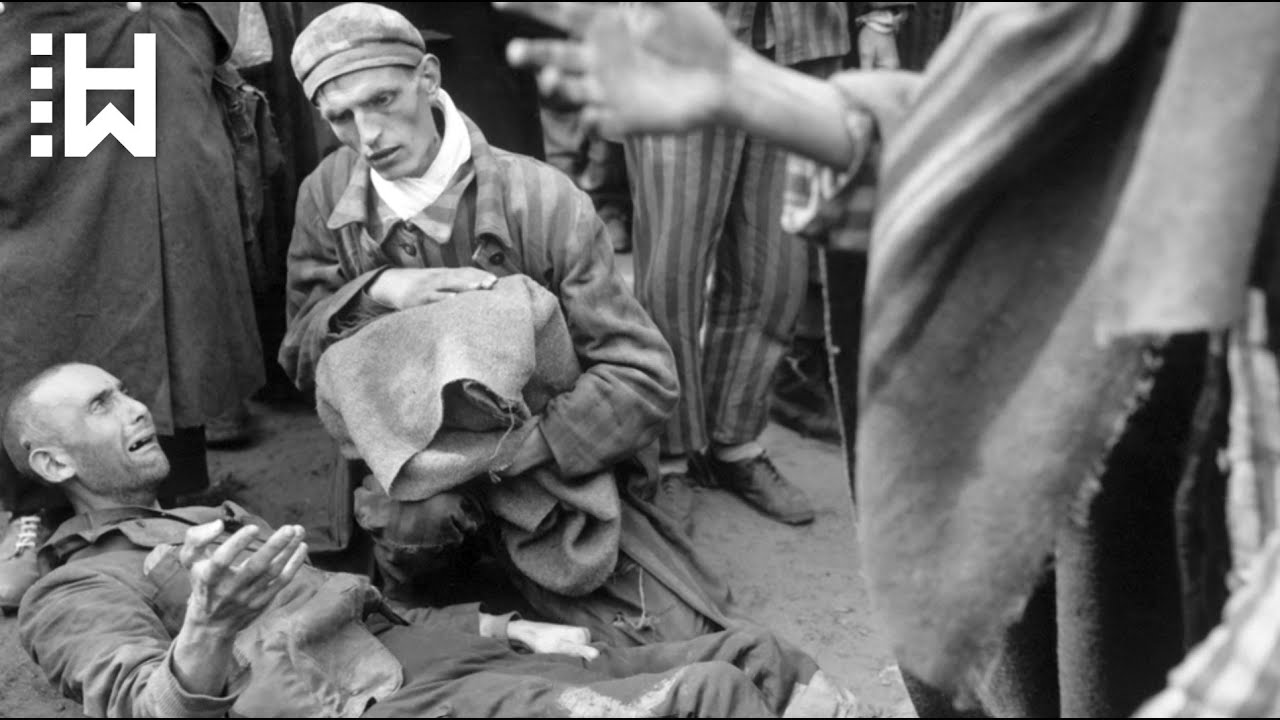
In a further escalation, the Nazis used new laws and police practices to arrest and detain without trial a limited number of gay men beginning in late 1933 and early 1934. This was part of a broader effort to reduce criminality.
The regime instructed police to arrest people with previous convictions for sexual crimes such as public exhibitionism, sexual relations with a minor, and incest. Those arrested included a number of gay men, some of whom were imprisoned in the regime's early concentration camps.
The Nazi judicial system also introduced castration into legal practice. As of late 1933, courts could order mandatory castration for certain sexual offenders. At least initially, men arrested under Paragraph 175 could not be castrated without their supposed consent, but in some cases men imprisoned under the statute could secure early release if they volunteered for the operation.
One such man was Friedrich-Paul von Groszheim, one of 230 homosexual men arrested by the SS in January 1937. He was held for 10 months in a cell with no heating, very little food, and no toilet facilities. In 1938 he was re-arrested and tortured.
The Nazis finally released him on one condition: that he agree to be castrated. Friedrich-Paul submitted to the operation. In 1943 he was arrested a third time and imprisoned as a political prisoner at Neuengamme concentration camp. He survived the war and died in 2006 in Hamburg at the age of 99.
In fall 1934, Reinhard Heydrich ordered police in all large cities to compile lists of known homosexuals. These lists became known as the "pink lists," although that was not what the Nazis or police called them.
In late 1934, the Gestapo, the official political police, raided gay bars and made mass arrests of homosexual men, most of whom were not involved in politics. Many men accused of homosexuality admitted to acts that were not punishable under Paragraph 175, expecting to be released. Instead, they were mistreated and incarcerated in concentration camps such as Lichtenburg or Dachau.
These early measures were just the beginning. Three events between 1934 and 1936 radicalized the Nazi campaign against homosexuality and led to more systematic oppression of gay men.
The first was the murder of Ernst Röhm and other SA leaders in June and July 1934. The killings changed how Nazi propaganda talked about homosexuality. Röhm and the others were murdered on Hitler's orders as part of a power struggle at the highest levels of the German government and Nazi Party. After the purge, propaganda used Röhm's sexuality to help justify the killings, playing on widespread prejudice against same-sex sexuality.
The second was the June 1935 revision of Paragraph 175, the statute of the German criminal code that banned sexual relations between men. Under the new Nazi version, a wide range of intimate and sexual behaviors could be, and were, punished as criminal. The revision also stipulated that non-consensual and coercive acts between men could result in up to ten years of hard labor in prison. It gave the regime the legal tools to prosecute and persecute men engaged in same-sex behavior in much larger numbers than before.
The third was the establishment in 1936 by SS leader and Chief of the German Police Heinrich Himmler of the Reich Central Office for the Combating of Homosexuality and Abortion. The office was part of the KRIPO, the criminal police, and worked closely with the Gestapo. The notoriously homophobic Himmler saw both homosexuality and abortion as threats to the German birth rate and thus to the fate of the German people.
The Nazi campaign intensified in 1935 and 1936. From that point, the regime focused less on shutting down gay meeting places and prioritized the arrest of individual men under Paragraph 175. In the Nazi understanding, these men were "homosexual" offenders, and thus criminals and enemies of the state.
Himmler believed targeting these men was necessary for the protection, strengthening, and proliferation of the German people. He directed the KRIPO and Gestapo to diligently carry out a campaign against homosexuality, and they did.
These police forces used raids, denunciations, and harsh interrogation and torture to track down and arrest men believed to have violated Paragraph 175. In the mid- to late 1930s, police raided bars and other meeting places popular with gay men. They set up cordons around bars or other locations and questioned anyone who seemed suspicious.
Some men caught in raids were released if there was no proof against them. Those deemed guilty were tried for violations of Paragraph 175 or, in some cases, sent directly to a concentration camp. Raids were public, high-profile displays in the Nazi campaign against homosexuality, used to threaten and intimidate gay communities and individuals. But raids were not particularly effective.

The primary means by which police tracked down men for alleged violations of Paragraph 175 were tips or denunciations from the public. A neighbor, acquaintance, colleague, friend, or family member could inform the police of their suspicions. Many Germans tended to agree with the Nazi attitude toward homosexuality, and denouncers referred to those they denounced as "effeminate," "unmanly," and "perverse." Unlike raids, denunciations were a very effective tool of repression and resulted in perhaps tens of thousands of arrests and convictions.
The Gestapo and KRIPO interrogated men caught in raids as well as those denounced. During these often physically and psychologically brutal interrogations, police frequently insisted on full confessions. Under the pressure of harsh interrogation and torture, men were forced to name their sexual partners, which helped police identify other men to arrest and interrogate. In this way, police caught entire networks of gay men.
Gay men responded to Nazi persecution in different ways, and not all made the same decisions or had the same choices. Gay men categorized by the regime as Aryan had far more options than those categorized as Jews or Roma and Sinti. Jewish and Romani gay men, above all, faced persecution for racial reasons.
Some gay men, especially those with financial resources, tried to hide their sexuality and outwardly conform. Some broke off contact with their circles of friends or withdrew from the public sphere. Others moved to new cities, the countryside, or even other countries. Some entered marriages of convenience.
There were also gay men who took the risk of resisting the Nazi state for political and personal reasons. Some helped hide Jews or joined underground anti-Nazi resistance groups.
Such was the case of Willem Arondeus, a gay member of the Dutch resistance who, on March 27, 1943, during the German occupation of the Netherlands, took part in an attack on the Amsterdam Population Registry offices. His group destroyed 800,000 identity cards of Jews and others sought by the Nazis, 15 percent of the records.
Soon after the attack, his unit was betrayed, and on April 1, 1943, the Nazis arrested Arondeus. He pleaded guilty and took the full blame, which may be why two young doctors were spared execution and given custodial sentences instead. Before his execution, Arondeus made a point of ensuring the public would know that he and two other men in the group were gay, asking a friend or his lawyer to "Tell the people that homosexuals can be brave!" Willem Arondeus was executed on July 1, 1943, at the age of 48.
Not all of the approximately 100,000 men arrested under Paragraph 175 during the Nazi regime shared the same fate. Typically, an arrest led to a trial before a court, which would either acquit or convict the accused and sentence them to a fixed prison term. The conviction rate was approximately 50 percent. Most convicted men were released after serving their sentences.
In rarer cases, the KRIPO or Gestapo sent a man directly to a concentration camp as a "homosexual" offender. Typically, though not always, men sent to camps this way had multiple convictions or other extenuating circumstances.
Between 5,000 and 15,000 men were imprisoned in concentration camps as "homosexual" offenders. This group was typically required to wear a pink triangle badge sewn onto their camp uniforms. The badges enabled SS guards to identify the alleged grounds for incarceration, and the pink triangle marked this prisoner population as a distinct group within the camp system.
According to many survivor accounts, pink triangle prisoners were among the most abused groups in the camps. SS guards murdered homosexual prisoners out of cruelty or during sadistic games. It is recorded that the SS used the pink triangles on the men's chests as targets to shoot at "for practice." In mid-1942, almost all of the 200 homosexual prisoners at Sachsenhausen were executed.
Sometimes pink triangle prisoners were assigned the most grueling and demanding jobs in the camp labor system. At camps like Mauthausen and Flossenbürg, it was standard practice to work homosexual prisoners to death, which was then disguised as death from natural causes.
They were often subjected not only to physical abuse but also sexual abuse. Pink triangle prisoners were raped by camp guards as well as fellow inmates. They were also beaten and publicly humiliated.
In Buchenwald concentration camp, gay prisoners were given experimental treatments for typhus or subjected to inhumane medical experiments, such as attempts to change their sexual orientation by implanting a pellet that released testosterone. Most of the victims died shortly after. Homosexual prisoners were also used to test opiates and Pervitin, or given experimental treatments for phosphorus burns at Sachsenhausen.
Beginning in November 1942, concentration camp commandants officially had the power to order the forced castration of pink triangle prisoners.

Fearing guilt by association, already prejudiced fellow prisoners shunned pink triangle prisoners, who were left isolated and powerless within the prisoner hierarchy. Homosexual prisoners rarely benefited from solidarity from other prisoners, which for many camp inmates provided tools of survival such as access to food and clothing.
Josef Kohout, imprisoned under Paragraph 175, was 24 when he was arrested in March 1939 after his Christmas card to his male lover was intercepted. After the war he recalled how at Sachsenhausen, where he arrived in January 1940, gay men could have no responsibility.
They could not speak to prisoners from other blocks or with other badges, because it was thought they would try to seduce the other prisoners. Their block was occupied only by homosexuals, with about 250 men in each wing.
At night it was so cold that a centimeter of ice would form on the windowpanes, but homosexual prisoners were still forced to sleep in nightshirts and to hold their hands outside the covers. This was supposed to prevent masturbation. There were several checks each night, and anyone caught without underwear or with hands under the covers was taken outside, had several buckets of water dumped on them, and was made to stand outside for an hour in freezing cold. Only a few people survived this treatment.
They were also forbidden to approach nearer than five meters to other blocks, and anyone caught doing so was whipped on the "horse" and received at least 15 to 20 lashes. Josef Kohout survived the war and in 1946 met his partner, with whom he stayed until his death in 1994 at the age of 79.
In the camps, the fact that these prisoners were German-speakers provided some measure of protection by giving them access to less onerous work details such as administrative positions. Some younger, more attractive men could obtain advantages from a sexual relationship with a kapo or SS guard. Nonetheless, the typically isolated position of homosexual prisoners made their survival much more difficult. It is believed that at least 3,100 to 3,600 pink triangle prisoners died in the camps.
Gay men could be imprisoned and persecuted in concentration camps for reasons other than their sexuality. Some were sent to camps as political opponents, Jews, or members of other prisoner categories. In these cases, their sexuality was generally secondary to the reason for their imprisonment, and they wore the badge corresponding to their official prisoner category.
The Second World War began on September 1, 1939. The number of men arrested under Paragraph 175 continued during the war years but declined as the needs of total war took precedence over the Nazi campaign against homosexuality.
Many men with Paragraph 175 convictions either joined or were conscripted into the German military. The military needed manpower and in most cases considered a soldier's sexuality to be of secondary importance.
Such was the case of Albrecht Becker, a German production designer, photographer, and actor imprisoned by the Nazi regime on the charge of homosexuality under Paragraph 175. Toward the end of the war, when the German Army needed more men, Becker was released to serve on the Eastern Front, which he did until 1944. He survived the war and died in 2002 in Hamburg at the age of 95.
At the end of the war, the Nazis destroyed a great number of records, including the archive of the Reich Central Office for the Combating of Homosexuality and Abortion. Scholars estimate there were approximately 100,000 arrests under Paragraph 175 during the Nazi regime, with more than 53,000 resulting in convictions.
In spring 1945, Allied soldiers liberated the concentration camps and freed prisoners, including those wearing the pink triangle. But the end of the war and the defeat of the Nazi regime did not necessarily bring liberation for gay men, who remained marginalized in German society, and sexual relations between men remained illegal in Germany throughout much of the twentieth century.
Many men serving sentences for allegedly violating Paragraph 175 remained in prison even after the war, and tens of thousands more were convicted in the postwar era. Homosexuality was decriminalized in East Germany in 1968 and in West Germany in 1969.
Only in the 1990s did the German government acknowledge "persecuted homosexuals" as victims of the Nazi regime. When the government overturned Nazi-era convictions for Paragraph 175 in 2002, gay men who had suffered at the hands of the Nazis became eligible for the first time for monetary compensation for the injustices perpetrated against them.
Because of continued prejudice against same-sex sexuality and the ongoing enforcement of Paragraph 175 for much of the twentieth century, many gay men were afraid to share their testimonies or write memoirs. We must never forget these men who either died or survived and remained marked until the end of their lives. Their stories and suffering must forever remind us of the dangers of discrimination, racism, and hatred toward one another, as history often repeats itself.