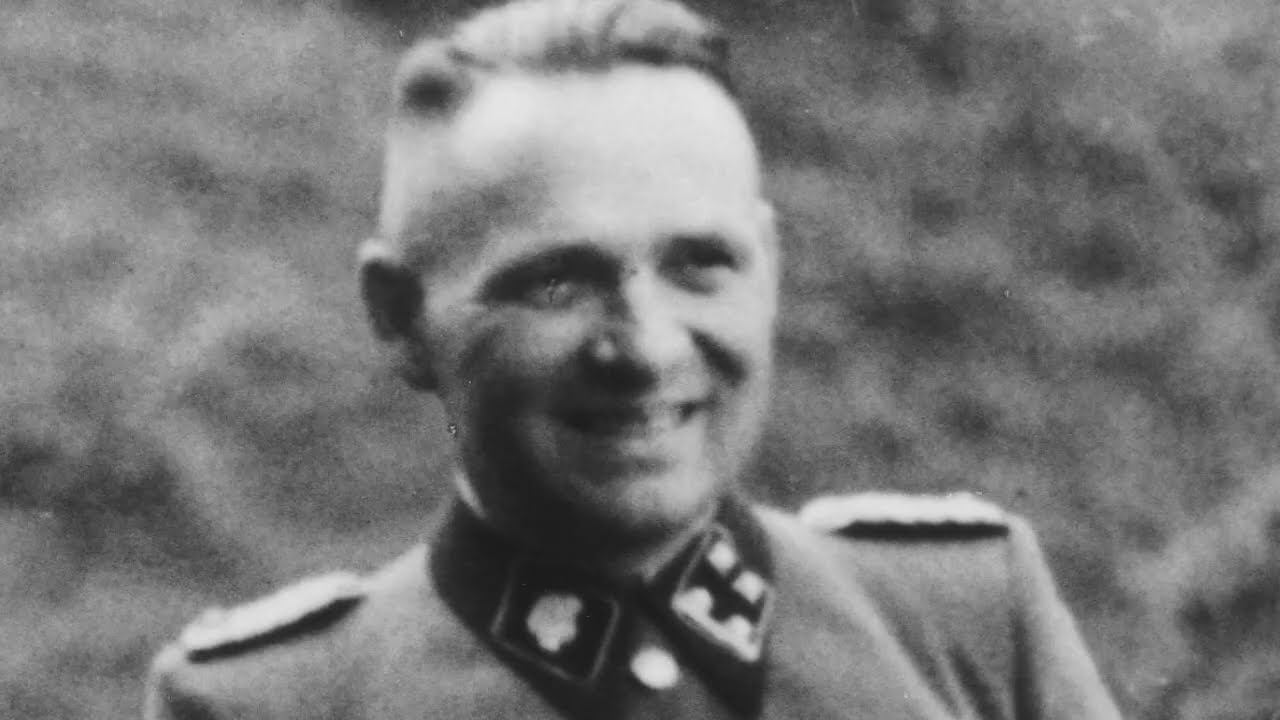
Rudolf Höss, the commandant of Auschwitz, is remembered today as one of the most notorious war criminals of the Second World War. He openly admitted his role in the massacre of millions during the Nuremberg trials. He also appeared proud of his actions in building the deadliest concentration camp of the war.
Höss tried to hide at the end of the conflict, hoping to avoid arrest and rebuild his life in post-war Germany. That was not to be. At the age of forty-five, Rudolf Höss was executed. His death sentence and its implementation were highly unusual.
He was one of only a few war criminals to be executed in the very place where he had inflicted such pain and suffering. Höss was the man around whom Auschwitz grew into the largest killing center of the Second World War.
He stated that he commanded Auschwitz until December 1, 1943, and estimated that at least two and a half million victims were executed and exterminated there through gassing and burning. At least another half million died from hunger and disease, bringing the total to about three million dead.
That figure represents roughly 70 to 80 percent of all people sent to Auschwitz as prisoners. The rest were selected and used as forced labor in the camp industries. Among those executed and burned were nearly 20,000 Russian prisoners of war, transported to Auschwitz in Wehrmacht vehicles driven by regular Wehrmacht officers and men.
The remaining victims included about 100,000 German Jews and large numbers of citizens, most of them Jewish, from the Netherlands, France, Belgium, Poland, Hungary, Czechoslovakia, Greece, and other countries. About 400,000 Hungarian Jews alone were executed at Auschwitz in the summer of 1944.
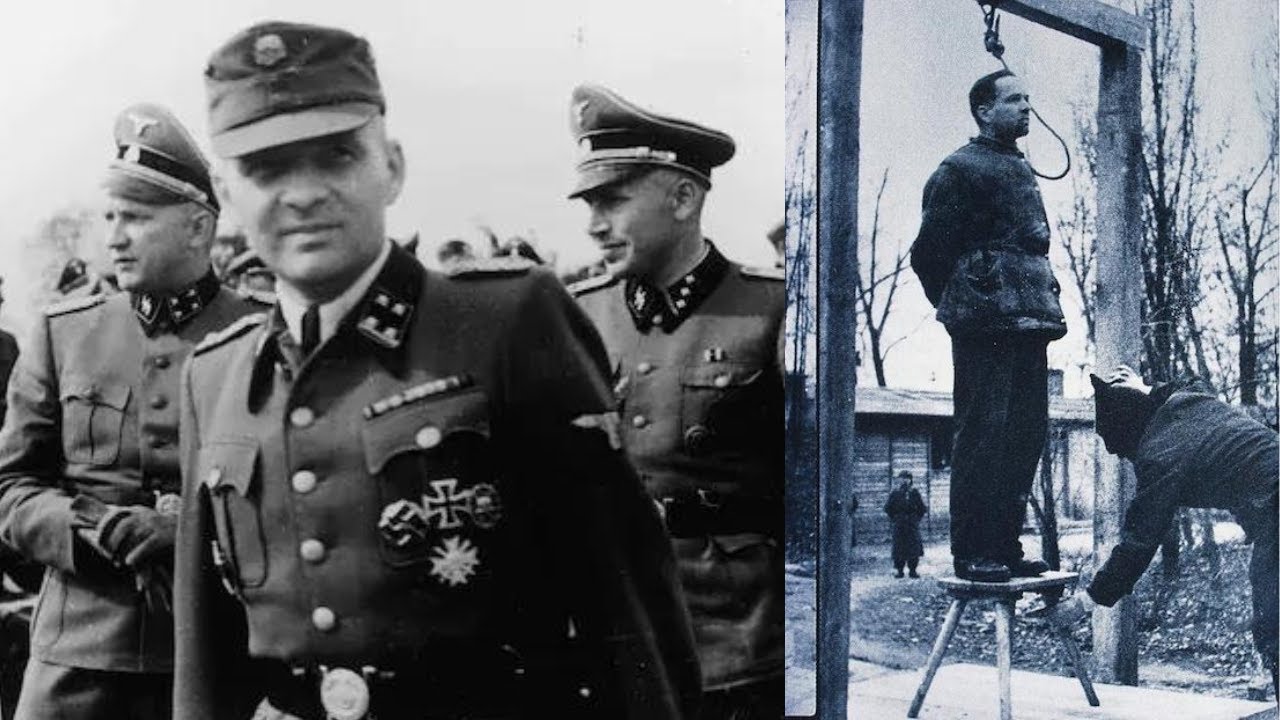
Höss was also responsible for the individual evil of the guards who worked in the camp. At the end of the Second World War, he was hiding under the name Franz Lang. He was posing as a gardener in Gottrupel.
His family fell into Allied hands, and his wife Hedwig was interrogated. After some time, she provided crucial information about her husband's whereabouts. Hans Alexander and a group of British soldiers approached him and ordered the gardener to remove his wedding ring.
When Höss refused, he was threatened. Engraved inside the ring was his name alongside his wife's name. The soldiers then began beating Höss with axe handles. Many of the men who were Jewish wanted revenge for themselves.
They were later pulled away, and Höss was left to rot in custody while plans were made for what to do with him. Of his time in British hands, he said that during the first interrogation they beat him to extract evidence. He did not know what was in the record or what he had said, though he signed it, because they gave him alcohol and whipped him.
He described it as hard to bear. The whip was his own. By chance, it had found its way into his wife's luggage. He claimed his horse had barely ever touched it, let alone prisoners. Somehow, perhaps one of the interrogators thought he had used it to constantly flog prisoners.
A few days later, he was transferred to Minden on the Weser, which was the main interrogation center in the British zone. There, he was treated more harshly, especially by the first British prosecutor, who held the rank of major. The prison conditions reflected the attitudes of the first prosecutor.

Compared to what he had experienced before, the prison of the International Military Tribunal was like a stay in a health resort. But Höss would be brought to trial between March 11 and 29, 1947. During his trial, many witnesses came forward to speak about the acts and incidents that took place inside Auschwitz.
It was clear what would happen to Höss and that he would be sentenced to death. Yet his execution was unique and very different. At the end of the Second World War, many convicted war criminals were executed inside prisons such as Landsberg or Hameln.
At Landsberg, those sentenced to death by American courts were taken to a courtyard accompanied by a chaplain and military police. They were then led to the gallows steps and handed over to the executioner. At Hameln, there were simultaneous execution platforms run by the British executioner Albert Pierrepoint.
But these executions were not carried out publicly. They used execution rooms inside the prisons, and very few witnesses saw the proceedings. Before his execution, Rudolf Höss acknowledged his crimes and said his conscience obliged him to make the following statement.
In the isolation of his cell, he had bitterly realized that he had committed a grave sin against humanity. As commandant of Auschwitz, he was responsible for carrying out part of the Third Reich's cruel plans to destroy human beings. In doing so, he had caused terrible injuries to humanity.
He said he had caused untold suffering to the Polish people in particular. He would pay for this with his life. He asked God to forgive what his hands had done. He asked the Polish people for forgiveness.
In Polish prisons, he experienced for the first time the meaning of human kindness. Despite everything that had happened, he received humane treatment he had never expected, which made him feel deeply ashamed. He hoped the facts now emerging about the horrific crimes against humanity would make the repetition of such cruel acts impossible forever.
Höss had also returned to the Catholic Church before this. But Rudolf Höss, the commandant of Auschwitz, would be executed inside his own concentration camp. The only other person convicted in this manner was a Nazi: Karl Otto Koch, the former commandant of Buchenwald, who was executed by his former colleagues after being convicted of stealing and embezzling money from the Nazis and Hitler.
Höss's execution inside Auschwitz was not originally planned. He was supposed to be executed inside a Polish prison such as Montelupich, where there are simply hooks in the ceilings of the execution rooms with nooses hanging from them.
But what happened was that many former Auschwitz prisoners and people imprisoned in the camp pressured the Polish courts and judges. They wanted the former commandant executed inside his camp. The judges responded to their demands and organized the execution of Rudolf Höss within the barbed wire of Auschwitz.
They ordered a gallows to be built inside the camp, to serve as a special execution structure for Höss's death sentence. It was the only time it was ever used. Today, the gallows bears a plaque stating that this was the site of the camp's Gestapo headquarters.
Prisoners suspected of involvement in the camp's secret resistance movement or of planning escapes were interrogated there. Many prisoners died as a result of beatings or torture. The first commandant of Auschwitz, Rudolf Höss, who was tried and sentenced to death after the war by the Polish Supreme National Tribunal, was hanged here on April 16, 1947.
Höss was brought to his former camp on April 16, 1947, and led to his old office, where he drank a cup of coffee. After that, he was led toward the gallows platform, where his legs and hands were bound. A masked executioner then led him to the steps leading up to the platform.
The executioner helped Höss climb one of the steps. The noose was then tightened around his neck before the trapdoor was opened, and Höss fell through. The execution of Rudolf Höss was shocking, given that he was put to death inside the camp he had overseen for so long.
It was a place where more than a million people had been killed, and Höss was the last person to be executed at that site. About 100 witnesses, including former prisoners and members of the Polish government, watched him being hanged. He was one of only two concentration camp commandants who met their end and were executed inside their own camps.