For more than 260 years, Buckingham Palace has been the most famous royal residence on Earth—and the monarchs who lived there have spent most of that time trying to get out. William IV tried to give it to Parliament. Victoria abandoned it for 40 years. George VI called it “the icebox.
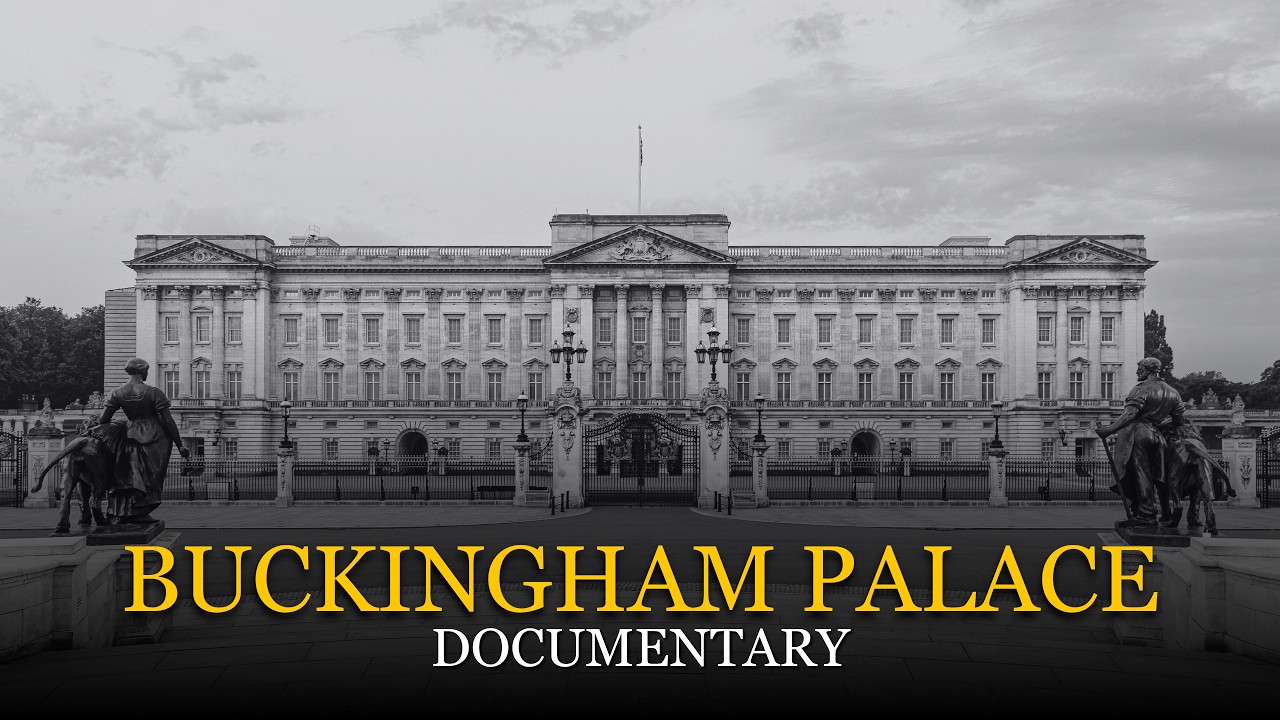
” Elizabeth II begged Winston Churchill to let her live somewhere else. And Charles III, who became king in 2022, has refused to move in at all, commuting each evening from a smaller house down the road. The story begins on a swamp. The land on which the palace stands was originally marshland, fed by the buried River Tyburn, which still flows beneath the courtyard today.
In 1703, John Sheffield, the first Duke of Buckingham and Normanby, chose this damp, inexpensive ground to build his London residence. The house was handsome but modest—brick, with a central block and two wings, costing about 7,000 pounds. It was a private dwelling, not a palace, with no throne room or ballroom. Sheffield died in 1721, and the house sat quietly for decades while the river continued its invisible work beneath the foundations.
In 1761, a young George III bought the house for 21,000 pounds as a private retreat for his new wife, Princess Charlotte. It became known as the Queen’s House, a home where the couple raised their 15 children. For a brief moment, it was exactly what George had wanted: a family home with a library, nurseries, and gardens. But in 1760, George had surrendered the Crown’s hereditary revenues to Parliament in exchange for a fixed annual payment known as the civil list.
From that moment on, the monarch could not maintain a royal residence without parliamentary approval. The cage had been built, and the key handed to politicians. George’s son, George IV, had very different ideas. After his father’s death in 1820, he set out to turn the modest house into a palace.
Parliament authorized 150,000 pounds for the transformation; George IV spent nearly 700,000 pounds. His architect, John Nash, created a sequence of increasingly magnificent state rooms—gilded ceilings, crimson silk walls, marble arches, and a grand staircase beneath a stained-glass dome. Nash also designed the Marble Arch, modeled on the Arch of Constantine, at a cost of 34,000 pounds. It was too narrow for the state coach to pass through.
By 1829, Parliament had lost patience and dismissed Nash in disgrace. George IV died in 1830 without spending a single night in the palace he had created. His brother, William IV, tried to give the building to Parliament after the old Palace of Westminster burned down in 1834. Parliament declined, judging the building unsuitable for political purposes.
When 18-year-old Victoria moved in three weeks after becoming queen in 1837, she was appalled. The chimneys smoked so badly that fires had to be left to die. Windows could not be opened because mechanisms had never been installed. The kitchen was so far from the dining rooms that food arrived cold.
The household was divided among three separate departments, whose jurisdictions overlapped so absurdly that repairing a cracked window pane required agreement from two different offices. Prince Albert, whom she married in 1840, imposed order, reformed the staff structure, and oversaw the construction of a new East Wing. It was Albert’s idea to add the central balcony—a simple architectural addition that would become the most photographed detail in Britain. But even Albert could not conquer the building.
He battled the smoke, the cold, and the creeping damp from the river below until his death in 1861. Albert’s death devastated Victoria. She withdrew from public life, wore black for the remaining 40 years of her life, and abandoned Buckingham Palace. The building sat largely empty—dust gathering on Nash’s ceilings, mold creeping up the walls, pipes corroding.
In 1864, someone pinned a satirical note to the palace railings, advertising the premises as available “in consequence of the late occupant’s declining business. ” Victoria returned only reluctantly in the 1880s and ’90s for her jubilees, dressing the building for ceremonial performances before closing it again. She died in 1901 at Osborne House, having spent fewer than a quarter of her 63-year reign in her London palace. Edward VII, who had waited nearly 60 years to be king, filled the palace with light, champagne, and the most glamorous people in Europe.
He redecorated the state rooms in cream, gold, and white, installed electric lighting, and hosted banquets for 170 guests. But he continued to live at his smaller Marlborough House, using the palace as his office and stage rather than his home. After Edward’s death, George V commissioned the Portland stone facade that faces The Mall today, completed in record time in 1913. The facade is barely a century old, though the building behind it and the ground beneath it are far older.
The Second World War changed the palace’s meaning. During the Blitz, the building was struck 16 times, with nine bombs causing significant damage. On the 13th of September 1940, five high-explosive bombs hit while George VI and Queen Elizabeth stood inside. The Royal Chapel was destroyed by a direct hit.
The King and Queen refused to leave the city, visiting bomb sites in the East End. The Queen’s comment that she could now look the East End in the face, having been bombed herself, became a defining statement of wartime Britain. The palace, once a symbol of privilege, became a symbol of shared suffering. But the repairs were hasty, patched together during a period of national austerity.
They were never meant to last more than a few years—and many remained in service for more than seven decades. George VI never wanted to be king. And he never wanted to live in the palace, which he called “the icebox. ” The heating was so inadequate that staff wore overcoats indoors in winter.
The architecture enforced distance: a father could not call to his daughter across a corridor; he sent a note through a page. His daughter, Elizabeth II, had been living at Clarence House, the only home she reportedly ever truly loved. When she became queen in 1952 at age 25, she asked Churchill if she could remain at Clarence House and use the palace only for official functions. Churchill said no.
The sovereign must reside at Buckingham Palace. Prince Philip was reportedly furious, but the decision was not theirs to make. Elizabeth made the palace function as her office and escaped to Windsor Castle every available weekend. Meanwhile, the building continued to decay—wartime repairs failing, pipes leaking, asbestos crumbling in unseen rooms.
In November 1992, a devastating fire tore through Windsor Castle, destroying nine principal rooms and damaging over 100 more. The restoration cost 37 million pounds, and the question of who should pay became a national argument. The unprecedented solution was twofold: the Queen agreed to pay income tax for the first time, and Buckingham Palace would open its state rooms to paying visitors to fund the restoration. In August 1993, the public walked through the palace’s state rooms for the first time in history.
Over half a million visitors now pass through each summer. The building that no monarch had ever wanted to live in became a building that strangers paid to walk through. The private had become public. In November 2016, the palace’s largest renovation since Nash’s original transformation was announced.
The cost was initially estimated at 369 million pounds. The scope was total: 14,000 meters of new electrical wiring, 20,000 meters of new plumbing, asbestos removal, and replacement of boilers over 30 years old. An internal assessment warned that a single electrical fire could cause an estimated 250 million pounds in damage. The building that survived 16 wartime bomb strikes could be undone by a faulty wire.
By the 2025–2026 financial year, the sovereign grant reached 132. 1 million pounds, a significant portion flowing directly into the building. The palace consumes tens of millions of pounds each year—whether or not anyone sleeps there. And that is precisely the point.
King Charles III, who became king on the 8th of September 2022 at age 73, finishes his work at Buckingham Palace each evening, walks five minutes down The Mall, and sleeps at Clarence House—the smaller residence he lovingly restored after the death of the Queen Mother in 2002. The official explanation is practical: the North Wing apartments are undergoing renovation as part of the reservicing program and will not be ready until 2027 at the earliest. But the explanation fits a pattern so consistent that coincidence becomes difficult to sustain. George III preferred Windsor.
George IV never slept in the palace. William IV tried to give it away. Victoria fled to Balmoral. George VI froze in it.
Elizabeth II escaped to Windsor every weekend. Now Charles commutes from a house down the road. The building has never been chosen. It has only been endured.
Every decision that made the palace more magnificent made it less livable. The state rooms were designed for ceremony, not comfort. The corridors were built to impress visitors, not connect family members. The scale was intended to project the power of a nation, not shelter the humans who represent it.
Seven hundred seventy-five rooms require 800 staff. The palace does not permit private life; it permits only performance. And yet it endures—not because anyone loves it, but because the ceremonies of the British state require a stage. The building has made itself necessary through function.
The Tyburn still flows beneath the courtyard, as it has since before the first Duke laid his first brick on the swamp above. The palace waits—for the next monarch, the next renovation, the next crisis, the next hundred million pounds. It has outlasted every person who has ever tried to change it, escape it, or love it. It will outlast the current king and the next.
It is the most beautiful prison in the world. And the door, as always, is open—but no one can leave.