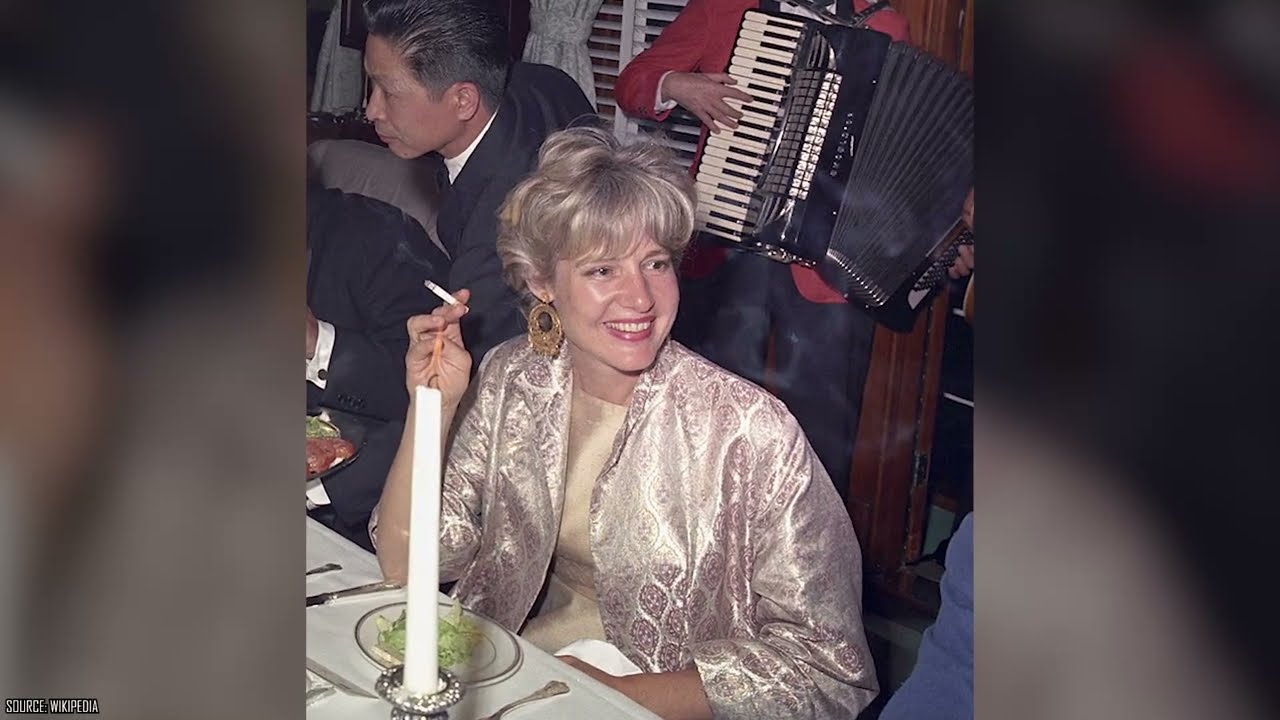
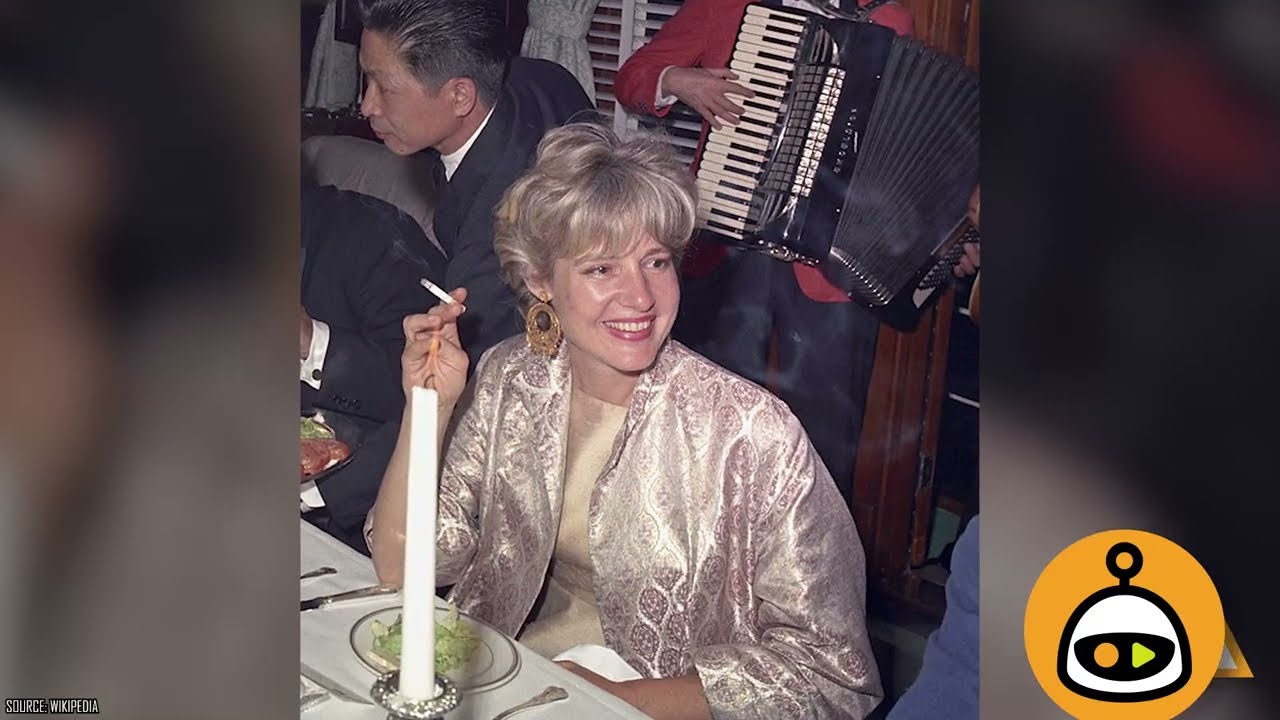
Mary Pinchot Meyer was an artist, socialite, and the ex-wife of a high-ranking CIA official. She was also, according to numerous accounts, one of President John F. Kennedy's most significant lovers.
Their relationship was not a fleeting affair built only on physical attraction. Meyer was intelligent, politically engaged, and deeply anti-war. She moved in the same elite circles as Kennedy and offered him a perspective on world affairs that few others could provide.
Her background was one of privilege and power. Born into a wealthy and influential family, she was raised among America's elite. She later married Cord Meyer, a prominent figure in the early days of the CIA. After their divorce, she settled in Georgetown and became deeply involved in the art world, forming friendships across politics, journalism, and intelligence.
Her relationship with Kennedy reportedly began in earnest after his election to the presidency. Unlike some of his other affairs, their connection appeared to go beyond romance. She was politically active and keenly aware of the power structures that governed Washington.
The most intriguing aspect of the relationship, however, was their supposed experimentation with LSD. Timothy Leary, the Harvard psychologist who became the face of the psychedelic movement, claimed that Meyer had approached him for guidance on administering the drug.
She reportedly wanted to introduce LSD to influential figures in Washington, including Kennedy, in an effort to expand their consciousness and push them toward peace-oriented policies.
Leary later recalled that after JFK's assassination, a distraught Meyer contacted him. According to Leary, she said, "They couldn't control him anymore. He was changing too fast. They had to take him out."
Those words have fueled theories that Meyer believed Kennedy's death was orchestrated by elements within the government who feared he was becoming too independent.

Some accounts go further, suggesting Meyer played a direct role in shaping Kennedy's policies. One claim holds that she helped turn Kennedy from a cold warrior into an advocate for peace, that she was behind his American University speech, and that she moved him to deal with Soviet leader Nikita Khrushchev.
She had divorced Cord Meyer in 1957. According to one account, she could no longer put up with what the CIA was doing.
After Kennedy was killed, she waited until the Warren Commission report was released. When it came out, she was reportedly appalled that it did not deal with the truth of what happened.
She then went to her ex-husband and, according to the same account, also to James Jesus Angleton, another senior CIA figure. She allegedly told them that if they did not reveal how Kennedy was really killed, she would blow the whistle on them and on what they were doing.
On October 12, 1964, less than a year after Kennedy's assassination, Mary Pinchot Meyer was shot to death in broad daylight. She was walking along the C&O Canal towpath in Georgetown.
She was killed execution style, with one bullet to the head and another to the back.
Police quickly arrested a man named Ray Crump Jr., who was found nearby with wet clothes and a superficial wound on his hand. But there was no forensic evidence linking Crump to the crime, and he was ultimately acquitted at trial.
The case against Crump was weak from the start. Witnesses described a man at the scene who was significantly taller and heavier than Crump. No murder weapon was ever found. There was no blood and no gunpowder residue tying him to Meyer's killing.
His defense attorney, the formidable civil rights lawyer Dovey Johnson Roundtree, dismantled the prosecution's case by pointing out inconsistencies in the eyewitness testimonies and the lack of hard evidence.
Despite Crump's acquittal, Meyer's murder was never properly investigated beyond the initial arrest. Given her connection to Kennedy and her rumored knowledge of sensitive information, many have long suspected her killing was not random but a targeted hit.
Perhaps the most perplexing element of Meyer's story is what happened in the hours following her death. Within mere hours of the murder, James Jesus Angleton, the CIA's chief of counterintelligence and a close associate of Mary's ex-husband, reportedly broke into her home in search of her personal diary.
The diary was later confirmed to have existed by multiple sources. It allegedly contained details of her relationship with Kennedy, her knowledge of his policies, and possibly her suspicions about his assassination.
Ben Bradlee, the famed Washington Post editor and Meyer's brother-in-law, later recounted how Angleton had taken possession of the diary. He said his wife, Mary's sister Tony, had handed it over to the CIA, where it was reportedly destroyed.
Some believe the diary may have contained explosive revelations, possibly about Kennedy's assassination, her own suspicions about who was behind it, and her knowledge of covert activities within the intelligence community.
The speed at which Angleton moved to secure the diary suggests that Meyer's murder was not a random act of violence. Rather, it appears as if there was an urgent need to prevent certain information from coming to light.
Many theorists argue that Meyer, much like Kennedy himself, had become a liability to powerful interests in Washington.
One of the most pressing questions surrounding her murder is the extent of her knowledge about covert CIA operations, particularly those related to her ex-husband Cord Meyer and his role in the agency.
As a high-ranking CIA official, Cord Meyer was deeply involved in Cold War-era psychological warfare and propaganda operations. His work placed him at the center of efforts to shape public opinion, influence foreign governments, and counter Soviet narratives.
Mary's outspoken anti-war views and her increasing skepticism of the CIA's activities may have put her at odds with powerful figures in Washington. She was reportedly vocal about her disdain for the growing military-industrial complex and had become disillusioned with the very institutions that once shaped her social and political circles.
Some accounts suggest she had knowledge of clandestine government activities, which may have included operations related to Kennedy's assassination.
Adding to the intrigue, it has been alleged that she confided in friends about her belief that elements within the government had orchestrated JFK's assassination. If she had been vocal about such suspicions, it could have made her a target for those who wished to silence any narrative that deviated from the official conclusion presented by the Warren Commission.
Her proximity to intelligence circles, combined with her relationship with Kennedy, suggests she may have been privy to information that few others knew.
Furthermore, her murder bears similarities to the fate of other figures connected to intelligence agencies and the Kennedy administration. Journalist Dorothy Kilgallen was investigating JFK's assassination before her mysterious death in 1965. Robert F. Kennedy's 1968 assassination raised questions about unseen political forces. Together, these cases illustrate a pattern of silencing those who pursued alternative narratives.
Whether Mary's death was an isolated event or part of a broader web of political intrigue remains an open question. But the CIA's involvement, whether direct or indirect, cannot be ignored. The agency's rapid response in securing her diary and the involvement of James Jesus Angleton, its head of counterintelligence, only deepens the mystery.
Despite the passage of nearly six decades, Mary Pinchot Meyer's murder continues to baffle researchers, historians, and true crime investigators. The case has all the hallmarks of a conspiracy: a high-profile victim with deep political connections, a crime that appeared professionally executed, an immediate but questionable suspect, and the involvement of intelligence operatives in covering up potentially explosive information.
One of the most perplexing aspects of the case is the lack of motivation for her murder. If it was a random act of violence, as the prosecution initially claimed, why was nothing stolen from her? Why was the execution-style nature of the shooting ignored? How did her killer manage to escape undetected despite the towpath being a public space?
The precision of the shooting, one bullet to the head and one to the back, suggests the work of someone with experience in targeted killing.