On a January night in 1980, inside Windsor Castle, a young woman looked across a ballroom at the heir to the British throne and said something no one else in his life, before or after, would ever say to him.
"I have never been so badly treated in my life. You've left me all alone all evening and now you will have to continue without me."
The woman was Anna Wallace, a 28-year-old Scottish landowner's daughter. The man was Prince Charles. The occasion was the Queen Mother's 80th birthday celebration.
Multiple people in that room heard some version of her words directly. The account has been reported consistently enough across independent sources that its core is not seriously disputed.
Twelve months later, Charles married a 19-year-old who never got the chance to say anything like it at all.
Anna Wallace grew up on her family's estate in Scotland, riding and hunting from childhood in a world where those skills were not hobbies but fluency. She had a temper sharp enough that people who knew her had already given her a nickname before Charles ever entered the picture: Whiplash Wallace.
The name did not mean she was cruel. It meant she did not absorb things quietly. If something was wrong, she said so immediately to whoever had caused it, regardless of that person's title.
In the narrow world Charles had been raised inside, a world built on the assumption that everyone defers to the position rather than the person, that trait made her genuinely unusual. It is also the entire reason this story exists.
She met Charles in 1980, one name among what biographers and the contemporary press had already started calling, with a straight face, "Charlie's angels." It was a rotating cast of young women, mostly aristocratic, mostly approved in advance by an informal filter running through his own household.
The system had one job: find the next Princess of Wales before the tabloids found a reason to disqualify her first.
By that point, Charles had already been through Lady Sarah Spencer, Diana's own older sister, and a long list of others the press had assembled with the same faint mockery reserved for a man clearly shopping rather than falling in love.
The rules governing the search were specific, and once stated plainly, a little bit brutal. She had to be aristocratic. She could not be Catholic. She needed the Queen's approval. And there was an expectation, never printed but never denied, that she have no romantic history the newspapers could later dig up and print beside a photograph of the wedding dress.
To understand why any of this mattered enough to produce a scene at a birthday party, you have to understand what Charles actually was underneath the checklist, because the checklist itself was never really his idea.
He had been raised largely by staff, sent away to a famously harsh boarding school at an age most parents today would consider far too young, and had a relationship with both of his parents that biographers, including the one he cooperated with directly for his own authorized account, have described as warm in principle and rationed in practice.
What he wanted, by every account of people who actually spent time with him in his twenties, was not a checklist at all. It was ease. Someone who was not frightened of him, who found the same things funny, who did not treat every interaction as an audition for a job with the largest possible stakes attached.
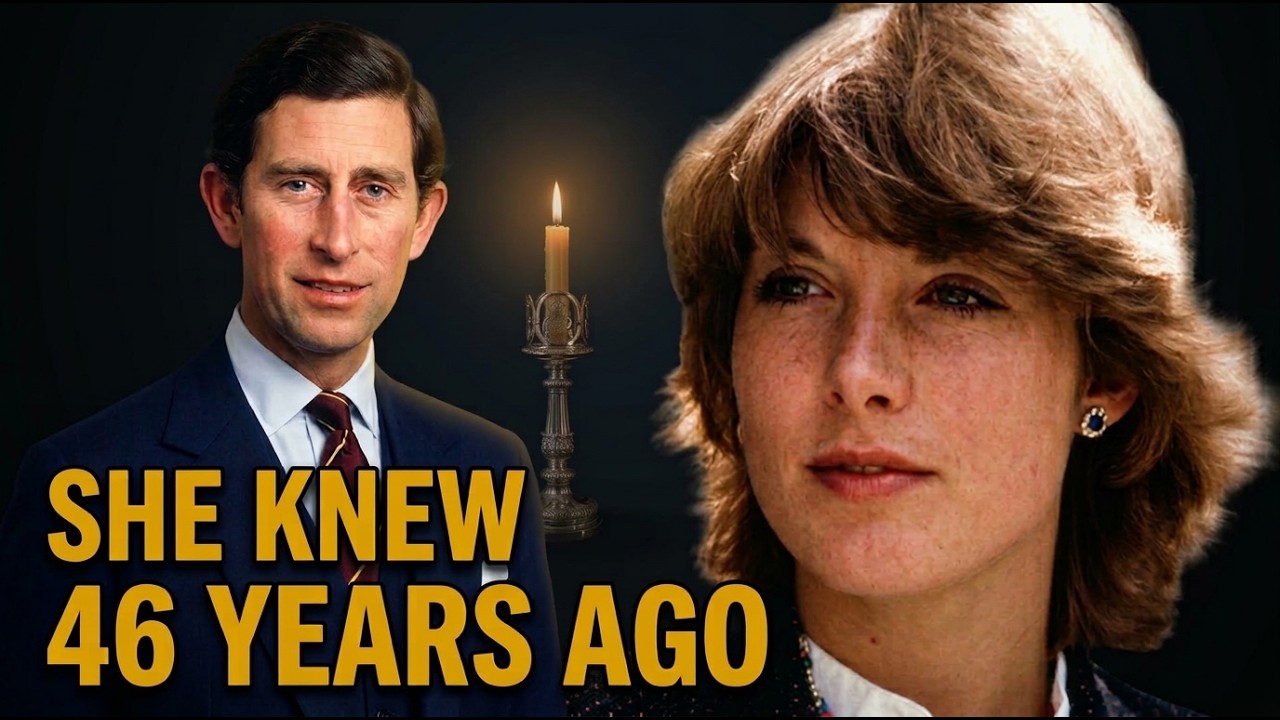
Camilla had given him exactly that years earlier, before either of them had married anyone else. The checklist existed because the institution around him had already decided that whatever he wanted personally was a separate, lower-priority question from what the monarchy needed structurally.
Anna Wallace walked into that gap without knowing at first how wide it actually was. By every account, she did not audition for any of it. She simply dated him the way she would have dated anyone else who interested her, which is to say completely on her own terms.
By some accounts, Charles proposed to her twice. She said no both times.
That inverts almost everything assumed about this story before it reaches the part everyone actually remembers. This is not a story about a woman who wanted to be queen and lost the job. It is a story about a woman who was offered the job, more than once, by the person with the actual authority to offer it, and said no anyway.
What makes that refusal make sense is not romance. It is information.
At the exact same time Anna Wallace was dating Charles, he was also quietly, persistently, in a pattern that people inside his own circle already knew about even if the country did not yet, still entangled with Camilla Parker Bowles. Camilla was married by then to Andrew Parker Bowles and had been for years.
That did not stop the calls, the weekends, the shorthand between two people who had known each other since 1970 and had never actually stopped. Anna Wallace was not guessing about this. She was living inside it, at parties, in rooms, watching it happen in real time, long before the rest of the country had a name to put to the woman Charles kept returning to.
That brings the story back to the ballroom. On the 4th of August, 1980, the Queen Mother's 80th birthday, a state occasion at Windsor Castle with the entire senior royal family in attendance, Charles brought Anna Wallace as his date.
Then, by multiple accounts from people who were actually in that room, he spent the overwhelming majority of the evening dancing with Camilla instead. Not once. Not a polite obligatory turn around the floor. Repeatedly, visibly, in front of the exact audience most likely to notice and repeat it.
Anna Wallace, a woman with no professional stake in staying quiet and no royal ambition requiring her silence, did not spend the rest of the night pretending she had not noticed. That is where the sentence comes from. Not a private argument in a car on the way home, where it might have stayed contained. In the room. In front of the people whose entire social function was to notice and repeat exactly this kind of thing by the following morning.
What did Anna Wallace understand standing in that ballroom that the country would spend the next 17 years slowly, painfully learning second hand?
She understood, immediately and without needing anyone to explain it, that she was watching a man choose someone else in real time, in public, while she stood there as his official date for the evening. She did not need a future biographer to tell her what that meant about her actual position in his life. She did not need to wait a decade for a tape recording or a television confession.
She had the information in front of her, live, and she acted on it the same night, in the room, rather than filing it away and hoping it would resolve itself later.
Notice, too, what Camilla herself was doing during all of this, because it is easy to write her into this story as a passive presence Charles simply gravitated toward. She was not passive. She was, by this point, seven years into a pattern of her own.
Married, present at these same events as a guest in her own right, dancing with a man who was not her husband in front of the same aristocratic circuit that would happily repeat every detail by the next morning, and apparently unbothered by whether his official date for the evening noticed.
That is not an accusation aimed at making her the villain of Anna Wallace's story. It is simply the other half of the same picture: two people who had already settled into a rhythm neither of them felt any particular urgency to hide, regardless of who else happened to be standing nearby holding a drink and waiting to be acknowledged.
Compare that, just for a moment, to what came next. Within weeks of that ball, by some accounts within the same season, Charles's attention moved toward a 19-year-old named Diana Spencer, the younger sister of a woman he had already dated.
She was freshly out of school, with no independent social footing of her own, no professional life, no established circle of friends outside the world the royal family already controlled, and, crucially, none of Anna Wallace's information.
Diana did not know, at the point she accepted his proposal, what Anna Wallace already knew cold. She had not watched it happen in a ballroom. She had not been told directly, in words, to her face, what her actual position was going to be.
She found out gradually, over years, in fragments. A bracelet she was not supposed to see. A radio broadcast eventually leaked to a magazine. A private telephone call somebody recorded off the airwaves nearly a decade later. Pieces of the exact same information Anna Wallace had received in full, in a single evening, before she had ever signed anything.
The honest, uncomfortable question this comparison raises has no clean answer. Was Diana less clear-eyed than Anna Wallace, or was she simply given less information, less power, and less room to act on what she did have?
The record does not really support less clear-eyed. Diana was 19, unmarried, without her own income, without her own household, without a single adult in her life whose job was not in some way downstream of the same institution she was marrying into.
Anna Wallace was 28, financially independent, from a family with its own standing that did not depend on royal approval, with a temperament that had already been tested and had already decided, more than once, that being right mattered more than being comfortable.
Same man, same pattern, wildly different amounts of actual leverage to do anything about it.
Think, too, about the mechanics of how each woman received her information, because the gap there is almost as important as the gap in what they could do about it. Anna Wallace got hers in a single evening, delivered by her own eyes, in real time, with no intermediary standing between her and the fact of what she was watching.
Diana's understanding arrived instead through a long chain of second-hand fragments, filtered through people who each had their own reason to manage what she learned and when. A bracelet discovered in an office, rather than shown to her directly. Private nicknames she had to piece together the meaning of on her own.
A level of household staff and protocol stood between her and anyone who might have simply told her the truth outright, the way Charles's own behavior told Anna Wallace everything she needed to know in a single dance. Being married into an institution that large does not just remove your options. It removes the plain, unmediated version of events that a woman with her own separate life still gets to see clearly.
That is the real subject of this story. Some people get caught inside a bad situation because they cannot see it. Anna Wallace was never in that category. She saw it immediately, and she still had somewhere to go when she decided to leave.
Diana saw it, too, eventually. She just did not have anywhere to go for a long time, and by the time she did, the stakes had multiplied into something that could no longer be resolved by walking out of a single room.
What happened to Anna Wallace afterward tells you something, too. She married an entrepreneur named Johnny Hesketh not long after. That marriage would itself eventually end in divorce, which is worth mentioning honestly rather than turning her into an uncomplicated symbol of a woman who escaped and lived happily ever after.
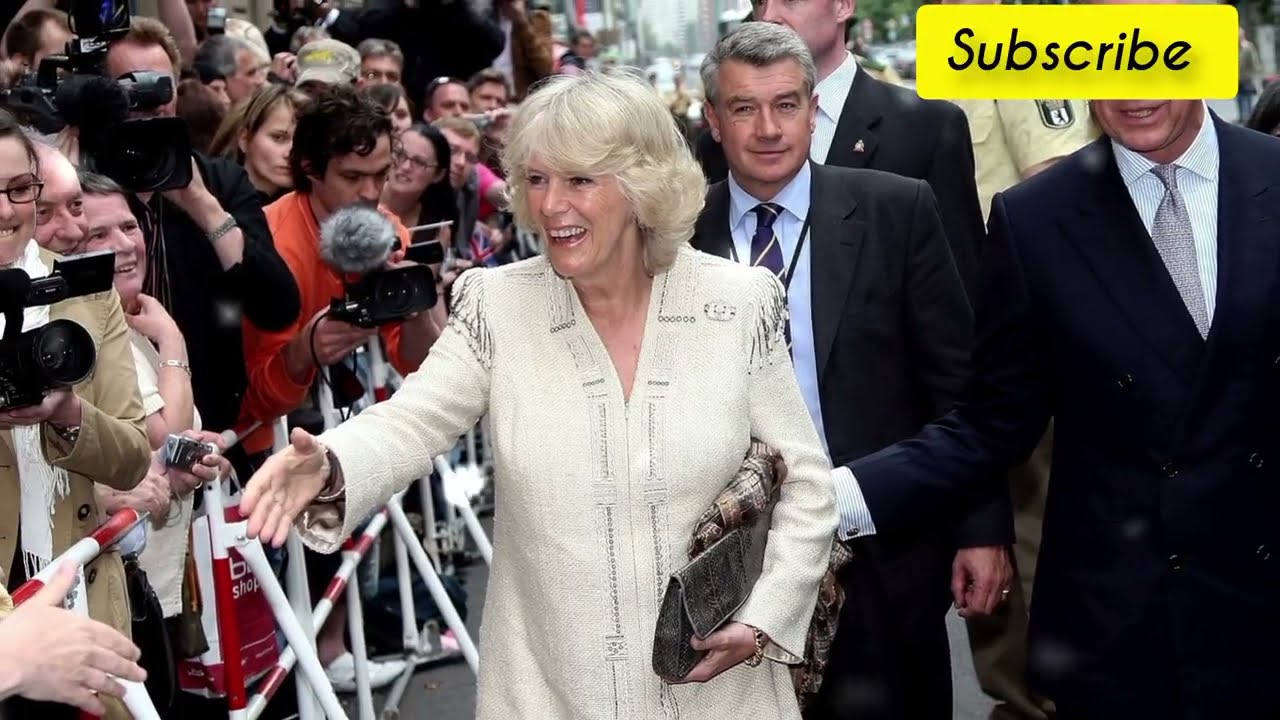
She did not disappear into misery, and she also did not get some clean, permanent victory lap out of turning down a crown. She got an ordinary life with ordinary complications, which is in some ways the least dramatic and most quietly remarkable outcome available to anyone who had been that close to the story the country would spend the next two decades treating as a fairy tale.
Every other woman in this story's orbit had her life permanently reorganized by proximity to the crown. Diana's entire adult existence, until the day she died, ran through her relationship to that institution, even years after the divorce. Camilla spent three decades under a level of prestige that reshaped how she was allowed to move through the world.
Anna Wallace, alone among them, simply exited the story completely and became, for the rest of her life, a private citizen whose most famous moment happened to involve a future king, rather than a woman whose entire identity got absorbed into being one. That is arguably the rarest outcome in this entire 50-year saga.
One more detail complicates the easy version of the story even further. Charles did not only date Anna Wallace and Camilla in this period. There was Davina Sheffield. There was Lady Jane Wellesley. There was Sabrina Guinness. A small rotating cast the press had already turned into a running joke by the late 1970s.
Multiple women, in other words, had some version of the same experience Anna Wallace had: proximity to a man whose actual emotional life was already spoken for, whether anyone said so out loud or not. Most of them did not get a ballroom moment dramatic enough to become a permanent footnote.
Anna Wallace is remembered specifically because she said the thing out loud in a sentence sharp enough that people repeated it for 40 years. The other women in that rotation had, in all likelihood, some version of the same realization. They just did not have Whiplash Wallace's specific willingness to make it everyone else's problem, too.
It is worth naming what actually happened to some of those other women, because the pattern holds up even without a dramatic exit line attached to it. Davina Sheffield's relationship with Charles reportedly ended after a former boyfriend of hers spoke to the press about their past living arrangement, the kind of disqualifying detail the unwritten checklist existed specifically to screen out.
Lady Jane Wellesley, daughter of a duke, dated him on and off for years without it ever converting into anything more permanent, by most accounts because neither side ever pushed hard enough to force the question.
None of these were failures of chemistry in any ordinary sense. They were candidates who ran into a wall built out of institutional requirements that had almost nothing to do with who Charles actually wanted to spend his evenings with. Anna Wallace ran into the exact same wall. She is just the one who named it out loud in the room instead of quietly accepting whatever explanation was offered afterward.
Go back to the sentence one more time, because this is where it changes meaning.
"I have never been so badly treated in my life. You've left me all alone all evening, and now you will have to continue without me."
Read it the first time, and it is an angry woman ending a relationship at a party. Read it again, knowing everything that came after, knowing that the man she said it to would spend the following 17 years married to someone else while never actually leaving the reason Anna Wallace walked out that night, and the sentence stops being about a single evening.
"You will have to continue without me" was not just about the rest of that ball. It turned out to be a fairly precise description of the entire rest of his adult life. He did continue without her toward a marriage that collapsed publicly, a decade and a half of scandal that played out in newspapers and television broadcasts, and eventually a funeral watched by most of the planet.
Arriving after all of it back at exactly the woman he had been dancing with the night Anna Wallace decided she had seen enough.
She was right immediately. It took the rest of the country until 1997, and in some ways until 2005, to catch all the way up to what she had understood in the space of a single evening at Windsor Castle.
That is the story almost nobody tells when they talk about Charles and Diana and Camilla, because it does not have a coronation at the end of it, and it does not have a tragedy, either. It has an ordinary woman who happened to be standing close enough to the truth to see it plainly, who said so once loudly in the one room where it would actually matter, and who then simply went and built a life that had nothing further to do with any of it.
No memoir, no tell-all interview decades later, no bitterness performed for cameras. Just a sentence repeated by other people for 40 years that turned out to be the single most accurate prediction anyone ever made about how the whole thing was going to end.