In 1981, Israel launched a daring airstrike that destroyed Iraq’s Osirak nuclear reactor near Baghdad. But the mission, codenamed Operation Opera, was not the first military attempt to halt Saddam Hussein’s nuclear ambitions. A year earlier, Iran’s air force had already bombed the same facility, with Israel’s secret backing. During the late 1970s and early 1980s, Iran and Israel were bitter enemies, yet both saw Saddam Hussein’s nuclear program as a shared existential threat.
Iraq had begun its nuclear energy efforts in the 1960s, and by the mid-1970s, France agreed to sell Baghdad an Osiris-class research reactor, 72 kilograms of highly enriched uranium, and technical training. Construction of the 40-megawatt light-water reactor, named Osirak by the French and Tammuz 1 by the Iraqis, began in 1979 at Al Tuwaitha, near Baghdad. Israel’s Mossad moved early to sabotage the project. In April 1979, agents damaged the reactor while it was still in France.
Months later, the head of Iraq’s nuclear program, Egyptian scientist Yahya El Mashad, was assassinated in his Paris hotel room. Israeli operatives also poisoned two Iraqi engineers in Europe and sent threatening letters to French personnel, frightening some from continuing their work. Despite the setbacks, Iraq received 12. 5 kilograms of highly enriched uranium in July 1980, the first of six scheduled deliveries.
France and Iraq publicly insisted the reactor was for peaceful civilian use, but Israel, Iran, and the United States all believed Saddam was on the verge of producing plutonium for a weapon. Iran needed little encouragement to act. The country was newly ruled by Ayatollah Khomeini’s hardline Islamic regime, which viewed Iraq as a greater threat than Israel. When the Iran-Iraq War broke out in September 1980, both governments agreed that denying Saddam a nuclear bomb served their interests.
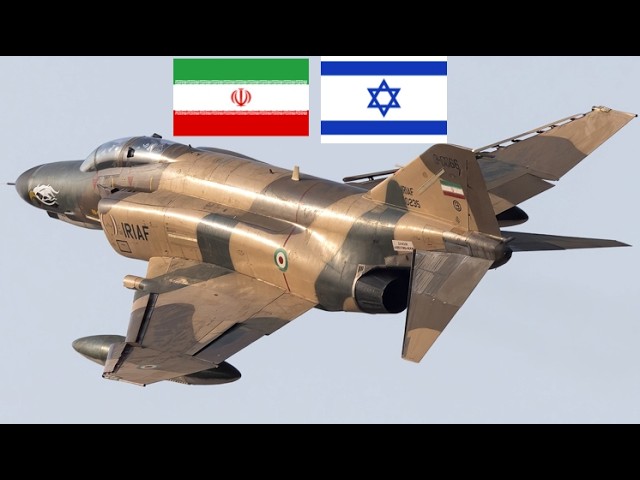
Israel went further than offering support: it secretly shipped US-made aircraft spare parts to Tehran. Iran’s air force, inherited from the Shah and mostly equipped with American planes, had been crippled by sanctions and shortages. With Israeli help, Iran assembled a viable strike force. On September 30, 1980, Iran launched Operation Scorch Sword.
Four F-4 Phantoms flew at low altitude into Iraq, refueled midair by an Iranian Boeing 707 and escorted by two F-14 Tomcats. Two Phantoms attacked the Tammuz 1 reactor, dropping twelve bombs, while the other pair struck the nearby power station, knocking out electricity to Baghdad for two days. Two bombs hit the reactor itself, and fires destroyed laboratories and support buildings. No shots were fired at the Iranian planes.
Iraqi officials listed the damage as minor, and repair work began almost immediately. Israel remained unsatisfied. Prime Minister Menachem Begin and Minister Ariel Sharon pushed for a decisive strike, while Defense Minister Moshe Dayan opposed it, fearing damage to Israel’s improving relations with Egypt and wider Arab concerns about Israeli military action. Israeli intelligence warned the reactor could become fully operational by June 1981.
The cabinet voted ten to six in favor of military action. Operation Opera was planned with great care. Israeli pilots conducted reconnaissance missions over southern and western Iraq, despite one close call when an Iraqi MiG-21 chased a Phantom until it ran out of fuel. The pilots found a blind spot in Iraq’s radar coverage near the Saudi border and planned to enter through that gap.
The strike force consisted of eight F-16As, each armed with two unguided 2,000-pound delayed-action bombs, escorted by six F-15As. Among the pilots was Ilan Ramon, who would later die aboard the Space Shuttle Columbia in 2003. On June 7, 1981, the Israeli planes took off, flying through Jordanian and Saudi airspace without permission. When challenged by Jordanian air traffic control, they claimed to be a Saudi patrol that had gone off course; over Saudi Arabia, they said they were a lost Jordanian patrol.
Over Iraq, the F-16s climbed and then dived toward the reactor, releasing bombs from about 3,600 feet. Eight of sixteen bombs struck the containment dome. Iraqi anti-aircraft fire opened up, but all Israeli planes returned home safely. The attack killed ten Iraqi soldiers and one French civilian engineer.
Israel faced widespread condemnation at the United Nations, but the destruction was permanent. Saddam vowed to rebuild the reactor with French help, but the ongoing war with Iran and financial problems ended the effort. In 1991, during the First Gulf War, US forces bombed the site out of existence entirely. The mission remains one of the most audacious military operations in modern history.
Notably, the Osirak strike capped a brief and secretive period during which Iran and Israel, despite their public enmity, cooperated directly to prevent a common adversary from acquiring nuclear weapons.