In July 1989, just months after what was then the largest divorce settlement in Texas history, a writer in a Manhattan magazine delivered a one-sentence verdict on what Anne Hendricks Bass had lost and what she had kept. The first Mrs. Bass may have lost her husband, but she still had Monets on the walls of her Fifth Avenue apartment. She remained a board member of New York City Ballet and a social force in W magazine, and she would be just fine.
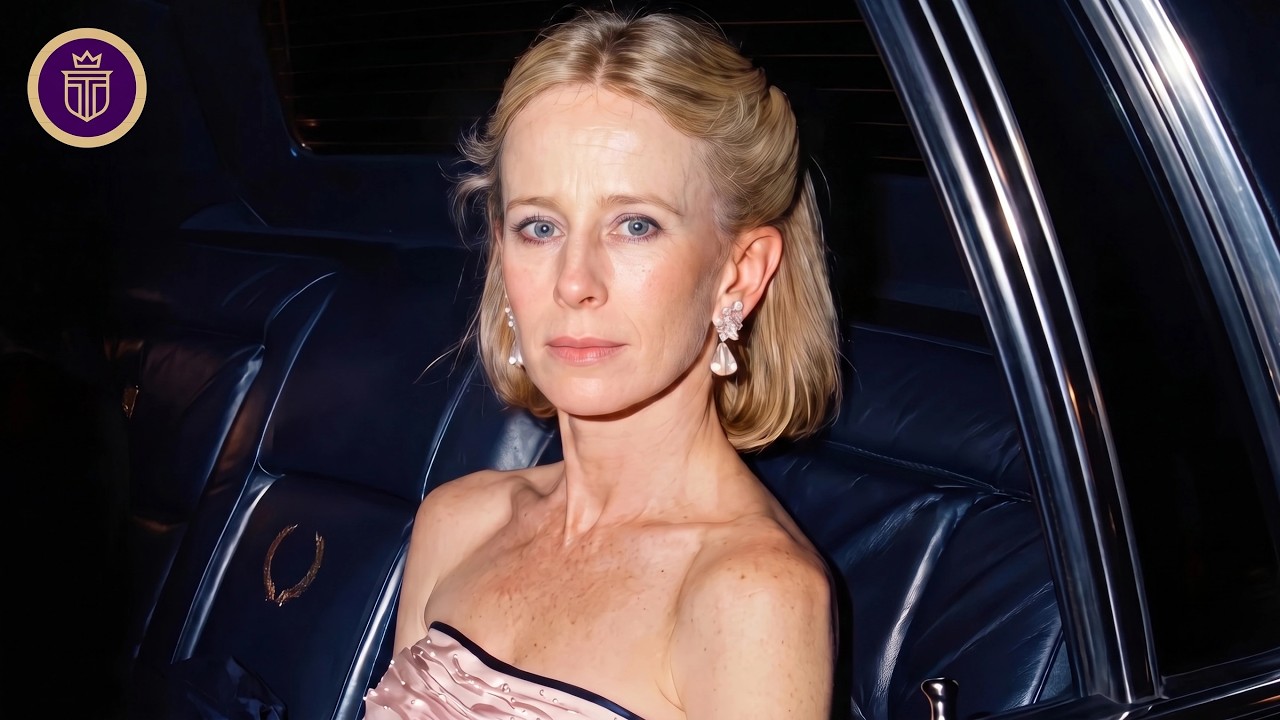
The writer was right, but the full story took 30 more years to prove it. The husband she lost was Sid Richardson Bass, the Texas oil and investment billionaire whose family had turned a $2. 8 million inheritance from a bachelor oilman uncle into a $14 billion investment group. His decision to leave Anne for a society woman named Mercedes Kellogg at a Bastille Day party in the Hamptons became one of the most talked-about scandals in 1980s New York society.
The settlement was estimated at around $200 million. It left her the modernist Fort Worth home that architect Paul Rudolph called the best house he ever designed, the Fifth Avenue apartment with 15-foot ceilings and Rothkos that rivaled the Central Park view, and more than a million shares of Walt Disney stock. The life she then built, without the support of the Bass family name, included 25 years on the board of New York City Ballet, a documentary about a Cambodian dancer she discovered at Angkor Wat, a thousand-acre Connecticut estate placed under conservation protection, and an art collection sold at Christie’s two years after her death for a total that surpassed all pre-sale estimates. Anne Hendricks Bass died on April 1, 2020, in her Manhattan home at age 78, of ovarian cancer, according to Julian Lethbridge, her longtime partner.
Born Anne Hyatt Hendricks on October 19, 1941, in Indianapolis, she was the eldest of four children of a champion golfer mother and a successful urological surgeon father. Her mother was a Vassar graduate, and the family had financial connections to the Bass Richardson oil dynasty in Fort Worth a full generation before Anne and Sid ever met, making the marriage seem less a collision of two worlds and more a slow convergence of overlapping social orbits. She attended Indianapolis public schools until 1957, then transferred to the private girls’ school Tudor Hall, graduating in 1959. As a child, she took ballet lessons, an early seed of a passion that would define her adult life.
Like her mother, she attended Vassar, graduating in 1963 with a degree in Italian literature. During her senior year at Vassar, she began dating a Yale sophomore named Sid Richardson Bass. The courtship moved at a pace both families expected. A Vassar girl and a Yale man connected by Fort Worth oil money going back a generation.
According to her family’s account, Anne first met Sid Bass at age nine at a birthday party in Fort Worth while visiting relatives there, a detail that shows the relationship grew within the same Fort Worth social network that had linked the Hendricks and Bass families through oil money a generation earlier. After Vassar, she moved to New York and worked as an executive trainee and then assistant buyer at Bonwit Teller. She later became a contributing editor at Vogue, credentials in the fashion world that proved foundational to her precise personal style, later associated with Yves Saint Laurent, Christian Dior, and Karl Lagerfeld. Fashion journalist John Fairchild would later call the social world she was entering the “New Society,” a phrase that captured the arrival of a new generation of the wealthy, mostly from Texas and the Sun Belt, into circles previously dominated by old New York money.
Anne Hendricks was exactly the type the New Society was designed to produce: well educated, aesthetically sophisticated, fluent in Italian literature and high fashion. To understand the family Anne married into in 1965, one must return to Sid Williams Richardson, born April 25, 1891, in Athens, Texas. He entered the oil business around 1919 with partner Clint Murchison Sr. Richardson’s fortune fluctuated wildly through the booms and busts of the 1920s, then rebounded in 1933, making him one of the richest men in America and a true kingmaker, drawing figures like Dwight Eisenhower and Lyndon Johnson to his retreat on San José Island off the Texas coast.
Richardson never married, and when he died in 1959, his closest heirs were his nephew Perry Richardson Bass and Perry’s family. Perry Bass married Nancy Lee Meuse of Fort Worth in 1941, and they had four sons who became known collectively as the “Bass brothers”: Sid Richardson Bass, born 1942; Edward Perry Bass, born 1945; Robert Muse Bass, born 1948; and Lee Marshall Bass, born 1956. At Richardson’s death, each brother inherited a share worth approximately $2. 8 million, a modest sum by today’s billionaire standards.
All four brothers attended Yale, and each multiplied his inheritance enormously, making the Bass family one of the great American wealth-growth stories of the late 20th century. The instrument of that multiplication was a Fort Worth investment adviser named Richard Rainwater, hired by the Bass brothers around 1970 to manage the family’s growing capital. Rainwater and Sid Bass founded Bass Brothers Enterprises. Over roughly 16 years, they coordinated a series of notable deals, including a profitable 1981 stake in Marathon Oil, a nearly billion-dollar stock deal in Texaco, and most famously, a bold 1984 investment in Walt Disney.
Rainwater invested about $478 million of Bass family money to help fend off corporate raiders, and the family emerged as Disney’s largest shareholder with a stake reaching about 24 percent. They were instrumental in installing Michael Eisner and Frank Wells to run the studio, a decision that transformed a company then valued at about $2 billion into an entertainment giant. In 2017, the family sold nearly 275,000 acres of oil and gas properties in the Permian Basin to Exxon Mobil for about $6. 6 billion in stock and contingent payments.
Ed Bass, often called the eccentric brother, funded the bold closed-ecosystem experiment Biosphere 2 in Arizona and led the decades-long Sundance Square redevelopment project in downtown Fort Worth. Robert became a prominent leveraged buyout financier through his Keystone Group and by 2024 was the wealthiest of the four brothers with an estimated net worth of $5 to $6 billion. Lee gained national attention for a controversial $20 million grant to Yale University for the study of Western civilization, a grant the university ultimately returned in 1995 amid an academic dispute over curriculum control. By 2024, Forbes estimated the combined Bass family fortune at about $13.
3 billion, ranking the family 36th among America’s richest families. Anne Hendricks married Sid Richardson Bass on June 26, 1965, in a Presbyterian ceremony in Indianapolis, followed by a reception at the Woodstock Country Club, a week after Sid’s Yale graduation. They honeymooned in Europe and lived for a year in Dallas while Sid gained business experience before attending Stanford’s Graduate School of Business. The marriage produced two daughters, Hyatt Bass, born 1969, and Samantha Sims Bass.
In 1970, the young couple commissioned architect Paul Rudolph, former dean of Yale’s architecture school and a founder of the Sarasota School, to design a highly contemporary residence on a wooded 8-acre lot in Fort Worth’s Westover Hills neighborhood. The resulting 18,000-square-foot house, framed in white enameled structural steel and ceramic-enameled aluminum, consisted of interlocking horizontal levels that seemed to float around a central courtyard, anchored by a dramatic 40-foot cantilever at the entrance. Architecture critic Paul Goldberger noted the house was unique in Rudolph’s work as the only design where he expressed monumentality through a sense of lightness and elegance. Critics compared the drama of its cantilever to Frank Lloyd Wright’s Fallingwater.
Rudolph himself later described it as the best house he ever designed, a judgment largely endorsed by the architectural world. The four main floors were divided into 12 distinct levels with ceiling heights varying up to 14 feet, and Rudolph designed custom furniture including a floating platform bed and sunken living room sofas mixed with Mies van der Rohe Barcelona chairs. The gardens were initially designed by landscape designer Robert Zion, then substantially redesigned in 1981 and 1982 by renowned English designer Russell Page, one of his last projects before his death. His advice that the structure needed the calm of an all-green base became the guiding principle for the surrounding spaces.
Anne was deeply involved in this process, and the gardens became a lifelong personal project that observers would later consider one of the truest expressions of her aesthetic taste. Beyond the house, Anne became deeply involved in Fort Worth’s cultural institutions: the Junior League, the Modern Art Museum, the Van Cliburn Foundation, and the Fort Worth Symphony Orchestra. She was credited with saving the forerunner of the Texas Ballet Theater from bankruptcy through a personal donation of $300,000, supplemented by $250,000 from the Sid Richardson Foundation. The executive director of the Fort Worth Symphony, Anne Consman, later described Bass as a patron who had good ideas for fundraising and board building but did not interfere with the work of the professionals running the institutions she supported.
That distinction matters because it summarizes what made Anne Bass different from many benefactors of her era. She understood institutions from the inside, served on their boards as a working member rather than a figurehead, and directed money where professionals said it was needed rather than where it could generate the most personal visibility. The house filled with an exceptional collection of post-war American art: Mark Rothko, Alexander Calder, Ellsworth Kelly, Frank Stella, Morris Louis, Henri Matisse, and Andy Warhol. In 1978, Anne was invited to join the national advisory council of the School of American Ballet, the training academy founded by George Balanchine and Lincoln Kirstein that feeds New York City Ballet.
A 1984 New York Times article wryly noted that the presence of Texans at School of American Ballet events did not necessarily reflect deep enthusiasm for dance, but was a tribute to Anne Bass, by then a prominent supporter of the school and its affiliated institutions. From 1980 to 2005, she served on the board of trustees of New York City Ballet. By the time of her death, she had contributed at least $5 million to the School of American Ballet over her decades of involvement. Her devotion to George Balanchine’s legacy was deep and unsentimental.
She believed the company, and perhaps life itself, had suffered a decline in quality after Balanchine’s death in 1983. She studied ballet herself from childhood into old age, and even into her seventies, she attended a 90-minute advanced ballet class three times a week in black dancewear under the instruction of the esteemed teacher Wilhelm Burmann at Steps on Broadway. In a small, poignant coincidence, Burmann died just two days before Anne Bass herself, both in the same city and the same week in April 2020. In June 1983, the Basses purchased an apartment at 960 Fifth Avenue, a historic pre-war building designed by Rosario Candela, for a then-record price of $5.
25 million. The apartment overlooked Central Park, featured 15-foot ceilings, and was said to contain the largest living room in Manhattan. To decorate it, the couple hired Mark Hampton, whom Anne had known slightly while growing up in Indianapolis, and she spent four years collaborating with him on the interiors. A Balthus painting hung in the foyer, Monets in the dining room, and two monumental Rothkos dominated the living room, rivaling the Central Park view itself.
By the mid-1980s, W magazine described Anne Bass as one of New York’s social hurricanes and a prominent arbiter of taste, moving in an elite circle alongside other Texas newcomers and old New York society women. The Basses’ arrival on the New York scene, with Sid dividing his time between Fort Worth and Manhattan for business and social reasons, was a defining cultural moment. Wealthy Texans, media-shy, were buying luxury apartments, funding cultural institutions, and unsettling assumptions about where the center of American high society lay. Sid held board memberships at the Museum of Modern Art and Yale University, and the couple’s two-city life, Fort Worth during the week and New York on weekends and for cultural events, became a model for a generation of Sun Belt billionaires who wanted institutional access without giving up their home-state roots.
The story of the relationship that ended the Bass marriage has been told and retold with minor variations in nearly every major account. Mercedes Tuculey Deba Kellogg, born in 1944 in Tehran to an upper-class Iranian family and educated in England and Switzerland, met Sid Bass in June 1986 at the “Black and White” party hosted by the Duke of Marlborough at Blenheim Palace. At the time, Mercedes was married to Ambassador Francis L. Kellogg, a former special assistant to Secretaries of State William Rogers and Henry Kissinger.
Several weeks after the Blenheim party, at a Bastille Day party in the Hamptons, Mercedes caught Sid Bass’s attention, according to widely circulated society accounts, by throwing a piece of bread across the room at him. By September 1986, the relationship became public when reports said society figure Sao Schlumberger saw the two walking hand in hand at the Plaza Athénée hotel in Paris. Sid Bass filed for divorce from Anne in 1986 after a marriage of 21 or 22 years, in what UPI at the time described as a Texas-style divorce. The dispute was complicated by Texas community property law, which generally requires the division of marital assets accumulated during the marriage.
Anne reached a settlement estimated at about $200 million, repeatedly described as the largest divorce settlement in Texas history at the time. Some secondary sources cited figures as high as $500 million, though $200 million is the figure most consistently repeated across independent media. The settlement left Anne the Paul Rudolph house in Fort Worth, the Fifth Avenue apartment, and their art collection, including works by Monet and Rothko and an original bronze cast of Degas’s “Little Dancer of Fourteen Years. ” Through the settlement, she also became the owner of more than a million shares of Walt Disney stock, and by 2000 her net worth was estimated at around $690 million.
She appeared on the Forbes 400 list of wealthiest Americans starting in 1989. She chose to keep the Bass surname, a decision that was itself a statement about who had built what. Fortune magazine, in its October 1988 issue about the broader unraveling of the Bass family unit, noted that Sid had virtually disappeared from view, mired in a messy divorce from Anne, his wife of 23 years, after running off with a married society woman named Mercedes Kellogg two years earlier. Town & Country magazine later ranked the Bass divorce among the most vicious and expensive divorces in modern high society.
The settlement gave Anne the financial independence to rebuild on her own terms, and she began that rebuilding immediately. She kept the Fifth Avenue apartment at 960 Fifth Avenue, the Paul Rudolph house in Fort Worth, the art collection she had spent 20 years assembling, and a substantial block of Disney stock inherited directly from the family’s Disney stake coordinated by Rainwater. Sid Bass married Mercedes Kellogg on December 10, 1988, at the Plaza Hotel in New York, in a ceremony reportedly costing around $500,000 and partially designed by Oscar de la Renta. An article published in July 1989 in Manhattan, Inc.
magazine, titled “The Two Mrs. Basses,” depicted both sides of the repositioning in New York and Fort Worth with unusual candor. In New York, the article described how high society was captivated by the love story of Sid Bass, possibly the gentlest billionaire in the world, and Mercedes Kellogg, possibly the most cunning bride in their second marriages. In Fort Worth, where Anne was still considered by some an outsider from Indiana rather than a Texan despite two decades of marriage to the family, the article was harsher.
Mercedes showed a playful spirit. She was fun. While Anne was haughty, with her boarding-school hairpins and cold Eastern airs. Most importantly, one heard the same grumbling from every socially ambitious woman in Texas: if only I had known Sid was looking for a partner.
The article made clear that when Perry and Nancy Lee Bass, Sid’s parents, allowed Mercedes to appear on Sid’s arm at a family event before the divorce was final, they had issued a statement without saying a word, giving an actual signal of the family’s acceptance of the new marriage long before any formal social ratification. Texas society women who had long viewed Anne as an outsider now had permission to choose sides, and most chose the side still connected to a billionaire. Most importantly, the article itself showed how Anne’s status, though damaged, was not destroyed at all. The one-sentence opening about the Monets, the ballet board, and the social hurricanes was the article’s actual verdict, written months after the settlement.
Financial and institutional capital, unlike a husband, could never be reassigned to a second wife. The irony deepened over the next two decades. Sid and Mercedes Bass divorced in 2011, with Page Six quoting a source describing it as the biggest society divorce since their previous one, a reference no one could miss to 1988. The woman replaced by a piece of bread outlived the marriage that replaced her own.
Mercedes built her own cultural career after marrying Sid, becoming vice president of the Metropolitan Opera and a prominent figure in New York philanthropy in her own right. Her post-divorce life was marked by the same institutional seriousness that characterized Anne’s. But the temporal fact stands: the marriage meant to replace Anne’s lasted 23 years, exactly the same length as the marriage it replaced, and ended the same way. The similarity was too precise for society columnists to resist, and Page Six’s reference to it being the biggest society divorce since their previous one captured what everyone was thinking.
The decades following the divorce were marked by a near-deliberate retreat into privacy. Anne agreed to a rare interview with Mimi Swartz of Texas Monthly on the condition that the journalist ask no personal questions, a condition explicitly intended to avoid discussion of her husband’s noisy departure with Mercedes Kellogg. Her New York Times obituary later described how, with her slender figure and striking blue eyes, she protected herself with a facade of indifference to life’s less pleasant realities, including her widely covered divorce, and instead devoted her energy to her passions, especially gardening and architecture, an intensity that often surprised her acquaintances. She never remarried.
After a period following the divorce, she began a long-term relationship with Julian Lethbridge, a British painter about six years her junior, whose large-scale abstract works drew on images of nature: winter branches, ocean waves, dawn light. Lethbridge became her partner until the end. Her involvement in the ballet world continued at the highest levels but eventually led to a break of her own. In January 2005, she withdrew a $1 million pledge for a new studio after a dispute with Peter Martins, the director of New York City Ballet.
On September 30, 2005, after 25 years on the board, she resigned from the School of American Ballet, citing in her resignation letter what she considered Martins’s unfair treatment of the school’s dismissed head. Her philanthropy in this period extended to the Metropolitan Museum of Art, where her name appeared among donors providing funds for art acquisitions, and she had her own record within the museum’s institutions and funds. She also supported the International Council of the Museum of Modern Art, the New York Botanical Garden, and Vassar College, where an endowed position there, the director of the Frances Lehman Loeb Art Center, bears the name “Anne Hendricks Bass” to this day. She donated pieces from her haute couture wardrobe by Yves Saint Laurent, Christian Dior, and Karl Lagerfeld to the Costume Institute at the Metropolitan Museum, considering her clothing cultural artifacts worth preserving.
In January 2000, during a trip to Angkor Wat sponsored by the World Monuments Fund, Anne watched a 16-year-old boy named Sokvannara Sar perform a traditional Cambodian folk dance and was, in her words, immensely moved. She did not meet Sar on that trip but kept thinking about his talent and potentially bleak future after returning home. She eventually asked the World Monuments Fund to find him and deliver her offer: she would sponsor his classical ballet training in New York. Sar arrived in New York in April 2000, speaking no English.
The School of American Ballet initially refused to accept him due to his lack of the formal training usually required of a dancer his age. Bass arranged intensive private lessons with School of American Ballet teacher Olga Kostritzky and hired Khmer-speaking translators, including a New York City police officer. The school accepted him that August. He graduated in 2005 and apprenticed the following year with Pacific Northwest Ballet in Seattle, then joined the main company.
Bass had been videotaping Sar in rehearsals for years, initially only to share his progress with his family in Cambodia. The footage she shot at a prestigious ballet competition in Varna, Bulgaria, impressed her friends so much that Lethbridge suggested she hire a film student to assemble it into something more professional. After a brief and unsuccessful attempt to hand the project to a professional director, which lasted about a week, Bass decided, in her words: “I finally thought, I’ll just do this myself, and I’ll learn on the job. ” Over about two years, she took film crews to Cambodia, Seattle, and her 1,000-acre estate in Connecticut.
The result was “Dancing Across Borders,” an 88-minute documentary that premiered in 2010 to positive reviews. The Los Angeles Times described it as a film that tells several interlocking stories with charm, and it received a modest theatrical release through First Run Features. Sar, reached by phone for a magazine profile, described Bass as like a mother to him. “She really tried to understand my background and make me feel comfortable, even though I was a difficult kid.
” Bass told W magazine that the film was one of many unexpectedly good turns in her life since the divorce: “I think there should be a positive side when a change happens in your life, and I’ve done many things I never would have done if I’d been with the same person. ” That sentence stands as the closest Anne Bass ever came to issuing a public verdict on her marriage. She also funded the oral history project “Speaking of Dance” in the dance division of the New York Public Library, recording interviews with figures like Carolyn Brown, Wendy Whelan, Julie Kent, and Ethan Stiefel. And the Khmer Dance Project, which documented three generations of Cambodian artists who preserved their traditions during and after the Khmer Rouge.
On the night of April 15, 2007, three masked men broke into Anne Bass’s roughly 1,000-acre estate in South Kent, Connecticut. The men were later identified as Emanuel Niculescu, a Romanian national who had previously worked as the property’s caretaker, along with his associates Alexandru Lucian Nicolaescu and driver Michael Kennedy, with a fourth conspirator, Stefan Alexandru Barabas, who was later found to have helped plan the crime. Anne testified at trial that she heard war cries before seeing three men wearing black masks and carrying guns and knives, moving, she recalled, as if in military formation. She was pushed to the floor of her living room and demanded to know what the intruders wanted, but they simply ordered her to be quiet.
Both Bass and her partner, Julian Lethbridge, were taken to an upstairs bedroom, where they were tied up and blindfolded throughout an ordeal lasting about six hours. At one point, hearing cracking and clicking sounds, Bass thought the intruders were preparing to blow up the house. “I thought they were going to blow up the house and I was sure we were going to die. ”
The intruders then injected both victims with a substance they falsely claimed was a deadly virus, demanding $8.
5 million for a fake antidote. Bass’s young grandson was asleep in the house throughout the ordeal. When the intruders realized their victims could not produce the ransom immediately, they drugged Bass and Lethbridge with a sedative and fled in the owner’s Jeep Cherokee, taking only the contents of a safe. Niculescu was convicted in 2012 and sentenced to 20 years in federal prison.
The last conspirator, Barabas, remained a fugitive until his arrest in Hungary in 2022. He pleaded guilty in June 2024 and was sentenced in December 2024 to seven years in prison, finally closing, more than 17 years after the crime, a case one reporter described as bizarre and reminiscent of an Agatha Christie story. A concertina bag washed ashore in Jamaica Bay, New York, six days after the crime, containing a stun gun, a 12-inch knife, an air pistol, a crowbar, syringes, sleeping pills, latex gloves, and a laminated card bearing the South Kent address. The knife was eventually traced as a gift given to Niculescu by his father-in-law.
The concertina bag was linked to Kennedy, whose father was a professional accordion player, a detail so novelistic it seems like fiction. Anne Bass did not live to see this final chapter close. The crime, especially the injections the intruders falsely claimed contained a deadly virus, left an indelible mark. Bass described one of the assailants cutting the sleeve of her bathrobe, cleaning her shoulder with an alcohol swab, and injecting her with the needle, describing the pain as unbearable.
The ordeal lasted about six hours, and according to her testimony, knowing her young grandson was sleeping upstairs throughout made the experience more terrifying than it otherwise would have been. Bass had been caring for the child because his mother Hyatt was about to give birth to her second child, meaning the grandmother’s devotion to her family put her directly in the path of a crime planned by a former employee who knew the property’s layout and routine from the inside. Bass’s estate in South Kent combined green pastures, winding stone walls, working farmland, and a herd of 97 rare Randall Lineback cattle, a heritage breed reminiscent of Colonial-era livestock, along with gardens her family described as stunning. After her death, Lethbridge confirmed that her properties in Connecticut, the Caribbean island of Nevis, and Texas would be preserved as they were.
He said: “Nothing will be sold, not in Connecticut, not in Nevis, not in Texas. ” The Kent Dispatch later confirmed that the hilltop 1,000-acre property had since been placed under conservation protection, meaning the land that Anne Bass shaped for 30 years would remain as she left it. The preservation decision stands as the clearest expression of Bass’s deepest instincts: she built things slowly, preserved them obsessively, and ensured that the things she cared about most would outlive her. The Fort Worth house gardens, designed by Russell Page and cared for by Anne for four decades, the Fifth Avenue interiors decorated by Mark Hampton and refined over 37 years, and the Connecticut pastures with their heritage cattle and stone walls, were all versions of the same project: creating beautiful, ordered environments that reflected one precise sensibility.
Anne Hendricks Bass died on April 1, 2020, in her Manhattan home at age 78, of ovarian cancer, according to Julian Lethbridge. Her New York Times obituary, “Anne Bass, 78, Patron of the Arts and Unlikely Gardener,” framed her legacy primarily around her role in significantly elevating the status of ballet in the United States. Two years after her death, Christie’s announced what would become one of the most important single-owner art sales of that decade. On May 12, 2022, the auction house offered 12 works of art from Bass’s Fifth Avenue apartment, presented by her daughters Hyatt and Samantha, and all 12 pieces sold in a successful auction totaling $363 million, exceeding initial estimates.
The collection’s masterpieces included Monet’s “Parliament, Sunset” from his famous “Views of London” series, two additional Monets from his popular “Water Lilies” series, Rothko’s “Untitled (Shades of Red)” and his “No. 1” from 1962, and Degas’s “Little Dancer of Fourteen Years,” the bronze version of the only sculpture the artist exhibited during his lifetime. Max Carter, head of Christie’s Impressionist and Modern Art department, described the collection: “There were masterpieces in every room. And between every masterpiece, there was a dialogue.
There was nothing like it, and there probably won’t be anything like it again. ” Describing it as a complete work of art, he added of Bass’s taste: “There were no mistakes, they were all exceptional masterpieces. ” A seven-word summary of a collecting career that spanned four decades and two homes, ending in an auction that confirmed every decision she made along the way. In April 2025, Christie’s held a second auction titled “Art from the Bass Residence,” offering works directly from her Paul Rudolph-designed Fort Worth home, topped by a Rothko from 1950 to 1951 that sold for $37.
785 million. In June 2025, Christie’s held an online auction titled “Anne H. Bass: New York Interiors” featuring handbags, jewelry, silver, furniture, and decorative arts from the Fifth Avenue apartment. A pastel by Degas titled “Dancer Tying Her Shoe” was formerly in the collection of Louisine and Henry Havemeyer, Degas’s legendary patrons whose bequest helped shape the core of the Metropolitan Museum’s Impressionist holdings.
This work sold alongside pieces by artists such as Balthus, Vilhelm Hammershøi, and Morris Louis. The Bass auction came in the same week that Andy Warhol’s “Shot Sage Blue Marilyn” set a record, selling for $195 million, helping push the week’s combined sales for both evenings to about $831 million. The Anne Hendricks Bass Foundation, based in Fort Worth, continues an ongoing grant program, holding assets between $8 and $9 million and distributing about $900,000 to $1 million annually through roughly 45 grants, with beneficiaries including the New York Botanical Garden and New York University. The sale of the Bass collection was one of the largest single-owner art auctions in market history, and the fact that every piece sold, achieving a “white glove” state, confirmed what Carter said about the quality of the collection: “There were no mistakes, they were all exceptional masterpieces.
” The woman who was told she would be just fine did far better than that, and the auction total was the ultimate, indisputable proof. Stripping away the social framework, what remains is a specific and instructive story about what a woman could keep when her marriage to a billionaire ended. Anne Hendricks Bass kept the Paul Rudolph-designed Fort Worth house because the settlement gave it to her. She kept the Fifth Avenue apartment because the settlement gave her that too.
She kept the Monets, Rothkos, and Degas because the art collection assembled during the marriage was community property under Texas law, and she fought for her share. She kept her seat on the New York City Ballet board because institutional capital built through years of personal relationships could not be transferred to a second wife by court order. She kept the gardens because they were her own creation, designed and tended by a woman whose meticulous precision extended to every blade of grass on a thousand-acre estate. And she kept the Bass name because she said she had earned it.
What she lost was the marriage. What the end of the marriage revealed was that the cultural empire she had built during 21 years as Mrs. Sid Richardson Bass, the ballet boards, museum committees, Fifth Avenue apartment, Paul Rudolph house, Mark Hampton interiors, and Russell Page gardens, was hers in every sense of the word, because she was the one who built it, and the man who provided the money was, institutionally and aesthetically, just a passenger. A 2007 Vanity Fair article reported that her two daughters, Hyatt and Samantha, each held trusts estimated at around $280 million, a figure which, if accurate, meant the next generation’s wealth exceeded even the divorce settlement that funded their mother’s independence.
Hyatt became a novelist, publishing “The Embers” in 2009, a book about a Manhattan couple whose marriage collapses after the death of their son, a plot many media outlets noted seemed to reflect aspects of the fractured Bass family narrative itself. Samantha became a photographer and maintained a much lower public profile. Neither daughter appeared under media lights during the Christie’s auctions, preferring to let the art speak for the woman who assembled it. The privacy they maintained was itself a tribute to their mother’s enduring preference for letting the work and the vision speak louder than any press release.
Anne Bass kept the Bass name after the divorce because she said she earned it. That earning consisted of 21 years of board work, institutional philanthropy, architectural patronage, and garden design funded by her ex-husband’s money and directed by her own taste. When the marriage ended, the money remained, and the taste remained. So did the institutions she built.
And the man who supplied the initial capital discovered that the cultural empire bearing his family name belonged to the woman he had abandoned. The Warhol Foundation later donated Andy Warhol’s Polaroid portraits of a young Hyatt from 1980 to the Princeton University Art Museum and the Pennsylvania Academy of the Fine Arts, a small artifact reflecting the family’s closeness to the art world of that era. The $200 million settlement was the price of the marriage. The $363 million auction was the measure of the vision.
What Anne Bass built was meant to last long after her marriage ended.