It is hard to believe it today, but there was a time when Iran and Israel were close friends and secretly worked together to stop another regional power from building a nuclear weapon. That power was Saddam Hussein’s Iraq. In the late 1970s and early 1980s, Israel actively cooperated with the Islamic Republic of Iran and even described it as its most valuable ally, rating it above the United States, which shocks most people who hear about it today. The two enemies of each other had a common enemy in Iraq, and they both feared that Saddam was on the path to acquiring atomic bombs.
The origins of this fear went back to the 1960s, when Iraq started a civilian nuclear energy program. By the mid-1970s, Baghdad wanted to buy a reactor. Few countries were willing to touch such a deal, but the French were. In 1974 and 1975, France agreed to sell Iraq an Osiris-class research reactor, along with 72 kilograms of 93 percent enriched uranium and training for Iraqi personnel.
The deal was worth around 300 million dollars at the time, which would be about 1. 7 billion today. Construction of the 40-megawatt light water reactor began in 1979 at the Al Tuwaitha nuclear center near Baghdad. The French called the main reactor Osirak, while the Iraqis called it Tammuz 1.
A smaller French-built reactor was called ISIS by the French and Tammuz 2 by the Iraqis. Israel’s intelligence agency, the Mossad, immediately began trying to sabotage the program before all the equipment and scientists were in place. On the 6th of April 1979, Mossad agents damaged the Osirak reactor while it was still in France awaiting shipment. Then they assassinated an Egyptian nuclear scientist, Professor Yaya El Mashad, who was supposed to head the Iraqi nuclear program.
He was killed in his room at the Meridian Hotel in Paris. Despite these efforts, Iraq received 12 and a half kilograms of highly enriched uranium fuel in July 1980, the first of six planned deliveries from France. Both France and Iraq insisted the reactor was for peaceful civilian purposes, but Israel, Iran, and the United States all believed Iraq was about to produce plutonium for a nuclear weapon. The Israelis tried diplomacy first, putting pressure on the French, but the French government refused to back down.
The longer Israel waited, the greater the chance that Saddam would get his bomb. So the Mossad poisoned two Iraqi engineers involved in the project, one in Switzerland and one in France, and sent threatening letters to French personnel working on the deal, which scared some of them off. Still, work on the reactor outside Baghdad continued. In 1979, the US-allied Shah of Iran was overthrown in the Islamic Revolution, and a new government came to power under Ayatollah Khomeini.
He was no friend of Israel or the Jews, but Israel still urged Iran to bomb the Iraqi reactor. Iran did not need much convincing. The new hardline Islamic regime in Tehran hated Iraq and saw it as a bigger threat than Israel. Shortly afterwards, the Iran-Iraq War broke out when Saddam’s army invaded Iran.
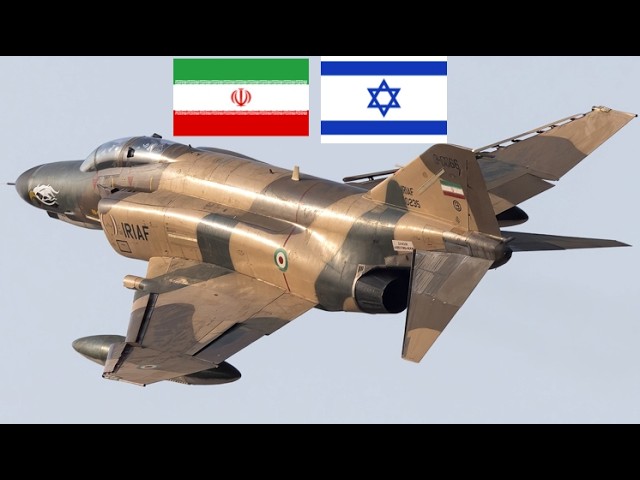
For both Iran and Israel, getting rid of any nuclear weapons Saddam might develop was a shared goal. The Islamic Republic had inherited from the Shah what had been the world’s fifth largest air force. But most of its planes were American-made, and since the United States was now its enemy, the Iranian air force was suffering from a severe lack of spare parts. Incredibly, the Israelis secretly shipped American-made aircraft spares to Tehran so that the Iranian pilots could put together a viable strike force.
The Iranians had the planes and the pilots, but they needed parts to keep them flying, and Israel provided them. The Osirak reactor site was defended by a single battery of Soviet SA-6 missiles, three batteries of French Roland 2 missiles, and some Soviet 23 and 57 millimeter radar-guided anti-aircraft guns. Because of the poor state of the Iranian air force, its F-4 Phantom fighter-bombers could only jam the SA-6s and not the Rolands. This meant the pilots would have to fly very low and very fast, and then leave just as quickly.
It would take great skill to get in and out alive. Israel and Syria also provided the Iranians with up-to-date intelligence on the reactor site. There was also a serious fear that if the main reactor was fully fueled, bombing it might release nuclear fallout all over Baghdad. The Iranian attack was called Operation Scorch Sword.
On the 30th of September 1980, four F-4 Phantoms took off. They flew to the Iraqi border and were refueled by an Iranian Boeing 707 tanker, escorted by two F-14 Tomcats. Each Phantom carried six Mark 82 general purpose bombs, two AIM-7 Sparrow air-to-air missiles, and an M61A1 Vulcan 20 millimeter cannon. The four Phantoms raced into Iraq at very low level.
Then they climbed just enough to let the Iraqi radars briefly paint them, hoping to confuse the Iraqis about the direction the Iranian aircraft were traveling. Then they dropped low again and turned toward the reactor site. One pair of Phantoms attacked the reactor itself, while the other pair attacked the associated power station. The first pair approached the Tammuz reactor at low level, pulled up about two and a half kilometers from the target, and released twelve bombs.
At the same time, the other two Phantoms bombed the power station at Tuwaitha, knocking out electricity to Baghdad for two days. Two bombs hit the Tammuz 1 reactor, while others started a huge fire that destroyed equipment, laboratories, and support buildings. Not a single shot was fired at the Iranian planes. The Iraqi nuclear program had been disrupted, though the Iraqis listed the damage to the reactor as minor.
A second Iranian mission followed on the 30th of November 1980, when a single Phantom overflew the damaged reactor and took photographs. But Israel was not satisfied. The reactor complex was damaged but far from destroyed, and the Iraqis were already working to repair it and continue the nuclear program. The Israelis decided they had to bomb it themselves.
In a secret meeting held in France, Israeli and Iranian officials came to an agreement. One of the key points was that in the event of a future Israeli attack, any Israeli planes that got into difficulty could land safely in Iran. The Israeli attack would be a much longer mission than the Iranian one. The Iraqi reactor was 990 miles from the nearest Israeli bases.
The Israeli planes would also have to overfly Jordan and Saudi Arabia without permission, which made air-to-air refueling impossible. They would have to carry all their fuel with them and still have enough to get home. The main supporter of the attack was Ariel Sharon, an Israeli cabinet minister. But the one-eyed Moshe Dayan, Israel’s defense minister until 1980, was opposed.
Dayan’s main concern was Egypt. Egypt had tried to invade Israel several times since 1948, but relations were improving. An attack on Iraq might upset the Egyptians and fuel general Arab concerns about Israel and its military. The attack might also damage Israeli-French relations.
But Prime Minister Menachem Begin believed the operation had to happen before Iraq gained a viable nuclear weapon. Israeli intelligence estimated that Iraq would have a bomb within two years. The United States provided Israel with satellite imagery of the reactor site, which suggested the facility would be fully operational by June 1981. The Israeli cabinet voted 10 to 6 in favor of military action.
The operation was code-named Opera. While waiting for the delivery of brand new American F-16 Fighting Falcons, the Israelis practiced the mission with A-4 Skyhawks. Israeli F-4 Phantoms also flew reconnaissance missions over southern and western Iraq. On one occasion, an Israeli Phantom was intercepted and chased by an Iraqi MiG-21, but the Iraqi plane eventually ran out of fuel and the pilot had to eject.
The reconnaissance missions found a blind spot in Iraq’s radar coverage along the border with Saudi Arabia. The Israelis decided to enter through this gap. This was also a time when the Iraqi Air Force was fully committed to the war with Iran and was losing many aircraft to Iranian bombing raids, especially on its airfields. The Iraqis had lost two Tupolev 22 Blinders and three Tupolev 16 Badger strategic bombers, the very planes they would most likely have used to bomb Israel in retaliation for any attack on the reactor.
The Israeli attack force consisted of eight F-16As, each armed with two unguided Mark 84 2,000-pound delay action bombs. Cover was provided by a flight of six F-15As. Among the attacking pilots was Ilan Ramon, who would later die aboard the Space Shuttle Columbia in 2003, where he served as a payload specialist. On the 7th of June 1981, the Israeli attack force took off.
They passed through Jordanian and Saudi airspace. When challenged by air traffic control over Jordan, they claimed to be a Saudi patrol that had gone off course. Over Saudi Arabia, they said they were a Jordanian patrol that had also become lost. The planes dumped their empty fuel drop tanks over the Saudi desert and then split up over Iraq.
The F-16s climbed to 6,900 feet about 12 miles from the reactor, then dived at 680 miles per hour, releasing their bombs at 3,600 feet. Eight out of 16 bombs hit the reactor containment dome. Iraqi anti-aircraft fire opened up, but the F-16s climbed away unharmed. The attack caused outrage at the United Nations, and Israel was widely condemned.
The attack killed ten Iraqi soldiers and one French civilian engineer. Saddam was determined to rebuild the reactor with French assistance, but the ongoing war with Iran and payment problems eventually killed the project. In 1991, during the First Gulf War, the United States bombed the facility out of existence permanently.
The reactor that had caused so much fear and had brought Iran and Israel together as secret allies was finally gone for good.