In 1997, when asked if she would ever sell Foyles bookshop, Christina Foyle replied with a question of her own: “If I did, where would I get my books? ”
Two years later, she was gone, and the answer to a far bigger question emerged from her will: a fortune of nearly £60 million, left overwhelmingly to charity while her family was conspicuously excluded. The headline-grabbing detail involved her 15 cats, her dog Bobby, and her four tortoises, all of whom were provided for in explicit terms. Her cousin, who knew her as well as anyone alive, offered the bluntest explanation on record: she left most of her money to charity because she did not like her family, not because she was philanthropically inclined.
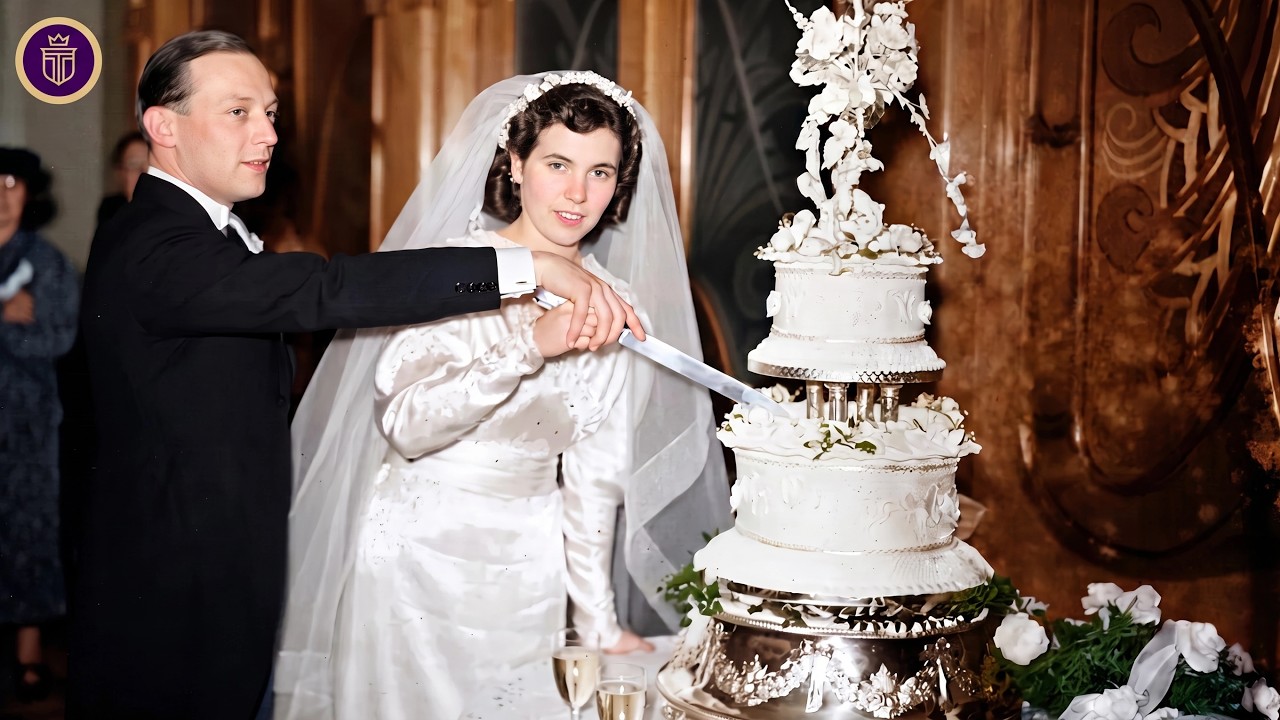
Christina Foyle spent 70 years hosting London’s most famous literary luncheons while simultaneously running one of the most chaotic commercial operations in British history. She was the sole controller of W & G Foyle Ltd, the bookstore that Guinness World Records once recognized as the largest in the world. Her death in 1999 at the age of 88 set in motion a chain of events that would transform millions into arts funding, rescue the bookshop from near-ruin, and finally sever the family from the business they had built. The origin of Foyles, repeated in the company’s official history and in nearly every obituary of Christina, begins with two brothers failing civil service exams in 1903.
William Alfred Foyle and Gilbert Foyle found themselves with a pile of useless textbooks, so they began selling them from their parents’ kitchen table in Peckham. The response was immediate and overwhelming. Within a year, the side venture had become a business. The first shop opened on Queen’s Road in Peckham with the motto “With all faith” above the door.
By 1906, the brothers had secured premises on Charing Cross Road, which would become their permanent home, and by 1910 they operated four branches. There is a documented discrepancy worth noting. Guinness lists Foyles as the world’s largest bookshop with a founding date of 1904, not 1903, and places the founding in Islington rather than a Peckham kitchen table. The contradiction suggests that the most repeated detail in the Foyles origin story may be more brand narrative than verified fact.
What is not in dispute is the scale the business achieved. The flagship building at 111–119 Charing Cross Road was constructed specifically for the company, designed by F. Taperell and H. Housar, with construction beginning in 1927 and opening in 1929.
William Foyle claimed it was the first bookshop in the world built for that purpose, a claim historians consider disputed. By the late 1920s, the shop held up to four million volumes on shelves stretching more than 30 miles. The family lore is rich with William Foyle’s flair for spectacle. In 1932, hearing reports that Nazis were burning books they considered un-German, he sent a telegram to Adolf Hitler offering to buy the books instead of seeing them destroyed.
The response attributed to the German government was that it would not corrupt English morals any more than it was corrupting German ones. During the Blitz, sandbags stuffed with old unsellable books protected the shop front. One newsreel reportedly showed a Foyles employee stacking copies of Hitler’s Mein Kampf on the roof instead of sandbags. In 1940, a direct bomb hit on Charing Cross Road nearly destroyed the shop entirely.
William built a bridge over the resulting crater and named it “Foyles Bridge. ” A gesture that embodied his instinct for turning disaster into publicity. Christina Agnes Lilian Foyle was born in London on January 30, 1911, the daughter of William Foyle and his wife Christina Tulloch, who was herself the daughter of a Shetland Islands sailor. Due to fragile health, her education was partly completed in Switzerland, the kind of finishing school education that functioned more as a marriage market credential for wealthy families than academic preparation.
At seventeen, in 1928, she left the Swiss school and began working in her father’s bookshop. Unlike her siblings, she never left. Her brother Richard died young, and her other brother showed no interest in the business, making Christina the only child of William Foyle to build a career inside the family company. That fact alone shaped everything that followed.
Some accounts say that at twenty-one, she undertook an extraordinary solo mission for her father, traveling through the Soviet Union to collect debts owed to Foyles, only to discover that most of the debtors had been executed or sent to Siberia. She also told stories of accompanying her father on transatlantic trips where he gambled heavily with professional card players, once losing a sum so large she had to disembark early at Southampton to stop a bad check before it cleared. She took effective control of the shop from her father in the mid-1940s, with most sources dating the handover to approximately 1945. She would run it for about 54 years, until her death in 1999.
A 2025 Cambridge Elements study by Samantha J. Rayner gave Christina a lasting title: “The Red Queen of Charing Cross Road,” in recognition of her attracting more journalistic attention than any of her peers, largely because of the high-level relationships produced by her literary luncheons. The literary luncheon at Foyles was Christina’s most enduring and genuinely impressive achievement. She conceived the idea as a teenager and ran it for essentially her entire career.
The idea grew from conversations she had as young writers and literary giants came to the shop and were, in her words, unexpectedly kind and not condescending. Customers told her how lucky she was to meet such people. She took the idea to her father, telling him they should hold a luncheon and invite customers to meet the writers. His response was, “Well, you haven’t got much to do.
Why don’t you organize it? ”
The first luncheon took place on October 21, 1930, when Christina was just nineteen, at the Holborn Restaurant. Lord Justice Darling was the guest of honor, addressing between 200 and 350 guests. Lord Alfred Douglas, the figure at the center of the Oscar Wilde trial decades earlier, was also present.
As the event grew in fame during the 1930s, it moved to Grosvenor House and later to the Dorchester Hotel, with audiences swelling to 2,000 people. Over the next seventy years, the speaker list included what one report described as the elite of English literature alongside a Debrett’s of royalty, emperors, and prime ministers: George Bernard Shaw, H. G. Wells, Bertrand Russell, Arthur Conan Doyle, Charlie Chaplin, Haile Selassie, Lauren Bacall, Philip Roth, Enid Blyton, T.
S. Eliot, Margaret Thatcher, Lord Mountbatten, Charles de Gaulle, the Duke of Edinburgh, and John Lennon, among many others. Shaw, a committed vegetarian, reportedly refused invitations for years, joking that he could not bear to watch 2,000 people chewing celery. When he finally agreed to speak on bird protection, the meal served was, ironically, chicken.
Randolph Churchill, attending drunk, once accused a fellow speaker of being a “royal pornographer” before the crowd. In the boldest episode in the luncheon’s history, Christina sent invitations in 1939 to Adolf Hitler, Benito Mussolini, and Joseph Stalin to speak. Hitler declined, citing pressing business. Mussolini’s office replied that attendance was beneath his dignity, though a visit might be possible later.
Stalin never replied. By the time of Christina’s death, approximately 700 luncheons had been held over nearly 70 years, hosting more than a thousand authors and speakers and an estimated half a million guests in total. By 2006, the luncheons had been scaled down to a smaller format, a quiet sign of how much the institution had already diminished. Behind the shop door, Christina was simultaneously running something closer to a bureaucratic nightmare.
The most notorious element was the payment system. Customers wishing to buy a single book had to queue three separate times: once for an assistant to write an invoice, once at a separate payment desk to pay it, and once again at the original counter to actually receive the book. One writer summarized the effect memorably: imagine if Kafka had entered the bookselling trade. Books were classified by publisher rather than author or subject, meaning that under one “Fiction” heading, a browser might find Boswell’s Life of Dr Johnson, Baudelaire’s prose poems, and Beaumarchais’s plays side by side, arranged only by who printed them.
Proust’s In Search of Lost Time was famously classified under short stories. There were no cash registers, no adding machines, and for most of Christina’s tenure, no telephone ordering system. Staff calculated invoices by hand or in their heads. The culture of dismissal was worse than the queuing system.
Christina was known for firing staff on a whim, and in one widely circulated story, she sacked 40 women in a single incident for talking too loudly. It became understood practice to move staff out of the business before they completed six months of service, avoiding the point at which statutory job protection rights began to accrue. A human resources magazine reported after her death in remarkably frank terms: Christina showed a shocking and often cruel disregard for individuals, dismissals were carried out with terrifying and systematic carelessness, and there was no such thing as paid leave or sick pay. By the year of her death, staff turnover at Foyles was said to be 130% annually, meaning the entire workforce changed more than once a year.
The voucher and bonus system was also the mechanism through which a fraud lasting approximately 20 years and totaling an estimated £10 million went undetected. Bonuses were calculated from paper vouchers that Christina personally transported to her home in Essex, where elderly women came to collect the voucher values by hand. Notable customers over the years included General Augusto Pinochet, who reportedly spent £15,000 on a single American Express bill inside the shop, and General Francisco Franco, who was a member of the Foyles book club. Eva Perón was said to have once paid for books with a crocodile-skin vanity case when she lacked sufficient cash.
Richard Burton later admitted in his memoirs that he had stolen Everyman editions from Foyles as a student, exploiting the chaotic voucher system for over an hour at a time without being caught. Christina seemed understanding of, even amused by, the shop’s reputation. In 1980, she said no one had ever tried to run a place like this before, and if anything happened to her, they would probably have to change things because the chaos would frighten most people. When Wendy Cope’s poem “Foiled” won the New Statesman prize in 1980, a rival chain published advertisements mocking the shop’s dysfunction, but Christina did not appear upset because the mockery was itself a form of fame, and fame for a bookshop was indistinguishable from publicity.
Christina married Ronald Batty, a childhood friend who also worked in the shop’s rare books department, in 1938. Batty became the shop’s general manager and chief personnel officer and was described in accounts of a 1965 strike as imposing and military in manner. He was the person most directly associated with the hiring decisions, and particularly the dismissals, that made Foyles notorious. Away from the retail side, Batty was credited with competently managing the family’s property investment portfolio, which appreciated significantly over the decades even as the bookselling trade itself declined under Christina’s more chaotic management.
That contrast proved crucial in determining the final size of Christina’s fortune. The couple had no children, and Batty died in 1994, five years before Christina. Christina later stated she was glad she had no children. Beeleigh Abbey, the couple’s home from 1963 until Christina’s death, is a genuinely ancient site.
Founded around 1180 for Premonstratensian monks on the River Chelmer, it received a royal charter from Richard the Lionheart in 1189, and the heart of Saint Roger, Bishop of London in the thirteenth century, is said to be buried there. William Foyle had bought the abbey in 1943, reportedly discovering it while rowing on the Chelmer, and turned it into the setting for one of the twentieth century’s great private English libraries. At Beeleigh, Christina’s personal zoo flourished. In her later years she kept about 15 cats, a dog named Bobby, tortoises, and peacocks that roamed freely and attacked their reflections in the polished chrome of visitors’ Rolls-Royces and Bentleys.
Visitors amused themselves by fixing small candles to the backs of garden tortoises, creating a strange procession of moving lights across the lawn at night. A modest painting hung in a ground-floor toilet, humorously attributed to Rembrandt. The long-serving housekeeper, Mrs. Jack, who worked for over 70 years, once dressed as a ghost and thoroughly frightened a police officer assigned to guard the property after a burglary attempt was reported.
After Christina’s death, her nephew Christopher and his wife Katherine bought the abbey and its estate, estimated at around 400 acres, from her executors at market price. Christopher reportedly could afford to restore only about 40% of his grandfather’s book collection by volume, and only about 5% by value. In July 2000, the remainder of William Foyle’s library, described as the most valuable single collection of books sold at auction in Britain or Europe up to that time, sold at Christie’s for approximately £12 million. Christopher’s more practical inheritance was less romantic: Christina’s cats had left such a pungent odor that he and Katherine had to rip up floorboards and remove entire sections of plaster to eliminate it, a task that took about two years.
The four-year restoration they completed at Beeleigh later won the RICS national heritage conservation award and the RICS East of England conservation award, both in 2008, plus a Maldon District Council conservation award in 2007. The union confrontation of 1965 remains the strongest public test of Christina’s management philosophy. Bookseller Marius Webb’s account is the most detailed primary source about working at Foyles during her rule. Webb was hired in the mail room and became alarmed at the frequency of arbitrary dismissals, including a Swedish colleague fired simply for inquiring about his departmental assignment.
He quietly began organizing colleagues into the shop workers’ union, USDAW, building a secret group that grew from three or four members to about 20. Webb himself was eventually dismissed after being reported by a management-loyal colleague, and his dismissal led to public protests that made the front page of the Evening Standard on May 19, 1965. The first strike lasted three days, during which Christina personally walked the shop floor offering employees £5 to return to work, a gesture that reportedly backfired and drove more staff to join the strike in defiance. A second strike, following the management’s retreat from earlier promises, lasted about six weeks, involved about 100 workers, roughly half the workforce, and eventually achieved pay increases and some reduction, though not the elimination, of arbitrary dismissals.
Ronald Batty appears in accounts of the strikes as the shop’s de facto general manager and head of personnel, described as imposing, military in manner, and personally responsible for most dismissal decisions. The strike was the closest anyone ever came to forcing Christina to change how she ran her business. The fact that the changes were partial and temporary tells you everything about her complete control over the institution. Within a few years, the arbitrary dismissals resumed.
The voucher system continued, and the shop returned to the very pattern that had caused the strike. A 1985 staff rules document reportedly stated plainly that employment was on a weekly basis. Christopher Foyle, who witnessed the shop’s operations as a young man, later described her odd hiring policy, forcing anyone who had been with the company for more than a year to leave. By the late 1960s, Christopher Foyle, who had joined the family firm as a young man, left the business frustrated and spent the next three decades building a completely independent career, most notably founding the airfreight company Air Foyle.
Christina reportedly appointed him a director of the library only on her deathbed, a detail that shows how late and reluctant any attempt at reconciliation was. Christopher later described his aunt’s management in a satirical, restrained tone rather than outright bitterness, portraying her firing practices and workplace eccentricities as symptoms of a company that had simply been allowed to continue by inertia for too long. That diplomatic reading concealed the depth of the family rift, which was about to shape the most important decision of Christina’s life. The most significant and least publicly discussed dimension of Christina’s character was her relationship with her extended family.
The most candid testimony comes from Bill Samuel, William Foyle’s grandson and Christina’s nephew, who served for years as the company’s deputy chairman and later wrote honestly about family dynamics. Samuel records that William Foyle handed Christina the majority shareholding in the company a few years before his death in 1963, and that her subsequent mismanagement destroyed most of the value of the bookselling business, while the property side managed by her husband Ron quietly rose in value. Samuel’s blunt verdict on her motives in excluding the family from her will is the most important primary-source judgment available on the matter. He writes that she left most of her fortune to charity because she did not like her family, not because she was philanthropically inclined.
Christina’s public persona reinforced that coldness in her later years during what turned out to be her final literary luncheon. Speaking of the people around her, she said, “They’re all after my money. ” Then she added, “I never think about money. ” Before catching herself, she said, “I’m lucky.
” “I don’t have to. ” The coldness was cumulative, never surprising, built over decades of Christina’s refusal to modernize the business, her destruction of the bookselling value her father had created, and her evident enjoyment of the power that the majority shareholding gave her over relatives who watched the company decline and could not stop it. The woman who said she never thought about money was sitting on a fortune of £59 million. Bill Samuel realized years before her death that the fortune would not pass to the family because the estrangement was too deep and too old to be repaired.
The property portfolio that Ron Batty had managed so competently had grown to the point where the decision mattered to every Foyle family member still alive. Asked in 1996 about a man who came to the shop daily to read one chapter of a book without buying it, Christina was, for once, not indifferent. She said, “I don’t mind, as long as he doesn’t steal anything. ”
Christina Foyle died at Beeleigh Abbey on June 8, 1999, aged 88.
When probate was announced about six months later, the figures were precise and large: a gross estate of £59,596,219 and a net estate of £59,029,581. The will provided £100,000 for her gardener, Antonio Cileto, who was also tasked with caring for her dog Bobby and four tortoises. A £60,000 cottage on the Beeleigh estate went to Maureen Harding, who had cared for Christina’s fifteen cats. The executors were instructed to provide income of £20,000 annually for animal care, reflecting a clause in the will reading: “My pets are very precious to me and I want them to be well looked after.
” There were specific charitable donations to Battersea Dogs Home, the Royal Society of Arts, the Book Trade Benevolent Society, and the Cinnamon Trust, an animal welfare charity. The remainder of the estate, in the region of £50 million, the vast majority of the total, was directed to create a new charity in her name. This is the essential point that dismantles the myth of the story. The common phrasing, “She left £59 million to the cats,” compresses a will that actually allocated only a small portion of the estate to the animals and their caregivers into a headline about the entire fortune.
The bulk of the money, tens of millions of pounds, went to a completely new charity focused on the arts, education, and learning, with no special animal welfare mandate. The cat detail is real and documented, but it describes only about 1–2% of the estate’s final destination. What is entirely real, however, is the deliberate and near-total exclusion of Christina Foyle’s blood relatives from the will. Family members are notably absent from the list of named beneficiaries, supporting Bill Samuel’s account that the exclusion was explicit.
The business itself, apart from the personal estate, passed to her nephews Christopher Foyle and Bill Samuel. But the wealth that funded it, the £59 million accumulated through decades of property appreciation and frugal living, went to the new foundation, the animals, and their caregivers. In practical terms, the will was a final chapter of family exclusion, executed through the entirely traditional mechanism of testamentary freedom in English law. The executors, led by a senior partner at the law firm that had long handled Christina’s affairs, a man reportedly never met by either Christina or her father William, created the Foyle Foundation specifically to disburse the residuary estate.
One executor reportedly told Samuel: “The original intention was to give the money away relatively quickly through grants to arts organizations and then wind up the foundation. ” Samuel said he suggested that William Foyle would most likely have preferred funding smaller, less well-known charities struggling to raise money. But the trustees instead built a fully staffed organization capable of vetting large volumes of grant applications. Christopher Foyle worked as a trustee for just over a year before resigning when he moved to Monaco for tax reasons.
Apart from that brief involvement, the Foyle Foundation never had any involvement from the Foyle family, nor sought it, a policy Samuel explicitly attributes to her feelings about her family. By the time of its final winding-down, expected between 2024 and 2025, the Foyle Foundation is projected to have given away nearly £200 million in total. Samuel describes that figure with a tone of family pride distinct from any feeling toward Christina herself, calling it “not a bad legacy for a man born in extreme poverty in the East End of London at the end of the nineteenth century,” referring to his grandfather William, not Christina. The distinction is precise and revealing: the money came from William Foyle’s business instinct and Ron Batty’s property management, and the charitable purpose came from Christina’s grievance against her family.
That combination produced one of Britain’s most significant funders of the arts and education in the early twenty-first century. The foundation funded public libraries, schools, theaters, orchestras, and arts organizations across the country for a quarter century. Its grants supported everything from small community libraries in rural Wales to West End theatre companies. The irony that this legacy exists because a woman did not want her relatives to have anything, and therefore needed somewhere to put money she was determined they would never receive, is precisely the kind of detail that makes inheritance stories worth telling.
The foundation’s work is real and has tangible consequences. It financed the refurbishment of local libraries throughout Britain at a time when council budgets were shrinking. It supported performing arts companies from community theatres to national orchestras and enabled educational programs in schools that would never have qualified for corporate sponsorship. All of this happened because a woman in Essex wanted to exclude her relatives, and English law gave her the right to act on that wish.
With Christina’s death, the bookshop itself, as an entity separate from her personal estate, passed to her nephews, with Christopher Foyle becoming chairman and Bill Samuel deputy chairman. The state of the business they inherited was dire. Sales had fallen below £10 million annually. Staff turnover was 130%.
There was no effective human resources system, no employment contracts, no sick or annual leave entitlements, and a fraud that had persisted for nearly two decades and cost the company an estimated £10 million was only uncovered after Christina’s death, when Christopher took over and suspended the general manager and his assistant. Christopher brought in a finance controller and an HR consultant and eventually promoted internal staff within a proper management structure. Within about two years, staff turnover had fallen below 50%. Pay scales were reviewed and raised to sensible levels.
Sick and annual leave were introduced for the first time, and the shop moved to seven-day trading with longer hours. Books were now classified by subject and author like any other bookshop in the country, and the three-queue system was abolished overnight. In 2007, Christopher appointed Sam Husain as the first non-family chief executive in the company’s history, who was reported to have disposed of nearly £1 million worth of old unsellable stock, given department heads real autonomy for the first time, and returned the shop to profitability within about a year. Husain retired in April 2015, having accomplished the transformation Christina had spent half a century preventing.
Christopher and Bill Samuel had already signaled their intention to step back from daily executive involvement years earlier, announcing in the mid-2000s that they would move to non-executive roles after about eight and a half years of working to save the company, with Christopher noting that sales had risen 15% in the previous year. A publishing industry editor described the decision as sad, given how far the two had brought the shop back from its dilapidated state. The company’s physical presence also changed dramatically. The lease on the historic Foyles building at 111–119 Charing Cross Road, the flagship branch since 1929, was sold in late 2011, and in June 2014 the shop moved to a newly redeveloped building at 107 Charing Cross Road, the former home of Central Saint Martins College of Art and Design.
The old main building, owned by Soho Estates, was demolished in 2017 despite objections from Historic England, the Victorian Society, and the SAVE Britain’s Heritage charity, to make way for the 310,000-square-foot Iona Rose House project. The bookshop that once held 30 miles of shelving vanished from the Charing Cross Road streetscape entirely, the building William Foyle designed in 1929 becoming a hole in the ground and then a mixed-use tower. In 2018, the Foyle family sold the freehold of the new Charing Cross Road building to property fund Brockton Capital for a reported £45 million, with Foyles remaining as a tenant on a lease with about 16 years remaining. Shortly after, in September 2018, Waterstones, then run by James Daunt and once Foyles’ fiercest rival, acquired the Foyles retail business for an undisclosed sum, ending 115 years of continuous family ownership.
At the time of the sale, Foyles operated seven outlets, four in London plus branches in Birmingham, Chelmsford, and Bristol, with annual revenues of £26. 6 million, though the company reported a small loss for the year ending June 2017, partly attributed to the aftermath of the London and Manchester terrorist attacks affecting footfall. Christopher Foyle, who then owned a 65% stake and lived in Monaco, said his family was happy that Foyles was entering a new chapter in its long and distinguished history. Tim Waterstone, founder of Foyles’ bitter rival Waterstones, who had once rented a Charing Cross Road property from Christina herself in the mid-1980s while expanding his own chain next door to her, described Christina as a proud and extremely determined woman and called the shop “a jewel.
” The fact that Waterstones ended up buying Foyles completes a circle that began when Dillons launched its “Foyled Again” advertisement in the 1980s, because Dillons collapsed in 1995. Waterstones itself nearly collapsed in the 2000s, and the survivor of that three-way competition ended up owning the shop it once mocked. Christopher Foyle died on August 10, 2022, having built his own distinguished and particular career. Air Foyle, the aviation world’s equivalent, embodied his grandfather’s commercial instinct resurfacing once more.
Beeleigh Abbey remained in Foyle family hands until it was placed on the market in June 2024 with a total asking price of approximately £5. 45 million. The main house, listed Grade I, was offered separately at nearly £2. 5 million with 35 acres, alongside 319 acres of farmland.
A local historian told the BBC he felt sad to see the abbey leaving Foyle family hands after more than 80 years, noting that the four-year restoration completed by Christopher and Katherine after repairing the cat-damaged floors had won the RICS national heritage conservation award and the RICS East of England conservation award in 2008. The cats were long gone, the candles once placed on tortoises extinguished. The dynasty William Foyle had built from a failed exam, for the first time in 120 years, was no longer a family firm. Christina Foyle’s will belongs to a well-known tradition in British legal and cultural history: the tradition of the wealthy testator, often childless or estranged from relatives, redirecting wealth away from living kin toward animals, animal charities, or eccentric causes.
English inheritance law generally upholds testamentary freedom, the principle that a person has the right to leave their property to whomever or whatever cause they choose, with relatively few automatic rights for adult relatives, a framework that differs markedly from the forced-heirship systems of continental Europe. That is precisely what made Christina Foyle’s will legally routine, even if culturally controversial. Family members had no automatic right to challenge it merely because they were excluded. The leading modern test of this principle came in Ilott v.
Blue Cross, a UK Supreme Court case where an adult daughter estranged from her mother challenged the mother’s will after the mother left her entire estate to three animal charities instead of her only daughter. The Supreme Court ultimately upheld the charities’ position, confirming testamentary freedom as a fundamental principle of English law. Christina Foyle’s case is not unique, even within Britain’s roster of famous animal-favoring wills. What distinguishes it from most such cases is the sheer size of the fortune.
At nearly £59–60 million, the sums usually cited in stories of family exclusion for cats dwarf it. The will is also distinctive because the animal portion was genuinely modest compared to the whole: the real event was the redirection of tens of millions to a new foundation, while the bequests to the animals were an emotional footnote. The press rushed to cover the animal detail because it made for a better headline than “Eccentric heiress funds new grant-making charity. ” The pattern of media coverage that reduces a complex, largely charitable will to a single vivid animal detail is a commentary on how the press frames inheritance disputes as much as it is on the testators themselves.
Christina’s life gave journalists ample material to justify that reduction. Decades of her openly expressed devotion to her cats at Beeleigh Abbey, the peacocks attacking Bentley bumpers, the tortoises carrying candles on their backs, the Chanel No. 5-scented job interviews, and 70 years of literary luncheons that placed her at the heart of London literary life, even as her shop became a byword for chaos. She was, in the end, a woman who ran the world’s largest bookshop for half a century while refusing to modernize it, hosted a thousand authors at the Dorchester while sacking 40 women for talking too loudly, and amassed £59 million while telling interviewers she never thought about money.
The will was not a surprise to anyone who knew her. The foundation she created has given nearly £200 million to causes her own institution would never have funded voluntarily, because the destination of the money was determined by one fixed and simple fact: Christina Foyle wanted to exclude her family. And English law allowed her to do exactly that. The cats got the headlines.
The foundation got the money. And the family got nothing.