In August 2003, in a modest home in Miami, Florida, an 85-year-old man sat propped up in his sickbed with paper on his lap and a pen in his hand. His son sat beside him, watching carefully. The old man was dying of pneumonia and failing kidneys, with months, perhaps weeks, left to live.
The son had asked a question he had asked many times before but had never gotten an answer to: "Dad, do you know anything about the assassination of President Kennedy?" For decades, the old man had sworn he didn't. He had testified under oath twice, once during the Church Committee investigation and once during the House Select Committee on Assassinations.
"I didn't have anything to do with the assassination," he had said. "Didn't know anything about it. I did my time for Watergate. I shouldn't have to do additional time and suffer additional losses for something I had nothing to do with." But now, with death approaching, the old man did something extraordinary. He started writing.
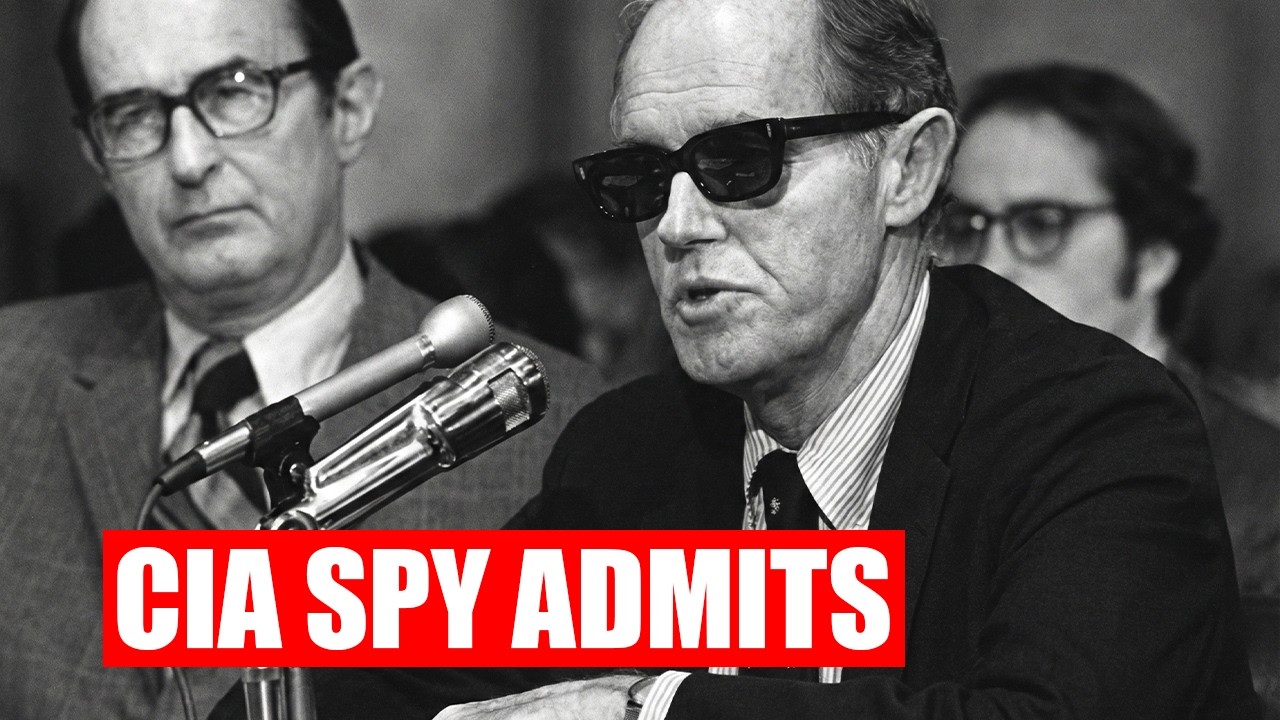
He wrote down names of men who participated in a plot to kill President John F. Kennedy. At the top of the list, in his own handwriting, he wrote two letters: LBJ. The old man was E. Howard Hunt, CIA spy, Watergate burglar, Cold War legend. In his final months, he confessed to one of the greatest conspiracies in American history.
Understanding Hunt means understanding half a century of America's darkest operations. Everette Howard Hunt Jr. was born on October 9, 1918, in Hamburg, New York. He attended Brown University, joined the US Navy during World War II, and in 1949 joined the CIA.
For the next 21 years, Hunt became one of the agency's most legendary operatives. He was a covert action specialist working in political warfare, regime change, propaganda, and assassination. In 1954, he was a key figure in the CIA's coup that overthrew Guatemala's democratically elected president, Jacobo Arbenz. In 1961, Hunt helped plan the Bay of Pigs Invasion, the failed CIA operation to overthrow Fidel Castro.
Hunt was not just an operative. He was deeply connected. He knew CIA directors, mafia bosses, Cuban exiles, and anti-Castro militants. He moved in circles where violence was policy and assassination was statecraft.
After leaving the CIA in 1970, Hunt joined Richard Nixon's White House as a consultant. He became one of the Plumbers, a secret unit tasked with stopping leaks and conducting political sabotage. Hunt specialized in dirty tricks. He forged documents, planned break-ins, and even considered using LSD-laced steering wheels to cause fatal car accidents.
On June 17, 1972, Hunt helped orchestrate the break-in at the Watergate Hotel. Five burglars were caught in the act, setting off the scandal that destroyed Nixon's presidency. Hunt was arrested, convicted, and sentenced to 33 months in prison for burglary, conspiracy, and wiretapping.
He served his time, and for the rest of his life he maintained that Watergate was his greatest failure. But according to his son, Saint John Hunt, that wasn't true. Watergate wasn't his greatest secret. It was just the one he got caught doing.
According to his son, E. Howard Hunt had been involved in something far bigger and far darker, something he had lied about for 40 years: the assassination of President John F. Kennedy. For decades, conspiracy researchers had suspected Hunt's involvement.
In the 1970s, a freelance writer named A.J. Weberman published photographs of three men, described as tramps, arrested in Dealey Plaza shortly after Kennedy's assassination. The men were questioned and released. No one knew who they were, but Weberman claimed two of them looked like E. Howard Hunt and Frank Sturgis, another CIA operative and Watergate burglar.
In 1978, a magazine called The Spotlight published an article by former CIA officer Victor Marchetti claiming Hunt was involved in the JFK assassination. Hunt sued for libel and won. But on appeal, the verdict was overturned.
Attorney Mark Lane defended The Spotlight and called witnesses, including CIA officers, former operatives, and even Hunt's associate Marita Lorenz, who testified that Hunt had been in Dallas on November 22, 1963. The jury found for The Spotlight. In effect, a US court had ruled that the evidence suggested Hunt was involved in Kennedy's assassination.
Hunt continued to deny it, publicly, privately, and under oath, for decades, until 2003. Saint John Hunt had suspected for years. He had seen the photographs, read the theories, and knew his father's world: the CIA, the anti-Castro operations, the connections to figures linked to Kennedy's death. He also knew his father was dying.
So in August 2003, Saint John visited his father in Miami and asked one more time, "Dad, do you know anything about the assassination of President Kennedy?" This time, E. Howard Hunt didn't deny it. He asked for paper and pen and started writing.
Saint John watched as his father, frail and sick, weeks from death, wrote down the names of men involved in the plot to kill JFK. Hunt's handwriting was shaky but legible. The names spilled out, one after another. At the top, Hunt wrote LBJ, Lyndon Baines Johnson, Vice President of the United States and the man who became president when Kennedy died.
According to Hunt, Johnson was the instigator, the man who ordered the hit. Hunt continued writing, listing other names. Cord Meyer was a CIA officer, chief of the covert action staff, and architect of Operation Mockingbird, the CIA's program to manipulate American media. Meyer's ex-wife, Mary Meyer, had been having an affair with Kennedy. After JFK's death, Mary Meyer was murdered in 1964, shot twice while walking along the C&O Canal in Washington, D.C. Her diary disappeared. The case was never solved.
David Atlee Phillips was a CIA propaganda specialist and chief of Cuban operations in Mexico City. Phillips handled Lee Harvey Oswald's legend, the cover story built around Oswald to make him look like a pro-Castro communist. Phillips was in Mexico City when someone using Oswald's name visited the Soviet and Cuban Embassies in fall 1963.
Frank Sturgis was an anti-Castro militant, CIA asset, and future Watergate burglar. Sturgis had worked closely with Hunt in anti-Castro operations. He was one of the men photographed as a tramp in Dealey Plaza.
David Morales was chief of operations at the CIA's JM WAVE station in Miami, the base for anti-Castro operations. Morales was known as El Indio, a brutal operative who specialized in assassinations. Before his death, Morales told close associates, "We took care of that son of a bitch Kennedy."
William Harvey was a CIA officer and former head of the CIA's assassination unit, ZR Rifle. Harvey had worked with the mafia on plots to kill Castro. He knew mob bosses Santo Trafficante and Sam Giancana, both later linked to theories about Kennedy's assassination.
Hunt added one more detail: a French gunman on the grassy knoll. Many believe this was Lucien Sarti, a French-Corsican hitman who worked for the Marseille mafia and had been hired for CIA operations in the past.
After Hunt finished writing, Saint John was stunned. His father had just put to paper what researchers had suspected for decades: a CIA-led conspiracy, orchestrated at the highest levels, ordered by the Vice President. Saint John had more questions, but his father was exhausted. They talked briefly, then Saint John left town.
A few weeks later, a tape arrived in the mail. It carried Hunt's voice, weak, grasping, sometimes wandering, but repeating the same story. On the tape, Hunt described a meeting in Miami in 1963 at a safe house. Hunt was invited by operatives he knew, David Morales and Frank Sturgis. They wanted Hunt involved. They called it the big event.
According to Hunt, Morales left the room. Then Sturgis turned to Hunt and said, "Are you in?" Hunt claims he declined active participation. He said he told them they didn't need him. But Hunt admitted he knew what was coming. He described himself as a benchwarmer, not a direct participant, but aware of the plan and peripherally involved.

Hunt's confession was explosive. It implicated the Vice President of the United States, senior CIA officials, and a network of operatives with direct connections to the anti-Castro underground, the mafia, and US intelligence.
But the confession had a problem. Hunt's own family disputed it. Hunt's widow, Laura, and several of his other children claimed Saint John and his brother David had exploited their father during his final years. They said Hunt was losing lucidity, that the sons coached him, and that they fabricated the confession for financial gain, hoping to sell the story and profit from their father's name.
Laura Hunt had insisted before marrying E. Howard that he swear he knew nothing about JFK's assassination. It was a precondition of their marriage. Hunt swore to it. After his death, his widow was furious that his sons were claiming otherwise. The Los Angeles Times examined the material Saint John offered to support his story. Their conclusion was inconclusive.
Was Hunt telling the truth? Or was this the invention of a dying man manipulated by his sons? Several facts are known. E. Howard Hunt worked for the CIA for 21 years, specializing in covert operations, regime change, and political warfare.
Hunt was deeply involved in anti-Castro operations, including the Bay of Pigs. He knew David Morales, Frank Sturgis, David Atlee Phillips, and William Harvey, all men named in his confession. Hunt was in the CIA's Western Hemisphere Division in 1963, working on Cuban operations. He had access to anti-Castro militants, CIA assets, and the JM WAVE station in Miami.
In 1985, a US jury ruled in favor of The Spotlight magazine, effectively finding that evidence suggested Hunt was involved in the JFK assassination. Multiple witnesses, including Marita Lorenz, a former CIA asset, testified that Hunt was in Dallas on November 22, 1963. Lorenz claimed she traveled to Dallas with Frank Sturgis and other operatives days before the assassination. She said they carried weapons and discussed the big event.
Hunt's handwritten notes and audio tape were made in 2003 and 2004. Saint John released them in 2007 after Hunt's death on January 23, 2007. Rolling Stone magazine ran a full investigative article on Hunt's confession in April 2007. The piece, titled "The Last Confession of E. Howard Hunt," treated the story seriously and presented extensive details.
The mainstream media ignored the confession almost completely. Despite Rolling Stone's investigation, despite Hunt's CIA career, despite the explosive allegations, major newspapers and TV networks refused to cover it. One reason is that Hunt's confession implicated Lyndon Johnson. Accusing a former president of orchestrating the assassination of his predecessor is not something the establishment media will touch.
But Hunt's credibility deserves examination. Was he a reliable source? Hunt had a history of lying. He forged documents and manipulated information. During Watergate, he forged cables to implicate President Kennedy in the assassination of South Vietnam's President Diem. Hunt created fake evidence to destroy reputations. He was a professional deceiver.
But Hunt lied when it benefited him, when it protected his interests or his employers. Why would he lie on his deathbed? What did he have to gain? Hunt was dying. He knew it. He had pneumonia, kidney failure, and months to live. He had no reason to fabricate a story that would tarnish his own reputation and implicate him in the greatest crime of the 20th century, unless he was telling the truth.
Saint John Hunt believes his father told the truth. He wrote a book about it, Bond of Secrecy: My Life with CIA Spy and Watergate Conspirator E. Howard Hunt. In the book, Saint John describes years of trying to get his father to talk, the meetings, the conversations, the tape, and the handwritten notes.
Saint John isn't a conspiracy theorist. He's a musician, a guitar player, a man who spent decades struggling with his father's legacy and his own demons. He had no interest in JFK assassination theories until his father started talking. What his father told him fits with what researchers have known for years.
Lyndon Johnson had motive. He was facing political destruction in November 1963: the Bobby Baker scandal, the TFX bribery investigation, and Life magazine's planned exposé. Kennedy was planning to drop him from the 1964 ticket. Johnson needed Kennedy dead.

The CIA had means. Hunt, Morales, Phillips, Harvey, and Sturgis were all experienced operatives. All had participated in assassination plots before. All had worked together on anti-Castro operations. They knew how to plan, execute, and cover up political murders.
Anti-Castro militants had opportunity. They hated Kennedy. After the Bay of Pigs, Kennedy refused to invade Cuba. He negotiated with the Soviets during the Cuban Missile Crisis. In the eyes of anti-Castro Cubans and their CIA handlers, Kennedy was a traitor. He had abandoned them. He deserved to die.
Hunt's confession ties it all together. LBJ provides the motive and gives the order. Cord Meyer organizes the operation. David Phillips handles Oswald's legend in Mexico City. William Harvey recruits Mafia connections. David Morales runs logistics from JM WAVE. Frank Sturgis coordinates on the ground, and a French gunman fires from the grassy knoll. Lee Harvey Oswald, a patsy, takes the blame. Jack Ruby kills Oswald before he can talk. The Warren Commission covers it up, and Lyndon Johnson becomes president.
Critics point out inconsistencies. They note that Hunt's published memoir, American Spy, written before his death, only hints at LBJ's involvement. The book doesn't make the explicit accusations that Saint John claims his father made privately. But there may be a reason for that.
Hunt's memoir was ghostwritten. According to William F. Buckley Jr., who wrote the forward, Hunt's original manuscript contained material suggesting transgressions of the highest order, including a hint that LBJ might have had a hand in the plot to assassinate President Kennedy. The publisher demanded changes. Hunt's lawyer demanded changes. The book was sanitized. Hunt's explosive claims were removed.
But privately, to his son, Hunt told the full story. Saint John wasn't a publisher. He wasn't worried about lawsuits or reputation. He was a son who wanted to know the truth. On his deathbed, E. Howard Hunt gave him that truth.
There is another piece to the story. President Richard Nixon knew about Hunt's involvement in Kennedy's assassination, and Nixon used it. During Watergate, when the scandal was exploding, Nixon told Chief of Staff H.R. Haldeman to deliver a message to CIA Director Richard Helms.
Nixon wanted the CIA to block the FBI's investigation. His leverage was this: tell Helms that if the CIA doesn't cooperate, the president is going to reveal the whole Bay of Pigs thing. But Bay of Pigs was code. Haldeman later wrote that when Nixon said Bay of Pigs, he meant the Kennedy assassination.
Nixon was threatening to expose the CIA's role in killing JFK. Helms, who had been CIA Deputy Director for Plans in 1963, understood perfectly. Haldeman described Helms's reaction: turmoil in the room, Helms gripping the arms of his chair, leaning forward, and shouting, "The Bay of Pigs had nothing to do with this. I have no concern about the Bay of Pigs."
But Helms was lying, and everyone in the room knew it. Bay of Pigs wasn't about Cuba. It was about Dallas, and Nixon was threatening to blow the lid off the biggest cover-up in American history. Nixon didn't do it. He had his own secrets, his own connections to Hunt, and his own role in protecting the conspiracy.
If Nixon exposed the CIA's role in Kennedy's assassination, the CIA would expose Nixon's role in covering it up. So they made a deal. The CIA helped Nixon survive Watergate as long as they could. When Nixon finally fell, Hunt went to prison for 33 months. He took the blame and kept his mouth shut until 2003, until he was dying, until he decided his son deserved the truth.
E. Howard Hunt died on January 23, 2007, at age 88. He is buried in Prospect Lawn Cemetery in Hamburg, New York, his hometown. His memoir, American Spy, was published four months later. The book is careful and ambiguous. It hints but doesn't accuse.
But the tape exists. The handwritten notes exist. Saint John Hunt has them. He released excerpts in 2007. The audio has been broadcast on Coast to Coast Live. Transcripts have been published. On that tape, in E. Howard Hunt's own voice, weak and dying, with nothing left to lose, he says it: LBJ ordered the hit. Cord Meyer organized it. "We called it the big event, and I knew it was happening."
The mainstream media ignored it. Wikipedia calls it a disputed deathbed confession. Skeptics say Hunt was senile, manipulated, or lying for attention. They say there's no proof. But there is other evidence: 40 years of circumstantial evidence, dozens of witnesses linking Hunt to Dallas, CIA documents showing Hunt's proximity to the operation, a federal jury ruling that suggested Hunt was involved, and now a deathbed confession naming names and describing the plot.
The tape exists. The confession is real. And E. Howard Hunt, CIA spy, Watergate burglar, and Cold War legend, spent his final months admitting the truth. According to a dying CIA operative who was there, it was a conspiracy from the top, with Lyndon Johnson's name written in ink at the very top of the list.