At 12:30 p.m. on November 22, 1963, shots rang out in Dealey Plaza in Dallas, Texas. President John F. Kennedy was struck by two bullets and rushed to Parkland Memorial Hospital. At 1:00 p.m., doctors pronounced him dead.
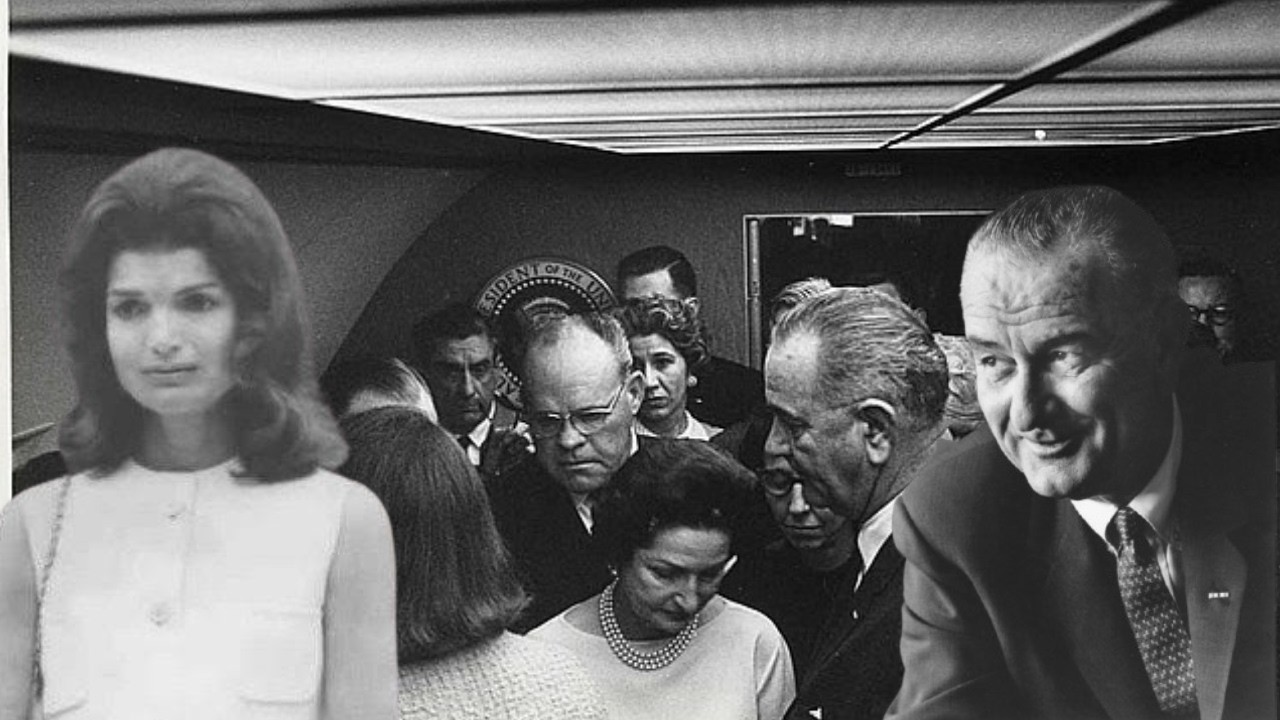
Ninety-eight minutes later, at 2:38 p.m., Lyndon Baines Johnson stood in the cramped 16-foot cabin of the presidential plane at Love Field. He raised his right hand, placed his left on a Catholic missal taken from Kennedy's bedroom aboard the aircraft, and took the oath of office as the 36th President of the United States.
To his left stood Jackie Kennedy, still wearing the pink suit stained with her husband's blood. To his right stood Lady Bird Johnson. The ceremony lasted 28 seconds. Nine minutes later, the plane took off for Washington.
This is the documented story of why Johnson took the oath so quickly, what drove the decisions made in those 98 minutes, and what each choice that day revealed about the man who suddenly became the most powerful person on earth.
Before examining why Johnson moved so fast, one constitutional fact must be settled, because it shapes everything else. Johnson became president the moment Kennedy died, following the succession precedent set by John Tyler in 1841.
The 25th Amendment, not ratified until 1967, later clarified the rules of presidential succession and inability to serve. It did not create the basic principle that a vice president succeeds a president who dies in office. The National Archives notes that the 25th Amendment reaffirmed that the vice president is first in the line of succession.
The oath Johnson took in Dallas, then, did not itself make him president. But Johnson and his advisers wanted to prove the transfer of power openly and unambiguously before the presidential plane left Dallas.
The National Archives records that Johnson called Attorney General Robert F. Kennedy, who advised him that he could take the oath before a judge in Texas. Johnson then arranged for Judge Sarah T. Hughes to administer the ceremony.
So the real question is not why he took the oath, but why he insisted on taking it in Dallas, aboard the plane, before returning to Washington, with Jackie Kennedy standing beside him. The answers are multiple, documented, and layered.
They involve Cold War geopolitics, constitutional symbolism, political calculation, and the complex psychology of a man who spent three years as vice president before finding himself suddenly in the most powerful office on earth.
To understand what November 22, 1963 meant to Lyndon Johnson, you have to understand what the vice presidency had done to him. Johnson had been the most powerful Senate majority leader in modern American history. He controlled the U.S. Senate through sheer force of will, personal pressure, and legislative skill.
Then, in 1960, he accepted the vice presidential nomination and entered what Robert Caro, in his Pulitzer Prize-winning biography "The Passage of Power," describes as a period of deep diminishment. His shoulders stooped, and he took on features described as reflecting defeat and brokenness. He was anxious and unsettled.
The Kennedy inner circle, led by Robert Kennedy, systematically excluded him from any real exercise of power. He was mocked in cabinet meetings. His phone calls went unanswered. The man who once controlled the Senate sat in meetings where young Kennedy aides ignored him.
On the morning of November 22, 1963, Johnson had additional reasons to fear for his political standing. A Washington scandal involving Bobby Baker, a close Johnson associate, was escalating. There were whispers in Washington that Kennedy might drop Johnson from the 1964 ticket.
Johnson woke that morning a deeply frustrated and politically threatened vice president. By nightfall, as Caro documents, everything had changed.
The first major consideration was continuity of government. The United States was in the middle of the Cold War, and Kennedy's assassination created extraordinary uncertainty. No one yet knew whether Oswald had acted alone, whether more shooters were out there, or whether a wider conspiracy existed.
Secret Service agents quietly led Johnson back to the presidential plane before the public announcement of Kennedy's death, specifically out of fear that he was the next target. A swift, visible transfer of presidential power reassured the country and the outside world that the American government was still functioning.
The National Archives specifically notes that Johnson was eager to document the oath ceremony so the nation would know with certainty that the transfer of power had occurred. In the middle of the Cold War, with nuclear weapons on high alert on both sides, a visible, public, photographed oath was not merely ceremonial. It was a signal to every capital watching that the United States had a president in command.
The second major consideration was legitimacy. Caro argues in "The Passage of Power" that Johnson understood the symbolic importance of having Jackie Kennedy beside him. The image would clearly link the new presidency to Kennedy's in the moment the nation was struggling to accept the transfer of power.
Johnson knew that a large segment of the American public, especially the liberal wing of the Democratic Party that adored Kennedy, viewed him with suspicion. He was a Southern politician whose record on civil rights and segregation made many Kennedy liberals deeply doubt him. The Kennedy men, the Harvard-educated intellectuals who called themselves the best and the brightest, barely concealed their contempt for him.
Had he returned to Washington and taken the oath quietly without visible participation from the Kennedy family, his presidency would have begun under a cloud of doubt in the eyes of millions of Americans who needed to see the transfer of power blessed by the slain president's family.
That is why Johnson insisted that Jackie Kennedy stand beside him. According to Caro's documented account, the famous photograph showing Jackie Kennedy in her blood-stained pink suit standing stunned beside Johnson as he took the oath happened only after Johnson insisted on her presence.

Jackie had arrived back at Air Force One expecting Johnson to have already left for Washington on Air Force Two. She entered the cabin to find Johnson there already making plans for the transition. After Lady Bird and Johnson consoled her, Jackie agreed to attend the oath.
When asked whether she wanted to change out of her blood-stained clothes, she refused. She said, "Let them see what they've done to him."
The third consideration involved the choice of judge. Johnson specifically requested that Sarah T. Hughes, a U.S. District Court judge for the Northern District of Texas, administer the oath. He sent his aide Barefoot Sanders to bring Hughes to the plane.
A Time magazine study of the episode notes that some researchers interpreted this choice as possibly linked to an earlier dispute. Robert Kennedy had initially tried to block Hughes's appointment as a federal judge, and some historians see her selection as carrying clear symbolic weight in the context of the intense hostility between Johnson and Robert Kennedy.
Historian Randall B. Woods, author of "LBJ: Architect of American Ambition," considers the choice practical and straightforward. He told Time that she was the federal court judge for the Northern District of Texas, which includes Dallas, making her the logical choice.
Hughes herself, in a 1968 oral history interview conducted for the Johnson Library collection, described the emotional weight of that moment from her own perspective. She was visibly crying in the famous photograph. It was the first time in American history that a woman administered a presidential oath, and the only time it was done aboard an aircraft.
The fourth consideration was the choice of book used for the oath. Johnson took the oath with his hand on a Catholic missal that belonged to Kennedy, found aboard Air Force One. This choice was not a constitutional requirement. Placing a hand on a Bible or another religious book is ceremonial, not a legal requirement.
The Johnson Library identifies the Catholic missal as the instrument used during the ceremony and displays it today as part of its collection. Critics later pointed to the religious symbolism of the choice, but contemporary accounts confirm it was a matter of what was available aboard the plane.
Johnson also called Robert Kennedy, then attorney general, to ask about the legal requirements for taking the oath. National Archives records note that Johnson called Robert Kennedy, who advised him that a Texas judge could swear him in. Warren Commission records specifically state that Kennedy advised Johnson to take the presidential oath before leaving Dallas.
Accounts have differed on the precise emotional nature of that conversation. Caro points to conflicting accounts of whether a distraught Bobby Kennedy formally approved Johnson's plan or merely acknowledged it. What is firmly documented is that Johnson made the call, that Kennedy advised him to take the oath before departing, and that Johnson then arranged for Hughes to be brought to the plane.
Johnson's actions in those 98 minutes also reflected the character Caro documented so extensively. The moment Johnson learned of Kennedy's death, a transformation occurred that everyone in the room could see. According to Representative Homer Thornberry, who was present and whose account Caro documented, Johnson took charge in that moment and everyone recognized it.
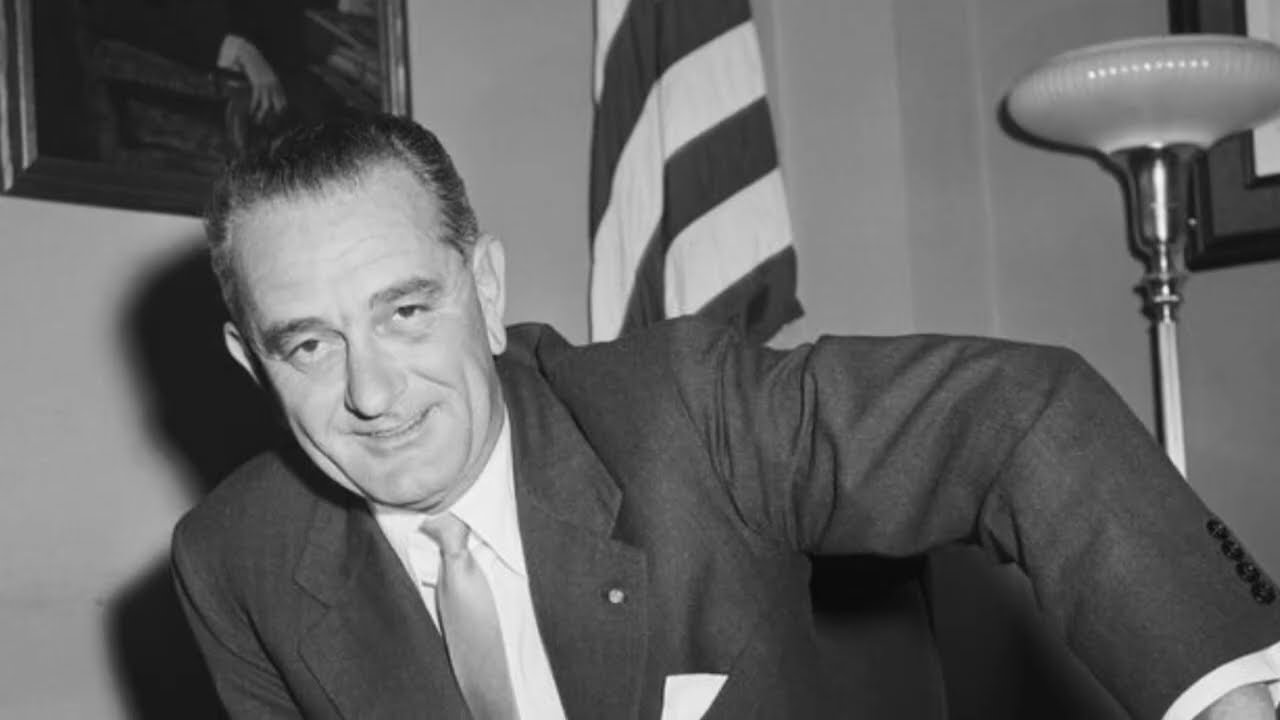
The man whose shoulders had stooped during his vice presidential years, who had been excluded and marginalized, suddenly returned to form. Caro describes the period following the assassination as Johnson's finest hours as a seasoned politician.
Johnson also made a decisive choice in those 98 minutes. He refused to leave Dallas before taking the oath. He insisted on staying aboard Air Force One until Jackie Kennedy and Kennedy's body were brought onto the plane before the ceremony began.
This act was both practical and symbolic. Air Force One was the presidential aircraft. Johnson returning on Air Force Two while Kennedy's body and widow returned on Air Force One would have created a visual split that Johnson rightly understood would undermine the appearance of a smooth transfer of power.
Twenty-seven people crowded into a 16-square-foot cabin for the ceremony. The lack of air conditioning added physical discomfort to the emotional weight of the moment. As the oath was administered, the plane's four jet engines were already running. Nine minutes after Johnson lowered his hand, the plane was airborne.
The speed of the departure was itself a clear message. The government was moving. The president was returning to office, and the machinery of American power was operating without interruption.
Once back in Washington, Johnson moved with exceptional speed to cement his presidency and reassure the Kennedy circle. He kept Kennedy's cabinet. He kept Kennedy's senior staff. According to Caro, he told each of them personally that he needed them more than President Kennedy himself had.
He pushed Kennedy's stalled legislative agenda, including the Civil Rights Act and the tax cut, to be the central mission of his presidency. He framed his early presidency clearly as a continuation and fulfillment of Kennedy's vision. In his first address to a joint session of Congress on November 27, five days after the assassination, Johnson said simply: "Let us continue."
Caro also documents that Johnson was aware in those first hours of how the transition would be interpreted. Caro writes that even in the first hour after John F. Kennedy's death, Lyndon Johnson appeared to be troubled by feelings that would haunt him for the rest of his life.
The complexity Caro points to is real and documented. Johnson's actions in those 98 minutes were driven at once by genuine constitutional responsibility, concerns about continuity of government, and precise political calculation. These motives are not necessarily contradictory. One can act rightly and act strategically at the same time. Johnson did both.
What happened in those 98 minutes was one of the most consequential transfers of power in American history. The oath Johnson took aboard the presidential plane, quickly, publicly, and with Jackie Kennedy beside him, achieved what Johnson sought. It was a signal to a grieving nation and a watching world that the United States had a president, that the constitutional system was intact, and that the government was working.
Time magazine noted the week after the assassination that with that ceremony, President Johnson seemed to realize for the first time that the transfer of responsibility was real. In 28 seconds, with a judge administering the oath and a widow in a blood-stained dress as witness, presidential power changed hands in the most documented and photographed transition in American history.
Ninety-eight minutes after John F. Kennedy was pronounced dead in Dallas, Lyndon Baines Johnson was flying to Washington as the 36th President of the United States.