On the morning of January 14, 1979, Thomas DeSimone stood in his family home in Ozone Park, Queens, adjusting his tie in the mirror. At 32 years old, standing 6’2″ and weighing 225 pounds, he looked every bit the part of a man about to receive the honor he had chased his entire criminal life. He believed that day he would finally become a made man, a full member of the Lucchese crime family. He kissed his mother goodbye and walked out the front door, climbing into a car with two men he trusted for what should have been a short ride to Brooklyn.
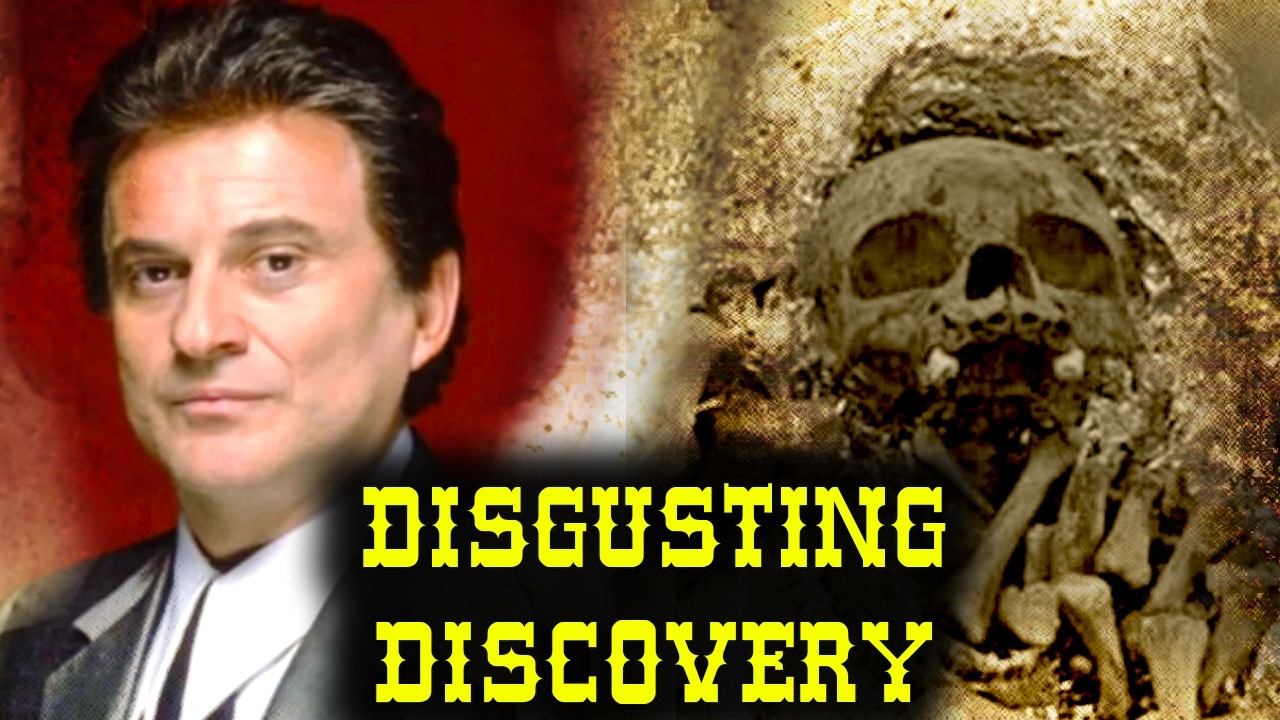
He was never seen again. The story of DeSimone’s disappearance and murder was later dramatized in Martin Scorsese’s 1990 film Goodfellas, where the character Tommy DeVito, played by Joe Pesci, is killed in a bar by members of John Gotti’s crew. The reality is considerably darker and more complicated. Multiple conflicting accounts exist of how DeSimone died, who pulled the trigger, and what happened to his body.
His remains have never been found. To understand why DeSimone was killed, one must first understand the man himself. Born into a working-class family of nine children, DeSimone was the son of a glass installer. By his teenage years, he was running errands for Paul Vario’s Lucchese crew.
He never finished high school and held few legitimate jobs. Instead, he built a reputation as an enormous, volatile figure with a violent streak that set him apart even in the world he inhabited. Henry Hill, who later became an FBI informant and whose testimony formed the basis of Wiseguy, the book that inspired Goodfellas, described DeSimone as looking like a college athlete but being a stone killer. Hill, despite his many flaws, had no reason to embellish DeSimone’s capacity for violence.
The record supports the assessment. DeSimone’s closest mentor was not a family member but James Burke, an Irish orphan from Hell’s Kitchen who had been in and out of reform schools since age 11. Burke could never become a made man due to his Irish heritage, but he was considered smarter and more vicious than many of the Italians above him. He became DeSimone’s surrogate older brother and teacher, instilling in him the belief that a bullet was the shortest distance between a problem and its solution.
The events that sealed DeSimone’s fate began on January 11, 1970, in a Queens bar. Billy Batts, a made member of the Gambino family whose real name was William Bentvena, had been released from Lewisburg Federal Penitentiary just nine days earlier after serving eight years for heroin charges. Batts, a childhood friend of John Gotti, was celebrating his freedom when DeSimone, Burke, and Hill walked in. According to accounts, Batts made a remark about DeSimone’s polished shoes, comparing him to a little girl.
In the rigid caste system of the Mafia, a made man could insult an associate without consequence. DeSimone, however, was not built to accept such treatment. What followed was a brutal beating that lasted between five and ten minutes. Batts was beaten with fists and the butt of a pistol until he was unconscious in a pool of blood.
The unconscious Batts was dragged to a car and placed in the trunk. He was still breathing, making a wet, ragged sound. The crew drove 150 miles north to a dog kennel property owned by Burke associates in upstate New York. When they opened the trunk at the burial site, Batts was still alive.
Instead of burying him, they drove back to the city, leaving him locked in the trunk for two weeks. When Burke and DeSimone returned on January 25, 1970, they found Batts still alive, still conscious enough to make sounds. They finished him with a shovel and a tire iron. Billy Batts, a made Gambino man, had been killed without the permission of his family’s boss.
In the Mafia’s code, this was a capital offense. The killing of a made man without authorization created a political problem. The Gambinos knew who was responsible, but DeSimone was protected by the Lucchese family. Killing him without Lucchese permission would risk an interfamily war.
So the Gambinos waited, filed grievances through back channels, and kept score. Four years later, DeSimone added another name to the ledger. In the summer of 1974, DeSimone was dating the sister of Ronald “Foxy” Jerothe, a low-level Gambino associate from Canarsie, Brooklyn. DeSimone was beating her.
When Jerothe confronted DeSimone about the abuse, some accounts say he punched him, others say he threatened him. Either way, DeSimone responded the only way he knew how. On a late summer day in 1974, DeSimone walked to Jerothe’s apartment carrying a . 38 revolver in a brown paper bag.
When Jerothe opened the door, DeSimone fired a single shot. Jerothe’s sister was inside the apartment and saw everything. DeSimone turned and walked away. No one was ever charged.
The Lufthansa heist of December 11, 1978 added another layer of danger. The armed robbery of the Lufthansa cargo building at JFK Airport netted approximately $5 to $6 million in cash and jewels, making it the largest airport robbery in American history. DeSimone was allegedly among the gunmen. A witness inside the building later identified DeSimone from a photo array.
The aftermath of the heist was a bloodbath. Burke became paranoid about potential witnesses and began eliminating crew members. Stacks Edwards, one of the participants, was shot five times in the head by DeSimone. The FBI, under massive pressure to solve the largest robbery in American history, was closing in.
The final nail in DeSimone’s coffin may have come from his own family. His brother Anthony was an FBI informant. When this revelation emerged, it contaminated the entire DeSimone name. In Mafia logic, if one brother was a rat, the other was a risk.
Paul Vario, the Lucchese boss who had known DeSimone since childhood, faced an impossible problem. DeSimone had killed a made Gambino man without permission. He had killed a Gambino associate. He had been identified in the Lufthansa heist.
His brother was feeding intelligence to the FBI. The FBI was circling the crew. Any single one of these issues would have been enough to warrant a death sentence. Together, they made DeSimone untouchable in the worst possible way.
Vario made his decision. He would hand DeSimone over to the Gambinos. But the cruelty went deeper. Vario told DeSimone that a making ceremony had been arranged, that he would finally become a made man.
The dream DeSimone had pursued his entire criminal life became the bait that walked him to his death. On the morning of January 14, 1979, DeSimone put on his best suit and kissed his mother goodbye. He told her he would become untouchable. He had roughly 30 minutes to live.
The car that arrived was driven by Thomas “Tuddy” Cicero, a Lucchese soldier who had known DeSimone since he was a teenager. Bruno Facciolo rode in the passenger seat. Both men had known DeSimone for years. They drove south toward Brooklyn, a trip of eight to ten miles through gray winter streets.
The car pulled up to an unremarkable house, possibly in the Flatlands area of Brooklyn. The exact address has never been confirmed. Cicero told DeSimone to go inside, that the others were waiting. DeSimone stepped out of the car and walked to the front door.
The house was empty. No ceremony was prepared. No boss was waiting. In the moment between stepping through the door and understanding what the emptiness meant, DeSimone reportedly said two words: “Oh, no.
”
According to the most widely accepted account, Cicero stepped behind DeSimone and fired a single shot into the back of his head at point-blank range. DeSimone was dead before his body hit the floor. But other versions of the story exist. One account claims that John Gotti’s crew got their hands on DeSimone and made his death last for hours.
Another version, provided by mob informant Joe Dogs Iannuzzi to the FBI, claims that Thomas Agro, a Gambino associate, was the shooter. Yet another version has the Gotti crew denying any involvement, claiming DeSimone’s death was purely an internal Lucchese matter. The disposal of the body is equally unclear. One account says DeSimone was buried in an unmarked location.
Another involves the Atlantic Ocean. The most detailed account, from an associate of contract killer Richard “the Iceman” Kuklinski, claims that Burke arranged for DeSimone’s body to be taken to a Philadelphia scrap metal yard and fed into a compactor, processed into raw steel alongside industrial waste. No body was ever recovered. No one was ever arrested.
No forensic evidence exists. The only people who know what actually happened in that house in Brooklyn have never spoken publicly. DeSimone’s wife, Angela “Cookie” DeSimone, reported him missing on January 15 or 16, 1979. The case went cold almost immediately.
His two daughters grew up without ever learning what happened to their father. His brother Anthony was murdered shortly afterward in a separate hit carried out by Thomas Agro. Two DeSimone brothers died within weeks of each other, one for being uncontrollable and one for talking to the FBI. The story entered the public consciousness through Henry Hill’s collaboration with journalist Nicholas Pileggi, which produced the book Wiseguy and then the film Goodfellas.
The movie simplified the story in significant ways. The character Tommy DeVito was shortened to 5’4″, while the real DeSimone was 6’2″. The film presented his death as a sudden Gambino hit in a bar, rather than a long-planned betrayal orchestrated by his own family. The most significant erasure in the film was the role of the Lucchese family in DeSimone’s death.
In reality, DeSimone was handed over by his own boss, driven to his death by his own associate, and killed in a house selected by his own family. The betrayal did not come from across enemy lines. It came from inside the room. The film also reduced DeSimone’s motive for death to a single killing, that of Billy Batts.
The killing of Foxy Jerothe, the Lufthansa identification, and the brother’s informant status were all compressed into a single bar fight and act of retribution. Henry Hill, who told the story and profited enormously from it, outlived everyone else in the narrative. He died in 2012 at age 69. Burke died of cancer in prison in 1996.
Gotti died in a prison hospital in 2002. Tommy DeSimone was 32 years old when he vanished. His body has never been found. His wife reported him missing the next day.
His daughters grew up without him. The world remembers him as a fictional character played for laughs and horror by an actor who looked nothing like him. The real DeSimone did not die like the movies.
He died like the mob, quietly, efficiently, and without a trace.