When Tito Jackson died in September 2024 at age 70, he became the second of Joe and Katherine Jackson’s children to pass away in just 15 years, following the death of his brother Michael in 2009. His sudden passing, caused by a heart attack during a car trip in New Mexico, closed another chapter in one of the most extraordinary family sagas in American music history. Long before global fame, the Jacksons were a family of 10 children living in a modest two-bedroom home in Gary, Indiana. Joe Jackson worked at a steel mill while playing in a local band, and Katherine raised the children, who arrived steadily between 1950 and 1966.
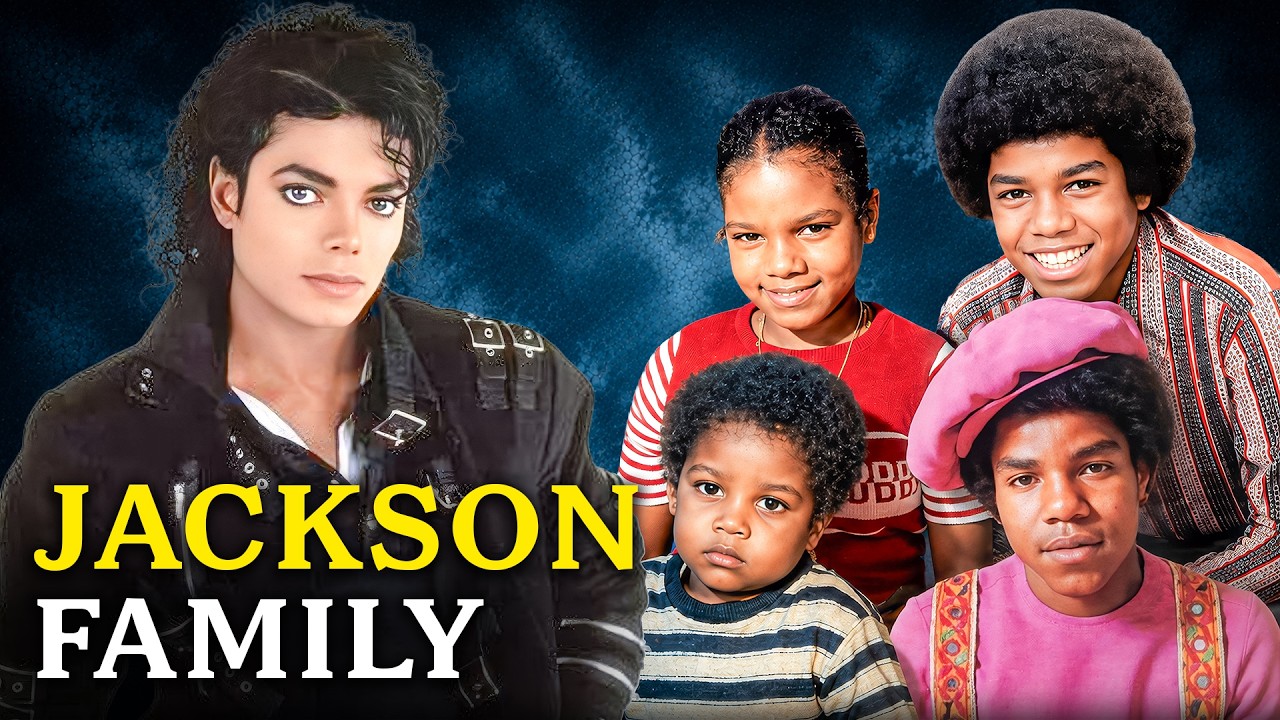
The oldest, Rebbie, was born in 1950, followed by Jackie, Tito, Jermaine, La Toya, twins Marlon and Brandon, Michael, Randy, and finally Janet in 1966. Brandon died shortly after birth, leaving nine surviving siblings. Music dominated the household from an early age. Joe recognized his sons’ talent and pushed them through rigorous rehearsals, a disciplinary approach that would later become one of the most debated aspects of the family’s history.
By 1964, Jackie, Tito, Jermaine, Marlon, and Michael were performing together as the Jackson 5, with Michael, still barely a toddler, emerging as the standout lead vocalist. The Jackson 5 signed with Motown Records in 1968, and their early hits including “I Want You Back,” “ABC,” and “I’ll Be There” made them national stars almost overnight. Their success was unprecedented: a group of children achieving consecutive number one hits and becoming a multimedia phenomenon with merchandise, an animated cartoon, and television appearances. Within a couple of years, the family moved from Gary to Southern California.
In 1975, the group left Motown for a more lucrative deal with Epic Records, but Jermaine stayed behind. He had married Hazel Gordy, daughter of Motown founder Berry Gordy, and chose loyalty to his father-in-law’s label over following his brothers. Randy, still a teenager, stepped in to fill his place. The group, now performing as the Jacksons, continued under Epic, while Jermaine pursued a solo career that never matched the commercial heights his brothers achieved together.
As Michael’s solo career exploded in the early 1980s, making him the biggest pop star in the world, each sibling followed a different path. Some found success, while others faced difficulties that only came to light years later. La Toya Jackson’s story stands out for its severity. In 1987, she hired Jack Gordon as her manager, and their professional relationship soon became personal.
On September 5, 1989, after a concert in Nevada, La Toya says she was forced into marriage with Gordon, with bodyguards intercepting her multiple times as she tried to flee the chapel. She has described years of isolation from her family, physical violence, and psychological manipulation, including an incident in Rome where Gordon struck her head against a hotel table hard enough to leave a black eye. La Toya has said Gordon threatened to kill her brother Michael and sister Janet if she ever left him, a threat that kept her trapped for years out of fear for her family’s safety rather than her own. During this period, she published a controversial autobiography containing harsh allegations against her father, claims she later said were dictated by Gordon as another means of control.
She also posed for Playboy in 1989, one of the best-selling issues in the publication’s history, even as her private life remained defined by fear. She escaped the marriage in the mid-1990s with help from her brother Randy, after learning Gordon had arranged for her to appear in an adult film without her knowledge. The marriage was formally dissolved in 1997, and Gordon died of cancer in 2005. La Toya has said she spent the first several months after leaving too afraid to even leave her own home.
Financial hardship touched several of Michael’s brothers after the group’s commercial peak. Jermaine launched a business venture called Jackson Communications Incorporated that collapsed under more than $45 million in debt, forcing a Chapter 11 bankruptcy filing in 1997. Reports described him living without steady income, shuttling between family homes while facing millions in liens. Randy filed for personal bankruptcy in 1996, then pleaded guilty to bankruptcy fraud in 2001 for failing to disclose a sports car worth about $21,000 as an asset.
He also accumulated substantial unpaid child support, reportedly totaling close to half a million dollars at certain points, and relied on financial support from his siblings while taking jobs including automotive repair work. Even La Toya faced a mid-1990s bankruptcy filing, and Jackie struggled to find consistent footing in the business world, running two small independent record labels with mixed results. Tito maintained the most consistent connection to music, continuing to perform well into his 60s and 70s. He released his debut solo blues album in 2016 with a follow-up in 2021, collaborating with his three sons, Taj, Taryll, and TJ, who formed the group 3T.
In 2021, he released “Love One Another” featuring his sons and Stevie Wonder, with a music video bringing together most of his surviving siblings and their mother Katherine. Tito’s personal life included profound tragedy. He married Delores Martes, known as Dee Dee, in June 1972, and the couple had three sons before divorcing in 1993. The following year, Dee Dee’s body was found floating in a swimming pool at her boyfriend’s home.
Investigators revisited the case, and her boyfriend was ultimately convicted of second-degree murder in her death. Tito relocated to Oklahoma in his final years, drawn in part to Tulsa through a great uncle who had survived the 1921 Tulsa race massacre. On September 15, 2024, he was traveling by car from New Mexico back toward his Oklahoma home while transporting several antique cars when he began experiencing severe chest pain while stopped near a shopping mall in Gallup, New Mexico. He was rushed to a local hospital and pronounced dead at age 70.
Medical experts later commented that the delay in receiving emergency care while stopped in the mall parking lot may have been critical, noting that immediate treatment is essential during a cardiac event. His sons announced the loss publicly in an emotional statement, describing their father as a man who cared deeply about everyone’s well-being. Janet Jackson shared a simple tribute about a month later, one of the few public statements from surviving siblings in the weeks following his death. Janet Jackson, the youngest of the 10 children, built a career that made her one of the most successful and influential artists of her generation.
Beginning as a child actress, she transitioned to music and broke free of both her family’s shadow and her early managers’ creative control with albums throughout the late 1980s and 1990s that redefined popular music and dance choreography. Her career faced significant disruption following a widely discussed Super Bowl halftime moment in 2004, which many industry observers later argued affected her trajectory far more severely than it affected her male performing partner. Radio stations reduced airplay of her music, and several planned projects were affected. She rebuilt steadily over the following two decades, continuing to tour and record, and was eventually inducted into the Rock and Roll Hall of Fame.
She also entered a business partnership with her brother Randy, making him a co-partner on her independent record label. Michael Jackson died on June 25, 2009, at his Los Angeles home. His finances at the time were revealed to be in far worse shape than the public had understood, with court filings eventually showing debts exceeding $500 million, the result of years of aggressive borrowing against assets including his music publishing catalog and Neverland Ranch, along with mounting legal fees. His estate’s executors spent years restructuring and eliminating those debts, eventually stabilizing what became an enormously valuable business that has reportedly generated billions of dollars in revenue since his passing.
Michael’s death reignited questions about custody of his three children and control over his estate. His mother Katherine took on a central role in caring for her grandchildren, with occasional disputes over guardianship and estate decisions spilling into public view. Joe Jackson died in June 2018 at age 89, leaving Katherine as the family’s sole surviving parent, now in her 90s. Today, six of the 10 Jackson children remain alive.
Rebbie, the eldest, has largely stepped back from the public eye, having been married to Nathaniel Brown from 1968 until his death in 2013. Jackie has continued performing occasionally, including a Unity Tour with Tito, Jermaine, and Marlon in 2012 and 2013. Jermaine has remained active in the music industry, founding his own label and frequently speaking publicly about Michael’s legacy. La Toya has rebuilt her public image and become an advocate on domestic abuse issues.
Marlon has largely stepped away from the spotlight, and Randy has continued his work with Janet’s record label. The Jackson family story, spanning from a cramped Indiana living room to global fame, bankruptcy courts, and profound personal losses, resists easy simplification. Extraordinary achievement and genuine hardship have existed side by side for decades, often within the same household.
What remains is a smaller, quieter version of the family that once dominated record charts, six siblings still connected by shared history, shared grief, and a last name likely to remain synonymous with American popular music for generations to come.