Washington, D. C. — At 11:45 a.
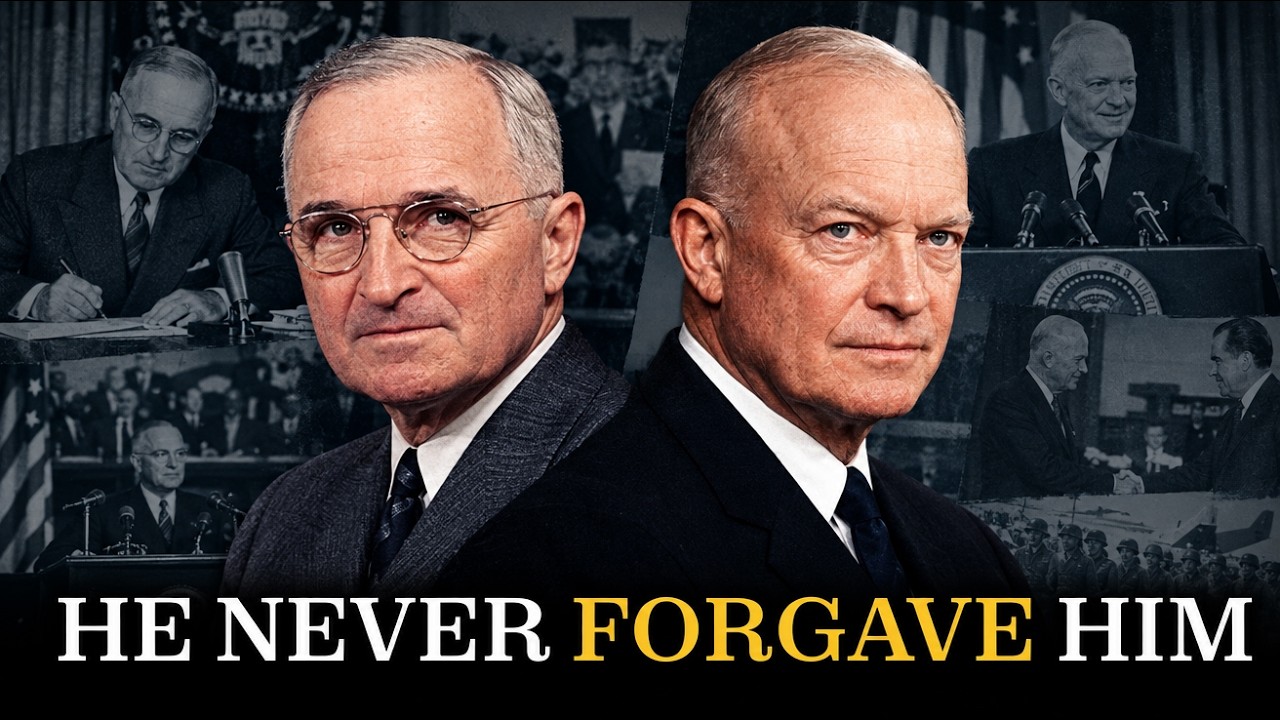 m. on January 20, 1953, the most popular man in America sat in a limousine outside the North Portico of the White House and refused to get out. Inside, President Harry S.
Truman waited in the Red Room with coffee poured for a guest who never came through the door. Dwight D. Eisenhower, the general Truman had plucked from obscurity and handed four stars, stayed in the car with Richard Nixon while the outgoing president of the United States walked out to meet him.
Every reporter on Pennsylvania Avenue understood what they were watching, and every one of them wrote it down.
The insult was deliberate, and it was only the beginning. What historians have long treated as a personal grudge between two proud men was in fact the collapse of a patronage bargain struck in the rubble of Berlin in July 1945 — a deal with terms, obligations, and a debt that one side refused to pay. The full account, reconstructed from presidential papers, oral histories, and declassified correspondence, reveals a rupture far deeper than the coffee that was never drunk.
The two men were not natural enemies. The letters survive, and they are warm. Truman wrote to Eisenhower with an affection he showed almost no one outside his family.
Eisenhower replied with a formality that occasionally cracked into something like tenderness. In the summer of 1945, Truman had been president for eleven weeks, had never been told about the atomic bomb until he inherited it, and was seated in a borrowed villa outside a ruined German capital, searching for allies with reputations larger than his own. Eisenhower was the most admired man in the Western world.
Four million people had lined the streets of New York to watch him parade.
In a car touring the wreckage of Berlin, Truman told the general there was nothing he could want that the president would not help him obtain — explicitly including the presidency in 1948. Eisenhower’s own memoir confirms the offer and his demurral. Truman meant it.
His private diary from those weeks describes Eisenhower as a fine companion and a good man he would be happy to help anywhere he wanted to go. What Truman needed was borrowed legitimacy. What Eisenhower needed was a patron who would let him say unpopular things about military unification without being destroyed for them.
Both got what they needed. For seven years, it worked.
The architecture of the relationship rested on one figure above all others: George Catlett Marshall, the man Truman called the greatest living American. Marshall plucked Eisenhower from among hundreds of colonels in 1941, promoted him over more than three hundred senior officers, and surrendered command of the Normandy invasion — the one thing he wanted in his life — so that Eisenhower could have it. Truman understood this debt because he had spent his own life keeping accounts.
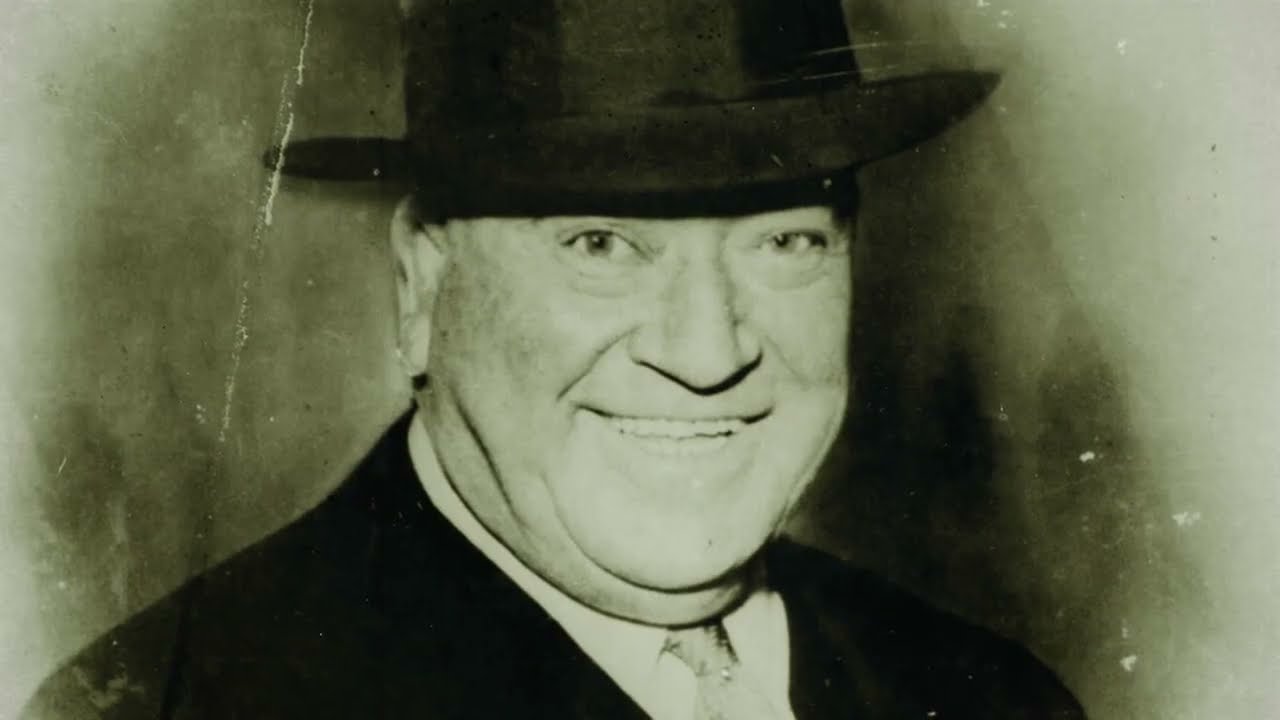
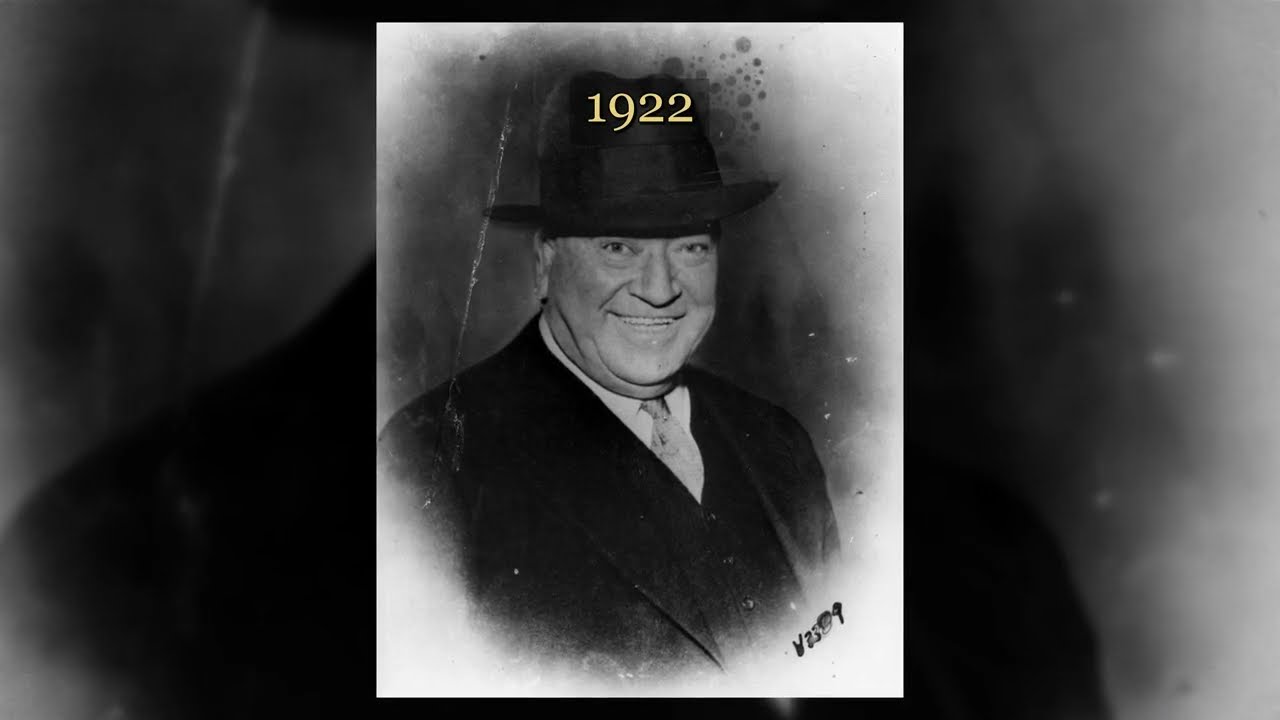
He had paid off a failed Kansas City haberdashery for over a decade rather than declare bankruptcy. He had traveled on an Army bomber to attend the funeral of Tom Pendergast, the disgraced machine boss who made him, when every adviser told him to stay away. In Truman’s moral vocabulary, the man who spent his capital on you is never forgotten.
Then came Milwaukee. On October 3, 1952, Eisenhower stood on a platform beside Senator Joseph McCarthy, who eighteen months earlier had read a 60,000-word speech into the Congressional Record accusing Marshall of participating in a conspiracy so immense it dwarfed any in human history. A paragraph defending Marshall had been written into Eisenhower’s Milwaukee speech, approved by the candidate, and distributed to reporters aboard the campaign train.
 Wisconsin’s Republican governor, Walter Kohler, objected on tactical grounds. Sherman Adams took the question to Eisenhower. Eisenhower agreed to the deletion.
The reporters had the advance text. They could see exactly what had been removed and from where. The New York Times reported the excision within a day.
Truman never read Milwaukee as a campaign tactic. He read it as a man refusing to settle a debt. He said publicly he could not understand how a man could do that to the general who made his glory.
He used the word he reserved for the worst thing he could think of about anyone: he called Eisenhower a coward on that platform. He repeated it for the rest of the campaign and the rest of his life.
Eisenhower had his own grievance, and it was not manufactured. His son, Major John Eisenhower, was serving in Korea when he was ordered home for the inauguration. In Truman’s account of the silent three-quarter-mile ride to the Capitol, Eisenhower asked who had pulled John out of the combat zone and implied the order was designed to humiliate him.
Truman said he replied that the president of the United States had done it, and that if Eisenhower believed someone was trying to embarrass him, the president would take full responsibility. Eisenhower remembered the conversation differently. Both men were writing for history and knew it.
What followed does not depend on anyone’s memory. After that ride, Harry Truman never entered the White House again while Dwight Eisenhower lived there. Eight years.
Two full presidential terms. A living former president, a neighbor from Missouri to the entire foreign policy legacy of the sitting administration, received not one invitation. His first return came in November 1961, under John F.
Kennedy, who let him play the piano in the East Room.
The estrangement hardened into something stranger than silence. In 1956, Truman wrote to Eisenhower about the presidential library he was building, requesting documents and support. The reply came from a subordinate.
When the Truman Library opened in Independence on July 6, 1957, Herbert Hoover attended — the Republican Truman had rehabilitated by sending him to Europe on relief missions — and delivered a speech about the exclusive organization of former presidents. Eleanor Roosevelt came. Chief Justice Warren came.
Eisenhower did not, sending a letter instead.
 Then came the story of the letters, and it is here that the record turns ugly. In its full form, the tale holds that during the war Eisenhower wrote to Marshall announcing his intention to divorce Mamie and marry Kay Summersby, his English driver and aide; that Marshall replied in fury, threatening to expel Eisenhower from the Army and ensure he never had a peaceful day for the rest of his life; and that Truman, as president, found the correspondence in the files, ordered it removed, and destroyed it. The story appeared in print in 1974 in Merle Miller’s “Plain Speaking,” an oral biography drawn from 1961 and 1962 interviews for a television project that was never completed.
It does not survive scrutiny. Archivists and researchers have examined Marshall’s papers at the George C. Marshall Foundation in Lexington, Virginia, and Truman’s papers in Independence for precisely this material and found nothing — no copy, no log entry, no file notation, no aide who remembered the task.
Marshall’s own office kept meticulous records, precisely because Marshall assumed history would audit him. The source problem is worse. Robert Ferrell, who edited Truman’s memoirs and letters and wrote one of the authorized biographies, examined Miller’s tapes and concluded that “Plain Speaking” contained material that does not appear on them as printed, that quotations were assembled, polished, and in places invented.
Francis Heller, who actually worked with Truman on his memoirs in Independence in the early 1950s, made a similar argument. Their critiques, published in the 1990s, are now widely accepted by Truman scholars.
Even setting authenticity aside, the story’s architecture is unmistakably Truman’s. It does not accuse Eisenhower of adultery. It accuses him of asking George Marshall’s permission to behave dishonorably, and of being saved from himself only by Marshall’s threat.
In the tale, Marshall is the moral authority and Eisenhower is the man who owes his career to him twice over. It is Milwaukee translated into a bedroom story. Whether Truman authored it or Miller polished it into final form, the structure is the ledger, the patron, and the protégé who would not take a stand.
Truman had lost the election, lost the office, lost the argument over his own record, and lost any ability to make the country see what he saw. All that remained was the claim that he knew something. He fought with the only ammunition available to a man out of power.
He fought with a story, and it worked in the crooked way such things work. The Summersby letters have been repeated in a thousand articles and dozens of books. Ask people today what Harry Truman knew about Dwight Eisenhower, and that is what they will tell you.
The weakest-sourced claim in the entire feud is the one that has endured best.
There was one near-rapprochement, and it is almost comic. After Dallas in November 1963, both former presidents came to Washington for the state funeral. Both were at the cathedral, and afterward Truman invited Eisenhower to Blair House for a drink.
Eisenhower went. Accounts of that conversation are thin and secondhand. No apology was offered by either side, no discussion of Milwaukee or the globe or the car ride, but they sat together for more than an hour and talked.
Margaret Truman’s account calls it a genuine thaw. Others describe two very old men being decent in the shadow of a young man’s murder.
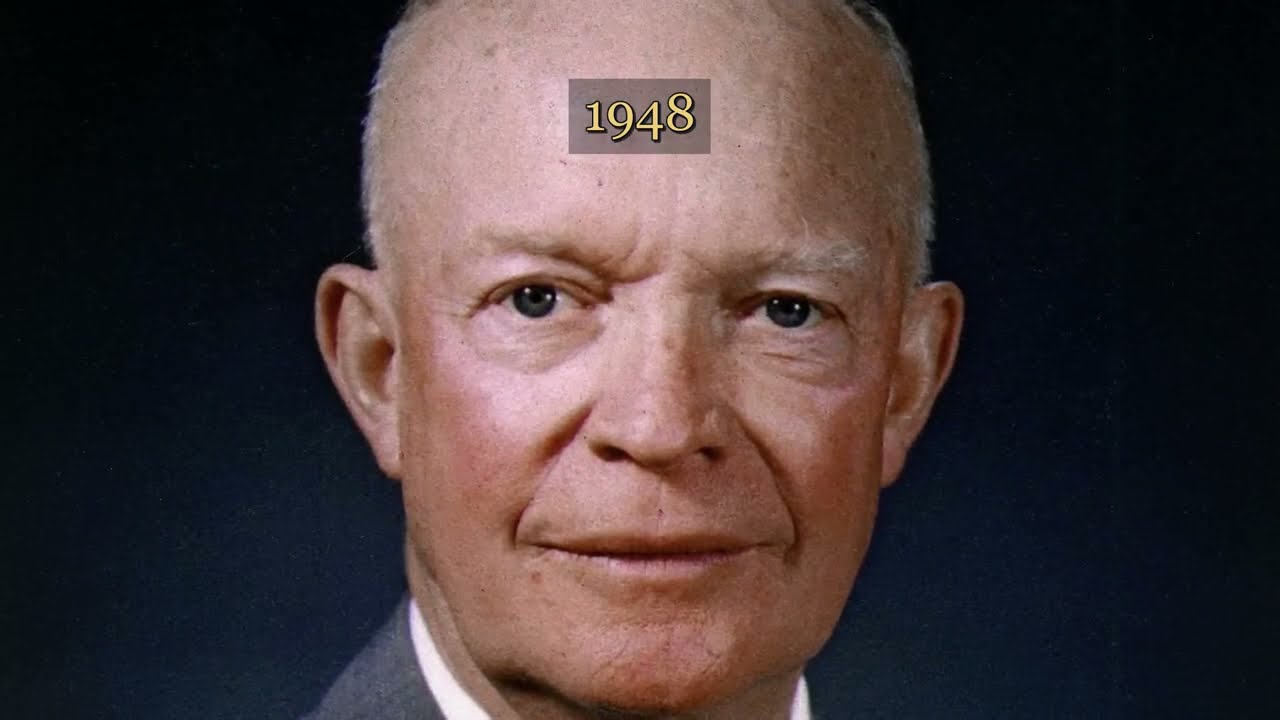 In 1964, Eisenhower visited the Truman Library in Independence, and Truman personally walked him through the building, showing him a replica of the Oval Office. There, at last, was the globe — the one from Eisenhower’s wartime headquarters in Europe, the gift Eisenhower had given Truman, the one Truman tried to return in November 1952 and Eisenhower refused, saying it belonged to the White House. It had not stayed there.
It went to Independence with Truman’s papers and now sits in the museum, in the reconstructed office, catalogued as a gift from Dwight D. Eisenhower. When Eisenhower walked through that replica, he passed the thing he had refused to take back from a man who would not drink coffee with him.
Eisenhower died in March 1969. Truman was too frail to travel to the funeral. He issued a statement calling him a great general and a great president — more generous than anything he had said in twenty years, and entirely unrequired.
Truman died in December 1972 in Kansas City at 88. Neither man’s public assessment of the other ever matched what he said in the middle of the fight.
Strip away the insults and what remains is a patronage relationship between two men who genuinely admired each other in 1945, governed by an arrangement with specific terms. Truman supplied the office, the promotion, the protection, the latitude, and one tax ruling of enormous value that let Eisenhower keep the fortune from his war memoir. Eisenhower supplied the prestige, the competence, and the credibility a transitional president could not manufacture alone.
Each made the other historically possible. Truman is considered a great president substantially because of the Marshall Plan and NATO, and NATO became real because Eisenhower went to Paris. Eisenhower became president largely because Truman placed him in the two jobs that kept him nationally visible from 1945 to 1952.
Then one ran against the other and won, and the patron discovered that the protégé who had become a principal no longer needed the ledger. The cruelty was not the campaign. Campaigns are savage, and Truman threw plenty of punches himself.
The cruelty was in what the aftermath looked like. Eight years in which a president could have lifted a telephone and ended it with a single invitation to the Red Room, and chose not to, term after term, while the man in Missouri sold off farmland, wrote his memoirs in longhand, and waited.
Eisenhower stayed in the car because he had already decided he owed nothing to the man in that house. Truman stood at the entrance because he had spent his whole life believing debts of that kind are never settled — only honored or denied. Both men got what they built.
Eisenhower got the presidency, eight years, and a library in Abilene that tells you he was called to duty. Truman got a library in Independence with a globe in the office and a story about burned letters that may never have been true, and that will outlive both of their official accounts anyway.
Ask which man won, and the answer depends entirely on which building you are standing in.