On 15 March 1944, an exceptionally unusual situation unfolded in occupied Warsaw. Two members of the Home Army checked their weapons, headed toward Miodowa Street, and carried out the effective liquidation of Mieczysław Darmaszek, a harmful confidant who had contributed to the deaths of at least a dozen Poles.
Relatively little is known about the 27-year-old Darmaszek. He was born on 29 March 1917, the son of an accountant, Aleksander, and Konstancja, née Garnysz.
During the occupation he worked for a time as a labourer in the Reich before returning to Warsaw, where he lived at various addresses. Many indications suggest that some members of his family made positive marks in Polish history, taking part in the Warsaw Uprising and fighting in the ranks of the National Armed Forces.
Mieczysław, for unknown reasons, chose a completely different path. The Home Army counterintelligence was aware of his confidant activities as early as 1943.
Underground documents recorded that Darmaszek, after being expelled from school, did not work anywhere and went into the service of the Gestapo. He had money and drank. On his accusation, in June 1943, 13 people were arrested by the Gestapo at the "Magnet" factory on Stępińska 13.
He also handed over colleagues from school and from the "Polonia" football club, and hardly a day passed without arrests of Poles. Apart from the Mokotów factory, he denounced the baker's son, Kwiatkowski. Already eight people were dead, and the rest were dying in Auschwitz. At night he gambled in the casino in Szucha.
Darmaszek was a very effective confidant. He listened carefully, observed, and guessed who might have links to illegal activities, then denounced specific individuals to the Gestapo.
A convenient place for his infamous activities was the building of the 5th Health and Welfare Centre at 24 Miodowa Street, where his brother, Bogusław, worked. It was here that he came into contact with Home Army soldiers whose denunciation brought him punishment from the Polish underground.
Information on Darmaszek's activities continued to mount, and it is difficult to explain why the Home Army delayed the order to liquidate him until December 1943, when high-ranking soldiers of the Polish underground fell victim to his next denunciation.
The circumstances for the denouement proved extremely convenient for the spy. As Christmas approached, most Poles, including Home Army soldiers, visited each other at wafer gatherings to wish each other well during a difficult wartime time.
One such meeting was organised on 21 or 23 December 1943 in a flat at 20 Emilia Plater Street. Among those attending were Maria Łozińska, pseudonym Dobrochna, Wanda Tworowska, pseudonym Myszka, and Jadwiga Kuberska, pseudonym Mea.
After the ceremony, despite the curfew, Kuberska decided to risk returning home. She did not manage to reach it in time, because Gestapo officers were already waiting outside her house, in the gate of the tenement house at 23 Miodowa Street, and a moment later they also set up a trap in her flat.
Unhappily, other members of the Home Army were inside: Jerzy Kleczkowski "Jurek" and Edward Madej "Felek", who were arrested together with Kuberska's father and sisters and taken to prison.
Probably on the same day, on Zakroczymska Street, the Germans also captured Irena Kalinowska "Ludka", who worked with Mea and also came to the Centre where Darmaszek appeared.
In Kuberska's flat, the Germans found parcels of conspiratorial press, which became the main motive for harsh interrogations of those arrested. None of them, despite the enormity of the brutality, revealed any conspiratorial secrets.
During the arrest, Kuberska recognised Darmaszek, who indicated to the Germans that they had captured the right person. On 30 December 1943, she sent a secret message to the members of the underground who remained at large, who took immediate steps to pass a death sentence on the harmful snooper.
This was not a simple thing to do, and everything had to be done in the majesty of the law, especially as it involved the liquidation of a civilian citizen of the Republic. There is considerable ambiguity as to who was responsible for issuing the sentence.
Theoretically, this should have been done by the Special Military Court, but it was done by a court subordinate to the Government Delegation for Poland. The sentence itself was handed down post factum, which was within the norm of the judiciary of the time.

Darmaszek's denunciation meanwhile reaped a bloody harvest. On 3 February, in retaliation for the liquidation of General Franz Kutschera two days earlier, the Germans shot hostages, including all the Kuberska sisters, their father Tadeusz, and "Ludka".
Seven days later, Jerzy Kleczkowski "Jurek" and Edward Madej "Felek", who had been arrested in Kuberska's flat, were executed. For the Polish underground, this was a painful blow.
The aforementioned soldiers were among the true elite of Polish diversion, participating in such important combat actions as the attempted liquidation of Friedrich Kruger or the Góral Action, during which 100 million zlotys were stolen from the Germans.
At that time, work was already underway to properly work out the confidant, made possible by a preventive death sentence on Mieczysław Darmaszek issued on 19 January 1944. The possibility of such a verdict was at the disposal of Antoni Chruściel, also known as Nurt.
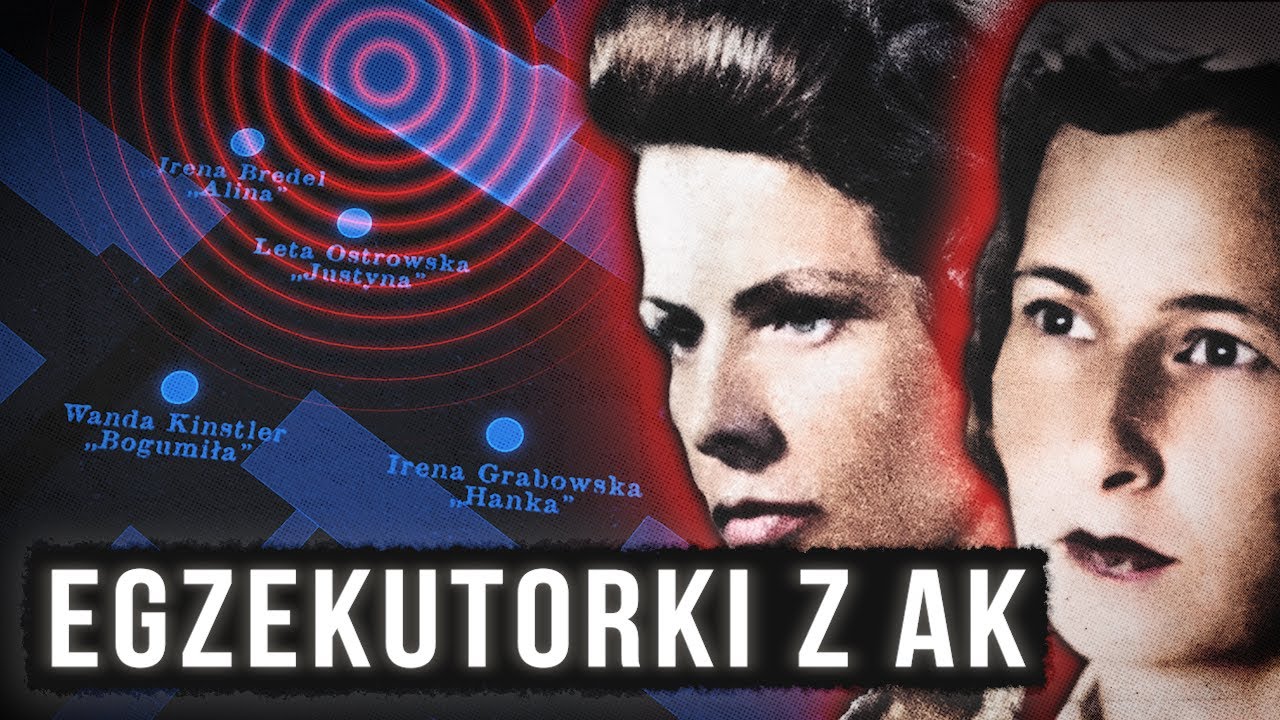
Women, specifically members of the Women's Miners' Patrols of the Diversion Management of the Home Army Warsaw District, volunteered for this not easy task. At the KPM briefing at 69 Wilcza Street, Irena Bredel, pseudonym Alina, and Letycja Ostrowska, pseudonym Justyna, volunteered.
The main pillar of the volunteers' activities was the observation of Darmaszek on Miodowa Street. Irena Grabowska, also known as Hanka, Kwieta Kurkowska, also known as Kwietka, and Michalina Petrykowska, also known as Micia, also provided assistance.
Also invaluable was the participation of Alicja Pniewska, also known as Alka, who lived on Podwale Street. She described her involvement in the action by recalling that Irena came to her and told her that someone had been arrested from the miners' unit and that they knew who had turned her in.
It turned out that it was a Volksdeutscher. Irena told her that she couldn't stand more than a few hours of torture and that they had to remove everything from the place where she worked and where she might have had incriminating things.
Then Irena came to her and said that he was walking on Miodowa Street and that there was going to be an attack there. They needed premises, so they asked whether they could get situated in her flat and hunt him down. She agreed.

On the day of the liquidation, 15 March, Irena came with two more girls whom she did not know at all. Irena was armed, and they were on guard. They told her to go to the office before the assassination so that she would have an alibi.
Everything was basically ready. Now it was necessary to wait for a convenient moment and proceed to liquidate the harmful confidant.
The action was staged on 15 March. That day, in the afternoon, the women selected for the liquidation took up their positions.
Equipped with small arms, Irena Bredel, also known as "Alina", and Leta Ostrowska, also known as "Justyna", stood at 24 Miodowa Street. Also taking part in the action as observers were Wanda Maciejowska, also known as Iza, Irena Grabowska, also known as Hanka, and Kwieta Kurkowska, also known as Kwietka.
It is also possible that the duo of enforcers were additionally insured by Wanda Kinstler, also known as Bogumiła.
Everything went well for the Poles, who at one point saw Darmaszek coming in and leaving the Centre after a few dozen minutes. He then headed toward Kapitulna Street, where he entered a hairdresser's.
The enforcers decided to wait, and when Darmaszek finished his visit and left the salon, Alina and Justyna ran up to him, fired two shots in his direction, and the confidant fell dead.
Unfortunately, at the same time, a lorry full of Germans drove along Kapitulna Street, one of whom started shooting in the direction of the Polish women, fortunately not accurately.
The Polish women retreated along Miodowa Street and Długa Street to the den on Podwale Street. The action was successful.
The liquidation of an exceptionally harmful confidant such as Mieczysław Darmaszek was a complete success and was perhaps the only example of a death sentence in occupied Warsaw being carried out by a female unit of the Home Army.
The main protagonists of this action, Irena Bredel and Leta Ostrowska, kept an admirable cool head, both in the course of working out Darmaszek and during his liquidation.
Irena Bredel did not survive the war, having been killed on 2 August 1944 during the insurgents' storming of the Main Post Office building. Leta Ostrowska died long years after the war, on 6 April 1992. Both soldiers were buried in the Powązki cemetery.