Claudia Alta Taylor was born on December 22, 1912, in Karnack, Texas. She would become known to history as Lady Bird Johnson, first lady of the United States from 1963 to 1969.
Her famous nickname came from a nursemaid who said she was as pretty as a ladybird. The name stuck for the rest of her life.
Lady Bird attended the University of Texas at Austin, earning a Bachelor of Arts degree in history in 1933 and a journalism degree in 1934. Her education laid the groundwork for her future roles in communication and public life.
She met Lyndon Baines Johnson, then a young congressional aide, in Austin in 1934. They married on November 17, 1934, in San Antonio, just weeks after their first meeting.
Their marriage intertwined love with political ambition. Lady Bird played an instrumental role in her husband's career, from his early days in Congress to his presidency, actively participating in campaigns and offering advice and insight.
Her life was also marked by personal tragedy and resilience. Her mother, Minnie Patillo Taylor, died in a fall at their home in 1918, when Lady Bird was only 5 years old.
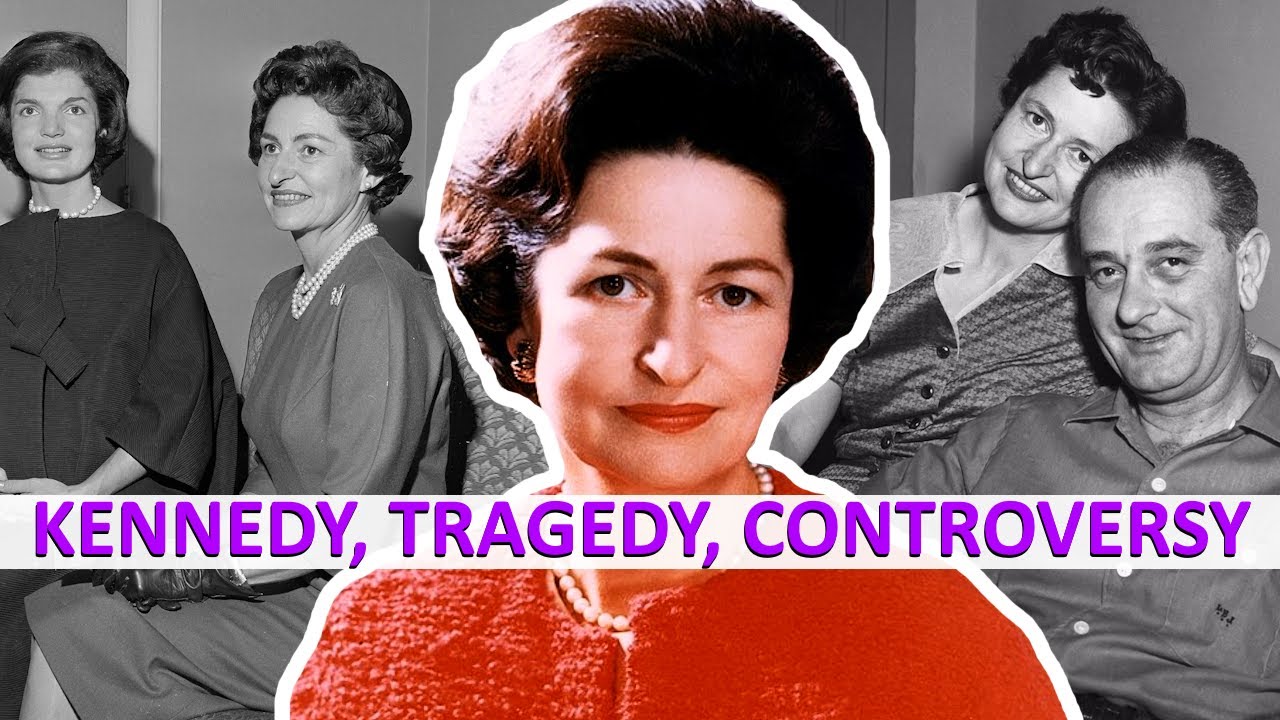
The loss profoundly shaped her childhood. She was raised by her father, Thomas Jefferson Taylor, and her aunt Effie Patillo, and grew into a strong, educated woman known for grace and perseverance.
On November 22, 1963, after the assassination of President John F. Kennedy in Dallas, Lady Bird found herself comforting a grieving nation. She and her husband, Vice President Lyndon B. Johnson, were immediately sworn in and took on their new roles.
She helped with funeral arrangements for President Kennedy and was a pillar of support for Jacqueline Kennedy and her children, Caroline and John Jr. She accompanied Jacqueline Kennedy to the funeral and took part in memorial services, showing empathy and leadership during one of America's darkest hours.
Before becoming first lady, Lady Bird was a successful businesswoman. In 1943, she invested a portion of a modest inheritance in a small Austin radio station, KTBC.
Under her management, the station became highly profitable, beginning the Johnson family's media business. It later expanded to include a television station, KTBC-TV, in 1952.
Her business ventures augmented the family's wealth and helped support Lyndon B. Johnson's early political campaigns, including his run for the U.S. Senate. Her acumen demonstrated skill and independence in an era when few women held such roles.

During the 1960s, Lady Bird championed beautification and conservation as first lady. She was particularly passionate about the Highway Beautification Act, which sought to control outdoor advertising and preserve natural landscapes along America's highways.
Her focus on these issues sometimes drew criticism amid the turbulent climate of the 1960s, marked by the Vietnam War and the Civil Rights Movement. Critics argued her beautification projects seemed disconnected from more pressing concerns.
Despite the criticism, she remained steadfast in her belief that improving the physical environment could have a positive impact on the nation's morale and quality of life.
Her tenure also coincided with deep national division over the Vietnam War, especially in the late 1960s. She was known to have private reservations about the war, yet she publicly supported her husband's policies.
That stance made her a target of anti-war protests. During public appearances and speeches, she often faced protesters, and her responses were sometimes seen as dismissive or overly defensive, further fueling criticism from those who sought a more empathetic acknowledgment of their dissent.
The 1960s also saw the rise of the feminist movement advocating for women's rights and equality. Lady Bird, a successful businesswoman, held a somewhat traditional view of her role as first lady.

Her approach was often seen as embodying traditional female roles, drawing criticism from contemporary feminists. Her reluctance to publicly align with the movement, despite being professional and politically active, was a point of contention for women's rights advocates.
In contrast, she was a proactive advocate for civil rights. She played an active role in promoting the Civil Rights Act of 1964, landmark legislation aimed at ending segregation and discrimination based on race, color, religion, sex, or national origin.
In a bold move, she embarked on a solo whistle-stop campaign tour through the Southern states in October 1964, a region where these policies were particularly contentious. Despite hostility and resistance, she persevered, underscoring her commitment to civil rights and equality.
The tour was significant not only for its political impact but also for demonstrating her personal courage and dedication to crucial social issues.
After leaving the White House on January 19, 1969, Lady Bird remained actively engaged in environmental conservation. In 1982, she founded the National Wildflower Research Center near Austin, Texas.
The center, dedicated to preserving and reintroducing native plants in planned landscapes, reflected her long-standing commitment to environmental stewardship. It was renamed the Lady Bird Johnson Wildflower Center in 1997 and became a leading organization in native plant research and conservation.
Lady Bird received the Presidential Medal of Freedom in 1977 and the Congressional Gold Medal in 1988, recognizing her work in environmental conservation, civil rights, and public service.
She passed away on July 11, 2007, at the age of 94. Her legacy endures through her efforts to beautify America, her advocacy for civil rights and education, and her redefinition of the role of first ladies.