Pierre Laval remains one of the most controversial figures in modern French history. A man who began his career as a champion of the working class ended it as a symbol of collaboration with Nazi Germany.
Laval was born on June 28, 1883, in the village of Châteaudun in central France. His father worked as a cafe proprietor and postman, and the family lived comfortably compared with the rest of the village.
In 1909, Laval married Jeanne Claussat, the daughter of the radical socialist mayor of Châteaudun, Dr. Joseph Claussat. Their only child, a daughter named Josee, was born in 1911.
Laval's early professional life was marked by a fervent commitment to the socialist cause. As a young lawyer and impassioned defender of trade unionists and left-wing agitators, he earned a reputation as a champion of the working class.
Yet as the years advanced and the political landscape shifted, Laval's convictions gave way to pragmatism and opportunism. Between 1925 and 1930, he held a series of governmental positions, including Minister of Public Works, Minister of Justice, and Minister of Labor.
In January 1931, Laval became Prime Minister, and the same year Time magazine named him its 1931 Man of the Year. However, in February 1932, his government was overthrown by the Senate for having attempted to change the electoral law before the legislative elections.
In June 1935, Laval again became Prime Minister. Four months later, on October 3, 1935, 200,000 soldiers of the Italian Army invaded the Ethiopian Empire, then commonly known as Abyssinia, starting the Second Italo-Ethiopian War.
Italy's objective was to incorporate the independent nation of Abyssinia into its Italian Empire and to avenge the 1896 Battle of Adwa, a humiliating defeat when the Ethiopian Army managed to defeat a heavily outnumbered invading Italian and Eritrean force.
In December 1935, Laval and British Foreign Secretary Sir Samuel Hoare made a secret pact for ending the war, proposing the partition of Abyssinia and thus partially achieving Italian dictator Benito Mussolini's goal of making Ethiopia an Italian colony.
On December 9, British newspapers revealed leaked details of the agreement. The proposal was met with outrage in Britain and France and never went into effect. Laval was forced to resign on January 22, 1936, and was driven completely out of ministerial politics.
The Second World War began on September 1, 1939, when Nazi Germany invaded Poland. When Hitler invaded France in May 1940, the shock of military defeat after six weeks rippled through a nation unprepared for the new face of modern warfare.
In those desperate days, as Paris trembled under the threat of occupation, Laval's influence in government grew steadily. It was he who, with cold calculation, persuaded the beleaguered French leaders to remain in the capital rather than flee, insisting that a legal centrally located government was essential to negotiate favorable armistice terms.
His voice, measured and pragmatic, helped usher in the armistice that would ultimately mark the end of the Third Republic on July 10, 1940, a decision that paved the way for the establishment of the Vichy regime.
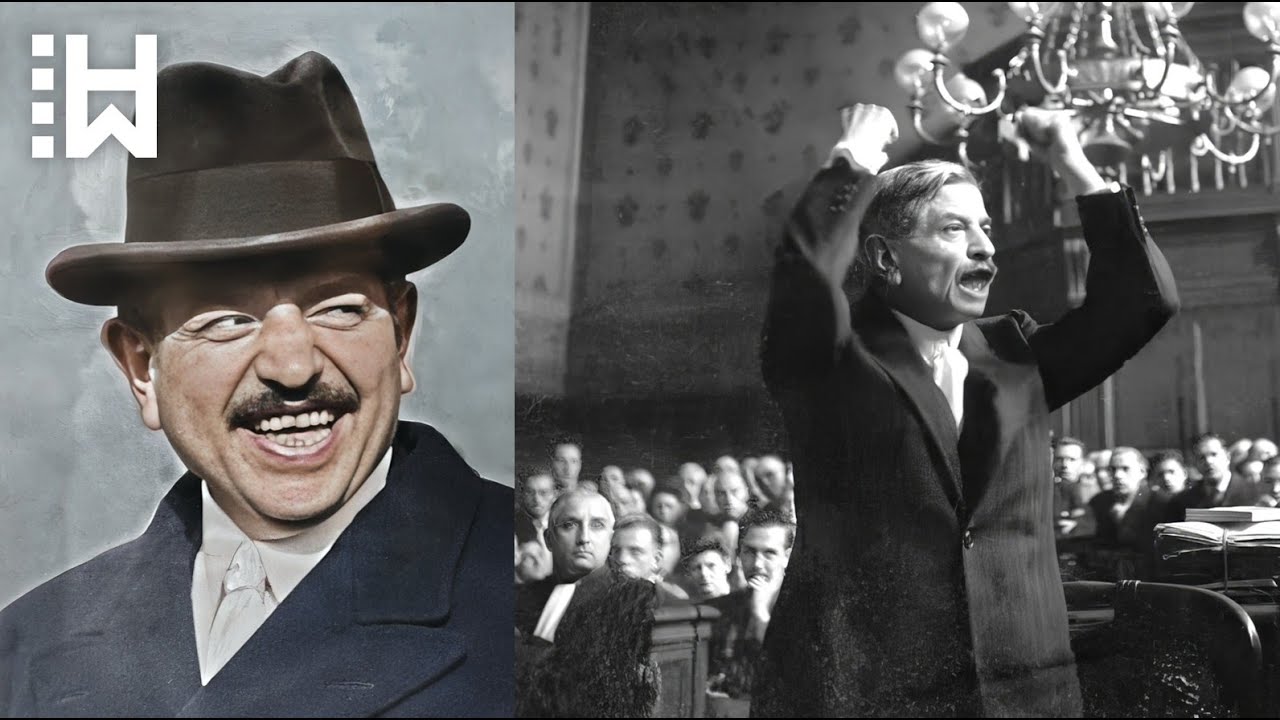
Laval's entry into Marshal Philippe Pétain's government was not merely a footnote in the history of wartime France. It was a defining moment. Initially appointed as Minister of State, Laval quickly distinguished himself as a master of political maneuvering.
His overriding ambition soon became clear. He believed that by collaborating with the seemingly invincible German war machine, France might yet secure a position of influence in a post-war order dominated by Nazi power.
To Laval, the harsh terms of the armistice were not a surrender but a calculated retreat, a necessary compromise that, if navigated astutely, would allow him to shape France's future.
In the early days of the Vichy government, Laval's actions were shrouded in ambiguity. Behind the veneer of legal government lay a series of decisions that would come to epitomize collaboration.
With the fall of France, many had expected a government of resistance or exile. Instead, Laval, alongside Pétain, embraced an approach that prioritized accommodation over defiance.
In his view, capitulation to German demands was not an admission of defeat but a pragmatic acceptance of reality, a view that would come to define his legacy.
Throughout these tumultuous years, Laval's political fate was as volatile as the nation he sought to govern. His methods, marked by a relentless pursuit of personal power and a willingness to shift alliances at a moment's notice, often put him at odds with even his closest collaborators.
In November 1940, Laval took a number of pro-German decisions of his own without consulting his colleagues. One of these decisions was turning the Belgian gold reserves over to German control.
As a result, in December 1940, a sudden and humiliating dismissal from the government sent Laval into a period of enforced obscurity. However, a man who appeared to many Frenchmen as the agent of collaboration, and to others as the Germans' man, re-emerged as French Prime Minister in April 1942 with a determination that left no room for compromise.
His personal ambition, seemingly insatiable, drove him to continue on a course that increasingly alienated him from any semblance of national unity. By April 1942, Laval's influence had grown again.
Reinstated as the head of government in a France already crippled by occupation, he now wielded power with an iron fist. In a now infamous radio broadcast on June 22, 1942, Laval shocked a nation already reeling from defeat.
His voice, measured yet chilling, declared he wished a German victory because without it, Bolshevism tomorrow would settle everywhere. Such words, delivered with a conviction that bordered on fanaticism, laid bare his belief that only by aligning himself with Nazi Germany could France hope to stave off the rise of Bolshevism, a threat he saw as even more dire than the foreign oppressor at France's doorstep.
Yet Laval's collaboration was not merely a matter of rhetoric. In the ensuing months, his government undertook a series of measures that brought the full weight of German domination onto French soil.
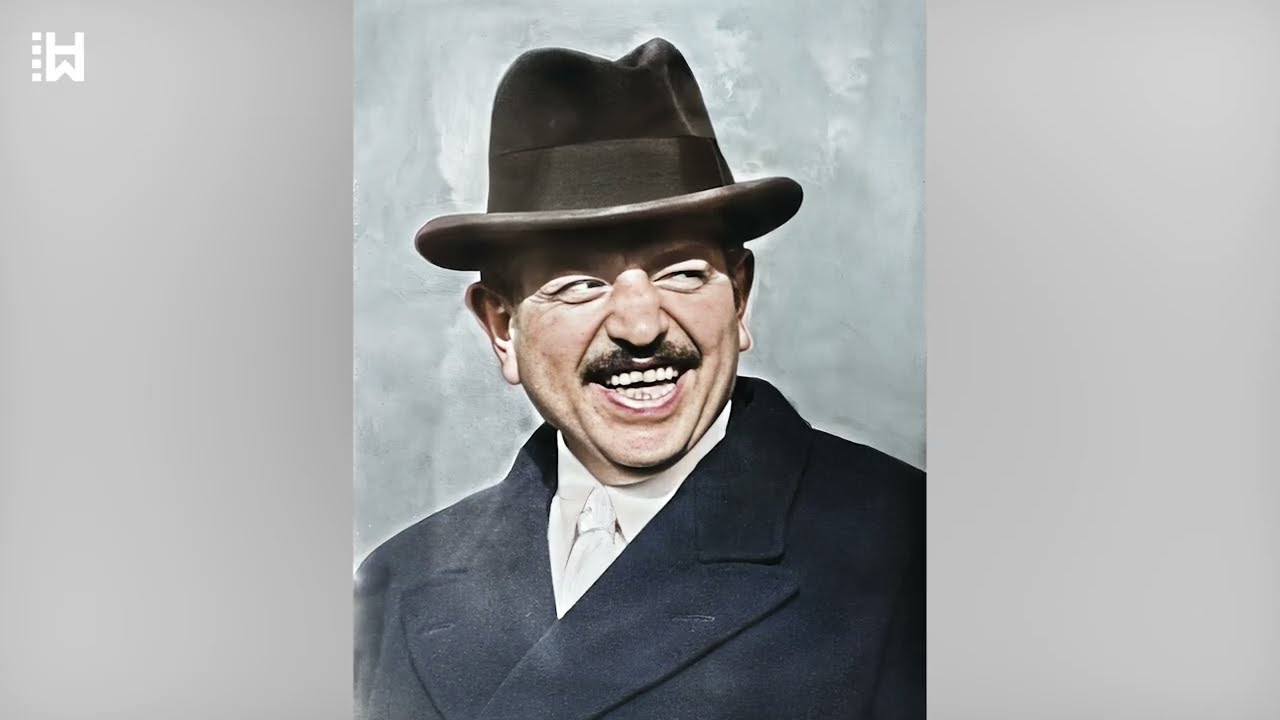
Seeking to demonstrate France's goodwill and to secure concessions from the occupiers, Laval agreed to supply thousands of French laborers to German industries. This decision, couched in the language of pragmatic diplomacy, had a devastating human cost.
French workers were ripped from their homes and thrust into harsh conditions far from their families, their lives reduced to mere cogs in the Nazi war machine.
The policies of Laval's government extended far beyond the economic realm. In matters of internal security and repression, his collaboration took on an even darker shade.
As the French resistance began to stir, Laval's administration responded with a mixture of heavy-handed tactics and treacherous compromises. Extremist collaborators, such as Marcel Déat and members of the Milice, the paramilitary force established to root out dissent, exacerbated the climate of fear.
In a perverse inversion of his early career as a defender of the common man, Laval now presided over a regime that betrayed the very people he once vowed to protect.
One of the most contested aspects of Laval's tenure was his role in the deportation of Jews. Under German pressure, Laval negotiated policies that allowed for the rounding up and deportation of Jews to labor and ultimately extermination camps.
His justifications were couched in terms of preserving national unity and preventing a chaotic internal revolt. Yet the moral implications of his actions were impossible to ignore.
In some instances, Laval went farther than his German overseers had ordered, extending the deportations to include even Jewish children under 16, arguing that family unity must be maintained even in the face of unspeakable horror.
When the French Protestant leader Marc Boegner argued that the children would almost certainly die, Laval replied, "Not one Jewish child must remain in France."
These decisions, made in the name of collaboration, ensured that Laval's legacy would be forever connected with the crimes of the Nazi regime. In all, some 77,000 Jews living on French territory perished in concentration camps and killing centers, the overwhelming majority of them at Auschwitz.
Yet Laval's vision was not limited solely to the pragmatics of survival in a defeated nation. He harbored a deeply held conviction that the future of Europe would be irrevocably altered by the triumph of Nazi ideology.
To him, Germany was not merely an occupying force but the inevitable victor in a global struggle against the twin threats of Bolshevism and democratic decay. In his eyes, the collaborationist policies he implemented were not acts of treason but desperate measures designed to secure France's place in a new world order.
This fatal miscalculation blinded him to the moral and political consequences of his actions, setting the stage for a reckoning that would come in the aftermath of the war. In France, nearly 400,000 civilians were killed between 1939 and 1945.
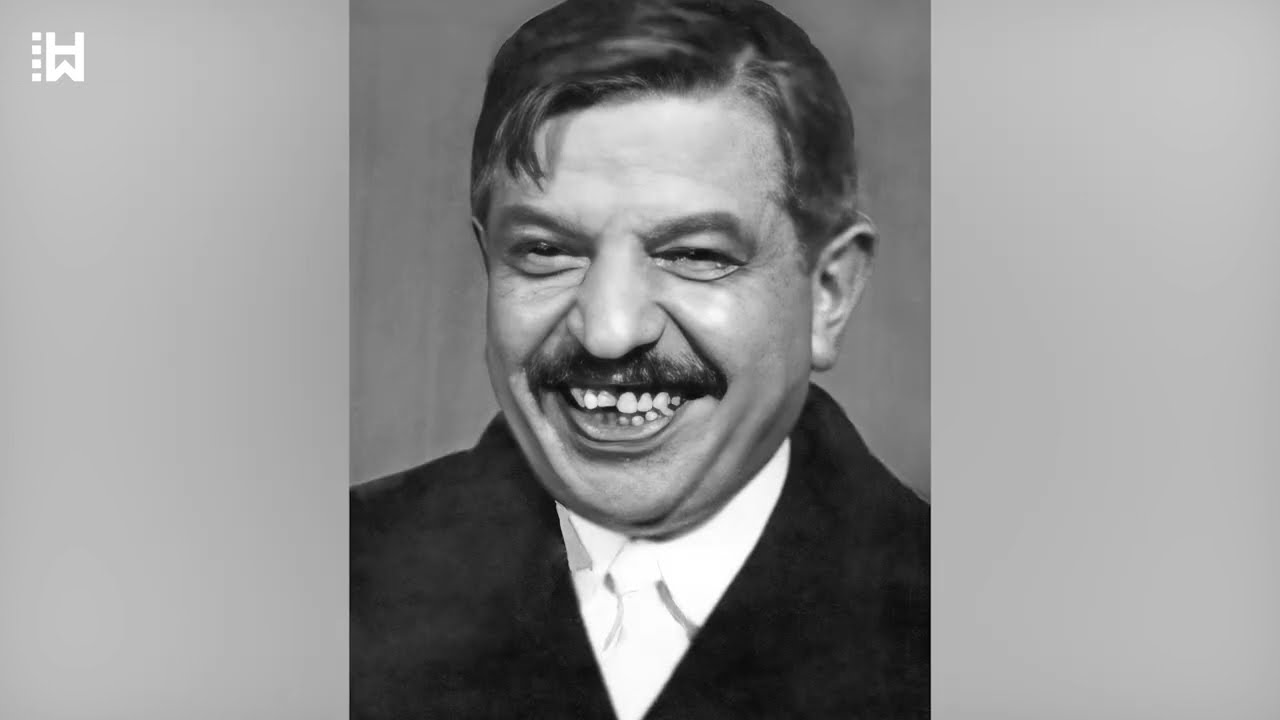
As the tide of conflict began to turn in favor of the Allies, Laval's grip on power weakened. The Allied landings in French North Africa in November 1942 and the gradual increase of resistance activities in France made the Vichy regime increasingly untenable.
Laval not only cooperated with Nazi Germany even after it occupied the southern parts of France, but also when Allied forces were approaching after the successful June 6, 1944, Normandy landings.
In a desperate bid to salvage his dwindling influence, Laval orchestrated a last-ditch effort to reconstitute a semblance of legitimacy. With permission from his German masters, he attempted to recall the National Assembly, a move seen by many as a transparent effort to maintain the vestiges of his power.
However, the plan collapsed amid the chaos of retreat and the Allied advance. Laval's collaboration with the Nazis did not end even after the liberation of France. Together with others, he was active in a quasi exile government on German soil, but this activity was short-lived as it was already clear that Nazi Germany was going to lose the war.
In the final months of the war, Laval's fate was sealed. Fleeing the advancing armies, he sought refuge in Spain, a country still sympathetic to the remnants of fascist ideology. Yet even there, his sanctuary was short-lived.
Under intense international pressure, particularly from the Free French authorities led by Charles de Gaulle, Spain was compelled to expel Laval. His journey of evasion ended with his arrest by American forces in Austria, and he was swiftly repatriated to a France that was no longer willing to tolerate the legacy of collaboration.
During the trial, which began on October 4, 1945, Laval, charged with plotting against the security of the state and collaboration with the enemy, found himself isolated and his defense stifled by a jury that saw him not as a statesman but as a traitor.
To the charge of collaboration, Laval replied, "The insulting way in which you questioned me earlier and the demonstrations in which some members of the jury indulged show me that I may be the victim of a judicial crime. I do not want to be an accomplice. I prefer to remain silent."
A sentence of death was handed down in Laval's absence, and his lawyers were refused a retrial. The execution was fixed for the morning of October 15, 1945, at Fresnes Prison, located south of Paris in the town of Fresnes.
Laval attempted to commit suicide before the sentence could be carried out by taking poison from a vial stitched inside the lining of his jacket. In a suicide note, he explained that he did not intend that French soldiers should become accomplices in a judicial crime.
The poison, however, was so old that it was ineffective, and repeated stomach pumpings revived Laval. This act only underscored the depths of his despair. However, the inevitable could not be postponed.
On October 15, 1945, the 62-year-old Pierre Laval was executed by firing squad, and his final words were "Vive la France," meaning "Long live France."
His corpse was initially buried in an unmarked grave until it was buried in the Chambon family mausoleum at the Montparnasse Cemetery in Paris in November 1945.
Laval's final moments were a tragic finale to a life defined by controversial choices and moral compromises. There were no tears shed for Pierre Laval.