Newly resurfaced historical testimony is renewing global attention on one of the Second World War’s most chilling and least understood atrocities: the death of an Italian princess inside the barbed wire of Buchenwald, the Nazi concentration camp where more than 56,000 people were murdered among the roughly 280,000 who passed through its gates.
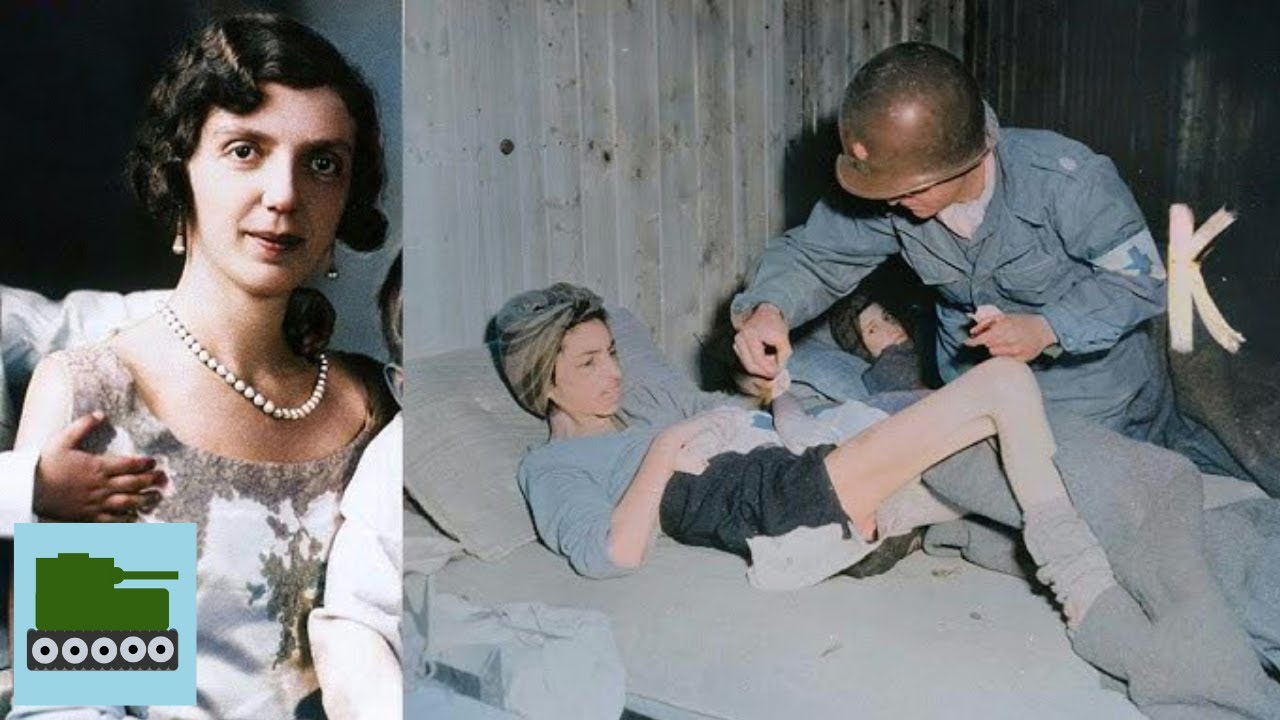
Princess Mafalda of Savoy, daughter of King Victor Emmanuel III of Italy, died in the camp’s infirmary on the night of August 28, 1944, after a botched amputation and what historians describe as deliberate medical neglect by SS personnel. She was 41 years old.
Her death was not a battlefield casualty, nor an execution by firing squad or gas chamber. According to accounts now circulating widely, it was a slow, calculated death by indifference — a policy, witnesses said, that the SS applied with particular cruelty to a royal prisoner they considered an inconvenience.
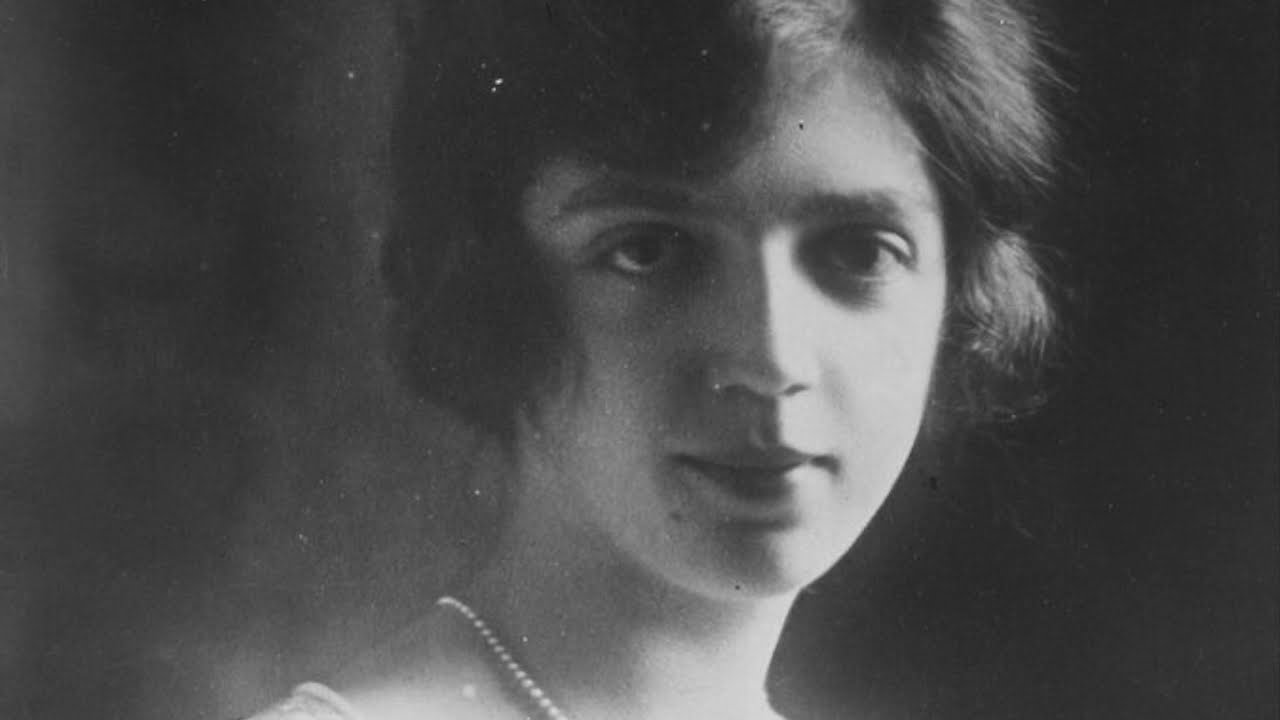
Mafalda Maria Elisabetta Anna Romana was born on November 19, 1902, in Rome, the second of five children of the Italian king and Queen Elena of Montenegro. Her father ascended the throne in 1900 after the assassination of his own father, and would reign through both world wars and the rise and fall of Italian fascism.
Despite their status, the royal household was notably modest. Queen Elena did much of her own cooking and cleaning, having been raised in a small village, and she sought to instill a sense of work in her children. The family lived in a comparatively unpretentious villa in the countryside outside Rome.
Mafalda was highly educated, mastered four foreign languages, played four instruments, and was a keen athlete. At about 21 she contracted typhoid fever alongside her younger sister Giovanna; both nearly died. Frailty would follow her for the rest of her life, and several bouts of illness brought her close to death again.
As a young woman she was linked romantically to the Prince of Wales and to Crown Prince Leopold of Belgium. In June 1925, however, she became engaged to Prince Philipp of Hesse, a German prince, architect and engineer who had served as a lieutenant in the German army during the First World War.
Their union was a geopolitical turning point. It marked the first marriage between two royal families that had so recently been at war, and it required Philipp, a Protestant, to renounce his rights to any future kingdom and agree that their children would be raised Catholic. They married on September 23, 1925, in a lavish royal ceremony, then hosted a more modest celebration for local villagers and attended it themselves.

The couple honeymooned and settled in a villa in Rome. In 1933, Philipp was appointed governor of the Prussian province of Hesse-Nassau — by Adolf Hitler himself. The family moved to Germany, and their children were born in Italy.
As fascism consolidated power under Benito Mussolini, Mafalda was allegedly sympathetic to the movement. When her children were born, Hitler sent her the Mother’s Cross as a reward. She did not, by available accounts, recognize the deeper significance of gifts from the Nazi Party.
Philipp, by contrast, was drawn ever deeper into Hitler’s orbit. He became an honorary member of the Brownshirts, the violent paramilitary wing that disrupted communist meetings and attacked Jews and other minorities. After the Night of the Long Knives purged the SA’s leadership, Philipp rose to the rank of general in the organization.
He served as a go-between and messenger linking Hitler, Mussolini and Heinrich Himmler, head of the SS, and built a personal relationship with the Führer. He also acted as an art agent for Hitler, seeking valuable Italian masterpieces to be stolen or bought at obscenely low prices for the dictator’s private collection.
As governor of Hesse-Nassau, Philipp was complicit in the Action T4 euthanasia program and signed over a sanatorium where roughly 10,000 mentally ill people were killed. He was later charged with murder, but the charges were dropped.
Historians have long debated how far Hitler actually trusted Philipp, given his Italian royal connections through his wife. But it was Mafalda who drew the Führer’s hostility in a deeply personal way. Hitler reportedly referred to her as a “black stain” on the Italian royal house, while propaganda minister Joseph Goebbels labeled her the worst of the Italian royals.
Hitler came to believe that Philipp and his family, including Mafalda, were complicit in orchestrating Mussolini’s downfall and arrest. Philipp was arrested in September 1943, stripped of his Nazi Party membership and sacked from his post. He was taken to Flossenbürg concentration camp, held in solitary confinement and denied contact with the outside world.
 He was given the same food as the guards and allowed to wear civilian clothes.
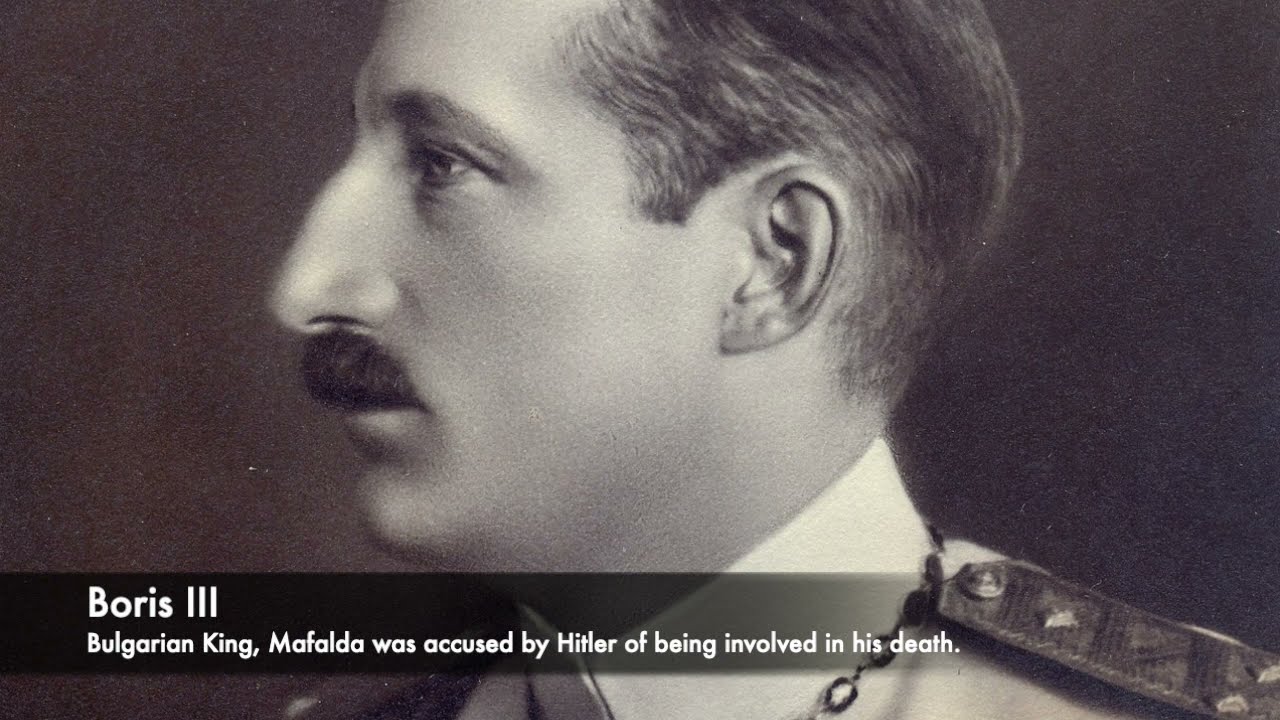
What happened to his wife was far worse. Beyond the accusations surrounding Mussolini, Mafalda was linked in Nazi minds to the death of Tsar Boris of Bulgaria, who fell ill and died shortly after a visit from her. Nazi high command believed he had been poisoned, and it was said his corpse turned black — a pattern similar to the reported death of a Greek prime minister.
Hitler also learned that Mafalda had received ciphers from her husband over the telephone, and concluded the royal couple were behind the Bulgarian ruler’s death. Mafalda was placed under military arrest at her villa in Rome, then transported to Munich for questioning and on to Berlin.
It is assumed she disclosed nothing during interrogation. What followed was extreme: the princess was transported to Buchenwald concentration camp, a site where thousands were murdered and executed during the Holocaust and the Second World War.
Buchenwald was primarily a camp for men. Mafalda was housed in a special compound for dignitaries, imprisoned alongside 54 other prominent European political figures. The SS sought to separate them from the general prisoner population, assigning a special guard and keeping them in buildings surrounded by large fences.
Then, on August 24, 1944, Allied bombs struck an ammunition factory inside the camp. Around 400 prisoners were killed and many wounded, including Mafalda. Her injuries were catastrophic.
She was in a unit near the factory when the attack came and was buried in debris, suffering horrific burns to her arms.
Because of the camp’s appalling conditions, her arm became severely infected. Medical officers at Buchenwald decided to amputate. What followed, according to witness accounts, was a grotesque sequence of delay and negligence.
The operation was performed inside a newly established brothel within the camp. It was long and drawn out. Afterward, Mafalda was left bleeding, operated on by an inexperienced and botching surgeon, and she never regained consciousness.
SS doctors at Buchenwald operated under a policy of delaying procedures unnecessarily — a sick practice intended, in their view, to bring about prisoners’ deaths. Mafalda lay in the camp hospital for days with her burned arm as infection spread.
Another prisoner working in the infirmary, a former surgeon, begged the hospital director to operate. The director waited two more days, allegedly because headquarters had not approved surgery on the Italian princess. Permission finally came, and the amputation went ahead — slow, drawn out and agonizing.
There was no post-operative care or support. The doctor simply left her unconscious in the infirmary. That night, she bled to death.
Investigators believe the SS intentionally held off her treatment and operation for as long as possible.
For the Nazis, the outcome was convenient. They could claim the princess died from injuries caused by Allied bombing rather than by execution or gas chamber. Letting her succumb to her wounds was, in their calculation, a sensible solution to the inconvenience of holding a senior member of the Italian royal family.
After her death, her body was dumped naked in the crematoria and cremated. A priest cut off a lock of her hair and smuggled it out of the camp to be sent to her relatives.
Mafalda of Savoy’s death stands as one of the most 𝓈𝒽𝓸𝒸𝓀𝒾𝓃𝑔 episodes of the Second World War: a princess killed not by a single act of violence but by a system designed to let human beings die slowly. She was one of millions murdered by the Nazis, and her story, long overshadowed, is once again being told.