Recordings made by authorities in the 1980s and 1990s captured several senior Mafia figures in New York expressing harsh and often dismissive views about the younger generation of mobsters rising through their ranks. The opinions of these veteran gangsters, which surfaced through government wiretaps, reveal deep frustration with the conduct, training, and judgment of those who served beneath them. Anthony “Tony Ducks” Corallo, who served as boss of the Lucchese crime family from the early 1970s until late 1986, was recorded in the early 1980s discussing family members and associates who were violating the Commission’s ban on dealing narcotics. Corallo, who had been a favored protégé of previous boss Tommy Lucchese, made clear that he saw drug dealing as an unacceptable risk for his organization.
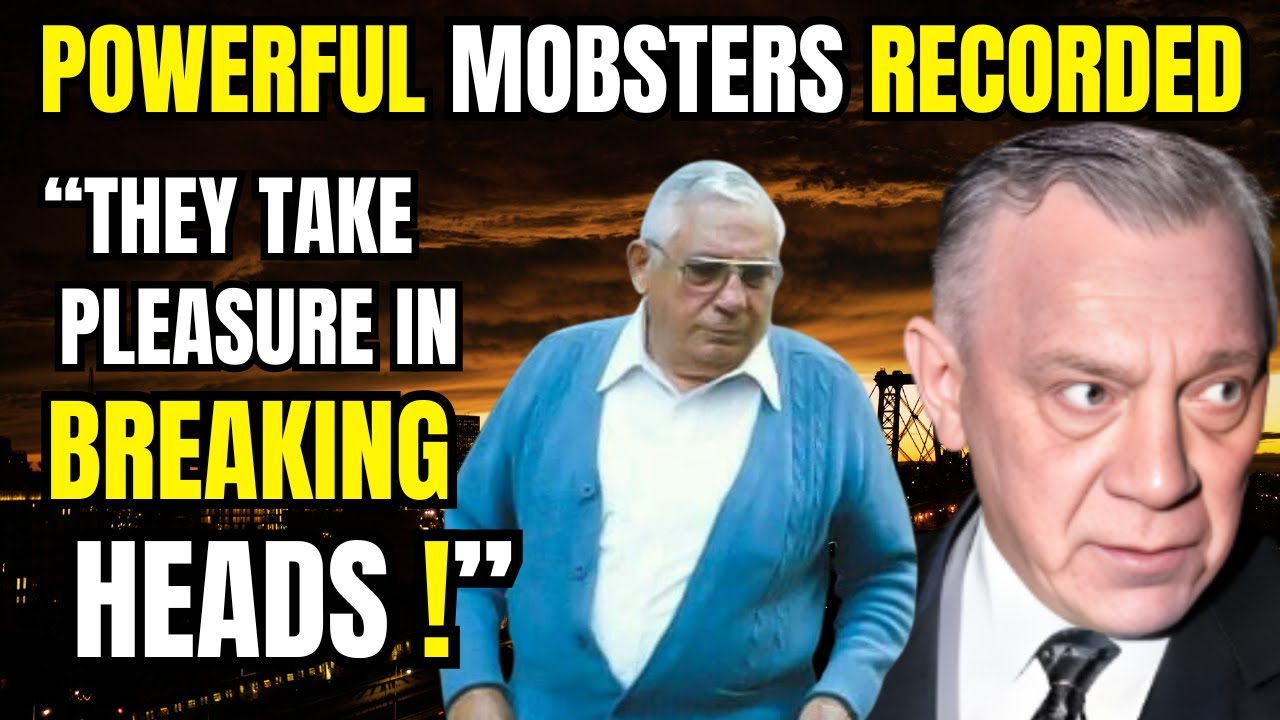
“I don’t want anybody messing around with junk. They got to be killed. That’s all,” Corallo stated in the recording. He argued that the nature of the narcotics business was incompatible with the low profile the Mafia required.
“You cannot be in a narcotics business and flat on your stomach. You got to be exposed to it. You got to go out on the street. You got to sell it.
” He concluded that offenders should be killed to set an example for others. Neil Dellacroce, the longtime underboss of the Gambino crime family, was another senior figure recorded delivering a damning assessment of the state of the American Mafia. Dellacroce, who served as underboss to Carlo Gambino and then to Gambino’s successor Paul Castellano, complained that the discipline of earlier decades had evaporated. “If this was like 20 years ago, you would have found yourselves in some hole someplace,” Dellacroce said.
He continued, “Things change now because there’s too much conflict. People do whatever they feel like. They don’t train their people no more. There’s no more respect.
If you can’t be sincere, you can’t be honest with your friends, then forget about it. You got nothing. ”
Paul Castellano, the Gambino boss who took over after Carlo Gambino’s death in 1976, was often criticized for being a racketeer rather than a street-level gangster. However, a recorded conversation between Castellano and veteran mobster Joseph “Piney” Armone illustrates his measured approach to ordering murders, which he saw as costly and risky actions rather than simple solutions to irritation.
“When we sit down to clip a guy, we have to remember what’s at stake here. There’s some hazards. Guys forget that,” Castellano said. He criticized those who immediately wanted to kill a man over late payments or personal aggravation, noting that such violence hurt the bottom line.
“How do you get your money then? It’s means and ends. The idea is to collect. ”
Armone replied that some men took so much pleasure in violence that they would almost rather not get paid.
Castellano agreed, saying, “Yeah. We got some guys like that. Dick fists I call them. ” He added that every time he could remember the family killing someone, it cost them.
“Somebody gets arrested or there’s a screw up, which means we got to clip another guy. Maybe a guy we don’t want to lose. ”
Despite his reputation for restraint, Castellano is believed to have ordered at least ten murders directly during his tenure as boss. John Gotti, who later took control of the Gambino family after Castellano’s murder, expressed similar disdain for the younger mobsters under him.
Gotti, who was sentenced to life in prison in the early 1990s, launched into a profanity-laced rant while reviewing an indictment naming his son John Gotti Jr. and several codefendants. Reading the list of nicknames, Gotti complained that he could not identify most of the men. “This is stupidity down the line.
I can’t even identify two people in the indictment. The sea monster. Sigund the sea monster. I’m not away 100 years.
I’m only away seven years. Where do these creatures emerge from? ” Gotti said, mocking names like “Sigman the sea monster,” “Tony the one-handed leprechaun,” and “Philly jump over the fence. ” One of the nicknames was real, referring to Steven Sergio, while Gotti invented the others to emphasize his disbelief at the caliber of the younger generation.
Gotti was also recorded commenting on his son-in-law, Carmine Agnello, questioning his intelligence. “What’s the story with Carmine? Does he get in the backseat of the car and think someone has stolen the steering wheel? ” he asked.
These recordings offer a rare glimpse into how the aging leadership of the American Mafia viewed the men who were expected to carry on their criminal enterprise, exposing a clear generational divide over discipline, training, and judgment.