Bourbon Street in New Orleans was alive with music on the evening of January 9, 1965. Five men walking past an open doorway stopped to listen. Among them was the largest player in professional football that year—a 6’9″, 315-pound defensive lineman whose reputation for physical force was already well established. The group decided to check the place out.
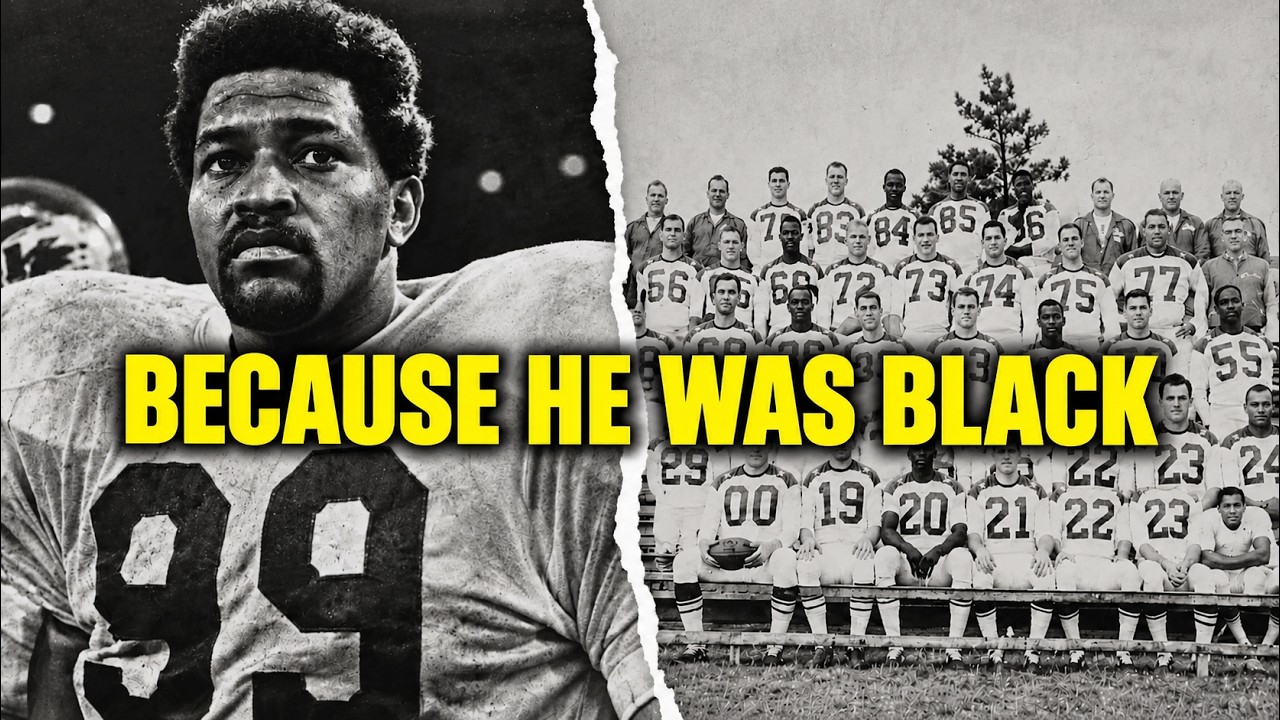
A doorman stepped into the entrance. Words were exchanged. Then the doorman pulled a pistol from his waistband and pressed it against the big man’s face. For a long moment, nobody moved.
The music from inside kept playing. The five men backed away slowly, one careful step at a time. Within 24 hours, that encounter would cost New Orleans a professional football team that had been five years in the making. The story has little to do with football itself and everything to do with what more than 20 men decided together in under two days.
The Civil Rights Act had been signed only six months earlier. On paper, segregation in public accommodations was over. On the ground in Louisiana, years of habit did not end because a president signed something in Washington. New Orleans wanted a professional football franchise badly.
A promoter named Dave Dixon had spent five years building the case that the city deserved one. Hosting the American Football League’s All-Star game was the audition. Tulane Stadium was expected to draw 60,000 fans—the largest crowd the league had ever seen for the event. The week before, the city had hosted the Sugar Bowl without incident.
A Syracuse team with eight black players played in front of the first fully integrated crowd that game had ever seen. Organizers took that as a hopeful sign. They believed the hardest part was behind them. More than 20 black players had been voted onto the two All-Star rosters that year.
Organizers made promises before anyone boarded a plane. Players were told to bring their families. There would be a golf tournament, dinners, everything. It sounded like a vacation with a football game attached.
Then the planes landed, and trouble started at the curb before anyone reached a hotel. White players stepped off the same flights, walked to the same taxi line, and were gone within minutes. Black players standing beside them could not get a single driver to slow down. A rookie defensive back from Buffalo approached the first cab in line.
The driver said he was on his break. The rookie tried the next one, then the next. After several identical refusals, the pattern felt less like coincidence. A Kansas City linebacker, a future Hall of Famer, watched the same scene from a few feet away.
By his own count, he stood at that curb for nearly two hours before a driver quietly explained the rule to him. Certain cabs served certain riders, depending entirely on the color of the man behind the wheel. A 21-year-old halfback from Houston, used to being the only black player on an otherwise all-white college roster, watched cab after cab roll past before a porter spelled it out plainly. He needed the right cab.
Because of his color, he could not just get into any of them. A veteran fullback, known as one of the toughest men in the league, tried to laugh it off and said he did not care what color the taxi was—he just wanted a ride. He finally got one only because a white teammate was standing next to him when he flagged it down. The driver made clear the ride was conditional on that white man having hailed it.
That detail mattered more than it seemed. A white teammate was the reason some of these men could move around the city at all that week. Before the story was finished, that same teammate would make a choice nobody expected from him. The hotels came next.
One squad was staying at a downtown hotel that had only just begun accepting black guests weeks earlier, because federal law had left it no real choice. The other squad faced a similar arrangement at a separate property across town. A cornerback from San Diego got as far as the elevator, dressed sharp in a brown suit. An elderly white woman beside him announced to the whole car that she smelled something.
Nobody asked what she meant. Nobody had to. Then came dinner. A tight end from Buffalo and some teammates went looking for French Quarter food.
They sat down at a restaurant that seemed friendly enough. He hung his coat on a rack. A white couple at the next table told him not to put it anywhere near theirs, so he moved it further down. Someone else got up, crossed the room, and threw both coats onto the floor.
He picked them up, brushed them off, and hung them again. Someone threw them down a second time. That same week, a running back from Oakland walked into a club with three separate rooms. In each one, the band simply stopped playing the moment he stepped through the door.
He drank in near total silence, surrounded by a crowd that had gone deliberately quiet. When the tight end’s group tried a different club later that night and was turned away at the door entirely, two white teammates walked out in protest without being asked to. One of them was the same quarterback who had flagged that taxi earlier in the day. A few blocks over on Bourbon Street, a second group of defensive players from two different AFL rosters was walking toward the sound of that open doorway.
One white teammate was walking with them—likely the reason they had not had trouble catching a cab. They passed a small crowd that called out an insult referencing a president who had been dead for over a year. Then they heard the music. They thought they might have wandered onto a black club by accident.
A doorman told them they could not come in. The biggest man in the group, a defensive lineman who would later become one of the most recognizable performers in American professional wrestling, laughed and said something like, “I’ll take these doors off myself. What do you mean I can’t come in? ”
Someone in the group asked why the club was playing this kind of music at all if it was not willing to let people who looked like the men who made it walk through the door.
What happened in the next few seconds is remembered slightly differently by the men who lived it. In one account, the doorman produced a handgun from his waistband and pointed it, warning that walking through that door would get the man killed. In another account, from a different player standing in the same doorway, the doorman went further—chambering a round audibly and adding a racial slur before repeating the threat. Both accounts agree on what happened physically.
The gun came up level with the big man’s nose, close enough to touch skin. A crowd had been gathering behind them the entire time—starting around 20 people and swelling past 200 by the time it ended. Nobody pulled a trigger. Nobody bled.
The entire encounter was over in well under a minute. The group could not find a single cab willing to take them back to the hotel. They walked the whole way. Somewhere on that walk, the man the gun had been pointed at said out loud for the first time that he was not playing in this city under these conditions.
Not for a paycheck, not for an All-Star selection, not for anything. His teammate agreed on the spot. Word reached a lineman from a different team before the night was over. By morning, every black player on both rosters knew exactly where to be and when.
The next morning, the white players climbed onto buses for a scheduled practice with no idea anything had happened overnight. One offensive tackle from San Diego noticed the bus was close to a third empty. His coach asked out loud where everyone was. Somebody answered that the black players were all upstairs in a meeting.
That tackle had his coach’s blessing to go make the case for playing anyway. He went up to find out what was happening. What he found was not shouting. It was a room full of men sitting quietly around a television watching the rival league’s own All-Star game air live on national television.
A strange detail that stuck with everyone who was in that room. He asked two of the more established players at the door if he could say a few words. They told him to go ahead. He knew before he opened his mouth that nothing he said was going to change a single mind in that room, as he acknowledged years later.
He tried anyway, talking about a better day eventually coming if they stayed patient and did not burn the bridge in front of them. A wide receiver from Oakland cut him off almost immediately. He said nobody in that room expected these people to change, and the players were not going to change either. They had to act according to their own conscience, regardless of what it cost them.
The tackle pushed back with the hardest argument he had left. Walking out would make them poor examples for every black American who could not simply pack a bag and leave a bad situation the way a wealthy athlete could. The receiver’s answer became the sentence the entire meeting turned on. Staying and playing anyway would only tell the world they accepted this treatment as fine.
He was not willing to send that message on anyone’s behalf but his own. Not even for one afternoon. A running back from Kansas City warned the room that any minute now, the important men of this city would be knocking on that door asking for one more chance to make things right. None of it would change what they had already decided together, no matter how the conversation was framed.
He was right almost to the minute. The knock came within minutes of him saying it. The man on the other side was a young field secretary for the local chapter of the NAACP. He had been sent in because the game’s organizers had no one else they trusted to talk sense into the room on short notice.
He asked the players for 24 hours to fix things before anyone made a final decision. Then he told them plainly that whatever they decided, it was entirely their decision to make, not his. He was not going to pretend otherwise just to get a game played on schedule. That single sentence was what he was remembered for in most retellings of this day.
It should not be. Thirteen years later, that same young NAACP field secretary became the first black mayor in the history of New Orleans. Behind him came the promoter himself—five years of work and an entire football future riding on the next few minutes. He asked the room simply, “Please don’t go.
We have a game to play here. ”
The plea landed with almost nobody left in the room who still had the patience to hear it out. One of the players who had his coat thrown on a restaurant floor the night before told him they should have thought about that before now, before any of them ever landed in this city. They voted.
Nobody wrote the countdown, but nobody doubted what it would say. They were leaving, and every man there already knew it before a single hand went up. Then came a detail almost nobody tells. The fullback who had effectively run that meeting, the loudest voice in the room, and the man most responsible for what had just been decided, had a problem.
Six weeks earlier, he had walked off the field in the middle of a regular season game over a dispute about how often he was getting the ball. The newspapers had already decided what kind of player that made him. Troublemaker. Malcontent.
He knew exactly what they would do with a story about him leading two dozen men out of a city. So he turned to the tight end whose coat had been thrown to the floor twice the night before and told him they needed an older guy for this. He should be the one to speak. Then the fullback picked up his bag and left the room along with almost everyone else.
Only the tight end stayed behind alone, with reporters already waiting on the other side of the door. He sat down and, in his own words, “I sat there and wrote something. ” What he produced was 110 words stating that the players could not compete under conditions where recreational facilities and transportation had been denied to them and basic service had been refused outright. No speeches.
No press conference. A single man alone in a hotel room writing the statement that would end New Orleans’ chance at a football franchise for at least a few more years, because the man who should have written it was too worried about his own reputation to risk putting his name on it first. What happened after surprised almost everyone watching from outside the room. Once the black players had left, the white players gathered on their own in a separate room.
By one rookie defensive back’s account, every single one of them wanted to play the game regardless of what had just happened upstairs. They were still weighing what an All-Star selection meant for a young career. Then the same tackle who had tried and failed to talk the black players out of leaving stood up in front of his own teammates and said the opposite of what he had argued upstairs minutes earlier. He wanted to play, but he respected what the black players were going through enough that he personally was not going to.
The quarterback whose name had already come up twice said the same thing next. The man who had flagged that taxi and walked out of that club the night before. According to a teammate in the room that morning, he said it was time for black athletes to stand up for what was right. Those two names alone, spoken back to back, were enough to turn the entire group of white players.
None of them played either. Not one. The tackle later wrote his own account for a national magazine two weeks afterward. He admitted plainly that not playing felt uncertain in some ways, but that it was important for at least one white player to join them.
A line he stood behind for the rest of his life whenever anyone asked him about that week. On January 11, the league’s commissioner announced the game was leaving New Orleans for good. He told reporters that the promoter had assured him the city was fully ready to host a racially mixed game. “Evidently, it wasn’t.
”
The game was played in Houston instead, on the date it had always been scheduled for, in front of roughly 15,000 fans instead of the 60,000 New Orleans had promised. Nobody who was there remembers the final score. The promoter was furious, at least at first. He told a national newspaper that the players had unfairly damaged his city’s reputation and that their action would set back race relations for people trying to do things the right way.
He was wrong. The next two years proved it in ways even he eventually came to accept. Months later, meeting again with some of the same players in Houston, he found the anger had already mostly burned off on both sides. One of the men who had led the walkout came up to him and apologized, telling him he knew he had arrived in the city carrying a chip on his shoulder and that it had not helped anything.
Black bus drivers got hired in New Orleans for the first time in the years that followed—a job category that had simply never been open to them before. Black passengers stopped being routed to the back of city buses entirely. Department stores on the city’s main shopping street opened their doors without separate entrances or side counters. Restaurants and grocery stores quietly stopped sending black customers around to a side window to be served away from other paying customers.
In 1967, New Orleans got its football team after all. An NFL expansion franchise called the Saints, awarded the previous November, once the league finally decided the city had done enough to prove itself. The same promoter who had begged those players not to leave became one of the team’s own co-owners. He stood in the owner’s box for the very first game the city had wanted for over a decade.
In a photograph of that very first Saints roster, nearly a quarter of the players are black—on a team playing in a city where three years earlier, some of those same men could not have hailed a cab together on the street outside the stadium. The boycott did not cost New Orleans its franchise. In its own strange way, it is part of the reason the city was finally ready for one. But there is one more piece.
It tells what the walkout actually cost the men who chose it. The part that never makes it into the version where this all sounds heroic and clean. At the airport waiting to fly home, the fullback who had run that meeting was not feeling anything like triumph. He knew that no matter whose name ended up on that statement, the newspapers were going to blame him specifically, the same way they had blamed him six weeks earlier for walking off a field over a football grievance.
Television monitors in the terminal were already running footage of the boycotting players, his face among them. White travelers milled around beneath the screens waiting on their own flights home. He later admitted he suddenly felt like everyone in that building was staring directly at him. For the first time in his entire life, he was genuinely afraid for his own safety.
The toughest man in professional football, standing in an airport terminal, scared of a crowd for the first time in his life. A younger teammate who had been in that hotel room described the exact same feeling in fewer words. The one thing he remembered most clearly from the whole ordeal was not the meeting or the vote or the walkout itself. Just being afraid.
Not a headline. Not a movement anyone marched behind. A group of exhausted men who had been promised a golf tournament and instead got a gun in someone’s face decided the only thing left to do was go home, hoping the flight left on time. The man that gun had been pointed at put it as plainly as it could be put years later.
Someone had to take a stand and stop players from being treated like second-class citizens. It was never about publicity, only about what was right and what was not. A distinction he insisted on every single time a reporter tried to make the story bigger than he thought it needed to be. The quarterback went on to spend 18 years in Congress and run for vice president of the United States three decades later.
A political career that started in some small way with a decision made in a hotel meeting room he technically had no reason to be part of. The man pinned by that gun became one of the most recognizable performers in American professional wrestling, trading one kind of physical spectacle for another in front of crowds who mostly had no idea what he had done. The NAACP field secretary became mayor in 1978, governing the very city that had refused to serve some of these men a meal 13 years earlier.
Almost none of the millions of people who later learned those three names ever knew where all of them had actually been together in the same city on the same night in January of 1965, or what it had cost each of them personally to leave it the way they did.