At 27, Austin Majors died of a drug overdose inside a temporary housing facility for the homeless in Los Angeles. He was a former child actor best known for his role as Theo Sipowicz on the long-running ABC drama *NYPD Blue*, and his death has ignited a painful conversation about addiction, mental health, and the failures of the systems meant to help. Born in California but not into the Hollywood machine, Majors was raised by his parents, Carrie and Robert, in an environment deliberately free of the pressure-cooker mentality that consumes many child stars. They prioritized family camping trips and fishing over agents and callbacks, teaching him that the world of television was make-believe while real life happened at the dinner table.
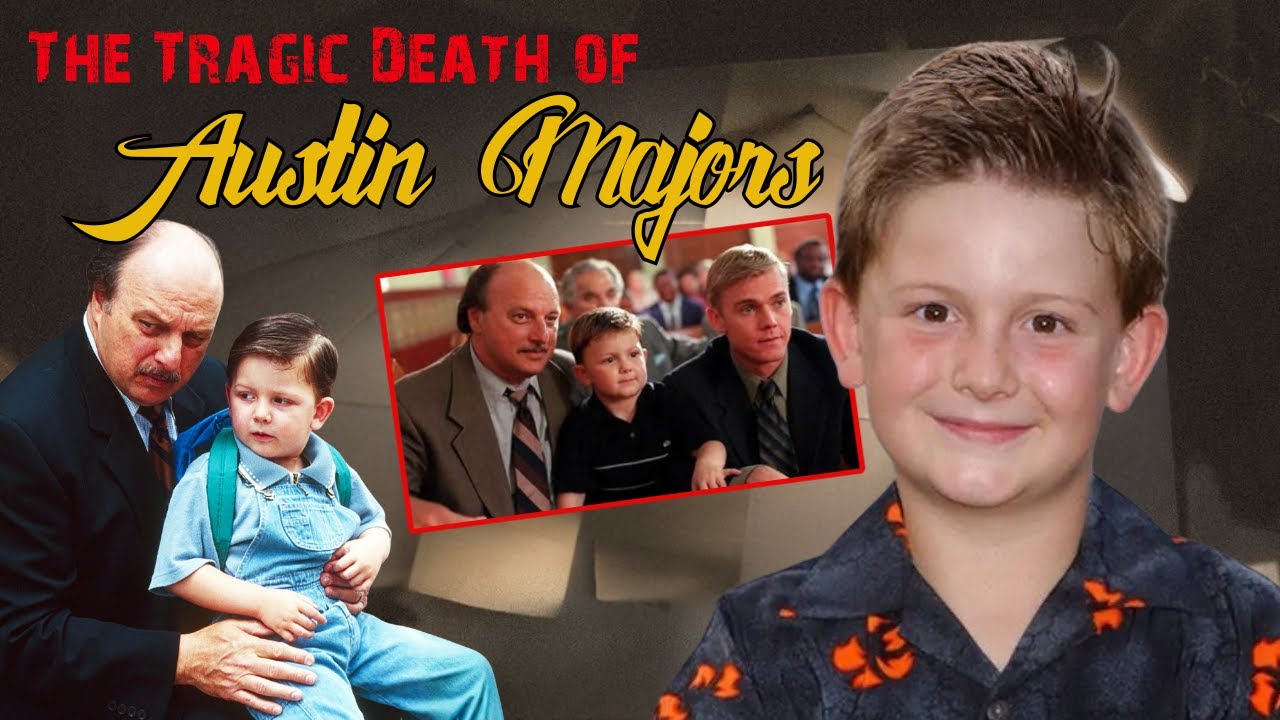
The camera loved him early. By the time he was a toddler, he was booking roles. But it was his portrayal of Theo, the son of Dennis Franz’s Detective Andy Sipowicz, that made him a household name. In a show defined by crime and death, Theo was the symbol of life continuing—a beacon of hope and stability in a chaotic world.
When the show ended, Majors avoided the typical downward spiral of the child-star cliché. He didn’t chase notoriety or rebellion. Instead, he stepped deliberately into the library. He enrolled at the University of Southern California, where his sharp, disciplined mind earned him the title of salutatorian of his graduating class.
He didn’t abandon acting entirely, landing competitive roles in top-rated shows like *Desperate Housewives* and *Navy NCIS*, proving he could still hit his marks while fitting acting around his life, not the other way around. But the industry is not a meritocracy, and after 2017, the roles stopped. His IMDb page, which shows credits for the show *Dirty* and a short film called *The Enslaver*, fell silent. The entertainment industry, unlike professional sports, has almost no structural support for former child stars who don’t transition into adult stardom.
There are no alumni networks or transition programs for the actors who age out of the spotlight. The tragedy of Majors’s death is compounded by the fact that his life was not one of rock-and-roll excess. It was a quiet, grim slide into homelessness. He ended up at the Hilda Elsouls Care First Village, a facility opened by the city as part of a “housing first” initiative.
On February 7, 2023, the *Los Angeles Daily News* ran a story about Mayor Karen Bass’s efforts to combat homelessness. The article featured photos from the facility, and in one of them, a man with an unkempt beard stood wearing a gray sweatshirt. His eyes, those recognizable, expressive eyes, were still the same. He was identified simply as a resident.
Just four days later, he was gone. The news broke slowly: first to his family in Kern County, then to his former castmates, and finally to the world. The family and the public were left in a painful limbo as the coroner worked to determine the cause of death. It would eventually be ruled an accidental overdose of fentanyl, a substance so cheap to produce and so incredibly lethal that it is often mixed into other drugs without the user’s knowledge.
It is entirely possible, even likely, that Majors thought he was taking something else—something to help him sleep or numb the anxiety of his situation. Fentanyl shuts down the respiratory system; the user simply falls asleep and forgets to breathe. His death was not the result of a moral failing. It was a result of societal neglect and the predatory nature of the modern drug trade.
For those who knew him, the news was not just sorrowful; it was a reminder that they were veterans of the same strange war. Dennis Franz, his on-screen father, spoke out, saying, “It’s so surreal to me still. He was only 27 with so much life left to live. ” He shared stories that had nothing to do with *NYPD Blue*, recalling the boy who was kind, bright, and full of potential.
In the days following his death, the debate intensified over the “housing first” model that placed him in the Care First Village. While the facility gave him a bed, it didn’t give him the tools to get sober. He was a high-risk individual with a history of brilliance who died inside the system designed to protect him. His death has become a case study for social workers who argue that warehousing the homeless is not enough.
We must heal them, not just house them. Majors had been a dedicated member of the Boy Scouts, achieving the rank of Eagle Scout—a distinction reached by only 4% to 6% of all scouts. He was a young man who lived by the Scout Law, a code that demands one remain morally straight and physically strong. He was also a salutatorian, a testament to a mind that was sharp, disciplined, and operating at an elite level.
These are the exact cognitive functions that addiction later destroys. There is a psychological theory that high-achieving children are more susceptible to anxiety and depression in adulthood because they equate their self-worth with their output. If Majors believed he was only valuable when he was the Eagle Scout or the actor, the quiet periods of unemployment would have felt like a death of the self. Drugs become a way to silence the inner critic that screams, “You are failing.
”
His life was 27 years long. The addiction was likely only a fraction of that time. The controversy of his death should not eclipse the validity of his life. He was a successful human being struck down by a disease and a societal plague.
He taught the audience that even the most damaged people are capable of tenderness if they have something pure to protect. His story dismantles the illusion of invincibility. It proves that mental health struggles do not check your resume before they attack. If Austin Majors, with all his gifts and all his support, could end up in a shelter, then homelessness is not a character flaw.
It forces us to look at the unhoused not as lazy or stupid, but as people who may have simply run out of road, just like he did. We should not remember him as the man in the gray sweatshirt in the homeless shelter. We should remember that he was loved. The entertainment industry is poorer for his absence.
We lost a voice that had seen the industry from all sides. His presence, his innocence, and his absolute trust in his father forced Franz to be better. It forced him to stay sober.
That is the legacy of Austin Majors—a boy who understood the language of cinema but never forgot the value of a family dinner.