A field surveyor named Alder Whitmore climbed a mountain in the autumn of 1931 to map a hollow for a timber company, but the job that should have taken a month was finished in three days by a man who was never quite the same afterward. The record of what happened survives because Whitmore kept a field journal, writing down everything he saw in neat, careful figures, though the explanations in those pages grow less reasonable as the work goes on. Whitmore was a methodical man who trusted his instruments and believed in what a chain and a compass could prove. He was hired by a timber concern out of the land cities to survey a remote valley, and he set out at first light with a local guide and a single mule carrying his equipment.
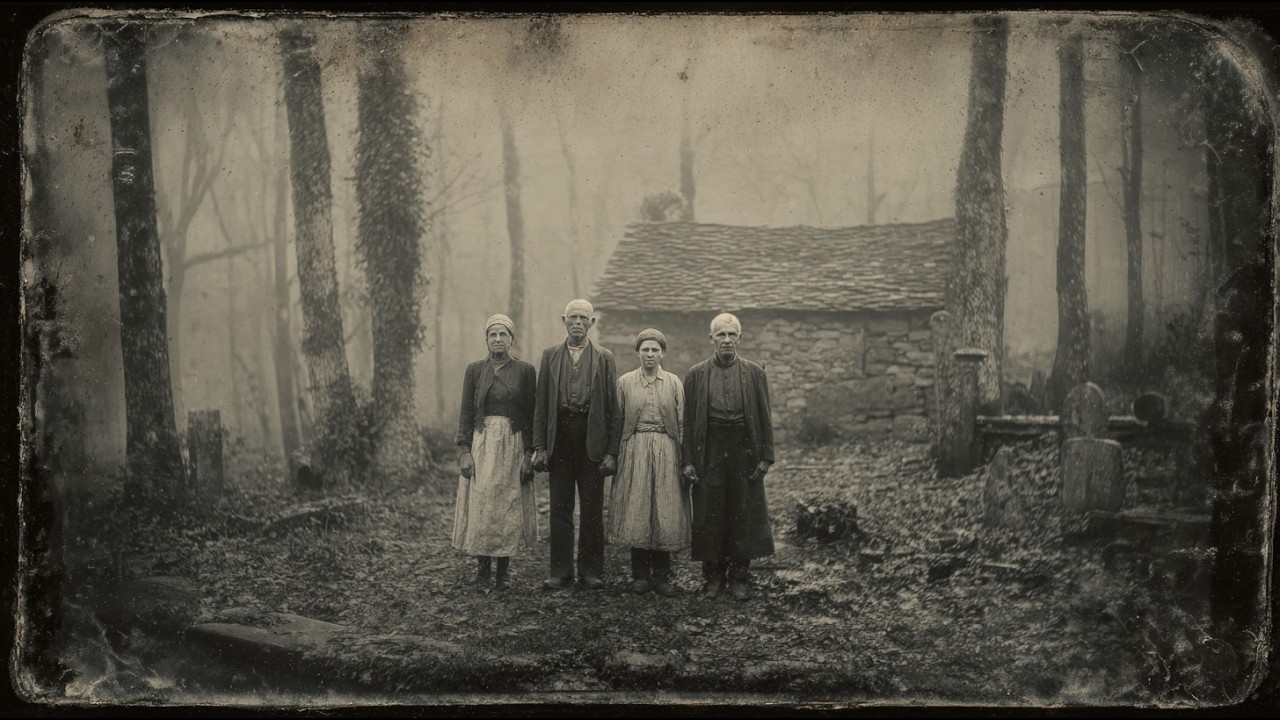
The trail took them up through quiet country where the only sounds were the creak of the pack saddle and the water running in the rocks below. The guide, Oric, refused to go all the way into the hollow and warned Whitmore against spending the night there, saying the local people were not the sort you wanted to be among after dark. Whitmore noted the warning but pressed on, finding a long sheltered valley with neat terraced fields and stone walls so old that moss had grown into their very heart. He was welcomed at a long table where perhaps twenty men and women sat in a silence so deep that he wrote he had never been in a room so full of people and so empty of noise.
During the day, Whitmore ran his survey lines, drove his stakes, and filled his field book with measurements, but he noticed that the compass needle behaved strangely in certain deep folds of the hollow, swinging in slow circles as if searching for a north that had wandered off. He also noticed that the people he worked with never seemed to sweat or tire, even after a full day in the cold. At night, he was given a room and a barred door, and he wrote that he heard the sound of footsteps in the passage outside his door, moving with unhurried calm. On the second day, Whitmore came upon a graveyard with hundreds of old stones, their dates climbing back through the 1700s, before any settler should have been on that mountain at all.
The same names appeared over and over, generation after generation, as if the same handful of people had been buried again and again across two centuries. He recognized one of the faces in a painted portrait hanging in the village hall, the same eyes, the same small scar at the corner of the mouth, dated a hundred years before. He wrote in his journal that he must have misread the date, but when he went back the next day, the date was still the date and the face was still the face. That night, Whitmore confronted Galt Vesper, a man with pale eyes and long, still fingers, and asked him what he was.
Vesper replied that something had come to rest in the deep places under the mountain long ago, before the first settlers, before the first natives, and that it could put on a face and a name and walk among the people of the land for as long as it needed to, then go back down into the dark and leave the worn-out body behind. When Whitmore asked why it stayed, Vesper said it did not stay, but that now and again the thing under the mountain required new material, a fresh shape it had not worn before, to fold into the long slow making of the next one of itself. Whitmore wrote that night with a hand so unsteady the letters could barely be read. He knew he should have left, but he could not walk away from the one question his rational life had never prepared him to ask: What are you?
He kept working, and on the third day he finished his survey, complete and perfect, every boundary drawn, every watercourse marked, work that should have taken a month. The hollow was never touched by the timber company, as if the survey had done exactly what it was meant to do, not to open the place up but to draw a line around it and set it apart. Whitmore was found at the edge of the hollow three days later, sitting whole and unharmed, his instruments packed neatly beside him. But he was not the same man who had climbed the mountain.
The real Alder Whitmore, the careful rational man who measured things for a living, never came down. The story ends with a field book full of clean figures and reasonable explanations that grow less reasonable toward the end, then stop altogether, three blank pages before the survey resumes in a slightly different hand. The old names on the same stones, the same faces repeated through the generations, are the kind of thing people tell themselves are only stories, the way of close families in lonesome country.
But the hollow remains, a place where the records go thin and the old names come around again, and Whitmore’s journal is the only record of what happened to the man who went up there with his instruments and never came back the same.